


do I need a whole house filter and reverse osmosis
Whole House Filter and Reverse Osmosis: Do You Need Both?

You need both whole-house treatment and reverse osmosis only when testing confirms separate whole-home and drinking-water problems. Match each stage to a documented concern instead of treating a bundled quote as the diagnosis.
That distinction matters more this summer because more homeowners are reading water reports, comparing PFAS headlines, and asking for one system that fixes everything. The EPA says community water systems provide annual Consumer Confidence Reports, but those reports do not automatically tell you which equipment belongs in your home. A quote should follow the water facts, not replace them.
Why these quotes get bundled together
Most bundled quotes are built around three different jobs. A whole-house carbon filter is usually aimed at chlorine taste, odor, and certain organic chemical concerns at the point where water enters the home. A conditioner is aimed at hard-water scale behavior, not at making unsafe water safe. Reverse osmosis is usually aimed at drinking and cooking water at one faucet.
Those jobs can overlap in the same home, but they are not the same job. That is why a single package can be either smart or excessive depending on the water source, the report, the test results, the plumbing, and what the homeowner actually wants fixed.
City water and well water also need different thinking. City water is regulated as a public supply before it reaches the home. Private wells are the homeowner’s responsibility. The EPA private wells guidance recommends testing when there are changes in taste, odor, color, staining, flooding, or nearby land-use concerns. If the home is on a well, a quote without current test results is usually premature.
For city water, the first step is to pull the latest report and read it before buying equipment. For well water, the first step is a current lab test. For either source, a good quote should connect each recommended system to a specific finding or complaint.
What each system is supposed to do
Think of water treatment by location first.
- Point of entry: Equipment installed where water enters the home. This is for whole-home concerns like chlorine taste throughout the house, sediment, odor, hardness behavior, or well-water issues.
- Point of use: Equipment installed at one faucet or used on the countertop. This is for drinking and cooking water when the main concern is what you consume from the kitchen tap.
A whole-house filter can improve water before it reaches showers, laundry, appliances, and faucets. That can be useful if the issue shows up everywhere in the home. Reverse osmosis is different. It focuses on a smaller stream of water and uses a membrane to reduce many dissolved substances from drinking water.
The EPA’s drinking-water overview is a helpful reminder that water quality depends on source water, treatment, distribution, and the home. The last step matters. A city can deliver regulated water, while a homeowner may still dislike chlorine taste, have scale on fixtures, or want extra drinking-water filtration.
So the question “do I need both?” depends on the problem location. If the complaint is mainly drinking-water taste, a whole-house system may be more than you need. If the complaint is scale on every fixture plus sediment and odor, a single under-sink system will not change the rest of the house.
What does not work: buying by bundle name
The fastest way to overspend is to buy the most complete-sounding package without testing. A bundle may be right, but it should earn its place.
A handheld TDS meter is not enough. Total dissolved solids can help you see mineral content, but it does not identify chlorine, PFAS, bacteria, iron, manganese, hydrogen sulfide, or specific metals. A low TDS number does not prove water is free from every concern. A high TDS number does not prove the water is unsafe.
Boiling is also not a whole-home plan. It can be relevant for certain boil-water notices, but it does not remove many chemical contaminants and it does not solve scale, staining, or odor at the main line.
A pitcher filter may improve taste at one point, but it will not change every shower, appliance, or laundry load. It also will not replace a well-water test. If your quote includes whole-home equipment, ask what whole-home problem the pitcher or faucet option cannot solve.
The practical move is simple: make the quote defend itself. Every item should answer one of these questions:
- What specific problem does this system solve?
- Where in the home does that problem show up?
- What test result, report line, or symptom supports it?
- What happens if we skip this item?
If a salesperson cannot answer those without jargon, slow down.
A better water treatment quote checklist
Before you approve a package, put the quote next to your water facts.
Start with water source. City water usually means you should review the Consumer Confidence Report and any utility PFAS updates. Well water means a current lab test. If you have both a well and city supply on the property, keep the results separate.
Next, list the symptoms by location. Scale on glass doors and faucets points toward hardness behavior. Rotten-egg odor can point toward sulfur-related well issues or other source-specific problems. Brown or black staining needs testing for iron, manganese, or other causes. Chlorine taste points toward disinfectant taste and odor. A drinking-water contaminant concern points toward the water you cook with and drink.
Then match equipment to each location.
- Whole-house carbon: Consider when taste, odor, or certain chemical concerns affect water across the home.
- Conditioning: Consider when scale behavior is the main problem and you want a salt-free path instead of traditional softening.
- Reverse osmosis: Consider for drinking and cooking water when you want a finer filtration step at the kitchen tap or countertop.
- Whole-home reverse osmosis: Consider only when testing supports a whole-home need that cannot be handled by simpler point-of-entry treatment.
This process does not make the decision slower. It makes it cleaner. It also helps you avoid buying a whole-home solution for a one-faucet problem or a countertop solution for a whole-house complaint.
Where RKIN fits
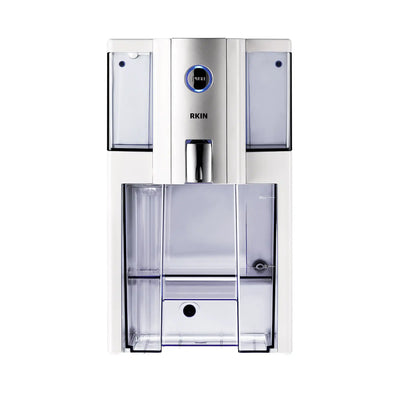
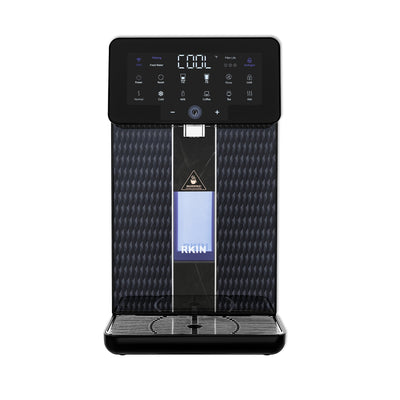
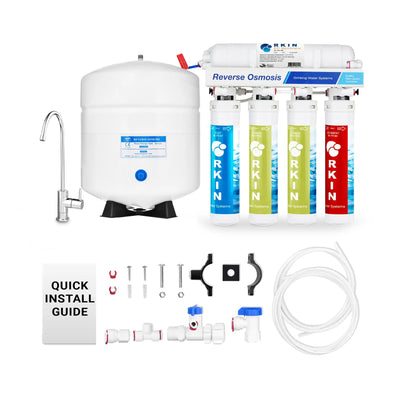
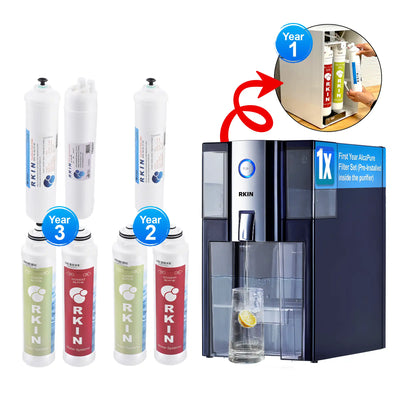
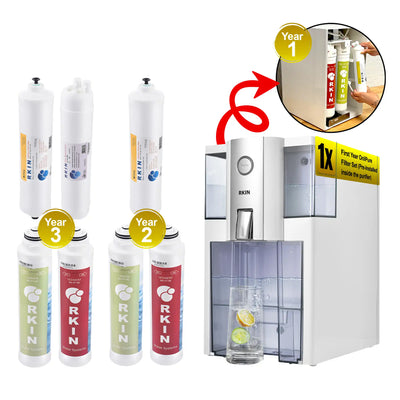
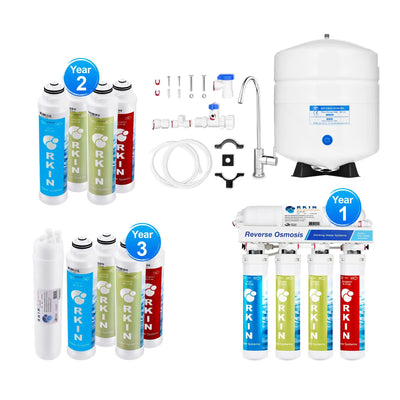
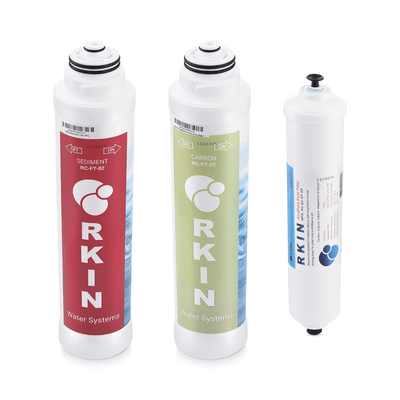
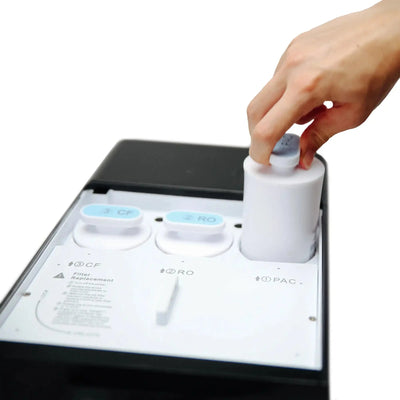
If your quote points to drinking and cooking water first, RKIN has two clear reverse-osmosis paths. The RKIN Flash Undersink RO System is designed for homeowners who want an under-sink setup with filtered water at the kitchen. The RKIN Zero Installation Purifier is designed for people who want reverse osmosis without a plumbing project. It sits on the countertop, and its front-loading design means you refill it at counter height instead of lifting a full tank to the top or back of the unit.
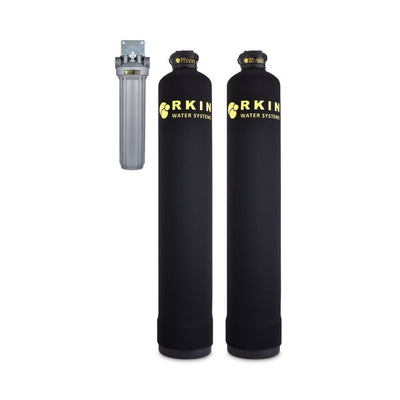
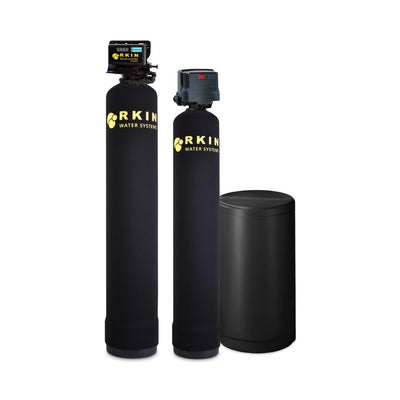
If the quote points to whole-home problems, start with the RKIN whole-house water treatment collection. A whole-house plan should be chosen from the water report or test, not from a bundle label. In my house, I would not approve a whole-home system until I knew whether the issue was hardness, chlorine, sediment, iron, PFAS, well-water odor, or some combination.
For some homes, the test results support both: point-of-entry treatment for the whole house and reverse osmosis for drinking water. For other homes, one well-chosen system is enough. The quote is useful only when it helps you tell the difference.
How to push back on a quote without starting over
You do not need to reject the quote. Ask for a diagnostic version.
Send one short note: “Can you show me which water issue each part of this quote solves and which test result or symptom supports it?” A good provider should be able to explain the carbon filter, conditioner, and reverse-osmosis system in plain language.
If the answer is mostly “better water everywhere,” ask for specifics. Does it address chlorine taste? Scale? Sediment? PFAS? Lead? Iron? Odor? Aesthetic issues? Drinking-water concerns? Appliance protection? Those are different outcomes.
Also ask what can be staged. Sometimes the right move is to start with the drinking-water system while you wait on a lab test, or to install a whole-house filter first and decide later whether reverse osmosis is still needed. Staging can be a good way to make a confident decision without buying everything at once.
Frequently Asked Questions
Do I need a whole house filter and reverse osmosis?
Maybe. A whole-house filter works where water enters the home, while reverse osmosis usually focuses on drinking and cooking water at one faucet or countertop. You may need both if you have whole-home issues plus a separate drinking-water concern. You may need only one if the problem is limited to one location.
Is a water treatment quote the same as a water test?
No. A quote is a recommendation. A test or report is evidence. For city water, start with your utility’s latest Consumer Confidence Report. For well water, use a current lab test. The quote should explain how each system matches those facts.
What should I ask before buying a bundled water system?
Ask what each item solves, where that issue shows up in the home, what test result supports it, and what happens if you skip that item. If the answer is vague, ask for a simpler diagnostic quote before approving the full package.
Can reverse osmosis replace a whole-house filter?
Usually no. Reverse osmosis is commonly used for drinking and cooking water. It will not change water used in showers, laundry, toilets, or most appliances unless it is part of a whole-home reverse-osmosis design. Match the system to the location of the problem.
Should I buy whole-home reverse osmosis?
Only when testing supports it. Whole-home reverse osmosis can make sense for certain water problems, but it is not the default answer for every home. Many homeowners are better served by targeted point-of-entry treatment plus point-of-use reverse osmosis for drinking water.
Ready to make the quote make sense?
Start with the water facts, then match each system to a job. If your main need is drinking water, compare the RKIN Flash Undersink RO System and the RKIN Zero Installation Purifier. If your issue affects the whole home, review RKIN whole-house water treatment options with your report or test in hand.





0 comentarios