




apartment
Best Water Filter for Apartments: No-Install Options

Your Apartment's Water Might Not Be as Clean as You Think
Moving into a new apartment is exciting. The water quality? Usually an afterthought—until you notice the film on your kettle, the odd taste in your morning coffee, or the faint smell of chlorine every time you turn on the tap. For the 44 million Americans who rent their homes (U.S. Census Bureau, 2023), this is a daily reality. And the frustrating part: you can't just call a plumber and install an under-sink system. Your lease says no.
The good news is you don't need to. No-install water filtration has gotten genuinely good. This guide covers what's actually in apartment tap water, why the cheap fixes fall short, and what to look for in a countertop system that moves with you every time you move.
What's Actually in Your Apartment's Tap Water
Municipal water treatment does a real job. By the time water leaves the treatment plant, it meets EPA standards for over 90 regulated contaminants. But the water that hits your glass is not the same water that left the plant.
From the treatment facility to your faucet, water travels through miles of aging distribution pipes, then into your building's internal plumbing. In any apartment built before 1986, that plumbing may include copper pipes joined with lead solder. Buildings constructed before 1930 may have pure lead supply pipes still in use. The EPA estimates that 400,000 public school buildings and 6 million homes still have lead service lines (EPA, 2024).
Lead is the most serious concern, but not the only one. Common apartment water issues include:
- Chlorine and chloramines — added by utilities for disinfection, but they affect taste, odor, and interact with organic matter to form disinfection byproducts
- PFAS (per- and polyfluoroalkyl substances) — a class of persistent synthetic chemicals linked to widespread contamination; detected in water systems serving 200 million Americans (Environmental Working Group, 2023)
- Nitrates — agricultural runoff contaminant, common in municipal systems drawing from surface water sources
- Sediment and particulate matter — rust from aging pipes, mineral deposits, and suspended solids
- Hard water minerals — calcium and magnesium buildup that affects appliances, skin, and taste
None of this means your tap water is unsafe by legal standards. It means that legal standards have limits—and that the pipe from the street to your glass adds variables no treatment plant controls.
Why the Common Fixes Don't Go Far Enough
Two solutions dominate the apartment renter's toolkit: pitcher filters and bottled water. Both are better than nothing. Neither solves the problem.
Pitcher Filters
Pitcher filters use activated carbon to absorb chlorine, some volatile organic compounds, and a handful of other contaminants. They're cheap to start. But activated carbon has real limits—it does not reliably remove lead, PFAS, nitrates, or dissolved solids. NSF/ANSI 53 certification covers lead reduction for some carbon filters, but very few pitcher models carry it, and when they do, the reduction rates don't match what reverse osmosis achieves.
Beyond performance, there's the operational reality: a pitcher that holds 8 cups takes 5–10 minutes to filter a full batch. You can't run it fast enough for cooking water and drinking water both. Forget filling a pot for pasta.
Bottled Water
Bottled water is filtered—sometimes. The FDA regulates it, but testing requirements are less stringent than EPA tap water standards. A 2018 study by Orb Media found microplastics in 93% of bottled water samples tested across 11 brands. Beyond the quality question, there's the cost: drinking the recommended 2 liters a day from bottled water runs $600–$1,200 per year depending on brand and where you shop. That's before accounting for the environmental cost of single-use plastic.
Bottled water also doesn't solve cooking water, ice, or the water you use to rinse produce. It's a partial workaround dressed up as a solution.
What Actually Works: Countertop Reverse Osmosis
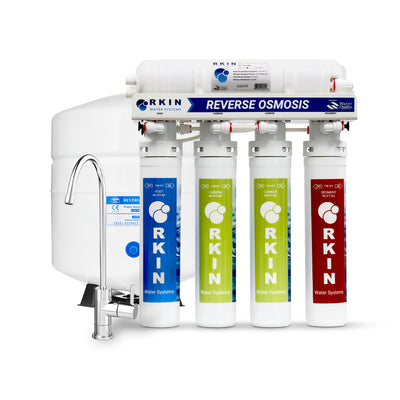
Reverse osmosis is the gold standard for residential water filtration. It forces water through a semi-permeable membrane with pores small enough to block dissolved salts, heavy metals, and synthetic compounds that slip through carbon filters. NSF/ANSI 58-certified RO systems remove lead, PFAS, nitrates, arsenic, chromium-6, and hundreds of other contaminants.
The traditional version—an under-sink RO system—requires drilling into your cabinet, splicing into your cold water supply line, and installing a dedicated faucet. That's a lease violation waiting to happen.
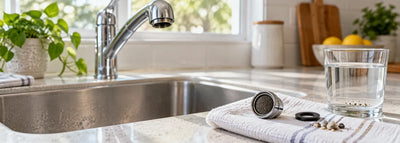
Countertop RO systems solve this by connecting directly to your existing faucet with a simple diverter valve that screws onto the aerator. No tools beyond hand-tightening. No holes. No permanent modifications. When you move, it disconnects in under a minute and goes in a box.
What to Look for in a Countertop RO Unit
- NSF/ANSI 58 certification — the benchmark for RO performance; confirms the system actually removes what it claims
- Multi-stage filtration — a sediment pre-filter, carbon stage, RO membrane, and post-filter (ideally with remineralization) give you the cleanest output and protect the membrane from early failure
- Reasonable waste water ratio — older RO systems waste 3–5 gallons for every gallon purified; newer countertop systems have improved this significantly
- Filter-change indicators — takes the guesswork out of maintenance
- Faucet compatibility — standard aerator fitting works for most kitchen faucets; check before buying if you have a pull-out or touchless model
The Right Tool for Renters: RKIN Zero Installation Purifier
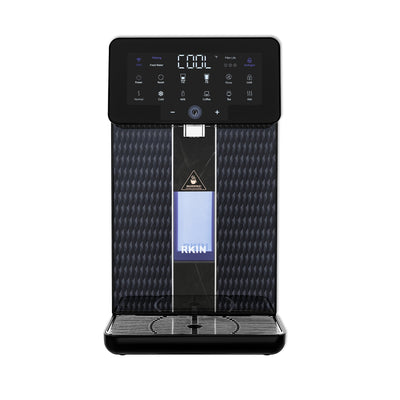
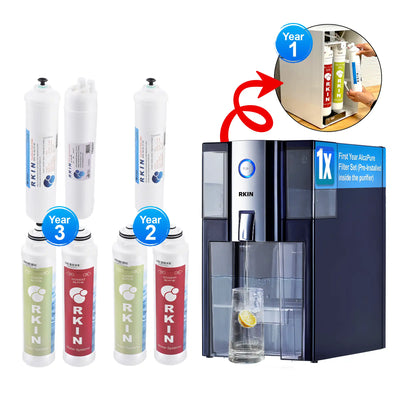
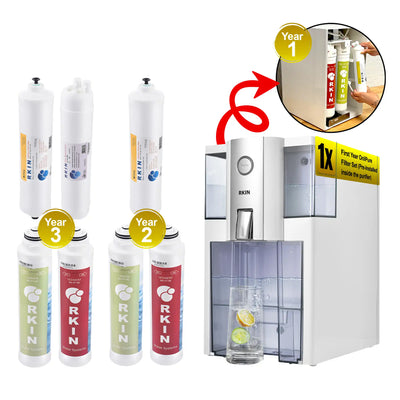
The RKIN Zero Installation Purifier was designed specifically for this problem. It's a countertop reverse osmosis system that connects to your existing faucet using a standard diverter—no drilling, no permanent connections, no landlord conversation required.
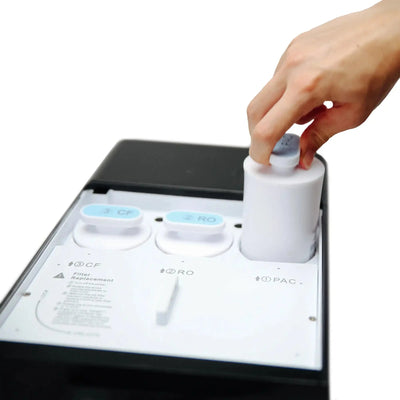
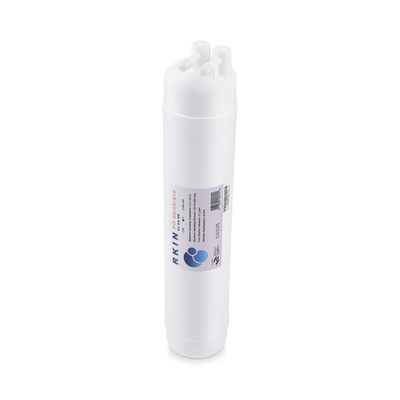
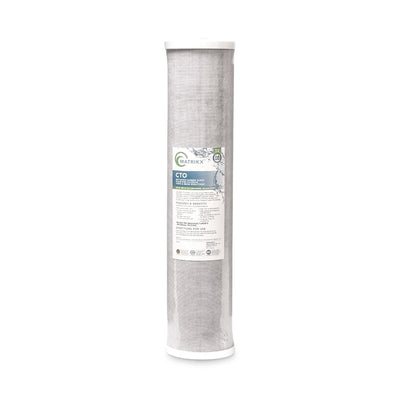
The Zero Installation Purifier runs water through a four-stage process: sediment pre-filtration, activated carbon, a reverse osmosis membrane certified to NSF/ANSI 58 standards, and a remineralization stage that adds calcium and magnesium back in for better-tasting output. The result is clean water that doesn't taste flat the way some RO systems produce.
Setup takes about 10 minutes. The system sits on your counter, connects to your faucet, and starts filtering immediately. When lease day comes around, it disconnects just as fast.
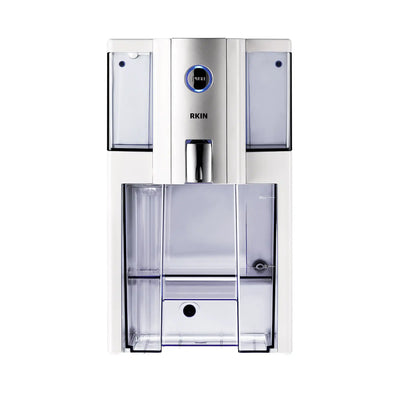
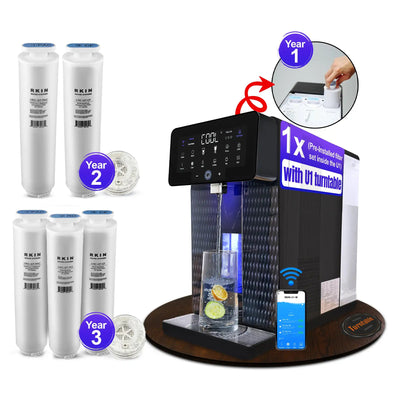
If you prefer a countertop option that doesn't connect to your faucet at all, the RKIN U1 4-in-1 Water Filter System is a freestanding countertop RO unit with a fill tank—just pour water in, plug it in, and it filters automatically. No faucet connection needed, making it compatible with any kitchen setup. But for renters who want continuous filtered water on demand, the Zero Installation Purifier is the right starting point.
The Zero Installation Purifier has become one of RKIN's most popular products for exactly this reason: it meets people where they actually live, without asking them to compromise their lease or their water quality.
Frequently Asked Questions
What is the best water filter for an apartment with no installation?
The best option for renters is a countertop reverse osmosis system. The RKIN Zero Installation Purifier sits on your counter, connects to your existing faucet in minutes, and requires zero drilling or plumbing changes. It reduces contaminants including lead, chlorine, PFAS, and nitrates without any landlord approval.
Can I use a water filter in an apartment without modifying plumbing?
Yes. Countertop water filters connect directly to your faucet's aerator using a simple diverter valve. No drilling, no permanent connections, and no changes to your plumbing. When you move out, the filter comes with you.
Are apartment water filters effective against lead?
A reverse osmosis (RO) system is one of the most effective technologies for removing lead from drinking water. The NSF/ANSI 58 standard certifies RO systems for lead reduction. Pitcher filters with basic carbon blocks are not certified to remove lead at the same level. If your building is older or has copper supply lines with lead solder, an RO-certified countertop unit is the right choice.
How is a countertop RO system different from a pitcher filter?
Pitcher filters use activated carbon to reduce chlorine taste and odor. They do not use pressure-driven reverse osmosis membranes, so they cannot remove dissolved solids, PFAS, nitrates, or lead at meaningful levels. A countertop RO system forces water through a semi-permeable membrane under pressure, stripping out contaminants at the molecular level. The output quality is significantly higher.
Do countertop water filters work with all apartment faucets?
Most standard kitchen faucets with a removable aerator are compatible. Pull-out spray faucets and some touchless models may not be compatible without an adapter. If your faucet does not accept a standard aerator adapter, a countertop unit with a separate feed line or a freestanding tank-based RO system is a good alternative.
How often do I need to replace the filters on a countertop RO system?
Filter life depends on the system and your local water quality. Most multi-stage countertop RO units require pre-filter replacement every 6–12 months and RO membrane replacement every 1–2 years. Some systems include filter-change indicators so you know exactly when to swap cartridges.
Is reverse osmosis water safe to drink every day?
Yes. RO-filtered water is safe for daily drinking. Some RO systems include a remineralization stage that adds back calcium and magnesium for better taste and mineral balance. The RKIN Zero Installation Purifier includes a remineralization filter as part of its multi-stage process.
Ready to Stop Guessing What's in Your Water?
You picked your apartment carefully. Your water filter should be just as deliberate. If you're renting, the RKIN Zero Installation Purifier gives you genuine reverse osmosis filtration without touching your plumbing—setup in 10 minutes, moves with you on move-out day. Stop pouring money into bottled water and start drinking water you can actually trust.




0 comments