




drinking-water-safety
How to Read Your Water Quality Report (And What It Misses)

Every spring, your water utility mails or posts a document called the Consumer Confidence Report — a legal requirement under the Safe Drinking Water Act. Most people glance at the first line, see "meets all federal standards," and move on. That's a mistake. The report is a useful starting point, but it was never designed to be a complete picture of what's coming out of your tap. Understanding what it measures — and what it deliberately leaves out — is the difference between informed confidence and a false sense of security.
According to the EPA, over 286 million Americans get their drinking water from community water systems that must publish these reports annually (EPA, 2023). Yet independent water testing consistently finds contaminants that don't appear anywhere in the Consumer Confidence Report. Here's how to actually read yours, what the numbers mean, and what gaps remain.
What Your Consumer Confidence Report Actually Contains
The Consumer Confidence Report (CCR) — also called an Annual Water Quality Report — is published each year by July 1 and must cover the previous calendar year's test results. Every community water system serving 25 or more people is legally required to produce one. If your water comes from a private well, you won't receive a CCR at all; testing is entirely your responsibility.
Here's what a standard CCR includes:
- Water source information — where your water comes from (surface water, groundwater, or a mix)
- Detected contaminants — a table listing every regulated contaminant found above the detection limit
- Maximum Contaminant Levels (MCLs) — the legal limit set by the EPA for each contaminant
- Maximum Contaminant Level Goals (MCLGs) — the health-based ideal level (often zero for carcinogens)
- Violation notices — if any MCL was exceeded during the reporting year
- Source water assessment — a general risk rating for your water supply
When you read the contaminant table, focus on two columns: the detected level and the MCL. If the detected level is below the MCL, the utility is in compliance. That sounds reassuring — and it is, to a point. But "legal" and "safe" are not always the same thing. The MCL for a contaminant is set based on a balance between health risk and what treatment technology can feasibly achieve. For many contaminants, the MCLG (the actual health goal) is set at zero, while the enforceable MCL is higher because reaching zero is not technically or economically practical at scale.
Lead is the clearest example. The MCLG for lead is zero — no level of lead in drinking water is considered safe. The action level that triggers required utility response is 15 parts per billion. If your report shows lead "below the action level," that means below 15 ppb, not zero. This is a critical distinction that the report's summary language often glosses over.
What the Report Doesn't Tell You
The CCR covers roughly 90 contaminants regulated under the Safe Drinking Water Act. The problem is that scientists have identified thousands of chemicals in U.S. drinking water sources. Compliance reporting only captures the ones that have gone through the full EPA regulatory process — a process that can take decades.
Several major categories of concern are not required to appear in your CCR:
- PFAS (per- and polyfluoroalkyl substances) — The EPA finalized the first enforceable PFAS drinking water limits in April 2024, setting MCLs for PFOA and PFOS at 4 parts per trillion. Many utilities are still working toward compliance and testing. A 2023 USGS study estimated that at least 45% of U.S. tap water contains one or more PFAS compounds. Your 2025 CCR may not reflect PFAS levels at all, depending on where your utility stands in the compliance timeline.
- Microplastics — There is currently no EPA MCL for microplastics in drinking water. They are not tested or reported in CCRs. A 2022 study in Environmental Science & Technology found microplastics in all 12 U.S. tap water samples tested.
- Pharmaceuticals and personal care products — Trace amounts of medications, hormones, and compounds from personal care products have been detected in treated municipal water across the U.S. None are currently subject to MCLs.
- Distribution system contaminants — The CCR reflects water as it leaves the treatment plant, not as it arrives at your tap. Corrosion in aging pipes — including lead service lines still present in millions of homes — can add contaminants after the water leaves the facility.
- Disinfection byproducts (DBPs) — While some DBPs like trihalomethanes (THMs) are regulated, the full suite of byproducts formed when chlorine or chloramine interacts with organic matter in your water is far broader than what the report covers.
None of this means your utility is doing a bad job. It means the regulatory framework was built incrementally, and the science has outpaced the rules. Your report is accurate as far as it goes — it just doesn't go far enough.
Why Relying Only on the Report Leaves Gaps
A common response to water quality concern is to assume that if the report says "compliant," the water is fine — or to reach for a simple workaround like boiling water or using a basic pitcher filter.
Neither fully addresses the problem:
- Boiling kills biological contaminants like bacteria and some parasites. It does nothing for lead, PFAS, nitrates, microplastics, or most chemical contaminants. In fact, boiling concentrates dissolved solids in the remaining water.
- Basic activated carbon filters (standard pitcher filters) improve taste and odor and reduce chlorine and some DBPs. They are generally not effective against PFAS, heavy metals like lead, nitrates, or dissolved inorganic compounds.
- Trusting the report alone means accepting that the EPA's 90-contaminant list is complete. Given the PFAS situation alone — where 45% of tap water may contain these compounds and regulation is only now catching up — that assumption carries real risk.
Independent testing and point-of-use filtration with verified technology are the two steps that actually close these gaps.
The Two-Step Approach That Actually Works
Step 1: Get Your Water Independently Tested
The CCR tells you what your utility found and reported. An independent test tells you what's actually at your tap. For homeowners who want a complete picture, a certified lab test is the most reliable option.
Start with a panel that covers what the CCR misses:
- PFAS (look for a panel covering at least PFOA, PFOS, and total PFAS)
- Lead and heavy metals (especially if your home was built before 1986)
- Nitrates (relevant if you're near agricultural land)
- Total dissolved solids (TDS) as a general water quality indicator
Use a lab certified under your state's drinking water program. The EPA's Safe Drinking Water Hotline (1-800-426-4791) can refer you to certified labs in your area. Tests typically range from $50 for a basic panel to $300+ for a screen including PFAS.
If you're on well water, annual testing isn't optional — it's the only way to know what's in your water.
Step 2: Filter for What the Report Misses
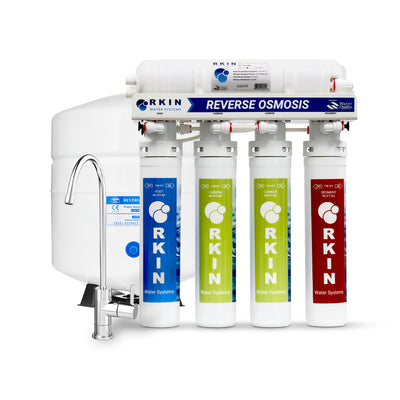
Once you know what's in your water, the filtration technology matters. Not all filters handle all contaminants. For the full range of concerns — PFAS, lead, microplastics, nitrates, dissolved solids — reverse osmosis (RO) filtration is the most thoroughly documented technology for point-of-use reduction.
The NSF/ANSI 58 standard covers RO systems and their contaminant reduction claims. RO works by forcing water through a semipermeable membrane with pores small enough to block dissolved contaminants, including PFAS compounds, heavy metals, nitrates, and microplastics. The EPA identifies RO as one of the best available technologies for reducing PFAS in drinking water.
For whole-home concerns — particularly if your pipes are aging or your source water has elevated hardness or sediment — point-of-entry filtration addresses contaminants before they reach any fixture in the house.
How RKIN Products Address What the Report Misses
RKIN builds filtration systems specifically around the contaminants that standard CCR reporting leaves unaddressed. The right system depends on where you want to filter and what your test results show.
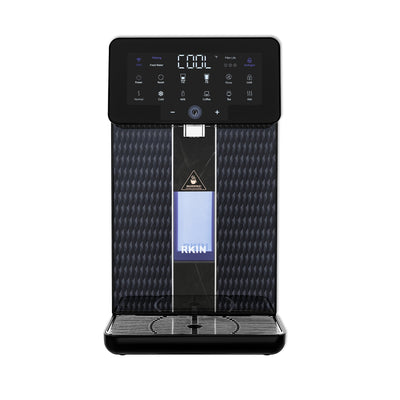
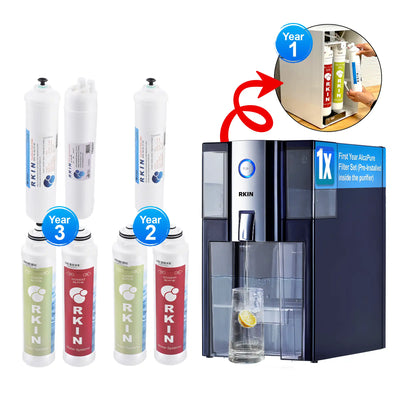
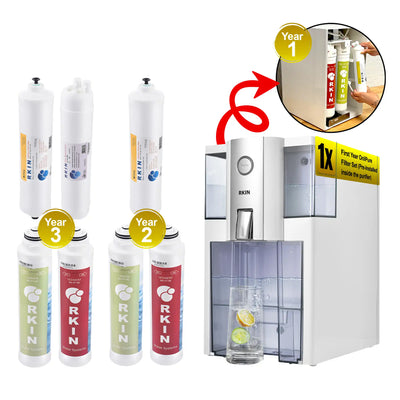
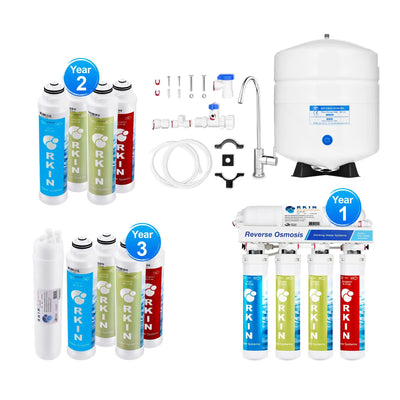
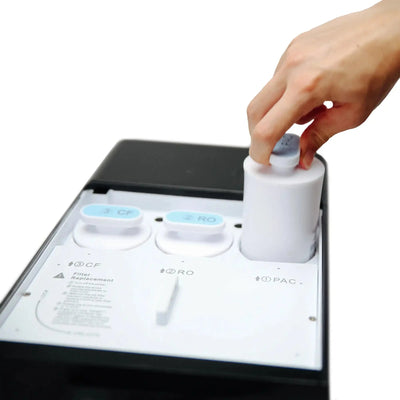
For drinking water at the tap: The Zero Installation Purifier is a countertop RO system that connects directly to your faucet without any plumbing modifications. It uses a multi-stage RO process designed to reduce PFAS, lead, microplastics, nitrates, and total dissolved solids. Because it sits on the counter, it's portable and works in apartments, rentals, or any kitchen setup.
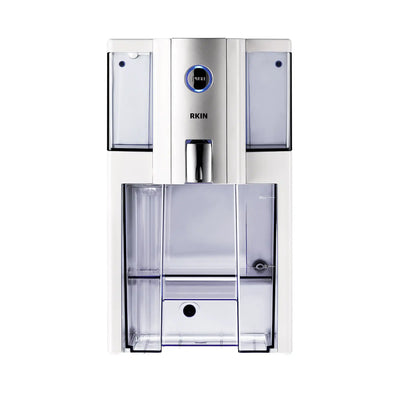
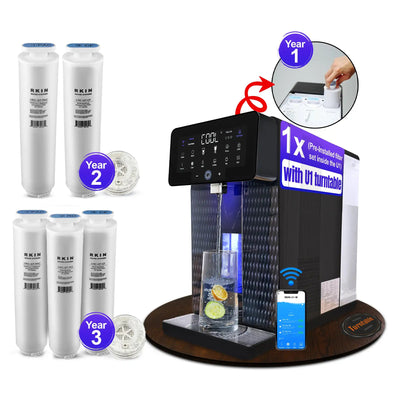
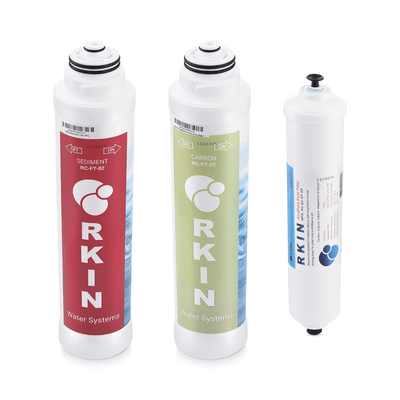
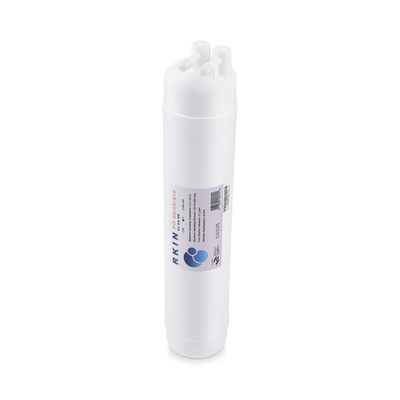
If you prefer a freestanding countertop option that doesn't require a faucet connection, the RKIN U1 4-in-1 Water Filter System is a countertop RO unit with a fill tank — just pour water in, plug it in, and it filters through five stages including sediment, carbon, RO, UV, and a post-filter. It's 3rd-party tested for contaminant reduction across PFAS, lead, arsenic, fluoride, and TDS.
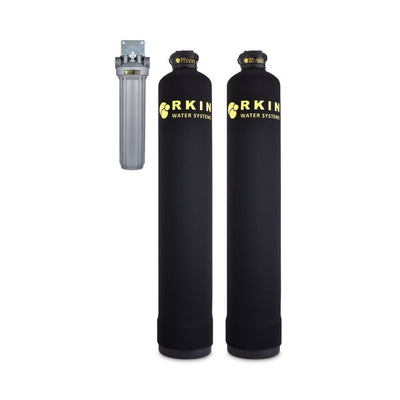
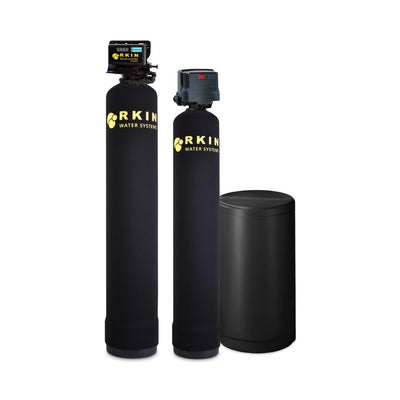
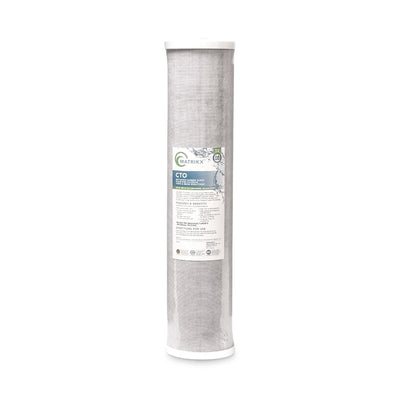
For whole-home protection: If your CCR or independent test flags concerns at the source — sediment, chlorine byproducts, or hardness that affects your entire home — the RKIN whole-house filter systems treat water at the point of entry. The RKIN OnliSoft Pro Salt-Free + Carbon Combo handles both hardness and chemical contaminants without salt or backwashing. The RKIN CBS Dual Carbon Whole House Filter targets chlorine, chloramines, and organic compounds across every tap in the house.
Frequently Asked Questions
Where can I find my Consumer Confidence Report?
Your utility is required to mail or deliver it annually by July 1, covering the prior year. If you didn't receive it, search your utility's website or use the EPA's drinking water search tool at epa.gov/ccr. Enter your zip code to find your local system's report. If you're on well water, you won't have a CCR — you'll need to arrange your own testing through a state-certified lab.
What does it mean if a contaminant is listed as "detected but below MCL"?
It means the contaminant was found in your water but at a level below the EPA's legal limit. This is a compliance status, not a health guarantee. For many contaminants — including lead, arsenic, and certain disinfection byproducts — the Maximum Contaminant Level Goal (MCLG) is zero or near-zero, meaning even detected levels carry some risk. "Below MCL" means the utility is in compliance; it doesn't mean the level is without concern.
Are PFAS included in Consumer Confidence Reports?
Not yet for most utilities. The EPA finalized the first national enforceable limits for PFOA and PFOS in April 2024, giving utilities until 2029 to comply. Some utilities are testing and reporting voluntarily, but most CCRs published through 2025 will not include PFAS data. A 2023 USGS study found PFAS in an estimated 45% of U.S. tap water samples. To know your PFAS levels, you'll need an independent test from a certified lab.
Does boiling water remove PFAS or lead?
No. Boiling water kills biological contaminants like bacteria, viruses, and some parasites — it is effective during boil-water advisories. It has no effect on dissolved chemical contaminants including PFAS, lead, nitrates, arsenic, or most industrial compounds. Boiling actually concentrates dissolved solids because water evaporates but minerals and chemicals stay behind. For chemical contaminants, you need appropriate filtration technology — not heat.
What filtration technology is most effective against PFAS?
The EPA identifies reverse osmosis (RO) and granular activated carbon as the best available technologies for reducing PFAS in drinking water at the point of use. RO systems certified to NSF/ANSI 58 have documented reduction rates for specific PFAS compounds. Not all carbon filters are equally effective against PFAS — activated carbon with longer contact time performs better, but RO remains the most reliable option for the broadest range of PFAS compounds.
How often should I test my tap water independently?
For municipal water users, a baseline test every 2–3 years is a reasonable starting point — or any time there is a change in your water's taste, odor, or appearance, a known local contamination event, or if you move to a new home. If you're on well water, the EPA recommends testing annually at minimum for bacteria, nitrates, pH, and total dissolved solids, with additional panels based on local land use. After installing filtration, a follow-up test confirms the system is performing as expected.
My water report shows no violations. Do I still need a filter?
A clean violation record means your utility met all current regulatory requirements — which is a meaningful baseline. But it doesn't account for unregulated contaminants like PFAS (for most utilities), microplastics, or pharmaceuticals; it doesn't reflect what happens in your home's pipes after water leaves the treatment plant; and it uses detection limits and MCLs that may be higher than what some health researchers consider optimal. Whether you want additional filtration is a personal decision, but a no-violation report is not the same as a guarantee that your water contains no compounds of concern.
Know More, Filter Smarter
Your Consumer Confidence Report is the starting line, not the finish line. Pull this year's report, read the contaminant table carefully — comparing detected levels to MCLGs as much as MCLs — and consider an independent test if you want a full picture including PFAS. If what you find warrants action, RKIN's reverse osmosis systems are built to address exactly what standard compliance reporting doesn't cover. Start with your water. The report is already available — now you know how to read it.






0 comments