


how to remove nitrates from drinking water
Nitrates in Tap Water: Why Spring Is the Worst Season

Your tap water has a season. And spring is the worst one. Most people assume city water is consistent — same chemistry in January, same chemistry in May. People on private wells already know better. What homeowners on city lines are now starting to find out is that nitrate concentrations rise sharply every spring as snowmelt and rain push fertilizer runoff into the drinking water supply, and the utility isn't going to call you when it happens.
A 2024 USDA Agricultural Research Service report tracking 1,200 monitoring wells across the Midwest and South showed nitrate concentrations averaging 38% higher in April and May than in October. In agricultural counties, the spike was higher still — some monitoring stations recorded levels at or above the EPA's federal limit of 10 milligrams per liter (mg/L) for several weeks straight before settling back down by midsummer.
If you live near farmland, downstream from farmland, or draw from a private well in a rural county, your tap water right now is almost certainly different than it was four months ago.
Why Nitrates Spike in Spring
Nitrate is a naturally occurring nitrogen compound, but the reason it ends up in drinking water isn't natural. The dominant source is synthetic fertilizer — applied to corn, soy, wheat, and pasture in late winter and early spring before the planting season. When the spring rains come, anything not absorbed by plants moves with the water. Some of it sinks into shallow groundwater. Some of it runs off into creeks and rivers. Either way, it ends up in the same aquifers and surface reservoirs that feed municipal treatment plants and private wells.
The 2023 USGS National Water-Quality Assessment showed nitrate is now detectable in 64% of public water systems serving rural and suburban America. About 5% of those systems exceed the EPA limit at least once per year — and almost all of those exceedances happen between March and June.
Other contributors to spring nitrate loading include:
- Animal feedlots and manure spreading — concentrated nitrogen sources that runoff carries into watersheds
- Septic system saturation — wet-season groundwater carries septic leachate into nearby wells
- Lawn fertilizer — suburban applications add to the load in residential watersheds
Once nitrate is in the water, conventional municipal treatment doesn't remove it. Chlorine doesn't touch it. Sand and carbon filtration doesn't touch it. Most utilities don't have the equipment to treat for nitrate — they manage it by blending water from different sources to dilute peaks. When the source water itself is high, your tap water is high.
Who Should Care, and Why
The EPA's 10 mg/L nitrate limit was set in 1992, primarily to protect infants from methemoglobinemia ("blue baby syndrome"). The limit hasn't been revised, but the science around long-term exposure has moved. A 2018 review in the International Journal of Environmental Research and Public Health flagged associations between chronic nitrate exposure and several health concerns including thyroid issues and certain cancers, prompting the World Health Organization and several state agencies to recommend lower target levels (5 mg/L or below) for sensitive populations.
People most affected by the spring spike:
- Households with infants or pregnant women — the original at-risk group; pediatricians often advise filtered water for formula preparation in agricultural areas
- Private well owners — wells aren't tested or regulated by the EPA, so nitrate spikes go entirely undetected without homeowner action
- Rural and small-town residents — small utilities with limited treatment capacity see the biggest seasonal swings
- Anyone within a few miles of active farmland — proximity to fertilized fields is the strongest predictor of nitrate detection
You can request your utility's most recent Consumer Confidence Report (CCR) — by law every public water system publishes one annually — and look for nitrate test results. Keep in mind those are typically annual averages, not seasonal peaks. The more useful number is the maximum value reported in any single test, and the month it was sampled.
For private well owners, the only option is direct testing. EPA-certified labs run nitrate tests for $20–$40, and home test strips can give a rough reading in 60 seconds. Spring is the right time to do it.
What Doesn't Remove Nitrates
This is where most homeowners run into a wall. The filters most people already own don't help.
- Pitcher filters and faucet-mount filters — designed primarily for chlorine and taste; nitrate passes through
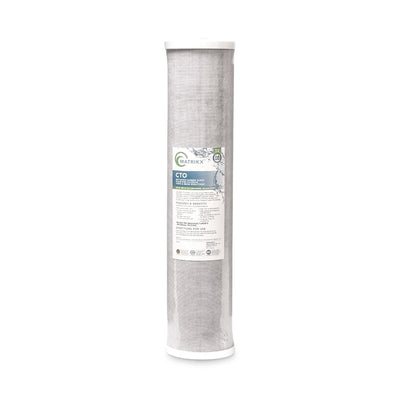
- Carbon block filters (under-sink or whole-house) — removes chlorine, VOCs, some PFAS; not designed for nitrate
- Boiling water — concentrates nitrate rather than removing it (water evaporates, nitrate stays)
- Ultraviolet (UV) systems — kills bacteria and viruses; has zero effect on dissolved nitrate
- Standard water softeners — removes calcium and magnesium; nitrate passes through
What does work falls into three categories: reverse osmosis (most common for residential), ion exchange specifically designed for nitrate (used in some whole-house setups), and distillation. Of these, reverse osmosis is the most accessible — it's well-tested, certified, and doesn't require dedicated salt or specialized media.
How Reverse Osmosis Removes Nitrate
Reverse osmosis works by pushing water through a semi-permeable membrane with pore openings small enough to block dissolved ions, including nitrate. Properly designed RO systems remove 85–95% of nitrate in a single pass — bringing a 12 mg/L source down to 1 mg/L or less at the tap.
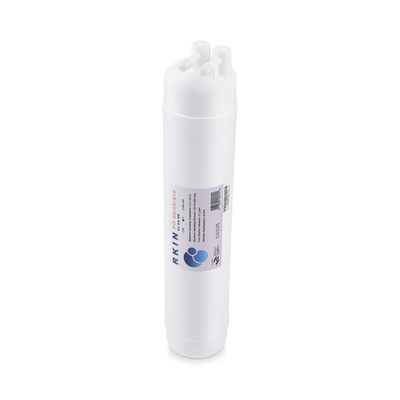
The membrane is the critical component. Sediment and carbon stages (typical in any multi-stage RO system) handle particulates, chlorine, and taste before the membrane stage. They protect the membrane and improve flavor, but the membrane itself is what removes nitrate, lead, fluoride, arsenic, PFAS, and most other dissolved contaminants.
For homeowners, the practical question is where to install it. There are three reasonable answers:
Countertop Reverse Osmosis (No Plumbing Needed)
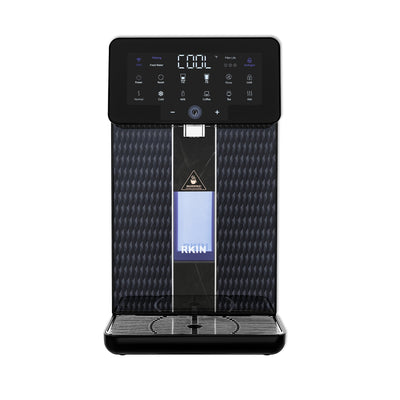
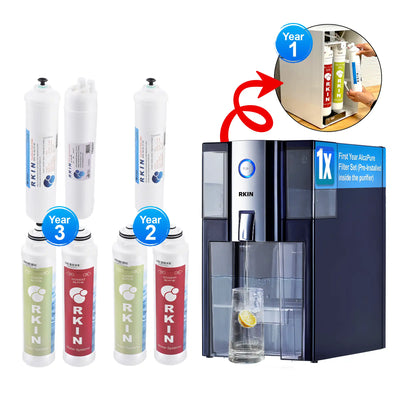
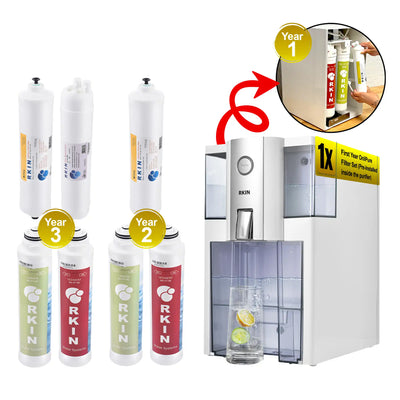
If you rent, can't modify your plumbing, or just want filtered drinking water without a project, a countertop RO system is the path of least resistance. The RKIN Zero Installation Purifier connects to any standard kitchen faucet — no drilling, no installer, no permanent fixture. It removes nitrate along with PFAS, lead, fluoride, chlorine, and TDS, and produces water on demand for drinking and cooking.
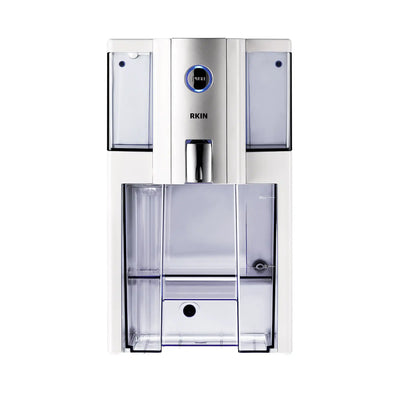
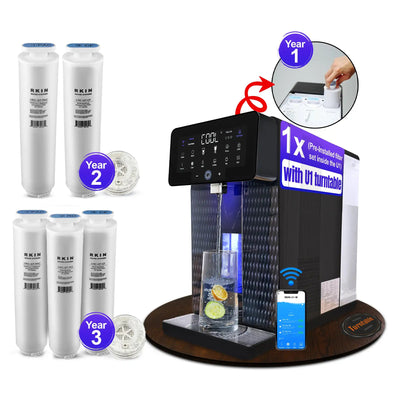
The RKIN U1 4-in-1 Water Filter System is the alternative countertop choice — a fill-tank design that doesn't connect to plumbing at all. You pour water in the top, the system filters it through five stages, and dispenses through a faucet on the front. This is a common pick for renters, RVs, and homeowners who want a backup drinking-water source independent of their main supply.
Under-Sink Reverse Osmosis (Permanent, Higher Capacity)
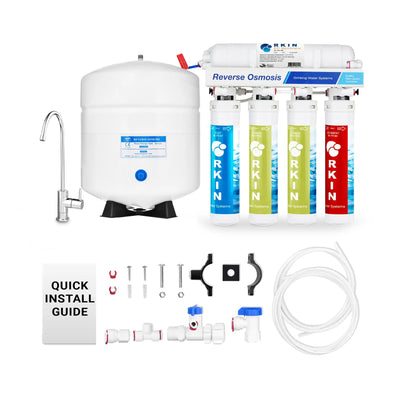
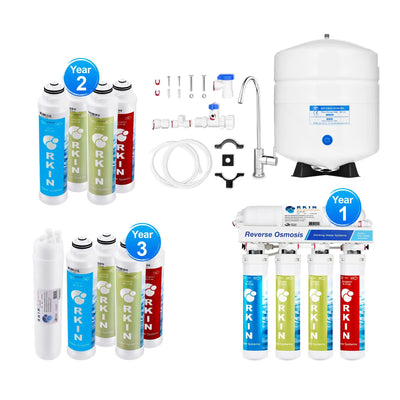
If you own your home and want a high-capacity solution, an under-sink RO system is the standard. The RKIN Flash Undersink RO System installs to your cold-water line, dispenses through a dedicated faucet, and produces 75 gallons per day of filtered water. The 3.2-gallon storage tank is compact enough to fit in most under-sink cabinets vertically or horizontally, and the system runs without electricity.
Whole-House Reverse Osmosis
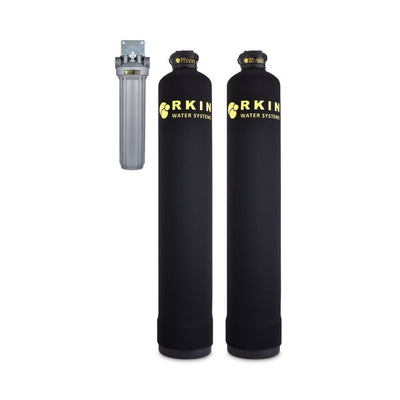
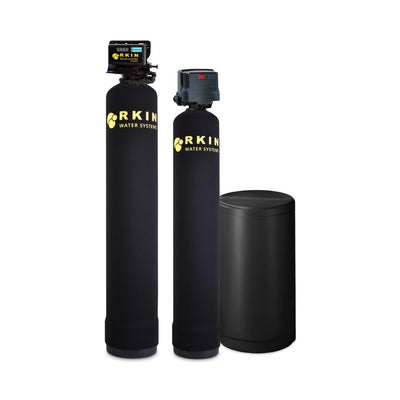
For homes drawing from very high-nitrate sources (agricultural wells, especially) or for households that want filtered water at every faucet — including showers and laundry — the RKIN Whole Home Reverse Osmosis System treats every drop entering the house. This is the right call for homes with persistent contamination across multiple categories (nitrate, PFAS, arsenic, hardness) where point-of-use systems aren't enough.
What to Do This Spring
If you live in or near an agricultural area and you've never tested your water for nitrate, start there. Spring is the highest-reading window of the year — it's the right time to capture a realistic worst-case number.
For city water customers, pull your utility's most recent CCR. Look at the nitrate row, note the maximum value (not the average), and note which month it was sampled. If the max is above 5 mg/L, your spring water is likely higher than your annual average. If the max is above 10 mg/L, you're at or above the federal limit during the spike.
For well owners, get a test kit or send a sample to a state-certified lab. You can repeat the test in late summer to see how much it falls between seasons.
If the numbers come back high, RO is the proven solution. The system you choose depends on whether you're treating drinking water only (countertop or under-sink) or the whole house.
Frequently Asked Questions
How do I know if my water has high nitrate levels?
Your municipal utility publishes an annual Consumer Confidence Report — pull the most recent one and check the nitrate row. For private wells, the only way to know is direct testing. State-certified labs charge $20–$40, and the EPA limit is 10 mg/L. Spring is the highest-reading season, so test between March and June for a realistic peak.
Can I drink water with nitrate?
The EPA's safe limit is 10 mg/L. Below that, water is considered safe for adults. For infants under six months, pregnant women, and people with certain health conditions, lower target levels (5 mg/L or below) are often recommended. If your test shows high readings, filtered water is the safer choice.
Does a refrigerator filter remove nitrate?
No. Refrigerator filters use granulated carbon to improve taste and remove chlorine. They aren't designed to remove dissolved ions like nitrate, fluoride, or lead. For nitrate removal you need reverse osmosis.
How often does an RO system need new filters for nitrate removal?
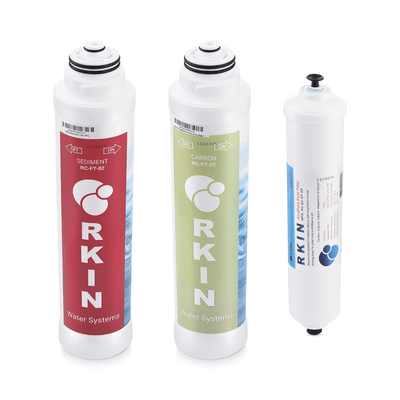
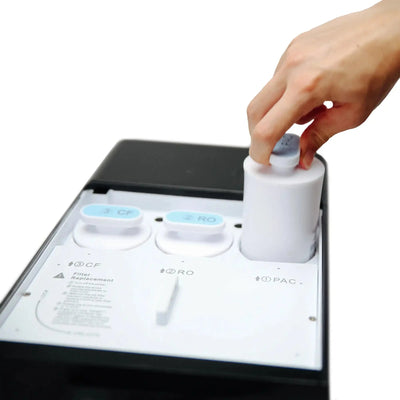
Sediment and carbon prefilters in the RKIN Zero Installation Purifier and U1 systems are replaced every 6–12 months depending on your water quality. The RO membrane itself lasts 2 to 4 years on most water supplies. The system signals when it's time to swap.
Is nitrate worse in spring than other contaminants?
Nitrate has the most pronounced seasonal pattern of any common contaminant. PFAS, lead, and arsenic stay relatively stable year-round (PFAS is industrial; lead leaches from pipes; arsenic is geological). Nitrate ties directly to the agricultural calendar — high in spring planting season, lower in late summer and fall.
What if my well is far from a farm?
Distance helps but doesn't guarantee safety. Groundwater flow can carry nitrate miles from its source. Septic systems, lawn fertilizer, and animal pastures contribute too. The only way to know is to test. If you've never tested your well, do it once this spring and once in October to see the spread.
Stop Drinking the Spring Spike
Nitrate is the only common drinking-water contaminant with a clear annual spike, and we're inside the worst window right now. If you live near agriculture, draw from a private well, or live in a small rural town, the water coming out of your tap this week is statistically the worst it'll be all year.
The fix isn't complicated. Reverse osmosis removes 85–95% of nitrate, plus PFAS, lead, fluoride, chlorine, and most other dissolved contaminants in one pass. The RKIN Zero Installation Purifier handles it without any plumbing work. The RKIN Flash Undersink RO System handles it with a permanent install. The RKIN Whole Home Reverse Osmosis System handles it for every faucet in the house.
See the RKIN countertop water filters lineup to find the right system for your kitchen.





0 comments