




Aquasana
RKIN Zero Installation Purifier vs Aquasana: Which Countertop Water Filter Actually Removes More?

You’ve narrowed it down to two countertop water filters: the RKIN Zero Installation Purifier and something from Aquasana. Both companies have solid reputations. Both promise clean, great-tasting water without tearing up your kitchen.
But they use completely different technology — and that difference matters a lot depending on what’s actually in your water.
This guide breaks down what each system does, what it can’t do, and which one fits your situation.
The Short Answer
If you want full reverse osmosis filtration — removing fluoride, arsenic, PFAS, TDS, and dissolved contaminants — the RKIN Zero Installation Purifier is the right call.
If you mainly want to reduce chlorine taste and odor from otherwise clean municipal water, Aquasana’s Clean Water Machine handles that well at a lower upfront price.
They’re not the same type of filter. Here’s why.
What Each System Actually Does
RKIN Zero Installation Purifier
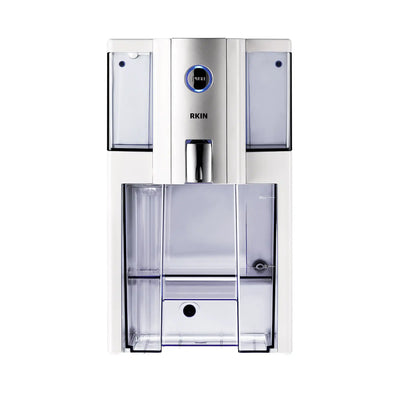
The Zero Installation Purifier is a countertop reverse osmosis system. Water passes through a multi-stage RO membrane that physically rejects dissolved solids, heavy metals, PFAS, fluoride, nitrates, arsenic, chlorine, lead, and more — down to contaminants measured in parts per billion.
Key specs:
- Technology: Reverse osmosis (multi-stage)
- Removes: Fluoride, lead, arsenic, PFAS, nitrates, TDS, chlorine, VOCs, and more
- Installation: Zero — no plumbing, no drilling. Plugs into a standard electrical outlet
- Form factor: Self-contained countertop tower
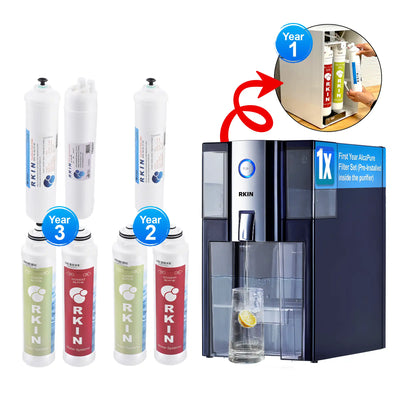
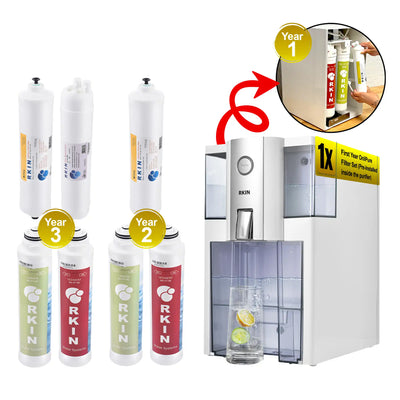
- Two editions: AlcaPure (re-adds minerals, alkaline 7–8 pH) or OnliPure (zero TDS, lab-grade purity)
- Filter changes: Periodic (not monthly)
Aquasana Clean Water Machine — from $199.99
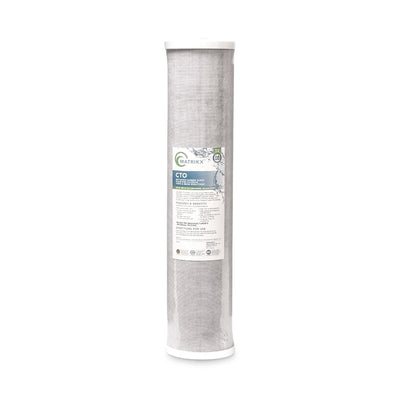
The Aquasana Clean Water Machine is a powered countertop carbon filtration system. It uses Aquasana’s Claryum carbon block technology to remove chlorine, chloramines, certain VOCs, and improve taste and odor. It requires plugging into an electrical outlet.
Key specs:
- Technology: Carbon block filtration (Claryum)
- Removes: Chlorine, chloramines, select VOCs, taste/odor contaminants
- Does NOT remove: Fluoride, TDS, arsenic, nitrates, dissolved heavy metals at RO levels
- Requires: Power outlet
- Replacement filters: Every 320 gallons (~3–6 months depending on use)
Head-to-Head Comparison
| Feature | RKIN Zero Installation Purifier | Aquasana Clean Water Machine |
|---|---|---|
| Price | See rkin.com | From $199.99 |
| Technology | Reverse Osmosis | Carbon Block |
| Fluoride removal | ✅ Yes | ❌ No |
| PFAS removal | ✅ Yes | Limited |
| Arsenic removal | ✅ Yes | ❌ No |
| TDS reduction | ✅ Significant | ❌ Minimal |
| Power required | ✅ Yes (standard outlet) | ✅ Yes |
| Installation | Zero | Countertop + outlet |
| Post-filter options | ✅ AlcaPure (alkaline) or OnliPure (zero TDS) | ❌ No |
| Works for renters | ✅ Yes | ✅ Yes |
Filtration Depth: Where the Gap Matters
Carbon filtration is good at what it does. Aquasana’s Claryum technology removes chlorine, chloramines, and some VOCs effectively. For city water that’s already treated and relatively clean, that’s often enough to improve taste.
But carbon does not reduce total dissolved solids. It doesn’t pull out fluoride. It doesn’t reject arsenic, nitrates, or dissolved lead. And it won’t do much against PFAS at the concentration levels that concern public health researchers.
Reverse osmosis goes further. The RO membrane is a physical barrier — water is forced through pores measured in nanometers. Dissolved contaminants can’t pass. What comes out on the other side is fundamentally different from what went in.
For households on municipal water in areas with older plumbing, high nitrate levels from agricultural runoff, or documented PFAS contamination, the difference is significant.
If you’ve looked up your local water quality report and seen any of these:
- Fluoride levels you’d rather reduce
- Lead or copper from aging pipes
- Agricultural area runoff (nitrates)
- PFAS advisories
…then carbon filtration alone won’t address those concerns. RO will.
The “No Power, No Plumbing” Advantage
One underrated feature of the RKIN Zero Installation Purifier: it needs nothing but counter space and a water source.
No plumbing modifications. No under-sink installation. Just plug it into a standard outlet. It’s genuinely portable — you can move it, take it to a rental, pack it for extended travel.
The Aquasana Clean Water Machine requires a power outlet to operate its internal pump. That’s a minor constraint, but it limits placement options and adds one more dependency.
Filter Cost Over Time
Both systems require periodic filter replacements. A few things worth knowing:
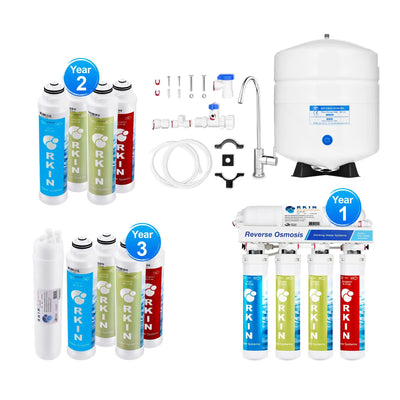
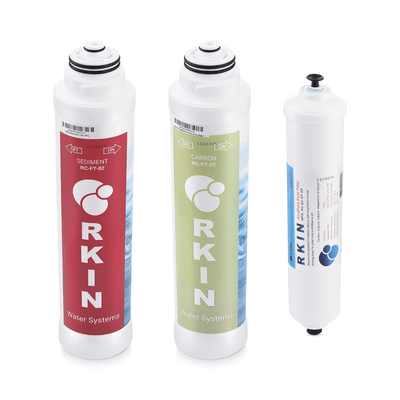
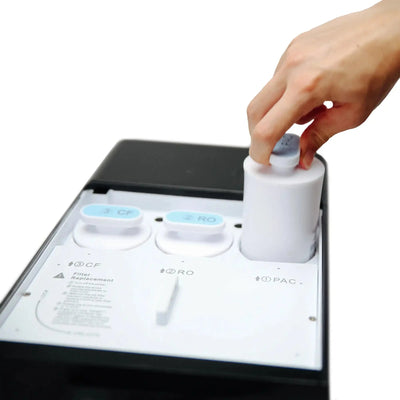
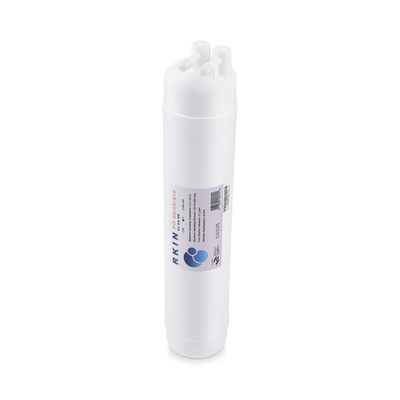
RKIN Zero Installation Purifier: Uses RKIN-designed replacement filter cartridges. You choose between AlcaPure (adds minerals back for alkaline water) or OnliPure (zero TDS purity) as your post-filter — and can switch between them at any time. Filter costs are reasonable for an RO system.
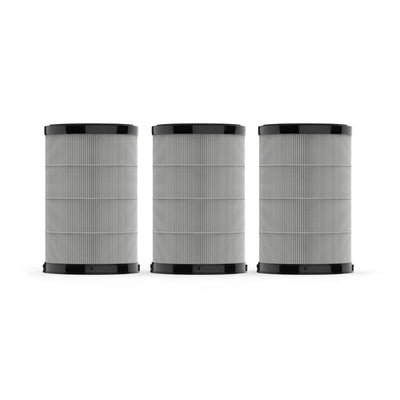
Aquasana Clean Water Machine: Replacement filters last approximately 320 gallons (about 3–6 months for an average household). Aquasana offers their “Water for Life” subscription plan at a 15% discount on replacements. Factor this into your annual cost calculation.
Neither system is expensive to maintain relative to buying bottled water. Over two to three years, either option pays for itself many times over compared to single-use plastic.
Who Should Buy the Zero Installation Purifier
- You want full RO-level filtration — fluoride, PFAS, arsenic, TDS reduction
- You’re a renter who can’t install anything permanent
- You want alkaline/remineralized water
- You want zero plumbing dependency
- You’ve tested your water and found high dissolved contaminant levels
Who Might Prefer Aquasana
- Your primary concern is chlorine taste and odor from clean city water
- Lower upfront cost is the deciding factor
- You already have an outlet near your counter and prefer a powered system
The Bottom Line
Both filters do what they claim. The difference is what they claim to do.
Aquasana’s Clean Water Machine is a strong carbon filter for improving taste and reducing chlorine. It’s not an RO system and doesn’t perform like one.
The RKIN Zero Installation Purifier delivers actual reverse osmosis filtration without plumbing or drilling — just plug it in. For anyone dealing with dissolved contaminants — or who simply wants the deepest filtration available at a countertop price — the Zero Installation Purifier is the clearer choice.
View the RKIN Zero Installation Purifier →
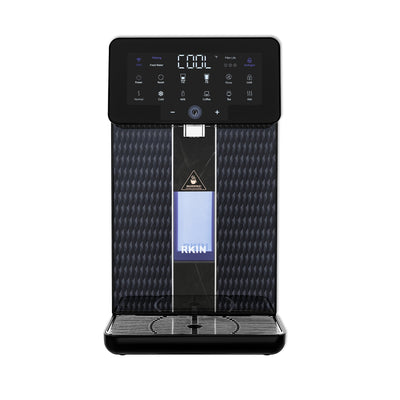
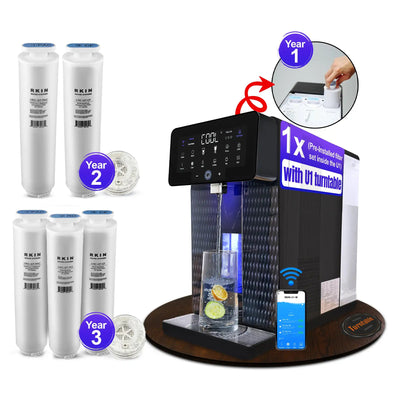
Not sure if countertop RO is right for your home? The RKIN 4-in-1 Water Filter System (U1) adds hot and cold water dispensing to a similar filtration footprint — worth a look if you want more versatility.
Frequently Asked Questions
Does the RKIN Zero Installation Purifier actually remove fluoride? Yes. The reverse osmosis membrane in the Zero Installation Purifier rejects fluoride along with other dissolved contaminants. Carbon-only filters like Aquasana’s Clean Water Machine do not significantly reduce fluoride.
Does the Aquasana Clean Water Machine use reverse osmosis? No. The Clean Water Machine uses carbon block filtration (Claryum technology). It removes chlorine, chloramines, and select VOCs, but does not use an RO membrane. It does not reduce TDS, fluoride, arsenic, or nitrates the way RO does.
Can I use the RKIN Zero Installation Purifier in an apartment? Yes. The Zero Installation Purifier requires no installation, no drilling, and no plumbing connection. It sits on your counter and connects directly to your faucet with the included adapter. It’s one of the most renter-friendly RO options available.
How often do I need to replace filters on the RKIN Zero Installation Purifier? Filter replacement intervals depend on your water quality and usage. RKIN publishes replacement schedules for each filter stage. The post-filter (AlcaPure or OnliPure, depending on your edition) is replaced separately.
Is the RKIN Zero Installation Purifier water alkaline? It depends on which edition you choose. The AlcaPure edition adds beneficial minerals back into the water after the RO stage, raising pH for an alkaline finish. The OnliPure edition reduces TDS to near zero for lab-grade purity. You can switch between editions by ordering a different post-filter. Aquasana’s Clean Water Machine does not include any post-filtration options.
What certifications does RKIN hold? RKIN products are designed to NSF/ANSI standards for contaminant reduction. Check the product page for current certification details as these are updated periodically.






0 comments