

Sediment in Your Water: What It Means and How to Fix It
Share
That Grit in Your Water Isn't Harmless
You flush your water heater for the first time and nothing comes out. Or you fill a glass and notice a faint cloudiness that wasn't there last week. Maybe there's a thin layer of grit collecting in your pet's water bowl. Something changed — but what?
Sediment in household water is one of the most common complaints homeowners report, but it's rarely a simple problem with a simple answer. The particles you're seeing could be harmless mineral deposits or a warning sign of corroding pipes, failing infrastructure, or contaminated source water. A 2023 EPA review found that sediment-related turbidity violations affected over 1,000 public water systems, impacting millions of households.
What Sediment Actually Is
Sediment is a catch-all term for any solid particles suspended in your water. It's not one thing — it's a category that includes very different materials with very different causes.
- Sand and silt — Common in well water and in city systems drawing from surface water. These are literally tiny pieces of rock and soil that made it through treatment or entered through cracks in distribution pipes.
- Rust particles — Orange or brown flakes, usually from corroding iron pipes. If your home has galvanized steel plumbing (common in homes built before 1970), this is likely your source. City water mains can also contribute — the American Water Works Association estimates that the U.S. has over 2 million miles of aging distribution pipes.
- Calcium and mineral scale — White or off-white particles from hard water deposits breaking loose. If you live in a hard water area (most of the U.S., especially Florida, Texas, Arizona, and the Midwest), dissolved calcium and magnesium can precipitate out as visible particles, especially when heated.
- Pipe degradation material — Small black or dark gray particles can come from deteriorating rubber washers, gaskets, or the interior lining of old pipes.
- Biofilm fragments — Slimy or stringy particles can indicate bacterial biofilm growth inside pipes or fixtures, particularly in stagnant water lines.
The Water Heater Connection
If you're reading this because you flushed your water heater and were surprised by what came out (or didn't), here's what's happening.
Your water heater is a 40-80 gallon tank that sits at the lowest pressure point in your hot water system. Every particle in your incoming water that's heavy enough to settle eventually ends up at the bottom of that tank. Over months and years, you get a layer of sediment that:
- Reduces your water heater's efficiency (the burner or element has to heat through the sediment layer first)
- Creates popping or rumbling sounds as steam bubbles escape through the sediment
- Shortens the water heater's lifespan — the sediment traps heat against the tank bottom, accelerating corrosion
- Gets stirred up and distributed through your hot water lines when demand is high
If you flushed your water heater and nothing came out, that can actually mean the sediment has hardened into a solid layer. At that point, flushing alone won't fix it — the tank may need professional service or replacement. Annual flushing prevents this by removing loose sediment before it compacts.
But here's the bigger question: why is that sediment getting into your water heater in the first place?
Where the Sediment Comes From
The source matters because it determines the right fix.
If you're on well water: Your well draws from an aquifer — essentially underground rock and sand. The well screen and pump are designed to filter out large particles, but fine silt, iron, and minerals pass through. Wells that are aging, improperly sealed, or drawing from a sandy aquifer will produce more sediment over time. A sudden increase in sediment can mean your well screen is failing or the water table has shifted.
If you're on city water: Municipal treatment plants filter sediment before distribution, but the miles of pipes between the plant and your faucet introduce their own problems. Water main breaks, hydrant flushing, construction near your street, or simply old cast-iron mains corroding from the inside can all push sediment into your supply. You might notice it after your utility does maintenance — that's disturbed sediment from the mains reaching your home.
If it's only in hot water: The sediment is likely already in your cold supply but only visible after it concentrates in your water heater tank. Hard water minerals are especially prone to this — calcium carbonate becomes less soluble as water temperature rises, so it precipitates out and settles.
When Sediment Means Something Worse
Visible sediment by itself is mostly an aesthetic and plumbing problem. But it can signal or accompany more serious contamination:
- Lead — In homes with lead service lines or lead solder joints, corrosion particles can carry lead into your water. The EPA's Lead and Copper Rule sets an action level of 15 ppb, but no level of lead exposure is considered safe for children.
- Iron bacteria — Reddish-brown slime in toilet tanks or orange staining on fixtures can indicate iron bacteria, which feed on dissolved iron and create biofilm that harbors other organisms.
- Turbidity-linked pathogens — High turbidity (cloudiness from suspended particles) can shield bacteria and parasites from disinfection. This is why the EPA's Surface Water Treatment Rule sets strict turbidity limits — particles in water can literally protect harmful organisms from chlorine.
If your sediment is accompanied by discoloration, odor, or a recent change in your water bill or pressure, get your water tested before assuming it's benign.
How to Actually Fix Sediment Problems
The right solution depends on what kind of sediment you're dealing with and how much of your home you want to protect.
For drinking water only
A countertop or under-sink reverse osmosis system handles sediment along with dissolved contaminants. The sediment pre-filter catches particles, and the RO membrane removes everything down to 0.0001 microns — that includes dissolved minerals, chemicals, and metals that a sediment filter alone would miss.
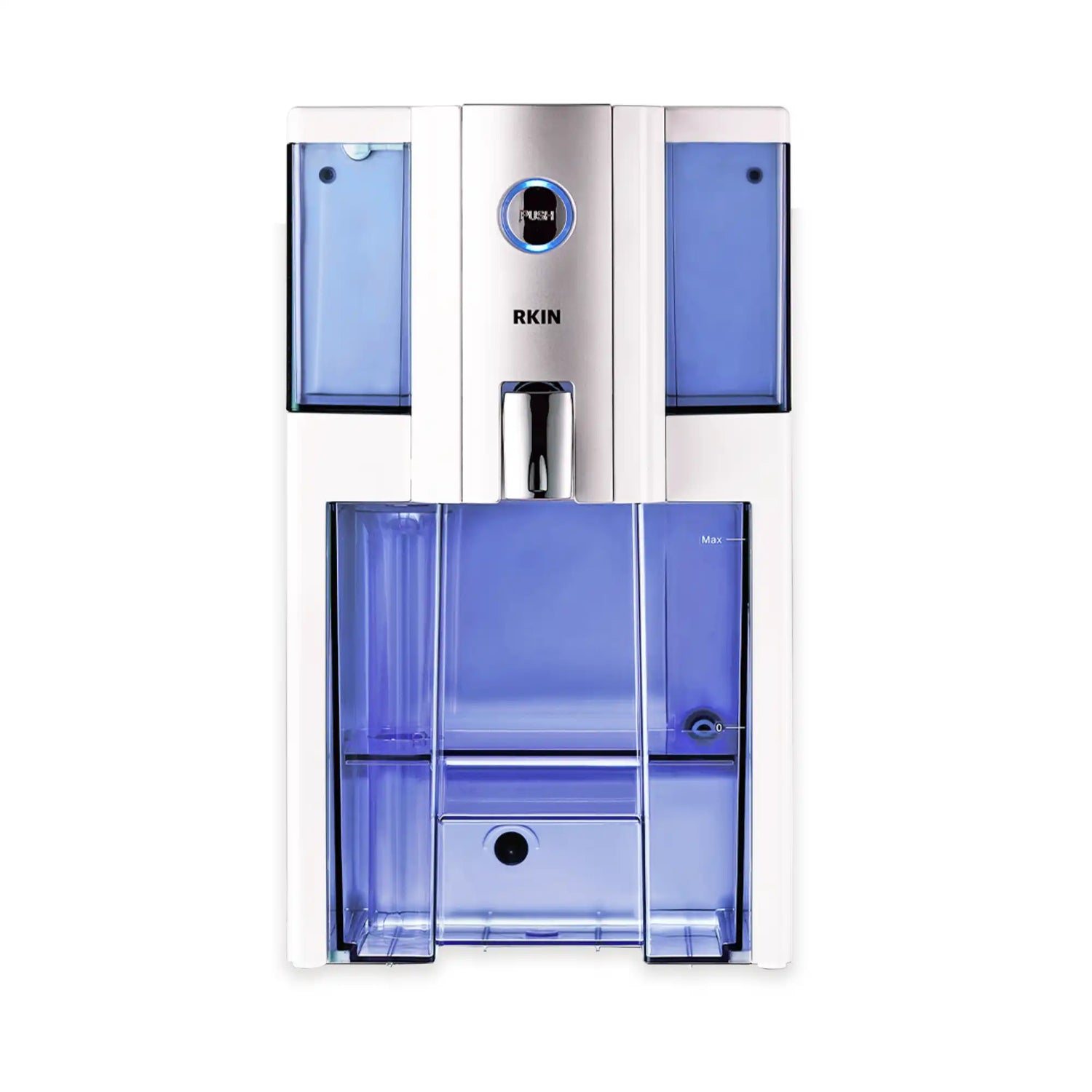
The RKIN Zero Installation Purifier or the RKIN Flash Undersink RO System both include dedicated sediment pre-filters as part of their multi-stage process.
For your whole house
If sediment is affecting your water heater, fixtures, laundry, and appliances, you need filtration at the main water line before it enters your home. A whole-house system addresses the problem at the source.
The RKIN Whole House Water Filter combines sediment pre-filtration with carbon media that handles chlorine, taste, and odor across every tap. For well water with iron, sulfur, and manganese — common culprits behind stubborn sediment — the RKIN Well Water Whole House Filter is built specifically for those contaminants.
For hard water sediment (calcium and mineral scale), a salt-free conditioner like the RKIN OnliSoft Salt-Free Water Conditioner prevents scale buildup throughout your plumbing without the salt, waste water, or maintenance of traditional softeners.
The Stack Approach: Whole House + Point of Use
For complete protection, experienced homeowners combine both layers. A whole-house filter at the main line catches sediment, chlorine, and hardness before they reach any fixture or appliance. Then a countertop or under-sink RO system at the kitchen handles dissolved contaminants in your drinking and cooking water to a higher standard.
This two-layer approach means your water heater, dishwasher, washing machine, and shower all get clean incoming water — and the water your family actually drinks gets an additional level of purification that whole-house systems alone can't provide.
Frequently Asked Questions
Is sediment in tap water dangerous?
Most sediment (sand, silt, mineral scale) is an aesthetic issue rather than an immediate health threat. However, sediment can carry or accompany harmful contaminants like lead, iron bacteria, or pathogens. If your water suddenly becomes cloudy or you notice a color change, get it tested before assuming it's safe.
Why does my water have sediment after the city flushes hydrants?
Hydrant flushing disturbs accumulated sediment inside water mains. This sediment — mostly rust and mineral deposits from aging pipes — temporarily enters your home water supply. Run your cold water taps for 5-10 minutes after a flushing event to clear the lines. If it persists beyond 24 hours, contact your utility.
Does a water softener remove sediment?
No. A water softener exchanges calcium and magnesium ions for sodium or potassium ions — it's designed for dissolved hardness minerals, not physical particles. You need a separate sediment pre-filter or whole-house filtration system upstream of the softener to catch particulate matter.
How often should I flush my water heater to prevent sediment buildup?
Once a year is the standard recommendation. If you have very hard water or well water with high sediment, twice a year is better. Consistent annual flushing prevents sediment from compacting into a solid layer at the bottom of the tank, which is much harder to remove.
Will a whole-house sediment filter fix cloudy water?
A sediment filter removes particulate matter (sand, rust, silt) and will clear up cloudiness caused by suspended particles. However, if cloudiness is caused by dissolved minerals, air bubbles, or microbial growth, you may need additional treatment — like a carbon filter for taste and odor or an RO system for dissolved contaminants.
What size sediment filter do I need for my home?
For most homes, a sediment pre-filter rated at 5 microns is standard for whole-house use. If you're on well water with heavy sand or silt, a two-stage approach — 20 micron pre-filter followed by a 5 micron filter — prevents premature clogging and extends filter life. Flow rate matters too; match the filter housing to your home's peak demand (typically 10-15 GPM for a 2-3 bathroom house).
Ready to Fix the Sediment in Your Water?
Whether it's grit in your glass or scale destroying your water heater, the fix starts with the right filtration. Browse RKIN whole-house water filters for full-home protection, or start with the RKIN Zero Installation Purifier for immediate countertop filtration — no plumbing required. Ships free.


