




florida
Spring Water Testing Guide for Florida Well Owners

Every March, Florida's weather shifts. Afternoon thunderstorms replace dry winter skies, the water table rises, and thousands of private wells across the state quietly change what they're delivering to your faucet. If you're a Florida homeowner on well water, the stuff coming out of your tap in April looks and smells different from what you had in January — and there's a reason for that.
According to the Florida Department of Environmental Protection, more than 2.6 million Floridians rely on private wells for their drinking water. Unlike public water systems, private wells have no federal monitoring requirement. That means testing and treatment are entirely on you. And spring is the single most important time to pay attention.
According to the Florida Department of Environmental Protection, more than 2.6 million Floridians rely on private wells for their drinking water. Unlike public water systems, private wells have no federal monitoring requirement. That means testing and treatment are entirely on you. And spring is the single most important time to pay attention.
Why Spring Changes Your Well Water in Florida
Florida's rainy season officially runs from May through October, but the transition starts in March. Warm, moisture-heavy air from the Gulf begins producing scattered storms weeks before the official wet season. That early rainfall triggers a chain reaction underground that directly affects well water quality. Here's what happens. Heavy rainfall saturates the soil and raises the water table. As groundwater levels climb, surface contaminants — fertilizer runoff, septic tank leachate, animal waste, and stormwater pollution — get pulled into the aquifer faster than the limestone can naturally filter them. The Floridan Aquifer, which supplies most of the state's groundwater, is especially vulnerable because of Florida's porous karst geology. Water moves through cracks and channels in the limestone rather than being slowly filtered through dense rock. A 2022 study published by the U.S. Geological Survey found that shallow wells in Florida's karst regions showed measurable increases in nitrate, coliform bacteria, and turbidity after significant rainfall events. The effect was most pronounced during the March-through-May transition period when the ground was still absorbing the first heavy rains after months of dry conditions. For homeowners in Southwest Florida — Lee County, Collier County, and Charlotte County — there's an additional factor. Agricultural operations in the region contribute to elevated nitrate levels in groundwater, and spring irrigation combined with early rains pushes those concentrations higher.What Contaminants Spike During Florida's Spring Season
Not all contaminants behave the same way when the rains arrive. Here are the ones Florida well owners should watch most closely between March and May:- Coliform bacteria and E. coli: Surface water carrying animal waste and septic overflow infiltrates shallow wells during heavy rain events. The EPA considers any detection of total coliform in well water a signal that the well may be compromised. E. coli specifically indicates fecal contamination.
- Nitrates: Fertilizer and septic systems are the two biggest sources of nitrate in Florida groundwater. The EPA's maximum contaminant level is 10 mg/L. During spring, nitrate levels in Florida wells can spike 30–50% above dry-season readings, according to FDEP monitoring data.
- Iron and manganese: Florida's geology is naturally rich in both. When the water table rises and groundwater flow patterns change, iron and manganese dissolve more readily. You'll notice this as orange-brown staining on fixtures, metallic taste, and discolored laundry.
- Sulfur (hydrogen sulfide): That rotten-egg smell gets worse in spring. Sulfate-reducing bacteria thrive in warm, oxygen-depleted conditions — exactly what rising water tables create in Florida's shallow aquifer zones.
- Turbidity and sediment: Increased water movement stirs up fine particles. Higher turbidity isn't just cosmetic; it can harbor bacteria and reduce the effectiveness of UV disinfection systems.
- Tannins: Decaying organic material from Florida's abundant vegetation leaches into groundwater during rainy periods. Tannins turn water yellow or tea-colored and can interfere with water softening equipment.
When and How to Test Your Florida Well Water
The Florida Department of Health recommends that private well owners test their water at least once per year. But a single annual test in August doesn't tell you what's happening in April. For Florida homeowners, the ideal testing schedule looks like this:- Late March or early April: Test after the first significant spring rains. This catches the initial flush of contaminants into the aquifer.
- Mid-summer (July or August): Test at peak rainy season to establish your worst-case baseline.
- Late fall (November): Test after the rains subside to see your dry-season numbers.
- Bacteria panel (total coliform and E. coli)
- Nitrate/nitrite
- pH
- Hardness
- Iron and manganese
- Sulfate and hydrogen sulfide
- Total dissolved solids (TDS)
Where to Get Your Water Tested in Florida
You have several options:- County health department: Most Florida counties offer basic well water testing for $30–$50. Lee County and Collier County health departments both run testing programs.
- State-certified private labs: The Florida Department of Health maintains a directory of certified labs that can run broader panels.
- Home test kits: DIY kits from hardware stores give a rough picture for pH, hardness, and basic contaminants. They're useful for spot-checking between professional tests, but they're not a substitute for a lab analysis.
Reading Your Water Test Results: What the Numbers Mean
A water test report can look intimidating if you're not sure what the numbers mean. Here's a quick reference for the contaminants Florida well owners see most often:- Total coliform: Any detection (even 1 colony per 100 mL) means your well may have a pathway for surface contamination. Retest immediately. If confirmed, shock-chlorinate the well and identify the source.
- Nitrate: The EPA MCL is 10 mg/L. Levels above 5 mg/L in a previously clean well indicate a new contamination source — likely fertilizer or septic.
- Iron: The EPA's secondary standard is 0.3 mg/L. Florida wells commonly test between 0.5 and 5.0 mg/L. Anything above 0.3 mg/L causes staining and taste issues.
- Manganese: Secondary standard is 0.05 mg/L. Even slightly elevated levels cause black staining on fixtures and in dishwashers.
- Hydrogen sulfide: Detectable by smell above 0.5 mg/L. Florida wells often run 1–3 mg/L during spring months.
- Hardness: Florida well water typically ranges from 120 to 350 mg/L (moderately hard to very hard). Spring rains can temporarily soften water as the aquifer dilutes, but mineral concentrations often rebound quickly.
- TDS: Below 500 mg/L is the EPA's recommended limit. Florida wells commonly run 200–600 mg/L depending on depth and location.
What to Do When Your Test Results Come Back High
Testing tells you what's in your water. Treatment fixes it. The right approach depends on what your test reveals, and most Florida well homes need more than one type of treatment to address the full range of seasonal contaminants.For Iron, Sulfur, and Manganese
These are the most common complaints from Florida well owners, especially in spring. A dedicated well water treatment system that uses oxidation and filtration can reduce iron, sulfur, and manganese to undetectable levels. The RKIN Well Water Whole House Filter is designed specifically for this problem — it handles iron up to 10 ppm, sulfur up to 8 ppm, and manganese without the need for chemical injection.For Hardness and Scale
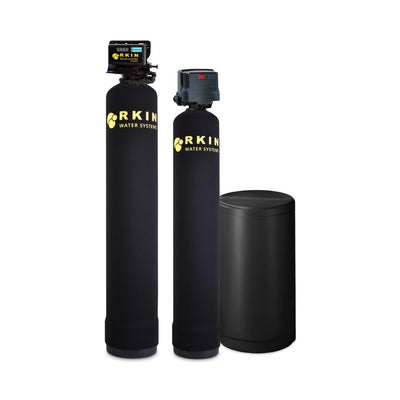
If your test shows hardness above 120 mg/L (7 grains per gallon), a water conditioning system protects your plumbing, appliances, and fixtures from scale buildup. The RKIN OnliSoft Pro Salt-Free + Carbon Combo treats hardness without salt, without wastewater, and without electricity — while also reducing chlorine, sediment, and organic compounds through its carbon filtration stage.For Sediment and Particulate
Spring's turbidity spikes call for a pre-filtration step to protect downstream equipment. The Dragon Self-Cleaning Sediment Filter automatically flushes accumulated sediment without manual cartridge changes — a practical choice for Florida homes where sediment loads vary seasonally.For Overall Water Quality and Chlorine/Chemical Concerns
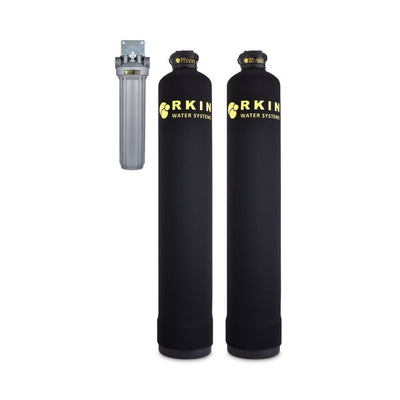
A whole-house carbon filter addresses chlorine, organic chemicals, pesticides, and taste and odor issues. The RKIN CBS Dual Carbon Whole House Filter uses a dual-tank design for higher flow rates and longer filter life — important for Florida homes where higher water usage during warm months puts more demand on filtration systems.For Lead and Cyst Removal
If your test shows lead above 15 ppb (the EPA action level) or if you're concerned about Cryptosporidium and Giardia — both of which spike after heavy rains — the RKIN OP1L Certified Whole House Lead and Cyst Removal System is NSF/ANSI 53 certified for both lead and cyst reduction at the point of entry.Building a Complete Well Water Treatment Stack
Most Florida well homes benefit from a layered approach. A common setup for Southwest Florida well water looks like this:- First stage — Sediment pre-filter: Dragon Self-Cleaning Sediment Filter catches sand, rust flakes, and particulate before they reach other equipment.
- Second stage — Well water treatment: RKIN Well Water Whole House Filter handles iron, sulfur, and manganese — the Big Three for Florida wells.
- Third stage — Conditioning: RKIN OnliSoft Pro treats hardness and filters chlorine and organics.
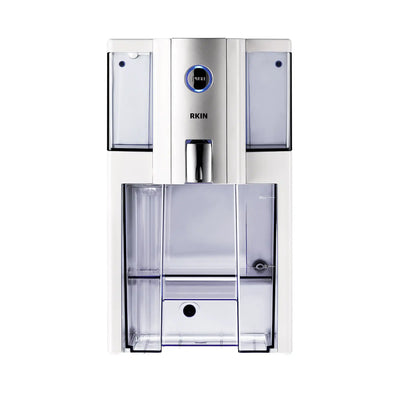
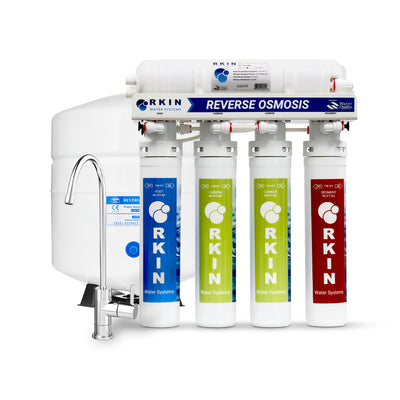
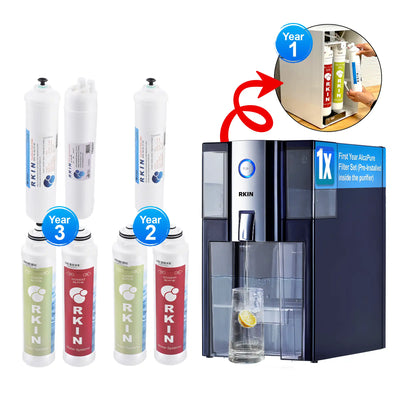
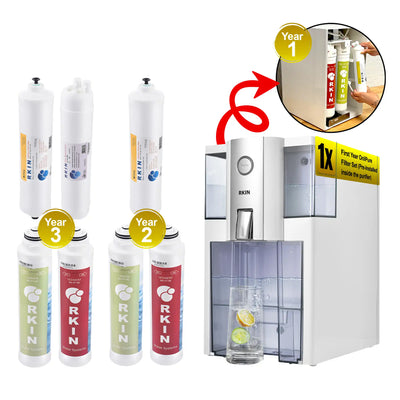
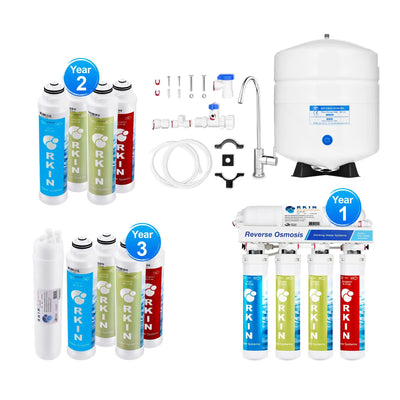
- Optional point-of-use: A countertop or undersink reverse osmosis system at the kitchen sink gives you purified drinking and cooking water. The RKIN Zero Installation Purifier connects in minutes without plumbing modifications — you hook it up to your faucet and start filtering immediately.
Five Maintenance Steps for Florida Well Owners Every Spring
Beyond testing and treatment, these steps help keep your well and water system in good shape during the transition into rainy season:- Inspect the wellhead: Check for cracks in the casing, damaged seals, or missing caps. Any gap is a direct pathway for surface water to enter your well.
- Clear the area around your well: Keep at least a 10-foot perimeter free of mulch, fertilizer, chemicals, and standing water.
- Check your pressure tank and pump: Spring is when pumps work harder as water table fluctuations change well performance. Listen for short-cycling — the pump turning on and off rapidly — which indicates a waterlogged pressure tank.
- Replace or clean filters: If you have whole-house filtration, check cartridges and media. Spring's higher sediment and contaminant loads can exhaust filters faster than expected.
- Review your septic system: A properly maintained septic system is less likely to contribute nitrate and bacteria to your well. Have it inspected every 3–5 years, and pump it on schedule.





0 comments