




backwashing carbon filter
Backwashing Carbon Filter: Do You Really Need One?

If you have been comparing whole-house carbon filters, you have probably seen the word “backwashing” treated like a must-have feature. Then you find another carbon system that does not backwash and the question gets muddy fast: is one design missing something, or are companies using the same word for different problems?
The short answer: a backwashing carbon filter can be useful, but backwashing does not “refresh” spent carbon. It mainly lifts and cleans the media bed so trapped sediment can flush to a drain and water can keep moving through the tank evenly. The carbon still has a finite capacity and should be sized for your water use and source water.
What a Backwashing Carbon Filter Actually Does
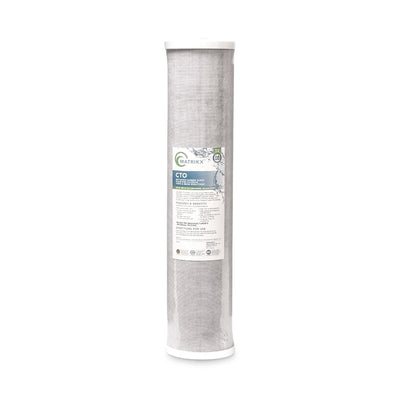
A whole-house carbon filter is usually installed where water enters the home, before it branches to showers, laundry, the water heater, and fixtures. The carbon media has a large surface area that can adsorb certain chemicals that affect taste, odor, and water quality. The EPA Drinking Water Treatability Database lists granular activated carbon as a treatment technology used in drinking water applications, and carbon is one of the most common media types homeowners see in whole-house systems.
Backwashing is a separate function. During a backwash cycle, the control valve reverses flow through the tank. Water moves upward through the media bed, loosens compacted carbon, and sends captured particles to a drain. After that, the valve returns the system to normal service flow.
Think of it as rinsing a bed of media, not recharging a battery. Backwashing can help with flow and sediment loading. It does not make exhausted carbon new again, and it does not turn a carbon tank into a treatment system for every contaminant.
That distinction matters because many homeowners shop backwards. They ask, “Does it backwash?” before asking, “What is in my water, and what am I trying to reduce?”
Why Homeowners Get Conflicting Advice
A lot of the confusion comes from mixing three different filter categories together.
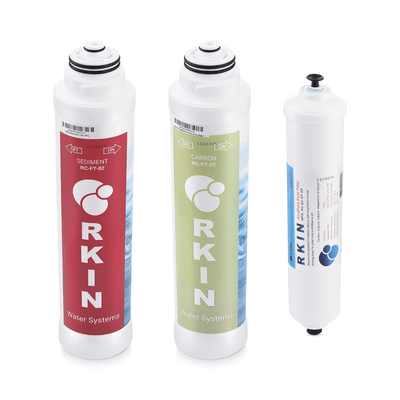
First, there are cartridge filters. These use replaceable cartridges and usually do not backwash. When the cartridge clogs or reaches its rated capacity, you replace it.
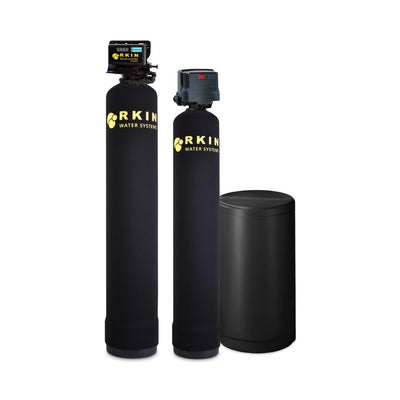
Second, there are tank-based carbon systems. These use a larger bed of carbon media. Some are designed with automatic backwash valves. Others use different flow paths and prefiltration to manage sediment without a drain-connected backwash cycle.
Third, there are backwashing media filters for iron, sulfur, manganese, or turbidity. Those systems often need automatic backwashing because they are capturing heavier particulate matter or using media that must be lifted and rinsed. That does not mean every carbon filter has the same need.
City water and private well water also behave differently. Municipal water often arrives with lower sediment but may have chlorine, chloramine, taste, odor, or disinfection byproduct concerns. Well water may bring sand, silt, iron, sulfur odor, manganese, or changing conditions after storms. The EPA private well guidance tells well owners to protect and test their own water because private wells are not regulated the same way public systems are.
So if one homeowner says a backwashing carbon tank fixed their pressure problem, and another says a non-backwashing carbon system works fine, both can be telling the truth. Their water may be very different.
What Backwashing Does Not Fix
Backwashing sounds powerful, so it is easy to give it more credit than it deserves. Here is what it does not do.
- It does not reset exhausted carbon. Carbon has a rated capacity. Once adsorption sites are used up, the media must be replaced according to the system design and water conditions.
- It does not replace water testing. A backwash valve tells you how the tank cleans itself. It does not tell you whether the system is right for PFAS, lead, arsenic, nitrates, hardness, iron, or sulfur.
- It does not make undersized equipment perform like a correctly sized system. Flow rate, tank size, media type, empty bed contact time, and plumbing layout still matter.
- It does not remove the need for prefiltration. If your water carries sediment, a sediment prefilter can protect the carbon bed and the rest of the system.
- It does not make a carbon filter a water softener. Carbon can help with certain taste, odor, and chemical concerns. Hardness needs a different treatment approach.
The most common mistake is treating backwash as a quality badge. It is better to treat it as a design choice. Useful in the right setup. Unnecessary or even inconvenient in others.
When a Backwashing Carbon Filter Makes Sense
A backwashing carbon filter may be worth considering when water has enough sediment or particulate load to compact the media bed, reduce flow, or create channeling. Channeling happens when water finds an easy path through the tank instead of moving evenly through the carbon. Once that happens, some water may not get the contact time the system was designed for.
Backwashing can also make sense when the system is installed on a private well with variable water conditions, especially if the home already has a drain location and the water test shows a broader treatment plan is needed. In those cases, the carbon tank may be one part of a larger point-of-entry setup that also includes sediment filtration, specialty media, or conditioning.
On municipal water, the answer is more situational. If the main issue is chlorine taste and odor, and the water is relatively clean from a sediment standpoint, a well-sized carbon system with proper prefiltration may not need a backwash valve to do its job. Some homeowners also prefer to avoid drain discharge, added control-valve settings, or the extra plumbing that backwashing requires.
The right question is not “backwashing or not?” It is “what design gives my water enough contact time, protects the media, maintains flow, and fits my home?”
What to Look For Instead of One Feature
Before you choose a whole-house carbon filter, look at the full setup.
- Start with your water source. City water, well water, and mixed-source communities have different risks and different treatment needs.
- Check the latest water data. Public-water customers can read their Consumer Confidence Report. Well owners should use a lab test rather than relying on taste or color.
- Match technology to the problem. Carbon is commonly used for taste, odor, chlorine, and certain organic chemicals. Reverse osmosis, specialty media, softening, UV, or oxidation may be needed for other concerns.
- Size for whole-home flow. Showers, laundry, dishwashers, and irrigation fill valves can overlap. A system that is too small can create pressure complaints.
- Ask about maintenance in plain terms. You should know what gets replaced, what backwashes, what drains, and what happens if power goes out.
- Confirm product claims against test data. Look for specific contaminant-reduction claims, not broad promises that one tank handles everything.
If a sales page makes backwashing sound like magic, slow down. If another page says backwashing never matters, slow down there too. Both statements are too simple.
Where RKIN Fits
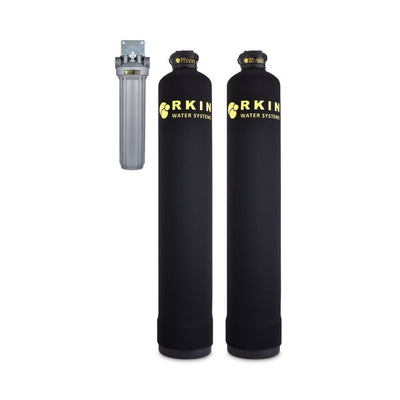
For homeowners who want whole-home taste, odor, and chemical reduction without turning the decision into a maze, the Whole House Carbon Water Filter System is designed as a point-of-entry carbon solution for the entire home. It uses a tank-based carbon approach and a sediment prefilter to help protect the system before water reaches fixtures and appliances.
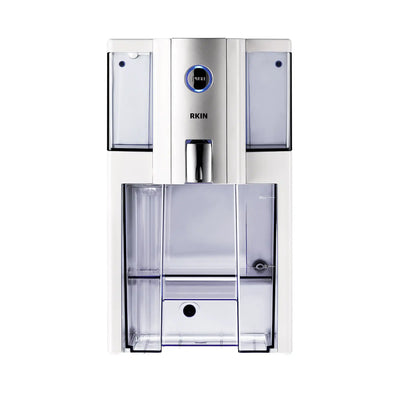
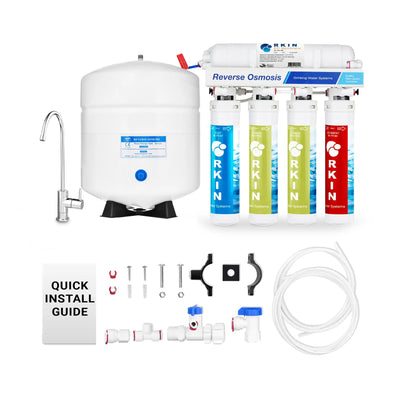
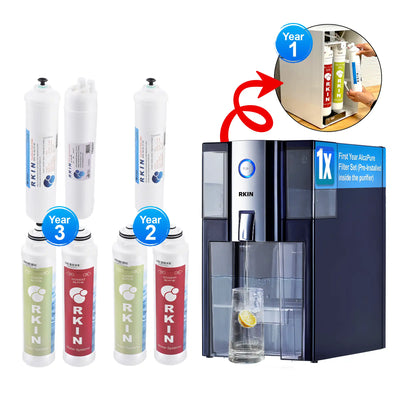
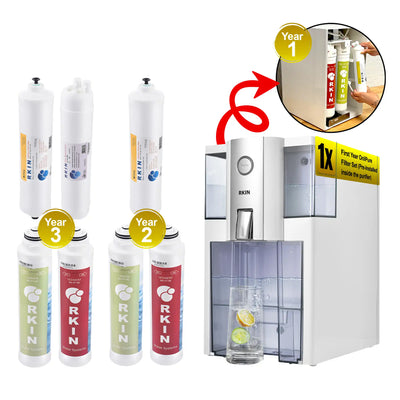
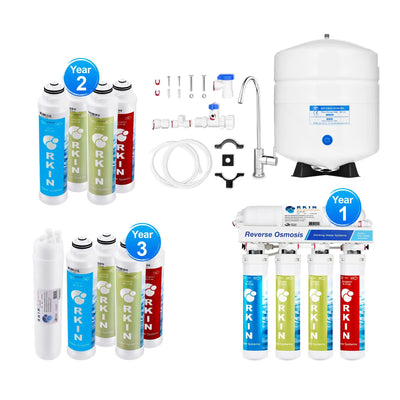
If your main concern is drinking water at the tap, a whole-house carbon system may not be the only piece. Many homes pair point-of-entry treatment with a drinking-water reverse osmosis system for the kitchen. For no-plumbing countertop RO, the Zero Installation Purifier Countertop Reverse Osmosis Water Filter is built for homeowners and renters who want reverse osmosis drinking water without modifying plumbing.
The best fit depends on your source water, your goal, and your home layout. A backwash valve is just one part of that conversation.
Frequently Asked Questions
Does a carbon filter need to backwash?
Not always. Backwashing helps clean and lift a media bed when sediment or trapped particles are likely to compact it. Some carbon systems use automatic backwash valves. Others rely on prefiltration, proper sizing, and a design that does not require drain-connected backwashing. The right answer depends on water source, sediment load, flow rate, and system design.
Does backwashing make carbon last longer?
Backwashing can help keep water moving evenly through the media bed, but it does not renew exhausted carbon. Carbon media still has a rated capacity. Once it has adsorbed what it can, it needs replacement based on the system design, water quality, and household usage.
Is a backwashing carbon filter better for well water?
It can be, but only if the water test supports that design. Well water can carry sediment, iron, sulfur odor, manganese, or changing conditions after heavy rain. A backwashing carbon tank may be one part of the plan, but some well issues need specialty treatment before carbon makes sense.
Can a carbon filter remove hardness?
No. Hardness is mainly dissolved calcium and magnesium. Carbon is not a softener. If hardness scale is the main problem, you need a water softener or salt-free conditioner matched to your goals and plumbing.
What should I ask before buying a whole-house carbon filter?
Ask what the system is designed to reduce, whether it needs a drain, what maintenance is required, what flow rate it supports, how the sediment prefilter is handled, and how the media life is estimated. If those answers are vague, keep asking before you buy.
Ready to Choose the Right Whole-Home Setup?
A backwashing carbon filter can be a smart choice in the right home, but it is not a shortcut around water testing, sizing, or product fit. Start with the water problem, then choose the design.
Explore the Whole House Carbon Water Filter System if you want whole-home carbon filtration for taste, odor, and chemical concerns, or contact RKIN if you need help matching a system to your water source.





0 comments