




carbon filter
Best Water Filters for Chlorine Taste and Smell (2026 Guide)

That chemical aftertaste isn't in your head. Chlorine and chloramines are deliberately added to municipal water as disinfectants — they're doing an important job keeping waterborne bacteria out of your pipes. But that doesn't mean you have to taste them every time you fill a glass.
This guide walks through what actually removes chlorine taste and smell from tap water, compares the two main technologies that handle it well, and points you to specific systems worth using in 2026.
Why Chlorine Tastes and Smells the Way It Does
Chlorine is a volatile chemical. It off-gasses at room temperature, which is part of why fresh tap water often smells stronger than water that's been sitting out. When chlorine reacts with organic matter in pipes or source water, it forms disinfection byproducts — trihalomethanes (THMs) and haloacetic acids (HAAs) — which contribute to the stale or plasticky taste some people notice.
Chloramine (a chlorine-ammonia compound used by many utilities) is harder to remove than plain chlorine. It doesn't off-gas as easily and requires catalytic carbon or RO to address effectively.
Temperature, pipe age, and distance from the treatment facility all affect how much of either compound reaches your tap. Spring pipe flushing events cause measurable spikes in chlorine levels as utilities increase dosing during annual maintenance.
Activated Carbon vs Reverse Osmosis: Which Actually Removes Chlorine?
Both technologies work for chlorine removal. They work differently, at different thoroughness levels, and suit different use cases.
Activated Carbon Filtration
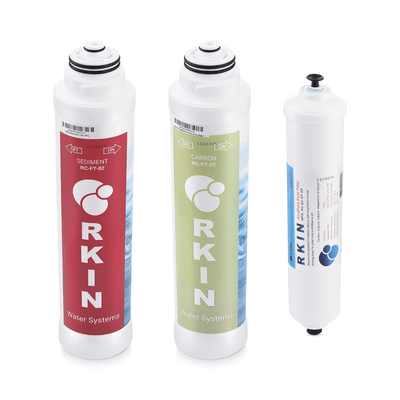
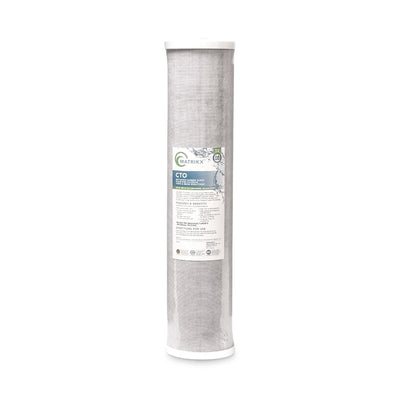
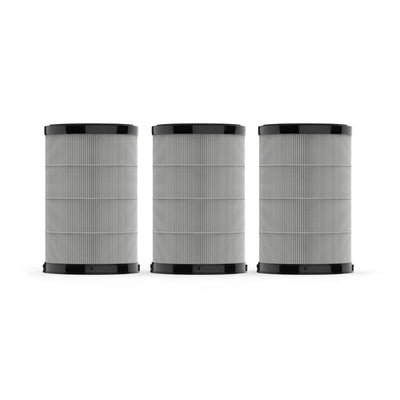
Activated carbon uses a high-surface-area material — typically coconut shell or coal-based — that physically adsorbs chlorine molecules as water flows through. The process is fast, doesn't require electricity, and doesn't waste water. Carbon filters are effective at:
- Reducing free chlorine taste and smell
- Improving overall taste and odor
- Reducing some organic chemical byproducts
Standard granular activated carbon (GAC) handles chlorine well. Catalytic carbon — a modified version with higher surface reactivity — handles chloramines more effectively. If your utility uses chloramine (check your annual water quality report), catalytic carbon matters.
Limitations: Carbon doesn't remove dissolved minerals, heavy metals, nitrates, or most other inorganic compounds. For chlorine taste reduction alone, it's effective. For broader water quality, you need more.
Reverse Osmosis (RO)
RO systems push water through a semi-permeable membrane under pressure, physically blocking contaminants that can't pass through at the molecular level. Most RO systems include a carbon pre-filter that handles chlorine and chloramine before the water hits the membrane (which chlorine would otherwise damage).
The result: RO removes chlorine at the carbon pre-filter stage, then removes everything else — dissolved salts, heavy metals, nitrates, fluoride, and most other contaminants — at the membrane stage. It's the most complete filtration available for point-of-use drinking water.
Limitations: Traditional RO wastes water (the ratio varies by system). Tank-based RO has a finite storage capacity and slow refill time. More recent tankless or high-efficiency systems have addressed both issues. RO systems cost more upfront than carbon-only filters.
Carbon vs RO: Quick Comparison
| Feature | Activated Carbon | Reverse Osmosis |
|---|---|---|
| Chlorine removal | ✅ Effective | ✅ Very effective |
| Chloramine removal | ✅ Requires catalytic carbon | ✅ Handled at carbon pre-filter |
| Heavy metals | Partial | ✅ Effective |
| Nitrates | ❌ No | ✅ Yes |
| Installation | Simple | Varies (countertop options available) |
| Water waste | None | Varies by system |
| Upfront cost | Lower | Moderate to higher |
For pure chlorine taste removal, either works. If your goal is also addressing other water quality concerns alongside chlorine, RO covers significantly more ground.
Best Water Filters for Chlorine in 2026
Here are six RKIN systems worth evaluating based on your setup and what you need addressed.
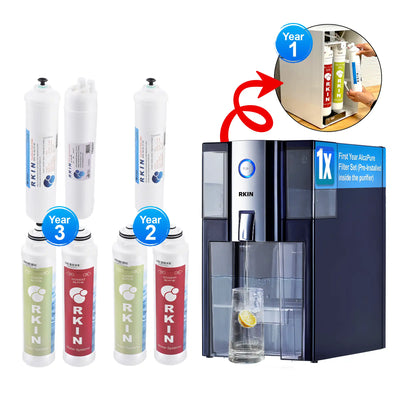
1. Zero Installation Purifier — Best for Renters and No-Install Setups
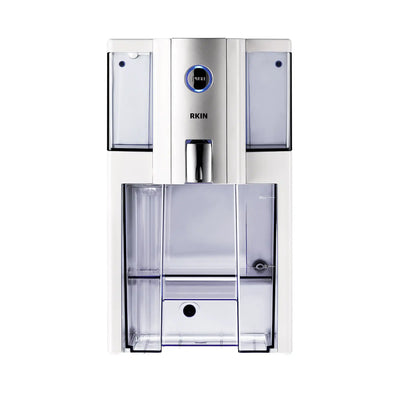
The Zero Installation Purifier is a countertop reverse osmosis system that attaches to any standard faucet without drilling or under-sink access. Plug into a standard outlet and you're filtering. It runs water through multiple stages including carbon pre-filtration and an RO membrane.
Best for: apartments, rental units, anyone who wants results immediately without installation work. Setup takes minutes, not hours. You don't need a plumber. You don't need to modify your kitchen.
What it addresses: chlorine taste, chloramine, dissolved solids, and common tap water contaminants across all sources.
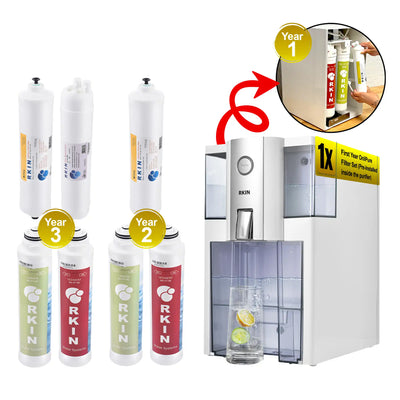
2. U1 4-in-1 Water Filter System — Best Countertop RO with Hot and Cold
The U1 4-in-1 Water Filter System is a countertop unit — no plumbing or installation required. Fill the tank, place it on the system, and it runs through a five-stage process: sediment, carbon, RO membrane, UV sterilization, and post-filtration. It produces consistently filtered water with the option of hot or cold dispensing, handles high daily volume, and sits on your counter.
Best for: homeowners who want a permanent, high-capacity solution and don't mind a one-time installation. Produces clean water on demand without taking up counter space.
What it addresses: chlorine, chloramine, sediment, dissolved minerals, nitrates, heavy metals, and most other dissolved contaminants.
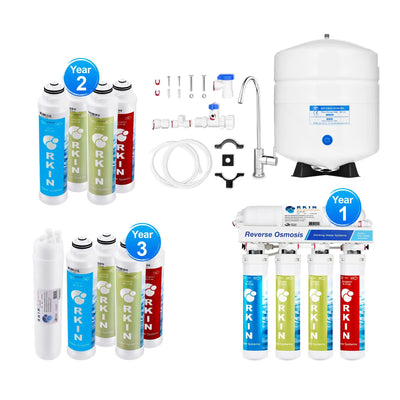
3. Flash Undersink RO System — Compact Undersink Option
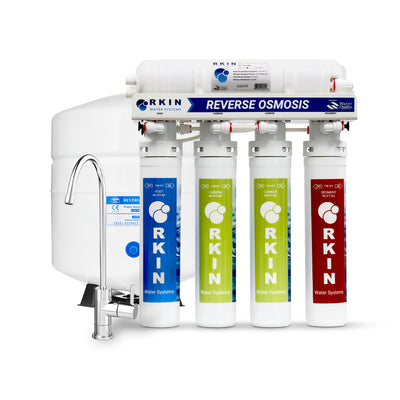
The Flash Undersink Reverse Osmosis System is a slim undersink RO with a compact 3.2-gallon storage tank that fits vertically or horizontally under the sink. It produces 75 gallons per day — about 50% faster than most undersink RO systems — and runs without electricity or a pump, making it the quietest option in the lineup.
Best for: homeowners who want a permanent, installed-and-forget drinking water system under the sink. The slim tank design leaves more storage space than traditional undersink RO systems.
4. CBS Dual Carbon Whole House System — Best Whole-House Chlorine Treatment
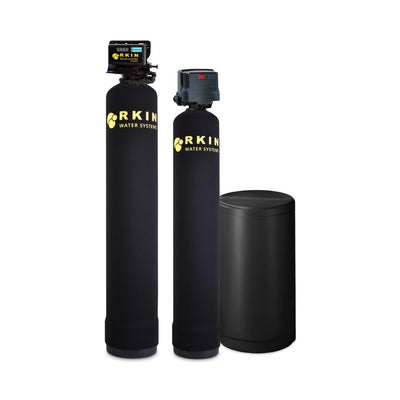
The CBS Dual Carbon Whole House Water Treatment System installs at the main water line and filters water to every tap, shower, and appliance in your home. Dual carbon stages provide sustained contact time for thorough chlorine and chloramine reduction across the entire household.
The OnliSoft Pro combines salt-free water conditioning with carbon filtration — removing chlorine and chloramines while preventing scale buildup, all in one system.
Best for: homeowners who want chlorine-free water from every tap — including showers, where chlorine exposure through steam is also a consideration — not just the kitchen faucet.
5. Whole House Carbon Water Filter System — High-Capacity, Long-Life Carbon Media
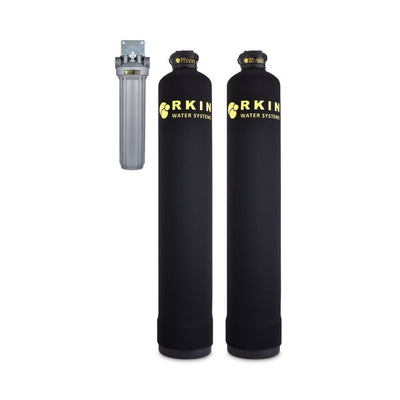
The Whole House Carbon Water Filter System uses a multi-stage tank-based design for homes that need higher flow rates and longer filter life. Stage 1 is KDF media (copper-zinc alloy) for chlorine and heavy metal reduction. Stage 2 is a catalytic activated carbon bed that removes chlorine, chloramines, and disinfection by-products. Stage 3 is an EvenFlow bed that maximizes contact time with the filtration media.
The carbon media is rated for up to 1 million gallons or 10 years depending on the model — significantly longer between changes than cartridge-based systems. The ZEE Pro sediment prefilter needs replacement every 6 to 12 months depending on household size. The system requires no electricity and produces zero water waste.
Available in four sizes: CS8 (1-3 bathrooms), CS9 (2-5), CS10 (4-6), and CS13 (7+). Best for: larger homes or households with higher water usage that want whole-house chlorine and chloramine protection with minimal long-term maintenance.
6. OP1L Whole House Lead, Cyst, PFOA/PFOS Filter — Best for Contaminant-Specific Concerns
The OP1L Whole House Filter is designed for homes concerned about lead, PFAS, and microbial cysts in addition to chlorine. It uses a 0.5-micron cartridge that removes 99.62% of lead (both particulate and soluble), 97.9% of PFOA/PFOS, over 99.95% of Giardia and Cryptosporidium, and over 90% of chlorine.
The OP1L cartridge is rated for 100,000 gallons or 12 months, whichever comes first. A built-in digital notification head tracks filter life so you know exactly when to replace. Filter swaps are tool-free — press the relief valve, pull the snap-ring, and lift the cap.
Can be paired with an OnliSoft salt-free conditioner or salt-based water softener for hard water treatment. Best for: homeowners with older plumbing or in areas with known lead, PFAS, or microbial contamination who also want chlorine reduction from every tap.
What to Look for When Choosing a Chlorine Filter
A few things worth checking before you buy:
- Does your utility use chlorine or chloramine? — Check your annual Consumer Confidence Report. Chloramine needs catalytic carbon or RO; plain carbon may not be enough.
- Do you rent or own? — Renters need no-install options. Homeowners can consider permanent under-sink or whole-house setups.
- How much water do you filter daily? — A single-person household uses less than a family of four. Match filter output to your actual use.
- Do you have other water quality concerns? — If you also have hard water, sediment, or nitrate issues, get a system that addresses all of them.
- What's the filter replacement schedule? — Carbon filters typically need replacement every 6-12 months. RO membranes last 2-3 years. Factor ongoing costs into the comparison.
Does Boiling Water Remove Chlorine?
Yes, boiling water drives off chlorine through evaporation — but it concentrates other contaminants and requires cooling time. It's not a practical daily solution. Letting water sit uncovered at room temperature also reduces chlorine over several hours, but this doesn't work for chloramines, which are much more stable.
A filter handles chlorine (and chloramine) faster, more consistently, and without changing your routine.
Can You Just Buy Bottled Water Instead?
Bottled water works as a stopgap but costs significantly more per gallon than filtered tap water over time. Most studies peg filtered tap water at a fraction of a cent per gallon versus $1-3 per liter for bottled options. A quality point-of-use filter pays for itself within months compared to regular bottled water purchases.
Environmental costs aside, you also have no visibility into bottled water quality — it's not held to the same testing and reporting standards as municipal tap water.
How Often Should You Replace Carbon Filters?
Standard activated carbon filter cartridges lose effectiveness as their adsorption sites fill up. Replacement schedules vary by system and water quality:
- Pitcher filters: every 1-2 months
- Under-sink carbon stages: every 6-12 months
- Whole-house carbon cartridges (like the RKIN CBS): every 6-12 months depending on water quality and volume
- Whole-house tank-based carbon media (like the RKIN Whole House Carbon Filter): up to 1 million gallons or 10 years, with ZEE Pro sediment prefilter replaced every 6-12 months
- OP1L lead/PFAS cartridge: every 100,000 gallons or 12 months, whichever comes first
- RO membranes: every 2-3 years under normal use
Letting filters run past their replacement window reduces effectiveness and can introduce a different taste as the media saturates. Most systems include indicator lights or app notifications for timing.
Frequently Asked Questions
What is the best water filter to remove chlorine taste and smell?
For most households, a reverse osmosis system with a carbon pre-filter provides the most thorough chlorine removal. Options range from countertop units with no installation required (like the RKIN Zero Installation Purifier or U1 4-in-1) to under-sink systems (like the Flash) for permanent installs. Whole-house carbon filter systems are the best option if you want chlorine reduced from every tap and shower in your home.
Does activated carbon actually remove chlorine from water?
Yes, activated carbon adsorbs free chlorine effectively as water flows through the filter media. Standard carbon handles chlorine well. Catalytic carbon (a higher-reactivity version) is needed for chloramine, which many utilities use instead of plain chlorine. Check your water quality report to determine which disinfectant your utility uses before selecting a filter type.
Is reverse osmosis better than carbon filter for chlorine removal?
Both remove chlorine effectively. RO systems typically include carbon pre-filtration as a first stage, then add membrane filtration for much broader contaminant reduction. If chlorine taste is your only concern, carbon alone works. If you also want to address dissolved minerals, nitrates, or other contaminants, RO handles significantly more in a single system.
How do I know if my water has chloramine instead of chlorine?
Your utility's annual Consumer Confidence Report (CCR) — required to be published every year by the EPA — will specify which disinfectant is used. You can also call your utility directly or check their website. Chloramine has a slightly different taste profile than plain chlorine, sometimes described as more medicinal or metallic. Standard carbon may not reduce chloramine significantly — catalytic carbon or RO is needed.
Can a water filter remove chlorine smell from tap water?
Yes. Chlorine is the same compound whether you taste or smell it — a filter that removes chlorine taste also removes the associated smell. Activated carbon and RO systems both address the volatile compounds responsible for chlorine odor in tap water.
Does boiling water remove chlorine?
Yes, boiling drives off free chlorine through evaporation — about 15 minutes of boiling removes most chlorine. However, it doesn't work for chloramine, concentrates other dissolved contaminants, and requires cooling time before drinking. A carbon or RO filter is more practical for daily use.
How long do carbon filters last before needing replacement?
This depends on the filter type and water volume. Pitcher filter cartridges typically last 1-2 months. Under-sink carbon stages last 6-12 months. Whole-house carbon cartridges (like the RKIN CBS Dual Carbon) should be replaced every 6-12 months. Tank-based carbon media systems (like the RKIN Whole House Carbon Filter) can last up to 1 million gallons or 10 years — only the sediment prefilter needs regular replacement. The OP1L lead and PFAS filter cartridge is rated for 100,000 gallons or 12 months. Follow manufacturer guidelines rather than a fixed schedule, since heavily chlorinated water depletes carbon faster.
Chlorine taste in tap water is one of the most fixable water quality issues there is. Whether you go carbon-only for simplicity or RO for complete filtration, you don't have to tolerate pool-water flavor every time you drink from the tap.
See the full lineup — U1 4-in-1 Water Filter System, Zero Installation Purifier, Flash Undersink RO, and CBS Carbon Filter — at rkin.com with current pricing on each product page.




0 comments