


brown stains toilet bowl
Brown Stains in Your Toilet Bowl? Iron in Well Water Explained

You scrub the toilet bowl on Saturday. By Wednesday there's a brown ring back at the waterline, and a rusty streak where the water trickles down the back of the bowl. The bleach barely touches it. The pumice stone leaves scratches. According to the USGS, more than 13 million U.S. households drink from a private well, and roughly half of them have iron concentrations high enough to stain fixtures.
That stain isn't a cleaning problem. It's a water problem. You can't out-scrub iron, because the iron is showing up faster than you can remove it. Here's what's actually happening, why it gets worse over time, and the only fix that works long-term.
What Causes Brown and Orange Stains in a Toilet Bowl?
The short answer: dissolved iron in your well water. When that iron hits oxygen — either in the air sitting in the toilet tank or after it splashes against the bowl — it oxidizes. Oxidized iron is rust, and rust binds to porcelain like glue.
A few specific culprits drive most of the staining:
- Dissolved (ferrous) iron. Invisible in the water as it comes out of the tap. Looks clear in a glass. Stains everything orange-brown once it sits and oxidizes. This is the most common form in well water.
- Oxidized (ferric) iron. Already rust-colored when it leaves the tap. Looks like dirt floating in the water. Usually from older galvanized pipes or wells with heavy mineral content.
- Iron bacteria. A slimy reddish-brown buildup on the underside of the toilet tank lid and inside the bowl. It feeds on iron in the water and creates a stain that's harder to remove than ordinary rust.
- Manganese. Iron's frequent travel companion in well water. Causes black or dark-brown staining instead of orange. The EPA's secondary drinking water standard flags both iron above 0.3 mg/L and manganese above 0.05 mg/L as nuisance contaminants.
- Hydrogen sulfide. If the staining comes with a rotten-egg smell, you're also dealing with sulfur. Iron, sulfur, and manganese tend to show up together in the same wells.
The deeper your well draws from, and the more anaerobic (oxygen-free) the source aquifer, the more dissolved iron you tend to have. New England, the Upper Midwest, the Pacific Northwest, and the Appalachian region are the highest-iron regions in the U.S. according to the 2024 USGS water-quality summary.
Why Toilet Bowls Show Iron First
The toilet shows it before the kitchen sink for a simple reason: water sits there. The bowl holds standing water 24 hours a day, which gives dissolved iron plenty of time to oxidize and bind to the porcelain. The fill valve also aerates the water as it refills, accelerating the reaction.
Other early warning signs in the same house:
- Orange or brown rings in the bathtub at the waterline
- Rust-colored stains running down the shower wall from the showerhead
- Dishwasher leaving spots on glassware
- White laundry coming out beige
- A slight metallic taste in cold drinking water
- Coffee tasting "off" or looking darker than it should
If you've got two or more of these, you don't have a toilet problem — you have a whole-house water problem.
What Doesn't Work
Before you spend another weekend on bleach and Magic Erasers, here's what tends to fail:
Chlorine bleach. Removes the surface stain temporarily but does nothing about the iron coming out of the tap. The stain comes back within days. Bleach also reacts poorly with iron — it can actually set the stain deeper into porous porcelain.
Vinegar and baking soda. Mild acid plus mild base — fine for soap scum, useless against oxidized iron. The chemistry doesn't match the problem.
Pumice stones and abrasive pads. Remove the stain by removing the porcelain glaze with it. Once you scratch the glaze, iron binds to the rough surface even faster, and the next stain shows up in half the time.
Drop-in tank tablets. Marketed for iron stains, these mostly contain mild acids that buy a few days. They don't address the source water and they shorten the life of rubber flapper valves.
Standard sediment filters. Catch oxidized iron particles but pass dissolved (ferrous) iron straight through, because dissolved iron is in solution, not floating as particles. The water still stains.
Water softeners alone. A salt-based softener can handle very low iron levels (under 1 ppm) as a side effect of softening, but it's not designed for iron and the resin fouls quickly. Above 1–2 ppm of iron, a softener will fail in months.
What Actually Removes Iron from Well Water
The right approach depends on which form of iron you have and how much. Most well-water households see best results from a dedicated whole-house iron filter installed at the point of entry — where the well line comes into the house, before it splits to the rest of the plumbing.
A modern iron filter does three things:
- Oxidizes the iron using injected air, ozone, or a catalytic media bed. This converts dissolved (invisible) ferrous iron into oxidized (filterable) ferric iron.
- Filters out the oxidized iron through a granular media that traps the rust particles before they reach your fixtures.
- Backwashes itself on a timer or meter, flushing the trapped iron down the drain so the media stays clean.
The same media bed typically removes manganese and hydrogen sulfide at the same time, which is convenient because those three contaminants almost always travel together.
What to look for when shopping: - Iron capacity rating — measured in ppm, should match or exceed your test result with headroom - Manganese and sulfur capability if you smell rotten eggs or see black staining - Self-backwashing media — anything that requires manual backwashing becomes a chore - A flow rate that matches your household (most homes need 10–15 GPM) - NSF/ANSI 61 certification on materials in contact with drinking water
You'll also want a recent water test — a basic well-water panel from a state-certified lab costs about as much as a single restaurant dinner and tells you exactly which contaminants you're dealing with and at what concentrations. Don't size a filter without one.
How RKIN Solves the Iron-and-Stain Problem
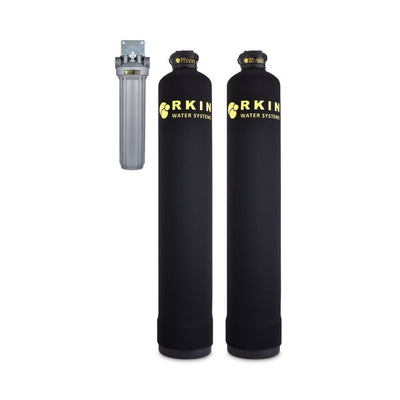
For well-water homes dealing with iron, sulfur, and manganese, the RKIN Whole House Well Water Filter System is purpose-built. It uses an air-injection oxidation chamber plus a catalytic media bed to remove all three contaminants in a single pass — no chemicals, no salt, no daily maintenance. It backwashes itself on a programmed schedule, and the media bed lasts 8–10 years before replacement.
Installed at the point where your well line enters the house, it stops the iron before it reaches a single fixture. The toilet stops staining. The shower stops streaking. White laundry stays white. Coffee tastes right again.
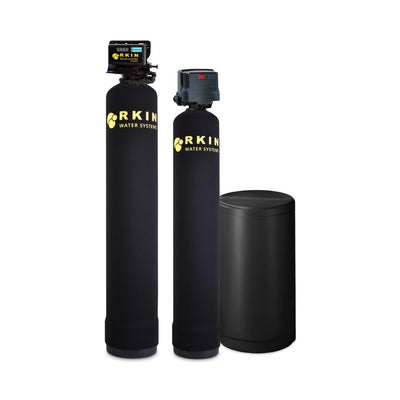
If your water test also shows hard-water minerals (calcium and magnesium above 7 grains per gallon), pairing the well filter with a salt-based water softener handles both problems with two sequential whole-house systems. The well filter goes first; the softener follows.
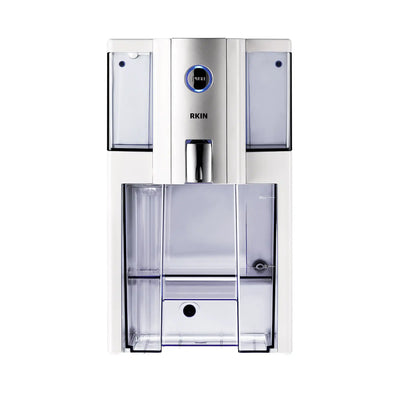
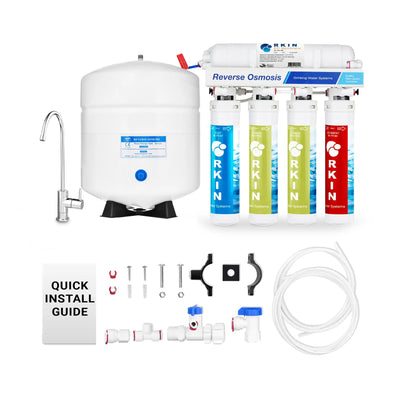
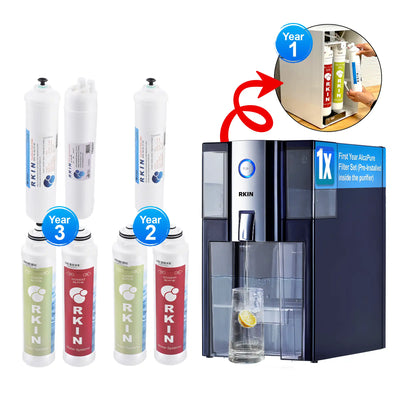
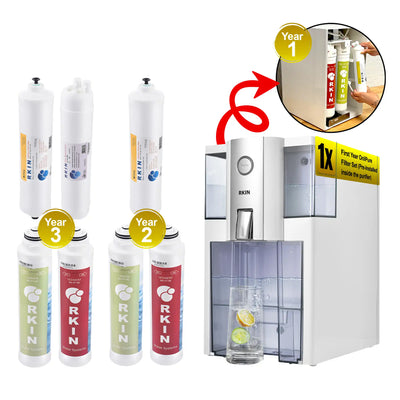
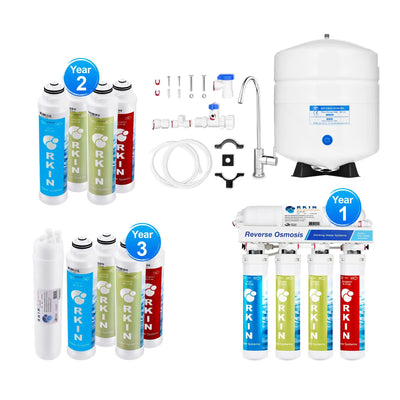
For dedicated drinking water on top of whole-house treatment, an undersink RO system like the RKIN Flash gives you a polished final stage at the kitchen sink — clean, mineral-balanced water for drinking and cooking.
Frequently Asked Questions
How much iron is too much in well water?
The EPA's secondary standard flags iron above 0.3 mg/L (parts per million) as a nuisance level — meaning it stains fixtures and laundry. Most well-water homes that complain about staining test between 0.5 and 5 ppm. Above 5 ppm, the staining is visible within hours. Get a state-certified water test to know your exact level before sizing a filter.
Can a water softener remove iron?
A salt-based softener can handle very low iron levels — under 1 ppm — as a side effect of removing calcium and magnesium. Above that, the resin fouls quickly and the softener loses capacity within months. For anything above 1 ppm, a dedicated iron filter is the right tool, installed before the softener in the plumbing line.
Will an RO system remove iron?
Reverse osmosis can remove dissolved iron at the point of use, but RO membranes foul rapidly when iron is present, so an undersink RO is not a substitute for a whole-house iron filter. For well water with iron, the correct setup is whole-house iron filtration first, then optional RO at the kitchen sink for drinking water.
Why does my water look clear but still stain everything?
That's dissolved (ferrous) iron — it's in solution, invisible, and only oxidizes once it hits oxygen in the toilet bowl, washing machine, or air. The water test will catch it even though your eyes can't. Dissolved iron is the most common form in well water and the one standard sediment filters miss completely.
Are brown toilet stains a health risk?
Iron and manganese at typical well-water levels are aesthetic and nuisance issues, not regulated health hazards. The EPA classifies them as secondary contaminants. That said, very high iron readings can indicate corrosion in the well casing or a deeper geology issue worth investigating with a full well inspection.
How often does an iron filter need maintenance?
A modern self-backwashing iron filter handles its own cleaning on an automatic schedule — no daily intervention. The media bed in a well-sized system typically lasts 8–10 years before it needs to be replaced. The control valve and gaskets last 15–20 years.
Ready to Get Rid of the Stains for Good?
You can keep scrubbing or you can fix the source. Iron in well water doesn't get better on its own — it gets worse as your fixtures age and the porcelain gets more porous. The fix is a one-time whole-house install that runs unattended for years.
The RKIN Whole House Well Water Filter System handles iron, sulfur, and manganese in a single pass. No salt, no chemicals, no daily maintenance — just clean water at every fixture in the house.





0 comments