




diy whole house water filter
Can You Install a Whole House Water Filter Yourself?

The risky part of a whole-house water filter is not tightening a fitting. It is cutting into the main water line before you know your water, your plumbing layout, your flow rate, and your code limits. That is why the best DIY plan often starts with testing and layout, not a pipe cutter.
Homeowners search this because the project looks simple online: shut off water, cut pipe, mount system, connect fittings, flush, done. In a real house, the details decide whether the install is clean or frustrating. The CDC's 2024 home-filter guidance says to test your water and choose a filter based on the substances you want to reduce. That advice matters even more when the system serves every faucet.
Start With the Water Test, Not the Filter Box
A whole-house filter is a point-of-entry system. It filters water where it enters the home, before showers, toilets, laundry, water heaters, and kitchen fixtures. That placement is powerful, but it also means you should know exactly what problem you are solving.
City-water homes often start with chlorine taste and odor, sediment, hardness scale, or concern about older plumbing. Private wells are different. EPA advises private well owners to test annually for total coliform bacteria, nitrates, total dissolved solids, and pH, and to test for local concerns when conditions point that way. EPA also lists stained fixtures, scaly residue, salty taste, cloudy water, and nearby land uses as reasons to test for specific contaminants.
If you install before testing, you can buy the wrong system. A carbon filter is not a softener. A softener is not a sediment filter. A sediment filter is not a drinking-water RO system. A well-water iron problem is not the same as a city-water chlorine problem. Good installation starts with matching the system to the water.
For a practical pre-install test list, start with hardness, pH, total dissolved solids, chlorine if on city water, iron and manganese if you see orange or black staining, and bacteria or nitrates if on a private well. If your annual city water report raises a concern, EPA's Consumer Confidence Report page can help you find the report for your water system.
Can You Install It Yourself?
Maybe. A handy homeowner can sometimes install a cartridge filter or conditioner on an accessible main line. But whole-house installation is not the same as swapping a refrigerator filter. You are working on pressurized plumbing that supplies the entire home.
DIY may be reasonable when the main shutoff is easy to access, the pipe material is familiar, local rules allow homeowner plumbing work, the system has enough clearance, and you already know how to cut, deburr, support, and pressure-test pipe. It also helps if the home has a bypass loop or a utility space designed for treatment equipment.
DIY is a bad bet when the main line is buried, inside a finished wall, directly tied to a fire sprinkler line, made from material you do not work with, or too close to electrical panels or gas equipment. It is also a bad fit when you need drain routing for backwash, a new electrical outlet for control equipment, or a code inspection. In those cases, you can still do the high-value part yourself: test the water, photograph the layout, measure clearances, and hand a clear plan to a licensed plumber.
That planning work saves time without turning your home into a plumbing experiment.
Where a Whole-House Filter Goes
Most systems are installed after the main shutoff and pressure regulator, but before the water heater. That way, treated water reaches both cold and hot lines. The exact order changes based on system type.
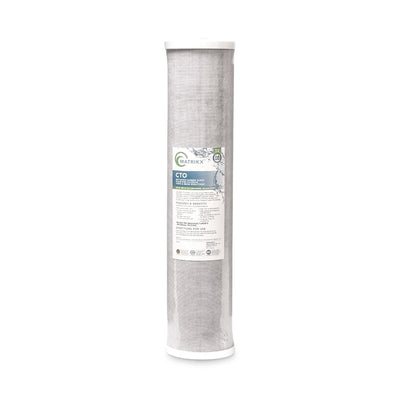
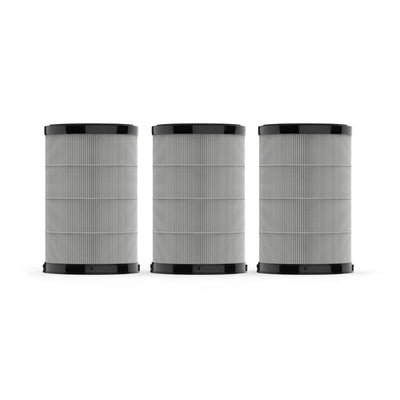
A sediment prefilter usually goes early, because it protects downstream equipment from sand, rust flakes, and larger particles. A carbon filter often comes before a conditioner or softener when chlorine removal protects media or improves water quality. A scale-control system may sit after sediment and carbon, depending on the manufacturer design. UV systems for well water often need sediment filtration before the light chamber so particles do not block exposure.
Do not guess the order from a social post. Follow the product manual and confirm with the system supplier. If your water test shows bacteria in a private well, that is not a DIY filter-order question. Contact your local health department or a qualified water professional and address the well source, disinfection, and retesting plan.
Leave service space. Filters need room for cartridge changes, tank access, bypass operation, and future repairs. A tight install that looks neat on day one can become a problem the first time someone needs to change a cartridge.
The DIY Planning Checklist
Use this checklist before deciding who should make the cut.
- Water test: You know the contaminants or nuisance issues you are targeting.
- Pipe material: You have identified copper, PEX, CPVC, PVC, galvanized, or another material.
- Main shutoff: You can shut the whole house off and verify pressure drops.
- Bypass: The design lets you service the system without shutting down the house for long periods.
- Drain and power: Any backwashing, softener, or UV equipment has safe drain and power access.
- Clearance: There is enough room to replace filters, open valves, and service tanks.
- Permit check: Local rules allow the planned work or you have a plumber lined up.
- Pressure test: You can test every joint before walking away.
If one of those boxes is not clear, pause. The cost of a mistake is not only the fitting. It is water damage, downtime, and a system that may not work as intended.
What Does Not Work
The most common mistake is buying a system from a symptom alone. Orange stains may point to iron, but staining can also involve plumbing, manganese, or water chemistry. Rotten-egg odor may involve hydrogen sulfide, bacteria, or the water heater. Scale points to hardness, but the right answer may be a softener, a salt-free conditioner, or a mix of filtration and conditioning.
Another mistake is installing a drinking-water system as if it were whole-house treatment. Reverse osmosis is excellent at the point of use for many dissolved contaminants, but a typical drinking-water RO system is not designed to supply every shower, appliance, and hose bib. Whole-home RO exists, but it is a different project with storage, pumps, pretreatment, and drain planning.
The third mistake is skipping maintenance access. A filter hidden behind boxes or wedged between pipes will get ignored. Any filter that is not maintained can become a weak link. EPA's PFAS home-filter guidance is direct on this point: filters are only effective if maintained according to the manufacturer's instructions.
Where RKIN Fits
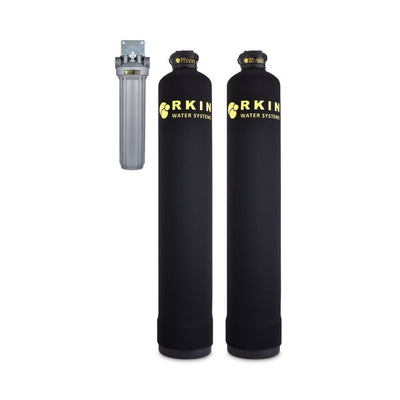
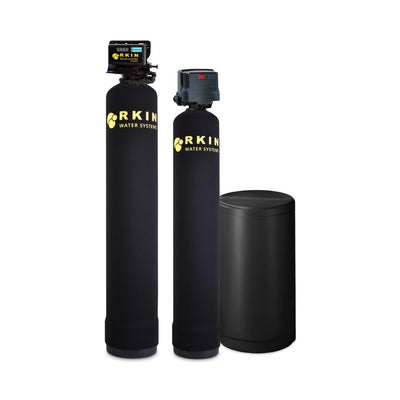
RKIN's whole house water treatment systems are for homeowners who want the water treated before it spreads through the home. That can mean sediment reduction, carbon filtration, scale control, well-water treatment, or a custom setup based on test results.
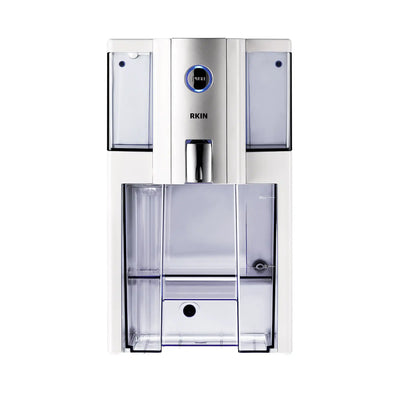
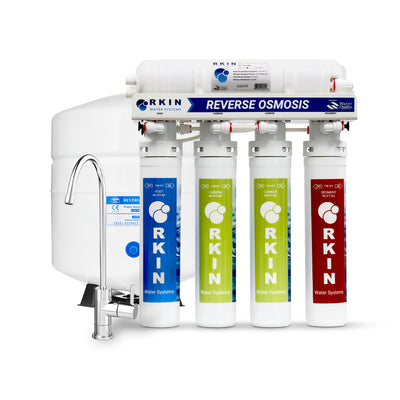
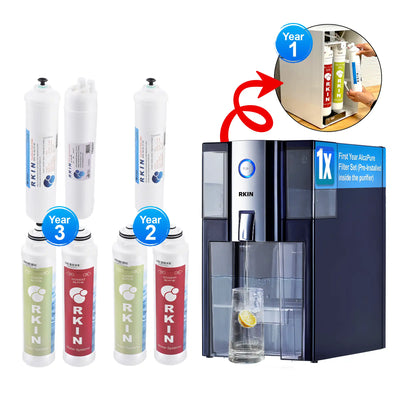
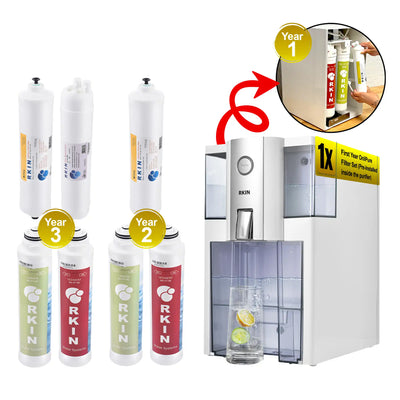
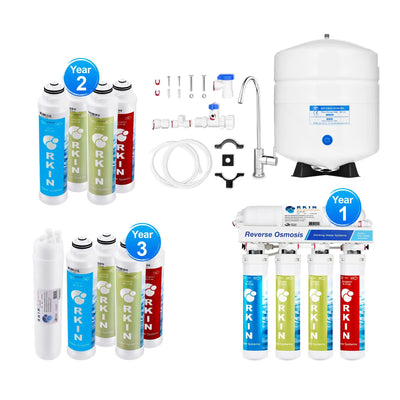
If your main problem is drinking and cooking water at one tap, you may not need a whole-house system first. The RKIN Zero Installation Purifier Countertop Reverse Osmosis Water Filter is a fit when you want countertop RO without plumbing changes. The RKIN Flash Undersink RO System fits homeowners who want an under-sink RO setup with a dedicated faucet.
For whole-house work, the honest answer is test first, then size and place the equipment. Flow rate, household size, water source, pipe size, pressure, drain access, and maintenance space all matter. That is why a plumber can install the same equipment well or poorly depending on the plan they receive.
When to Call a Plumber
Call a plumber if you need to move the main shutoff, change pipe material, add a bypass loop, route a drain, add a pressure regulator, work near electrical service, or meet local permit rules. Also call when the home has old galvanized pipe, polybutylene, slab-routing uncertainty, or signs of past leaks.
A plumber is not a substitute for a water test, though. The best handoff is specific: water source, test results, photos of the main line, pipe size, available wall space, nearby drain and outlet locations, and the system manual. That gives the installer less to guess and gives you a cleaner result.
If you want to do part of the project yourself, do the non-destructive part. Test, measure, photograph, label valves, clear the area, and confirm the service path. Let the person with the right tools make the cut if the plumbing risk is outside your comfort zone.
Me personally, I would test the water and map the plumbing before cutting the main line.
Frequently Asked Questions
Can I install a whole house water filter myself?
Yes, some homeowners can install a whole-house filter themselves if the plumbing is accessible, local rules allow it, and the system does not need complex drain or electrical work. If the install requires main-line changes you do not do often, use a licensed plumber.
Should a whole house filter go before or after the water softener?
It depends on the equipment and the water problem. Sediment filtration often goes early to protect other equipment. Carbon, softening, conditioning, and UV placement depend on the system design and water test. Follow the manual rather than copying a generic diagram.
Do I need a water test before installing a whole-house filter?
Yes. CDC recommends testing your water so you can choose a filter that addresses the substances you are concerned about. For private wells, EPA recommends annual testing for bacteria, nitrates, total dissolved solids, and pH, plus local concerns.
Is whole-house filtration enough for drinking water?
Sometimes, but not always. Whole-house systems treat water entering the home. If your concern is dissolved contaminants at the kitchen tap, a point-of-use reverse osmosis system may be the better layer. Match the treatment to test results.
How much room does a whole-house filter need?
Plan for the system footprint plus service space. You need room to turn valves, change cartridges, access tanks, and make repairs. If the area is too tight, the system may be hard to maintain even if it technically fits.
Ready to Plan the Install the Right Way?
Do not start with a saw. Start with your water test, your main-line layout, and the problem you want solved. If the pattern is house-wide, review RKIN whole house water treatment systems and use your results to choose the right layer for the home.




0 comments