


countertop RO system
Countertop vs Under Sink RO: Which Fits Your Kitchen?

Most reverse osmosis shopping guides start with filter stages and lab terms. Homeowners usually start somewhere simpler: “Where is this thing going to fit, and will I actually use it every day?”
That is the real countertop vs under sink reverse osmosis decision. Both can improve drinking water at the point of use. Both can reduce contaminants that basic taste-and-odor filters may not be designed for. But they ask different things from your kitchen: counter space, cabinet space, installation comfort, refill habits, faucet layout, and maintenance access.
Before choosing a system, read your water report or test your water. The EPA’s Consumer Confidence Report overview explains how many public water systems report detected contaminants each year. That report will not tell you which filter to buy, but it gives you a better starting point than shopping by ratings alone.
The Short Answer
Choose countertop reverse osmosis if you want strong drinking-water filtration without permanent plumbing work. It is usually the better fit for renters, condos, smaller kitchens, offices, and homeowners who want a simpler setup.
Choose under sink reverse osmosis if you own the home, have room in the cabinet, and want filtered water from a dedicated faucet or direct kitchen connection. It is usually the cleaner visual fit because the system sits out of sight.
Neither choice is automatically better. The right answer depends on your kitchen, your water concern, and how your household uses water.
A family that fills several bottles before school may value storage and fast access. A renter may value no drilling and easy move-out. A homeowner remodeling a kitchen may prefer a built-in faucet. A person with a tiny cabinet packed with cleaning supplies may be happier with a countertop unit than forcing an undersink install into a bad space.
How Countertop Reverse Osmosis Works
A countertop RO system is designed to sit on the counter rather than live inside the sink cabinet. Some countertop systems connect to a faucet. Others use a fill tank or reservoir. The details vary by model, so always read the product page and manual before buying.
The appeal is simple: fewer installation steps. You do not need to cut into the cold water line, drill a faucet hole, or clear space around a garbage disposal. That makes countertop RO easier to consider in rental housing, temporary homes, offices, and kitchens where plumbing changes are not worth the hassle.
Countertop systems do ask for visible space. If your kitchen already has a toaster, coffee machine, blender, knife block, and drying rack fighting for room, the countertop footprint matters. Measure before you buy. Include clearance for filling, opening lids, moving pitchers, and keeping the unit away from heat sources.
The daily habit also matters. A countertop reservoir system may need refilling. For many households, that trade-off is fine because the setup is simple and the filtered water is easy to access. For others, the refill habit becomes annoying. Think about your real routine, not the ideal version of it.
How Under Sink Reverse Osmosis Works
An under sink RO system connects beneath the kitchen sink, usually to the cold water line. Many systems include a storage tank and a dedicated faucet. Some homeowners have the faucet installed through an existing accessory hole, while others need a new hole in the sink deck or countertop.
The benefit is a built-in feel. The filtration system is hidden, the counter stays clear, and filtered water comes from a faucet rather than a countertop appliance. For homeowners who use the same kitchen for years, that can be a strong setup.
The trade-off is installation. You need enough cabinet space, access to the cold water line, and a place for the faucet. You also need room to replace filters later. If the cabinet is tight, crowded, damp, or hard to reach, maintenance becomes harder than it should be.
Under sink RO is not always a big project, but it is still plumbing-adjacent. If you are uncomfortable with shutoff valves, fittings, drilling, or leak checks, plan for help. Also check whether your lease, condo rules, or countertop material limits what you can install.
Compare the Real Kitchen Constraints
Here is the practical way to compare countertop vs under sink reverse osmosis before getting lost in product scores.
Countertop RO needs open counter space, an outlet for powered systems, and a routine for filling or connecting the unit. It is visible, so you should like how it looks and where it sits. It is easier to move, easier to inspect, and better for homes where permanent changes are off the table.
Under sink RO needs cabinet space, plumbing access, and a faucet plan. It hides the equipment, keeps the counter open, and feels built in. It is less portable and usually less renter-friendly.
Now think about access. A filter that is easy to reach is more likely to be maintained on schedule. A beautiful undersink setup that requires emptying half the cabinet every time you check it can become a chore. A countertop system that sits where you prep food can get in the way. The best system is the one your household will use and maintain.
Also check water pressure and source conditions. If you are on city water, start with the water report. If you are on a private well, testing comes first. Reverse osmosis is a strong drinking-water category, but source water can affect pre-treatment needs, filter life, and the best system design.
What RO Can Help Reduce
Reverse osmosis is popular because it targets many dissolved substances that simple carbon filters may not handle as well. Depending on the system and testing, RO may be used for concerns such as total dissolved solids, fluoride, arsenic, lead, and PFAS.
PFAS has become a bigger homeowner search topic since the EPA finalized national drinking water standards for several PFAS chemicals in 2024. You can read the EPA’s summary on its PFAS drinking water page.
Do not assume every RO product has the same reduction data. Look for clear testing, contaminant-reduction information, replacement schedules, and plain product documentation. A system with a long list of vague claims is less useful than one that tells you what it is designed to address.
Also remember that RO is a drinking-water solution, not a whole-home hardness solution. If your issue is scale on fixtures, spots on glass, or water heater scale, you may need a whole-house treatment approach in addition to drinking-water filtration. If your issue is what you drink, cook with, and put in coffee, a point-of-use RO system can be the right place to start.
When a Countertop RO System Fits Best
Countertop reverse osmosis is often the better fit when installation flexibility matters more than hiding the equipment.
It works well for renters who cannot drill or modify plumbing. It works for condos where rules make undersink work complicated. It works for offices, vacation homes, and households that want to take the unit with them later. It can also be a good fit if the cabinet under your sink is already packed with a disposal, cleaning supplies, pull-out drawers, or older plumbing.
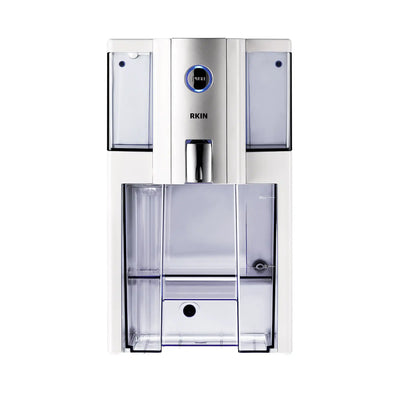
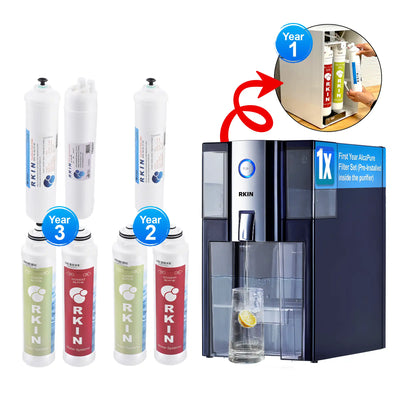
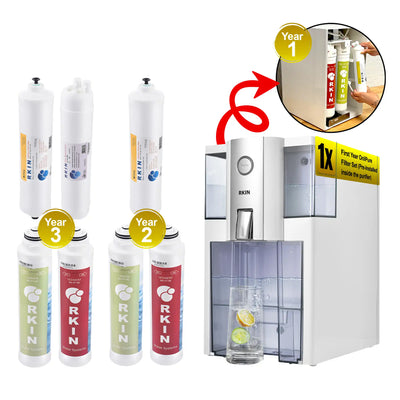
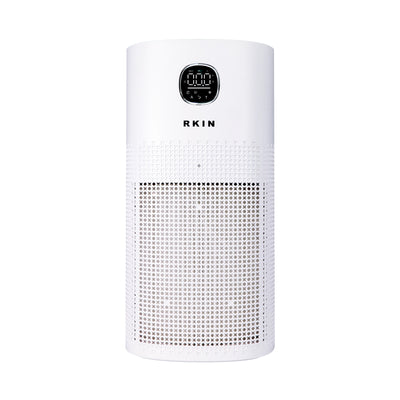
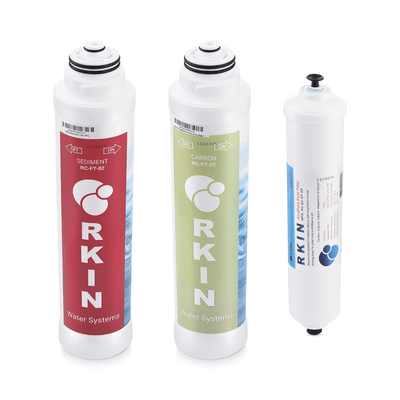
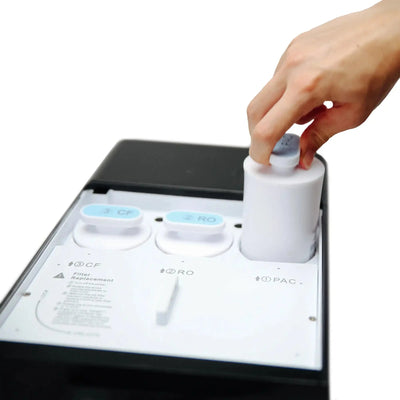
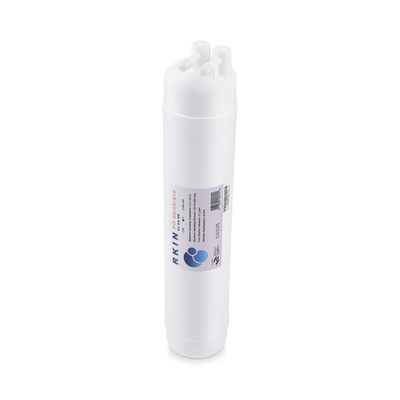
The RKIN U1 4-in-1 Water Filter System is a countertop RO system with five-stage filtration, including sediment, carbon, reverse osmosis, UV, and post-filtration. It is built for people who want a countertop approach instead of an undersink install.
The RKIN countertop water filter collection is also worth comparing if your priority is no permanent plumbing work. Countertop systems are not all the same. Some are more compact, some have different reservoir designs, and some are built around different daily routines.
Choose countertop RO if you want a simpler path, can spare counter space, and prefer easy access over a hidden installation.
When an Under Sink RO System Fits Best
Under sink reverse osmosis is often the better fit when you want the filtration system out of sight and you have a kitchen that can support the install.
It works well for homeowners with enough cabinet space, a usable cold water connection, and a faucet location. It can be especially nice in kitchens where counter space is limited but the sink cabinet is open. If you cook often, fill pots, make coffee, or want a dedicated filtered-water faucet, the built-in workflow can feel natural.
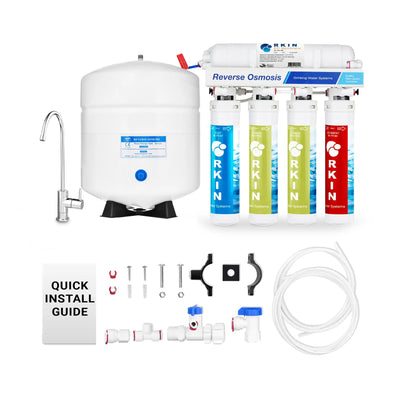
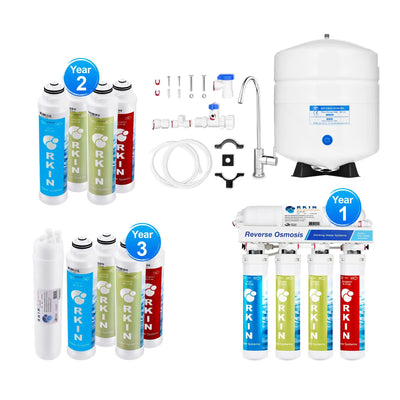
The RKIN Flash Undersink RO System is designed for an undersink setup and includes a compact storage tank that can fit vertically or horizontally. It is a good match for homeowners who prefer a dedicated faucet and want the system tucked under the sink.
Before choosing this route, open the cabinet and measure. Check the disposal, existing pipes, shutoff valves, drawer clearance, and anything mounted inside the cabinet. Then think about future filter changes. If you can barely reach the back of the cabinet now, filter maintenance will not get easier later.
Choose under sink RO if you want a built-in feel, own or control the kitchen, and have the space and access to install and maintain it properly.
A Quick Fit Checklist
Use this checklist before deciding:
- If you rent, choose countertop unless your lease clearly allows plumbing changes.
- If you have no spare counter space, check whether under sink space is actually better.
- If your sink cabinet is crowded or hard to access, countertop may be simpler.
- If you want the cleanest visual setup, under sink usually wins.
- If you move often, countertop is easier to take with you.
- If you want a dedicated filtered-water faucet, under sink is usually the right category.
- If you are unsure what is in your water, read the water report or test before buying.
This is not about choosing the most expensive-looking system or the one with the most stages on a comparison chart. It is about matching the system to the water problem and the kitchen it has to live in.
Frequently Asked Questions
Is countertop reverse osmosis as good as under sink reverse osmosis?
It can be, depending on the specific system, membrane, filter design, and testing. Placement alone does not determine filtration quality. Compare contaminant-reduction data, filter stages, replacement schedules, and daily output. The better choice is the one that fits your home and addresses your water concern.
Do under sink RO systems require a plumber?
Not always, but they do require a cold-water connection, faucet plan, leak check, and enough cabinet access. Many handy homeowners can install an undersink system, while others prefer help. If drilling or plumbing fittings make you uncomfortable, plan for installation support.
Is countertop RO better for renters?
Usually, yes. Countertop RO avoids permanent plumbing changes and is easier to move. Renters should still check dimensions, outlet needs, refill routine, and lease rules. If your landlord allows an undersink system, make sure you understand what must be restored at move-out.
Which system is better for PFAS concerns?
The answer depends on the product’s tested performance, not whether it sits on the counter or under the sink. Reverse osmosis is commonly considered for PFAS reduction, but you should review the system’s contaminant-reduction information and your water report or test results.
Does reverse osmosis fix hard water?
RO can reduce dissolved minerals in drinking water, but it is not a whole-home hardness solution. If scale is showing up on showers, faucets, dishwashers, and water heaters, look at whole-house treatment. If your concern is drinking water, coffee, ice, or cooking water, point-of-use RO may be the right step.
Ready to Choose the Right RO Fit?
If you want strong drinking-water filtration without permanent plumbing changes, start with the RKIN U1 4-in-1 Water Filter System. If you want a built-in faucet and have room under the sink, compare it with the RKIN Flash Undersink RO System.
Measure your kitchen first. Then choose the RO system your household will actually use every day.





0 comments