




pfas
Do Water Softeners Remove PFAS? What Homeowners Need to Know

You bought a water softener because the dishes had spots and your skin felt dry. Now you're reading about PFAS in drinking water and wondering if the softener already handles that too. It does not. A 2024 U.S. Geological Survey study estimated PFAS contaminates the tap water of at least 45% of Americans, and a conventional water softener removes zero of it.
That's not a knock on softeners. They do exactly what they're designed to do — trade hardness minerals like calcium and magnesium for sodium ions through a resin bed. That chemistry is tuned for mineral ions with a strong positive charge. PFAS molecules don't behave that way. They slip through ion-exchange resin untouched.
What a Water Softener Actually Does
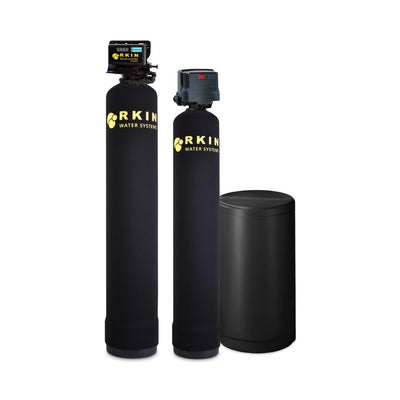
A softener is an ion-exchange device. Hard water enters a tank filled with negatively charged resin beads that have been pre-loaded with sodium ions. As water passes through, calcium and magnesium — both carrying a +2 charge — stick to the resin and release sodium into the water in their place. The result: no more lime scale on your shower door, no more crusty faucet aerators, and better lather from soap.
This process is excellent for scale prevention. It is not a filter. Nothing about ion exchange targets organic contaminants, dissolved gases, pesticides, or industrial pollutants. If a contaminant doesn't carry the right kind of charge and size profile, the resin bed is invisible to it.
Why PFAS Slips Through
PFAS — per- and polyfluoroalkyl substances, often called "forever chemicals" — are a family of more than 12,000 synthetic compounds built around carbon-fluorine bonds. That bond is one of the strongest in organic chemistry, which is why PFAS persist in soil, in groundwater, and in the human bloodstream for years.
Most PFAS in drinking water are present as large organic molecules, not as simple charged ions. They don't compete with calcium and magnesium for spots on softener resin. A 2023 EPA technical brief on PFAS treatment confirms the point: the proven removal technologies are granular activated carbon, anion exchange resins specifically designed for PFAS, and reverse osmosis. Standard cation-exchange softener resin is not on that list.
A softener also doesn't touch chlorine, chloramines, trihalomethanes, lead dissolved in water, pharmaceutical residues, or microplastics. These are separate problems with separate solutions. Treating a softener as a catch-all is one of the most common — and expensive — misunderstandings in home water treatment.
The Filter-vs-Softener Confusion
Plenty of product marketing blurs this line. "Whole-home water system" could mean a softener, a carbon filter, a reverse osmosis unit, or a combination. If the spec sheet doesn't explicitly list PFAS reduction with a third-party test or NSF/ANSI 53 or 58 certification, assume the system does not remove PFAS.
A few specific questions cut through the confusion quickly:
- Does the system use activated carbon, RO membranes, or PFAS-specific anion resin?
- Is the PFAS reduction claim backed by third-party testing at the ng/L (nanograms per liter) level — not just the mg/L scale most hardness tests use?
- What's the certified capacity before the media needs replacing?
If a sales page can't answer those three, the system isn't built for forever chemicals.
What Actually Removes PFAS
Three technologies have real data behind them for residential PFAS reduction:
Reverse osmosis (RO): Water is pushed through a semi-permeable membrane that rejects contaminants by physical size and charge. A properly built residential RO system removes 94-99% of PFAS, including the short-chain variants (like PFBS and GenX) that carbon alone struggles with. RO also knocks out lead, arsenic, fluoride, nitrates, and total dissolved solids in the same pass.
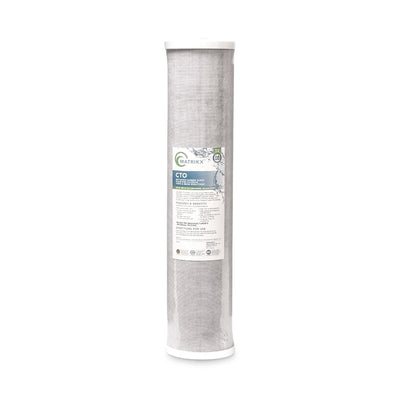
Granular activated carbon (GAC): Specifically-graded coconut-shell carbon, in sufficient contact time, adsorbs longer-chain PFAS like PFOA and PFOS. GAC is less effective against short-chain PFAS, and the bed eventually saturates — which is why capacity ratings and replacement schedules matter more here than with most filter types.
PFAS-specific anion exchange resin: A newer class of resin, different from softener resin, designed to bind PFAS molecules directly. Often used in municipal treatment and in certain whole-house residential systems as a targeted PFAS stage.
For most households, the simplest effective setup is reverse osmosis at the point of use — the kitchen tap where drinking and cooking water comes from. Whole-house RO is possible but usually overkill unless your PFAS levels are severe or your water has additional problems (high TDS, agricultural runoff, arsenic).
Where a Softener Still Earns Its Keep
This post is not an argument against softeners. If you have hard water, the softener is doing real work that a filter won't: protecting your water heater, your dishwasher pump, your washing machine, and every fixture with a mixing valve. The U.S. Department of Energy has noted that scale buildup can cut water heater efficiency and shorten appliance life.
The honest framing is that softeners and filters solve different problems. A softener handles hardness. A filter handles contaminants. If you have both hard water and a PFAS concern, you need both — ideally configured in series, with the softener first and the point-of-use filter downstream.
Building the Right Stack
For a typical home with hard water and PFAS concerns, a layered approach looks like this:
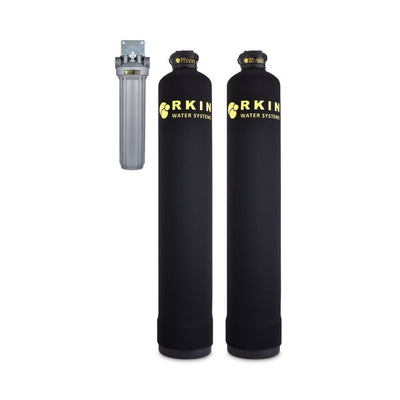
- Whole-house softener or salt-free conditioner to protect plumbing and appliances from scale.
- Point-of-use reverse osmosis at the kitchen sink for drinking and cooking water.
- Regular testing — annual is reasonable for most homes, more often if you're on a well or in a known PFAS-affected area.
That stack covers scale, taste, chlorine, heavy metals, and PFAS without over-engineering the rest of the house. Shower water passes through the softener but not the RO, which is usually fine — most PFAS exposure in the home comes from ingestion, not dermal contact.
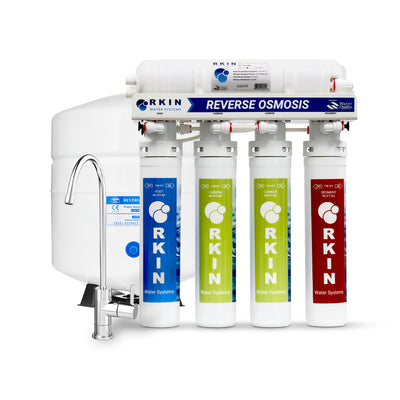
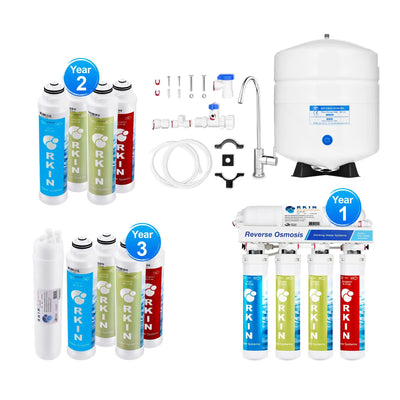
The RKIN Flash Undersink RO System is built for this role. It's a 4-stage reverse osmosis system designed to sit under the kitchen sink, reducing PFAS, lead, arsenic, fluoride, chlorine, and TDS while pushing soft, mineral-balanced water to a dedicated faucet. Third-party testing covers the short-chain PFAS most carbon filters miss. It pairs cleanly with any existing softener without modification.
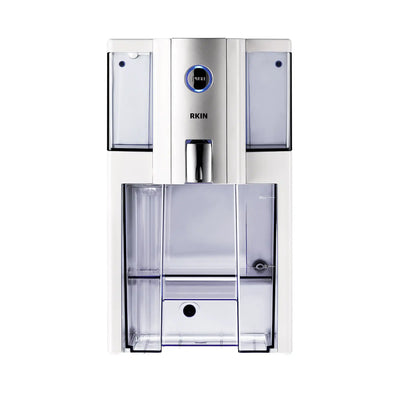
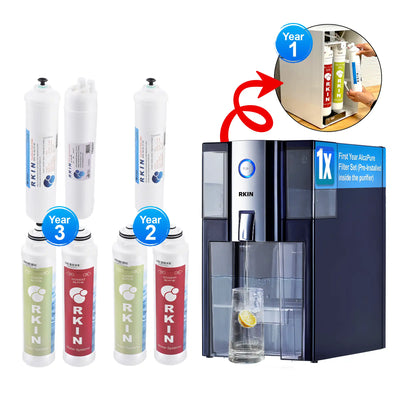
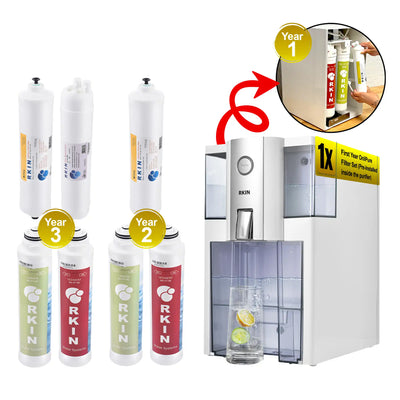
For renters or households where plumbing changes aren't an option, the Zero Installation Purifier delivers the same reverse osmosis treatment with no tools, no drilling, and no connection to the cold-water line — just fill the reservoir and plug it in.
Frequently Asked Questions
Do water softeners remove PFAS?
No. Water softeners use cation-exchange resin designed to swap hardness minerals (calcium and magnesium) for sodium. That chemistry doesn't bind PFAS molecules. For PFAS reduction, you need reverse osmosis, granular activated carbon, or PFAS-specific anion exchange resin.
Will a whole-house filter remove PFAS?
It depends on the filter. Standard sediment and basic carbon cartridges won't. Filters with properly-graded activated carbon in sufficient volume can reduce longer-chain PFAS like PFOA and PFOS. For the full PFAS spectrum, including short-chain variants, reverse osmosis remains the most thorough option.
What's the difference between a water softener and a water filter?
A softener is a conditioner — it changes the mineral content of the water to stop scale buildup. A filter is a contaminant remover. They're complementary. Many homes need both, installed in the correct order, with the softener first and the drinking-water filter downstream.
Is sodium from a softener bad for me?
The sodium added by a typical softener is small — usually 7-40 mg per 8-ounce glass, depending on your hardness level. That's less than a slice of bread. If you're on a strict low-sodium diet, consider a salt-free conditioner like the RKIN OnliSoft Salt-Free Water Conditioner, which prevents scale without adding sodium.
How do I know if my water has PFAS?
Municipal water systems serving more than 10,000 people are now required to test for PFAS and report results under the EPA's 2024 national drinking water standard. Private well owners need to commission their own tests — expect to pay for an accredited lab, since PFAS testing requires ng/L-level sensitivity. Your state environmental agency can point you to certified labs.
Can I test my own water for PFAS at home?
Not reliably. Over-the-counter test strips don't measure PFAS. A proper test ships a sample to a lab accredited for EPA Method 537.1 or 533. It costs more than a standard water test, but it's the only way to get defensible numbers.
If I already have a softener, what should I add for PFAS?
Add a point-of-use reverse osmosis system at the kitchen sink. You don't need to replace or modify the softener. The softened water actually helps extend the life of the RO membrane by reducing scale stress on the system.
Ready to Cover What Your Softener Doesn't?
A water softener protects your pipes and appliances. A reverse osmosis system protects the water you and your family drink. They solve different problems, and you need both if PFAS is on your radar.
The RKIN Flash Undersink RO System installs under the kitchen sink, reduces PFAS, lead, arsenic, and fluoride, and pairs with any softener already on your line. Ships free. No hidden filters, no surprise reorders — just clean water at the tap that matters most.






0 comments