


hard water filter for home
Hard Water Stains on Glass Shower Doors: Filter Guide

Hard water stains on glass shower doors are not just a cleaning problem. They are a water clue.
If a freshly cleaned shower turns cloudy again in a few days, the issue is usually minerals left behind after water evaporates. EPA WaterSense explains that cation exchange softeners remove calcium and magnesium ions found in hard water, and its water softener guide notes that hard water can make soap harder to rinse off. That matters because the stain is telling you about source water behavior, not only bathroom cleaning.
For homeowners, the practical question is simple: do you need a stronger cleaner, a water conditioner, a water softener, a drinking-water filter, or a full treatment plan? This guide breaks down what those stains mean, what they do not mean, and how to choose the right next step without overbuying.
What Hard Water Stains on Glass Really Mean
Hard water stains form when mineral-rich water dries on a surface. The water disappears. Calcium, magnesium, silica, soap residue, and other dissolved material stay behind as a white, gray, or cloudy film.
Glass shower doors make the problem easy to see because they get wet daily, sit in warm air, and dry with droplets still attached. Faucets, tile, tubs, dishwasher interiors, coffee makers, and humidifiers can show similar signs.
The stain pattern tells you something. Smooth, powdery spots that wipe away with vinegar are often fresh mineral scale. Rough, etched-looking marks that do not fully clear may mean the surface has been sitting under mineral deposits for a long time. Orange or brown staining points toward iron or plumbing sediment, not simple hardness. Black or slimy buildup needs a cleaning and moisture-control answer first, not a water filter guess.
Hardness is usually measured as grains per gallon or milligrams per liter as calcium carbonate. If you already have a water test, look for calcium, magnesium, total hardness, iron, manganese, pH, TDS, and silica. A basic strip can give a quick hint, but a certified lab test gives better direction before you spend money on equipment.
Why Cleaning Helps but Does Not Fix the Source
A cleaner can remove what is already stuck to the glass. It cannot change what comes out of the shower head tomorrow.
That is why the same stains often return after a deep clean. Vinegar, citric acid, or a shower-safe mineral cleaner may dissolve fresh scale. A squeegee helps because it removes water before minerals dry on the glass. Ventilation helps because water evaporates faster and leaves less time for deposits to spread.
Those habits are still worth doing. They reduce buildup and protect glass. But if the water itself is hard, cleaning becomes a loop. You remove the evidence, not the cause.
Do not judge the whole house by one shower door alone. A bathroom with poor airflow can spot faster than a guest bath. A shower with textured glass can hold droplets longer. A high-flow shower head can leave more water behind than a low-flow fixture. The real signal is repeat evidence across the home: glass spots, crust around faucets, soap that feels hard to rinse, cloudy dishwasher glassware, scale in a kettle, and frequent appliance descaling.
Test Before You Choose Equipment
The fastest way to make a good decision is to separate three questions.
First, is the issue mainly hardness and scale? Test total hardness, calcium, magnesium, and pH. If glass spots are the only complaint, hardness is a likely starting point.
Second, is there sediment, iron, or odor? If water looks rusty, leaves orange stains, smells metallic, or changes after heavy rain, hardness may not be the only issue. Well water especially deserves a broader lab panel.
Third, is the concern drinking water or whole-home water behavior? Shower-door stains are a whole-home symptom. A point-of-use reverse osmosis system at the kitchen sink can improve drinking and cooking water, but it will not change the water feeding the shower.
The EPA lists several substances, including total dissolved solids, under secondary drinking water standards. Secondary standards are about taste, odor, color, staining, and nuisance effects, not the same as enforceable primary contaminant limits. That distinction helps keep the decision grounded: hard water stains are usually an aesthetic and maintenance issue unless your test shows something else that needs action.
What Actually Helps With Hard Water Stains
The right fix depends on whether you want to change water chemistry, reduce scale behavior, or protect only one tap.
A salt-based softener reduces hardness minerals through ion exchange. That can make soap lather differently and reduce classic hard-water scale. It needs a brine tank, salt refills, and regeneration. Some homeowners like the feel. Others do not want salt handling or brine discharge.
A salt-free conditioner does not soften water in the traditional ion-exchange sense. It is designed to condition hardness minerals so they are less likely to form hard scale on surfaces and inside plumbing. This can be a good fit when the goal is scale control without salt.
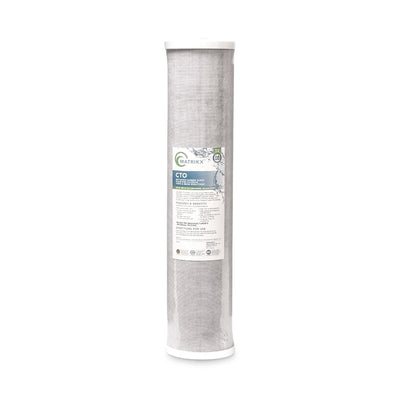
A whole-house carbon filter is a different tool. Carbon targets taste, odor, chlorine, and certain chemical concerns depending on design and test results. It is not the main answer for hard-water scale by itself.
A point-of-use reverse osmosis system is also a different tool. RO is for drinking and cooking water at a specific tap or countertop system. It can reduce many dissolved substances at that point of use, but it will not change shower-door stains unless every shower is fed by treated water, which is not how kitchen RO systems are used.
The EPA WaterSense guide to selecting water treatment systems gives the right buying mindset: match the treatment technology to the target problem, then check the performance data and certification details.
How RKIN Fits the Hard Water Problem
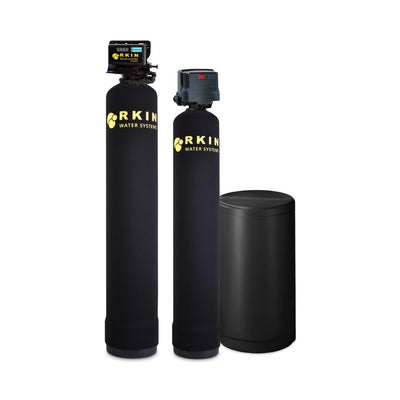
If hard water stains are showing up around the home, start with RKIN's whole house water treatment collection. Whole-home systems treat water near the point where it enters the house, so showers, laundry, fixtures, and appliances all get the benefit of the selected treatment approach.
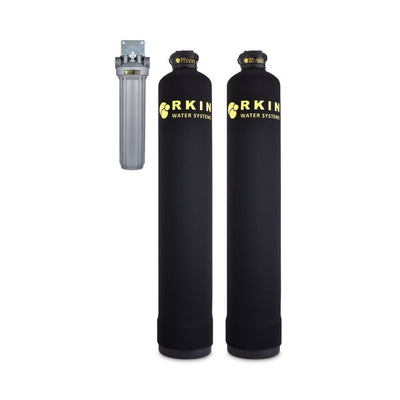
For city-water homes where the main concern is scale behavior plus taste and odor, the RKIN OnliSoft Pro Salt-Free + Carbon Combo is the product path to review. Its seed-assisted crystallization (SAC) media conditions hardness minerals to help reduce scale adhesion; it does not remove calcium or magnesium. The carbon media and sediment prefilter follow their own service requirements.
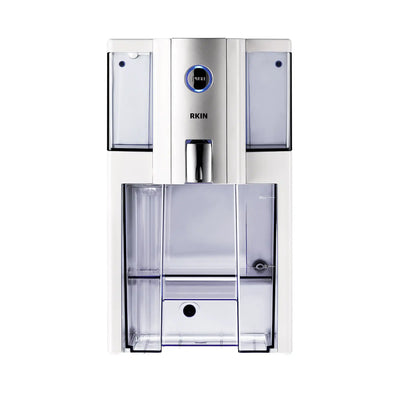
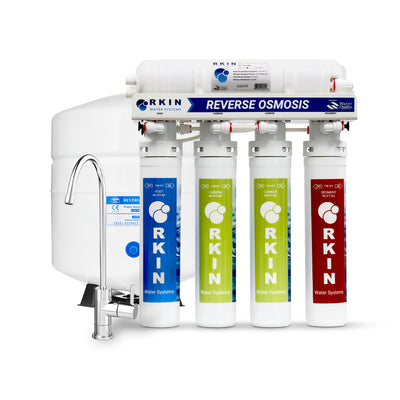
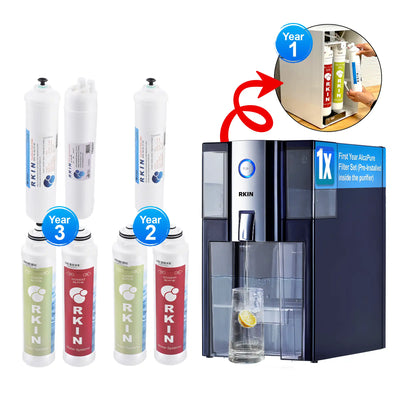
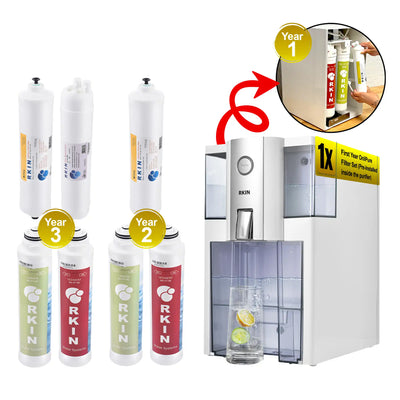
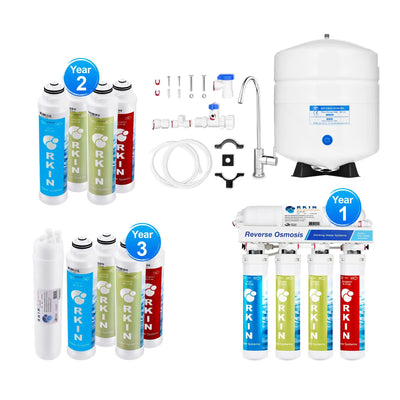
If your main concern is the water you drink and cook with, pair the whole-home discussion with a point-of-use drinking-water option. The RKIN Zero Installation Purifier Countertop Reverse Osmosis Water Filter is a countertop RO system for homes that do not want permanent plumbing work. The RKIN Flash Undersink RO System is the built-in kitchen option with a dedicated faucet.
One system does not solve every water problem. The best setup starts with what the test says, where the symptom appears, and whether the goal is whole-home scale control, better drinking water, or both.
A Simple Decision Path
Use this order before buying equipment.
- Confirm the pattern. Do you see spots only on one glass door, or across faucets, dishes, fixtures, and appliances?
- Test the water. For city water, start with your utility report and a hardness test at the tap. For well water, use a certified lab panel.
- Match the treatment point. Shower-door stains point toward whole-home treatment. Drinking-water taste points toward point-of-use RO.
- Check maintenance. Filters, cartridges, salt, and media all have different upkeep needs. Choose a system you will maintain.
- Avoid one-size-fits-all claims. A carbon filter, RO system, salt-free conditioner, and salt-based softener each do different jobs.
If you rent or cannot modify plumbing, focus on what you can control: daily squeegee use, better ventilation, fixture cleaning, and a countertop drinking-water system. If you own the home and hard-water symptoms are house-wide, a whole-home setup is the cleaner long-term conversation.
Frequently Asked Questions
What causes hard water stains on glass shower doors?
Hard water stains usually come from dissolved minerals, mainly calcium and magnesium, left behind after water dries. Soap residue can mix with those minerals and make the film look worse. If stains are orange, brown, black, or slimy, test for iron, manganese, sediment, or moisture issues instead of assuming hardness alone.
Will a reverse osmosis filter stop shower-door stains?
A kitchen reverse osmosis system treats water at that tap or countertop unit. It can be a strong choice for drinking and cooking water, but it does not treat the whole shower line. Shower-door stains usually call for whole-home scale control or softening if testing confirms hardness.
Is a salt-free conditioner the same as a water softener?
No. A salt-based softener removes hardness minerals through ion exchange. A salt-free conditioner is designed to condition hardness minerals so they are less likely to form hard scale. The better choice depends on your water test, installation preferences, local rules, and how you want the water to feel.
Do I need a water test for hard water stains?
A simple hardness test is a good first step. If you use a private well, have staining in several colors, notice odor, or see sudden changes after storms or plumbing work, use a certified lab test. The result helps avoid buying a system aimed at the wrong problem.
Can hard water damage appliances?
Hardness minerals can form scale on heating surfaces, fixtures, and appliance parts. The practical impact depends on hardness level, water temperature, use, and maintenance. If you see scale in a kettle, dishwasher, water heater, or shower head, test hardness and review whole-home treatment options.
Ready to Reduce Hard Water Stains?
Stop guessing from the glass door alone. Test your water, confirm whether hardness is the main issue, and match the equipment to the symptom.
Compare RKIN's whole house water treatment systems or contact RKIN with your test results so we can help you choose the right path for scale control, drinking water, or both.






0 comments