


hard water damage appliances
How Hard Water Quietly Destroys Your Home Appliances

The dishwasher that should have lasted 12 years died in 6. The water heater everyone said would run 15 years started leaking at 8. The ice maker on the new fridge stopped cycling cleanly after 18 months. If you've been replacing appliances faster than the manuals say you should, hard water is almost certainly the reason — and a new appliance won't fix it.
According to a 2024 USGS water hardness map, roughly 85% of U.S. homes have water hard enough to cause measurable scale buildup inside heated appliances. The U.S. Department of Energy notes that scale deposits on heating elements act as insulators, cutting efficiency and shortening the service life of every appliance that runs hot water. Most homeowners blame the brand. The water is the actual problem.
What Hard Water Actually Does Inside Your Appliances
Hard water carries dissolved calcium and magnesium. When that water is heated — in a water heater, dishwasher, washing machine, coffee maker, or ice maker — the minerals come out of solution and bond to whatever surface they touch: heating elements, valve seats, spray arms, internal piping, and tank linings. Over time, that buildup acts like an insulating shell. Heat transfer drops. Components run hotter. Plastic parts warp. Metal parts pit. Seals fail.
Here's what happens inside each major appliance:
- Water heater: Scale coats the heating element or the bottom of a gas tank. The heater has to run longer to reach the same temperature. Energy costs rise. The tank lining cracks years sooner than rated. By year 6–8 instead of 12–15, you're shopping for a replacement.
- Dishwasher: Spray arms clog, the heating element gets a white crust, and the fill valve sticks open or closed. Dishes come out spotty no matter how much rinse aid you add. Most dishwashers in hard-water homes die at half their rated lifespan.
- Ice maker: Mineral buildup blocks the small internal water lines and fouls the freezing tray. Cubes come out cloudy, undersized, or stop dropping entirely. The whole ice maker module usually needs replacing within 2–3 years.
- Washing machine: Scale builds up inside the drum bearing and pump, and clothes never quite feel clean because soap binds with calcium instead of doing its job. You use more detergent and get worse results.
- Coffee maker and espresso machine: Internal heating coils scale over within months. Flow drops. Pressure inconsistency ruins extraction. Espresso machines often need expensive descaling service calls or replacement.
- Tankless water heater: The most vulnerable of all. A tankless unit can lose 30% of its capacity in under a year on hard water, and warranties are typically void if you can't show treatment was in place.
The Real Cost — and Why Memorial Day Sales Don't Fix It
Every spring, appliance retailers run major holiday sales. Homeowners with a dying dishwasher or a leaky water heater see 30–40% off and pull the trigger on a replacement. Six years later, the same thing happens again. The cycle continues.
The math is worth seeing in one place. Average lifespans for major appliances in soft-water vs. hard-water homes, based on industry service-life data:
| Appliance | Soft water lifespan | Hard water lifespan | Years lost |
|---|---|---|---|
| Water heater (tank) | 12–15 years | 6–8 years | 5–7 |
| Tankless water heater | 20+ years | 8–10 years | 10+ |
| Dishwasher | 10–12 years | 6–7 years | 4–5 |
| Washing machine | 10–13 years | 7–8 years | 3–5 |
| Refrigerator (with ice/water) | 13–15 years | 8–10 years | 3–5 |
| Coffee maker / espresso | 5–7 years | 1–3 years | 2–4 |
Add it up across an average household and hard water silently costs $325–$650 per year in shortened appliance life, plus another 15–25% on water-heating energy. Over a decade, that's typically $4,000–$8,000 going out the door — and it shows up as a string of "the new fridge broke again" complaints, not a single visible bill.
What Doesn't Stop the Damage
Plenty of products promise hard-water fixes. Most don't address scale where it actually forms.
- Magnetic and electronic descalers: Sold widely online, but independent testing has consistently failed to show they prevent scale buildup at typical residential hardness levels.
- Dishwasher rinse aid: Reduces spotting on glasses temporarily — does nothing to protect the heating element, spray arms, or pump from scale.
- Vinegar descaling: Works as periodic maintenance for coffee makers and shower heads, but you can't run vinegar through a water heater or dishwasher on a regular schedule.
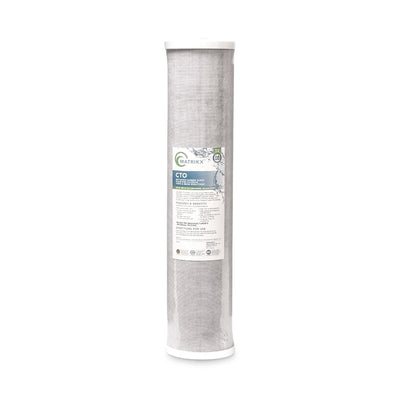
- Whole-house carbon filters alone: Excellent for chlorine and chloramines, but they don't reduce hardness. Many homeowners install carbon filtration and assume they're protected from scale — they're not.
The only fixes that actually protect appliances are systems that either remove the hardness minerals entirely or change their chemistry so they can't bond to surfaces.
Two Approaches That Actually Work
You have two real options for protecting every appliance in your home: salt-based softening or salt-free conditioning. The right choice depends on your priorities.
Salt-based water softeners use ion exchange to remove calcium and magnesium and replace them with sodium. Water feels noticeably softer in the shower, soap lathers better, and existing scale slowly dissolves out of pipes and appliances. The trade-offs: a brine tank to refill periodically, wastewater discharge during regeneration, and slightly elevated sodium in drinking water.
Salt-free water conditioners use Template Assisted Crystallization (TAC) media to convert dissolved calcium and magnesium into microscopic crystals that pass through the plumbing without bonding to surfaces. Appliances stay scale-free, water keeps its natural mineral content, no salt to refill, no wastewater, no electricity. Water doesn't feel "slippery" the way it does with salt softeners — many homeowners prefer this.
The RKIN Solution for Scale Protection
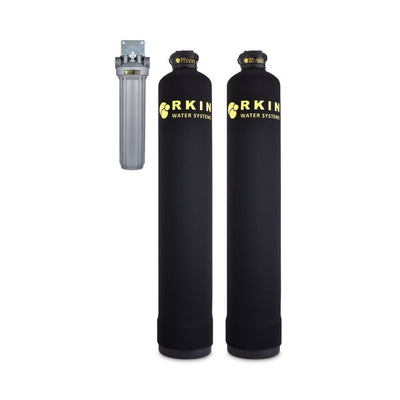
For homeowners who want full appliance protection without the maintenance and operational footprint of a salt system, the RKIN OnliSoft Salt-Free Water Conditioner uses Template Assisted Crystallization media to neutralize hardness across the entire home — no salt, no electricity, no wastewater. The TAC media is rated to last a lifetime with no replacement required, so once it's installed it protects every appliance, fixture, and pipe in the house with effectively zero ongoing cost.
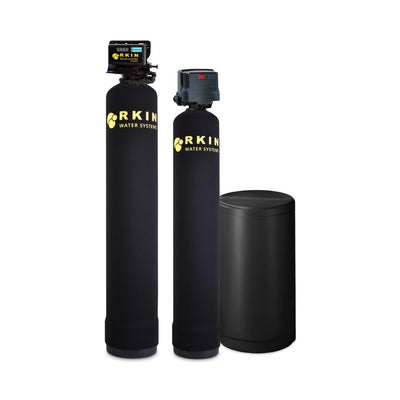
For homes that also deal with chlorine, chloramines, or other municipal contaminants, the RKIN OnliSoft Pro Salt-Free + Carbon Combo combines conditioning with whole-house carbon filtration in a single system — protecting appliances and improving water quality at every tap. Homeowners who specifically want the classic "soft water feel" can choose the RKIN Whole House Salt-Based Water Softener, which removes hardness through traditional ion exchange.
The point is the same in every case: protect your appliances at the source, not by buying new ones every six years. See rkin.com/collections/whole-house-water-treatment for current models and specs.
How to Tell If Your Home Has a Hard Water Problem
You probably already know, but here's the quick checklist. If three or more apply, your appliances are taking damage every day:
- White, chalky buildup on faucets, shower heads, and around the dishwasher door
- Soap scum that won't rinse off shower walls and tubs
- Spots on glasses and silverware out of the dishwasher
- Stiff, scratchy laundry — towels especially
- Dry skin and dull hair after showers
- Coffee maker descale light coming on more than every 3 months
- Reduced flow at faucets that were fine a year ago
- Water heater making rumbling or popping sounds
Frequently Asked Questions
How hard does my water need to be before it damages appliances?
The Water Quality Association classifies anything above 7 grains per gallon (gpg) as hard, and damage to appliances accelerates noticeably above 10 gpg. Many U.S. municipal supplies test between 7 and 25 gpg. If your test result is anywhere above the WQA "soft" threshold, treatment is worth considering — the cost of scale damage compounds every year you wait.
Will a water softener fix existing scale buildup in my appliances?
Yes, slowly. Once the water flowing through is no longer depositing new scale, the existing mineral layer gradually dissolves over weeks to months — particularly inside water heaters and washing machines. Heavy buildup in dishwashers and coffee makers may need a one-time descale, but new scale stops forming immediately.
Do I need a water softener if I already have a whole-house carbon filter?
Yes. Carbon filtration removes chlorine, chloramines, taste, and odor — but does nothing about hardness. Calcium and magnesium pass right through a carbon filter and continue scaling your appliances. The two systems address different problems and are commonly installed together.
Is salt-free conditioning as effective as a salt-based softener?
For appliance protection, independent studies have shown TAC-based salt-free systems reduce scale formation by 88%+ on heated surfaces — effectively eliminating the appliance-life problem. They don't produce the "slippery" feel of softened water and don't lower hardness on a test strip (the minerals are still in the water, just neutralized), which can confuse first-time users. Both technologies protect appliances; the choice comes down to preferences about salt, sodium, wastewater, and feel.
How long does it take to see the benefit?
Immediate. From the day the system is installed, no new scale forms inside your appliances. Existing buildup softens and washes out over the following weeks. Most homeowners notice softer-feeling laundry, cleaner glassware, and quieter water heaters within the first month.
How much maintenance does a salt-free conditioner need?
Almost none. The TAC media itself doesn't deplete and isn't designed to be replaced. The sediment prefilter that protects the media should be changed every 6–12 months. There's no salt to refill, no electricity to consume, and no wastewater to discharge.
Stop Replacing Appliances. Start Protecting Them.
The next time a dishwasher or water heater fails years early, the new one will fail at the same rate — unless you fix what's actually causing the damage. The RKIN OnliSoft Salt-Free Water Conditioner stops scale at the source with no salt, no electricity, and no ongoing media cost. Visit rkin.com to see the full whole-house lineup and find the right fit for your home.




0 comments