




best whole house water filter company
How to Choose a Whole House Water Filter Company in 2026

A whole-house water filter is not a small impulse buy. It touches every shower, fixture, appliance, and glass of water in the home. So when a company has a polished website but vague claims, few reviews, or a name that sounds a little too close to another brand, homeowners are right to pause.
That pause is even more common now because water questions are moving from niche forums into mainstream news. In 2024, the EPA finalized national drinking-water limits for several PFAS compounds, which pushed many homeowners to look harder at what their current system does and does not handle. More demand brings more options. It also brings more confusing claims.
Here is a practical way to choose a whole house water filter company without getting pulled into scare tactics or buying more equipment than your home needs.
Start With the Water, Not the Product
The best whole-house water filter company should ask about your water before recommending equipment. If the first answer is a product bundle, slow down.
City water and well water need different conversations. City water customers should start with the latest Consumer Confidence Report from their utility, then add point-of-use testing if there are home-specific concerns such as old plumbing, taste, odor, or nearby contamination news. Private well owners have a different job because the homeowner is responsible for testing and maintenance. The EPA private-well guidance tells well owners to test and protect their own water source because private wells are not covered by the same public-water rules.
A company that treats every home the same is guessing. A better company will ask questions like:
- Are you on city water or a private well?
- What problem made you start shopping: taste, odor, stains, scale, PFAS, lead, iron, sulfur, sediment, or something else?
- Do you want whole-home treatment, drinking-water treatment, or both?
- How many bathrooms and high-flow fixtures does the home have?
- Is there room near the main line, a drain, and an outlet if the system needs one?
Those questions are not busywork. They decide whether carbon, softening, conditioning, reverse osmosis, UV, or specialty media belongs in the plan.
Watch for Claims That Are Too Broad
A trustworthy water filter company should be able to say what its system is designed to do and what it is not designed to do. “Filters everything” is not a useful answer.
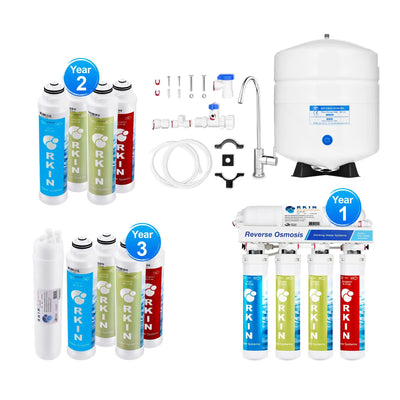
Different technologies solve different problems. Activated carbon is commonly used for chlorine taste and odor and certain organic chemicals. Reverse osmosis is used at the drinking-water tap for a wider range of dissolved contaminants. Salt-based softeners exchange hardness minerals. Salt-free conditioners condition scale behavior without removing hardness minerals. UV addresses certain microbiological concerns when water is already clear enough for UV treatment. Iron and sulfur issues often need oxidation and media designed for that water chemistry.
The EPA consumer filter tool for lead-reduction devices is a good example of the broader point: certification and contaminant-specific claims matter. A filter should be matched to a named contaminant or problem, not sold as a universal fix.
Ask the company to connect every claim to one of three things: a test result, a certification or third-party test, or a clear product specification. If the answer stays general, keep looking.
Check Fit for the Home, Not Just the Review Count
Reviews help, but they are not enough. A company can have strong reviews and still recommend the wrong system for a specific home. Another company can be newer online but have clear specs, real support, and a better fit.
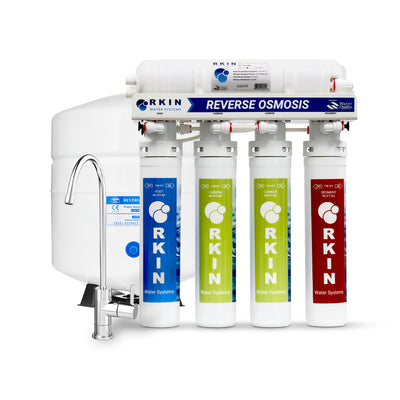
Fit includes flow rate, plumbing space, drain access, electrical needs, replacement schedule, and whether the system is point-of-entry or point-of-use. Whole-house systems treat water as it enters the home. Countertop or undersink RO systems treat drinking water at one location. Those are different jobs.
Here is the simple test: ask the company to explain why the recommended system matches your water source and your main complaint in two plain sentences. If they cannot explain it without jargon, the recommendation may not be ready.
For example, a homeowner worried about shower odor and chlorine taste may be looking at whole-house carbon. A renter worried about drinking water and cannot modify plumbing may be a better fit for a countertop reverse osmosis system. A well-water home with orange staining and sulfur smell needs a different conversation entirely.
Compare Maintenance Before You Compare Brands
Maintenance is where a lot of buyer regret starts. The system may sound simple until you learn it needs a drain, programmed backwash cycle, cartridge changes, salt, UV lamp replacement, media replacement, or a service call you did not plan for.
Ask these questions before you buy:
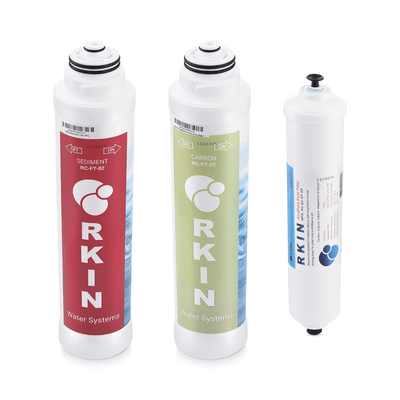
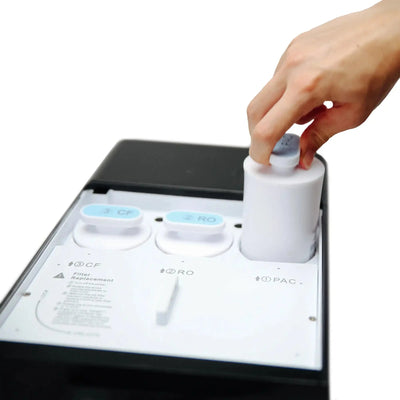
- What gets replaced? Get the exact filter, cartridge, lamp, or media schedule in writing.
- What happens if I miss maintenance? Some systems lose flow. Others lose reduction performance. Some can let untreated water bypass the media.
- Does it backwash? If yes, ask where the discharge goes and how often the cycle runs.
- Does it need salt? If yes, ask how much storage and refilling the home should expect.
- Can I do the maintenance myself? If not, ask who services it and how scheduling works.
- How will I know it is working? Look for test results, pressure gauges, indicator lights, lab retesting, or clear performance checks.
A good company will not hide these details. It will tell you the trade-offs before you buy.
Look for Plain-Language Support
The sales process is a preview of ownership. If the company is hard to reach before the sale, expect the same after the sale. If the answers feel scripted, ask a more specific question and see what happens.
Strong support looks like this:
- They explain the difference between whole-house and drinking-water treatment.
- They ask for water-test details when needed.
- They avoid fear-based language.
- They do not claim one product solves every problem.
- They can point you to product pages, manuals, replacement parts, and realistic maintenance steps.
- They are willing to say, “You may not need that,” when a smaller setup fits better.
That last point matters. The most trustworthy company is often the one that talks you out of overbuying.
Where RKIN Fits
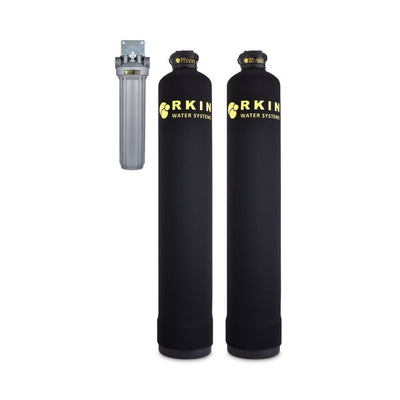
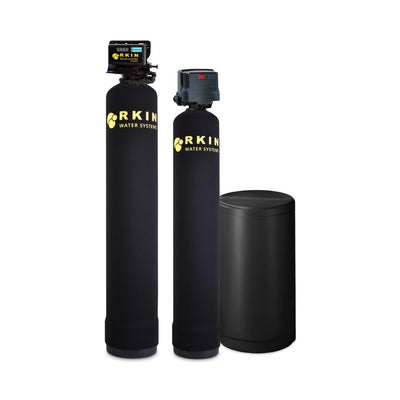
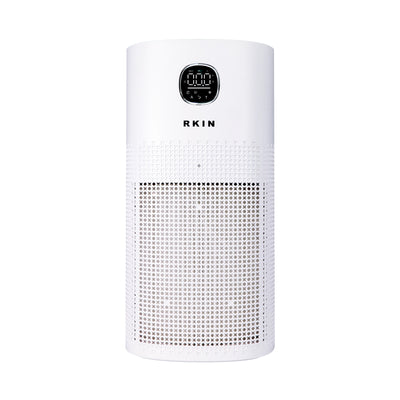
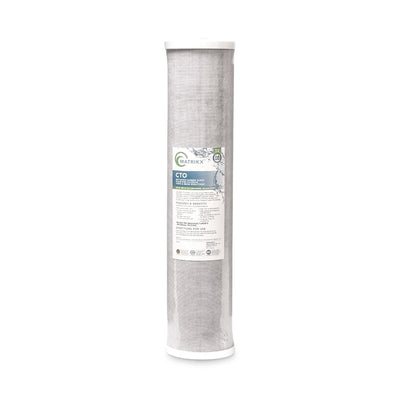
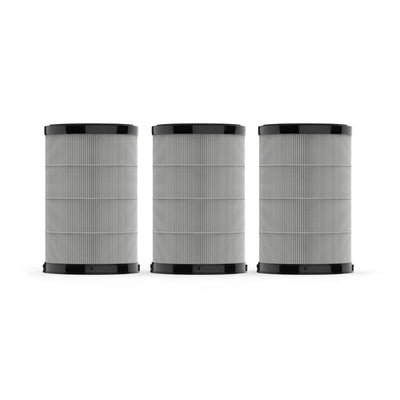
RKIN’s approach is to match the system to the water problem instead of forcing every homeowner into the same setup. For whole-home treatment, the RKIN whole-house water treatment collection includes options for carbon filtration, salt-free conditioning, softening, and well-water concerns.
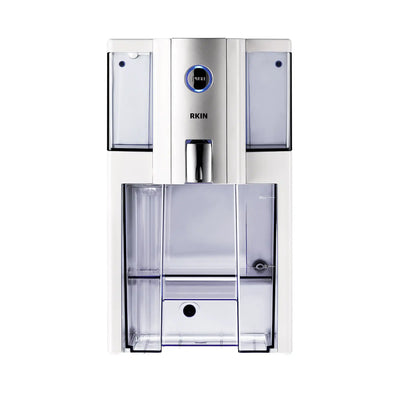
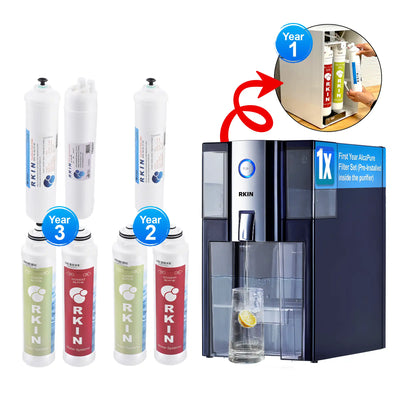
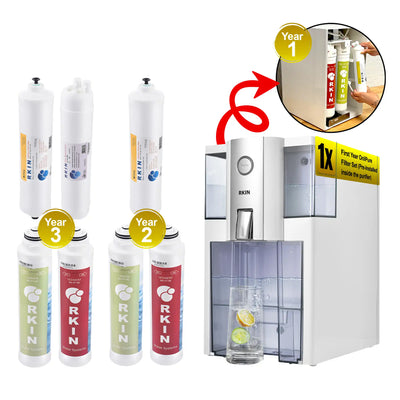
If your main issue is city-water taste, odor, or whole-home chemical reduction, the Whole House Carbon Water Filter System is built for point-of-entry carbon filtration. If your main concern is drinking water at one tap without plumbing changes, the Zero Installation Purifier Countertop Reverse Osmosis Water Filter may be the better first step.
That is the point: the right company should help you choose the least complicated system that fits the actual water problem.
A Homeowner Checklist Before You Request a Quote
Use this checklist to compare companies side by side.
- Water source: Did they ask whether you are on city water or a private well?
- Water data: Did they ask for a report, lab test, or at least a clear description of symptoms?
- Claim clarity: Did they name what the system is designed to reduce?
- Technology fit: Did they explain why carbon, RO, softening, conditioning, UV, or specialty media fits?
- Flow sizing: Did they ask about bathrooms, fixtures, and household demand?
- Maintenance: Did they explain replacement schedules, drains, salt, power, or service needs?
- Support: Can you reach someone who answers specific questions without pressure?
If a company passes those checks, it is worth a deeper look. If it fails more than one, do not ignore the signal just because the website looks polished.
Frequently Asked Questions
What is the best whole house water filter company?
The best company is the one that matches technology to your water source, test results, flow needs, and maintenance preferences. For one home that may mean whole-house carbon. For another it may mean a softener, salt-free conditioner, well-water system, or drinking-water reverse osmosis at the kitchen tap.
Should I choose a whole-house filter before testing my water?
For city water, start with your utility report and then test if you have home-specific concerns. For private wells, a lab test is the better starting point. Buying before testing can lead to the wrong media, poor flow, or a system that does not address the main problem.
Are online reviews enough to trust a water filter company?
Reviews are useful, but they are not a substitute for product fit. You still need clear claims, maintenance details, sizing guidance, and support. A good review history cannot make the wrong technology right for your water.
Do I need whole-house filtration or reverse osmosis?
Whole-house filtration treats water as it enters the home. Reverse osmosis usually treats drinking water at one tap or countertop unit. Many homes use both, but not every home needs both. The right setup depends on whether the concern affects showers, laundry, appliances, drinking water, or all of the above.
What questions should I ask a water filter company?
Ask what the system is designed to reduce, what it will not reduce, what maintenance is required, how it is sized, whether it needs a drain or power, and how you can verify performance over time. Clear answers are a good sign. Pressure or vague answers are not.
Ready to Choose With Less Guesswork?
A whole-house water filter company should make the decision clearer, not louder. Start with your water source, ask for plain claims, and compare maintenance before you compare brand promises.
Explore RKIN whole-house water treatment systems or contact RKIN if you want help matching the right system to your home’s actual water problem.






0 comments