




countertop-ro
How to Cut Bottled Water Waste at Home: An Earth Day Guide

Americans buy about 15 billion gallons of bottled water a year, according to the 2024 Beverage Marketing Corporation report — and the average household now spends more on single-use plastic bottles than on tap water by a factor of roughly 1,500 to one. Most of the plastic does not get recycled. A 2024 Ocean Conservancy cleanup tally counted plastic bottles in the top five items collected on beaches globally for the twelfth year running.
Earth Day tends to push people toward symbolic gestures — a reusable tote, an extra recycling bin. The higher-leverage swap is quieter: stop buying bottled water because the tap version in your kitchen is already better, once it is filtered correctly.
Why households keep buying bottled water
The switch feels obvious on paper, but it holds for a reason. When households stick with bottled water, it is usually one of four concerns driving it:
- Taste — municipal water can taste like chlorine, dirt, or metal depending on the source and the time of year.
- Trust — headlines about PFAS, lead pipes, or old distribution infrastructure have made people default to the sealed bottle.
- Convenience — a fridge full of cold, portable bottles is easier to grab than a pitcher in the door.
- Uncertainty — people do not know what is actually in their tap water and do not know what to do about it.
Each of those is solvable without a case of plastic on the counter.
The math of the swap
Before the tactical steps, a quick reality check on what stopping bottled water is actually worth.
A household that drinks the commonly cited ~1 gallon of water per person per day across four people uses about 1,460 gallons a year. At typical grocery bottled prices, that translates to $1,500–$3,000 a year spent on water — money that funds packaging, refrigeration trucks, and warehouse labor rather than water treatment.
The environmental number is larger:
- Plastic waste per household: 4–8 pounds a month from bottled water alone, depending on bottle size.
- Carbon footprint: The 2023 Pacific Institute estimate put bottled water at 3,000× the carbon footprint of filtered tap water, most of it from bottle manufacturing and trucking.
- Microplastic exposure: A 2024 study in Proceedings of the National Academy of Sciences found bottled water contains an average of 240,000 plastic particles per liter — most of them nanoplastic-sized and previously invisible to standard tests.
Stopping bottled water at the household level is the rare sustainability swap that also saves money and reduces a health concern at the same time.
A 7-day plan to phase out bottled water
Quitting cold is possible but rarely sticks. A staged transition keeps the household on board.
Day 1 — Audit what you are actually drinking
For one day, track every bottle opened — who, when, where. Most households discover that 60–70% of the bottled water is consumed at home, near a tap, for no practical reason other than habit or taste. That 60% is the easy win.
Day 2 — Test your tap water
Find your utility's most recent Consumer Confidence Report. Read it once. Then run a $15 home test kit covering chlorine, hardness, lead, and TDS. This step matters because the right filter depends on what is actually in the water, not what the internet generalizes.
Day 3 — Match a filter to the data
Tap water with no health violations but strong chlorine taste needs carbon filtration at the point of use. Water with elevated TDS, PFAS concerns, or old-lead-pipe risk needs reverse osmosis. Water with hardness and scaling issues needs a whole-house conditioner in addition to drinking-water filtration. The test results decide, not the ad.
Day 4 — Set up the kitchen
Place a stainless-steel or glass carafe in the fridge, a reusable bottle next to the coffee maker, and one for each household member on a hook by the door. Friction is what defeats good intentions — make the filtered option the easiest option in every room.
Day 5 — Use up the last of the plastic
Do not throw out the bottles you already bought. Rinse them, recycle them, and let the cupboard go empty. Rearranging the pantry after the last case clears the visual prompt that drove the next grocery reorder.
Day 6 — Fix the out-of-home bottleneck
Most households that fail at this swap fail on the car and gym side, not the kitchen side. A well-sealed insulated bottle, refilled at home before leaving, closes about 85% of the gap. For road trips, a small countertop unit in the kitchen can fill a 32-oz bottle in under a minute the night before.
Day 7 — Redirect the bottled water budget
Move the grocery line-item over to a filter budget. Over a year, most households will have paid for a quality filter system with money that was already being spent — just on plastic bottles instead of water.
What does not work
Three common substitutes fall short and need calling out:
- Pitcher filters can handle chlorine taste but are limited on dissolved solids, lead, and PFAS. They also run out of filter life faster than most labels claim if the household actually drinks a gallon a day.
- Refrigerator filters handle chlorine and some cysts but typically are not certified to the same standards as reverse osmosis for dissolved solids or PFAS.
- 5-gallon jug delivery removes the single-use plastic problem but keeps the cost high, adds truck-route emissions, and often uses municipal tap water filtered once and resold.
None of those are wrong for every household — they are just often sold as the answer when a better one exists.
What actually works at home
Two filtration approaches remove the reasons households default to bottled water:
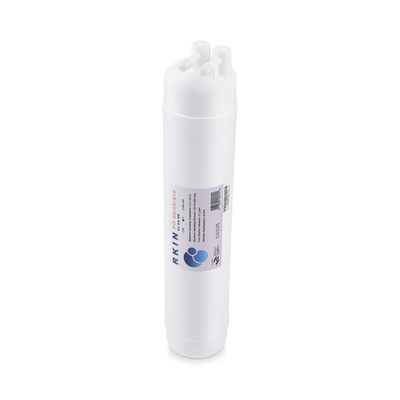
Reverse osmosis at the kitchen tap forces water through a semipermeable membrane that rejects dissolved solids, heavy metals, PFAS, fluoride, nitrates, and pharmaceuticals down to molecular size. Certified RO systems carry NSF/ANSI 58 certification. This is the technology that produces water equal to — or cleaner than — most bottled water brands.
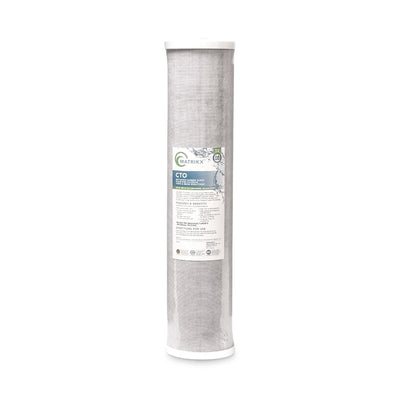
Carbon filtration knocks out chlorine, chloramine, VOCs, and many taste and odor compounds. Paired with RO, it handles the pre-treatment that extends membrane life. Paired with a whole-house setup, it upgrades every fixture, not just the kitchen.
The right mix depends on what the test kit and the Consumer Confidence Report showed, not on which ad showed up first.
The RKIN options worth knowing
For a household ready to commit to ending bottled water, four systems fit different living situations:
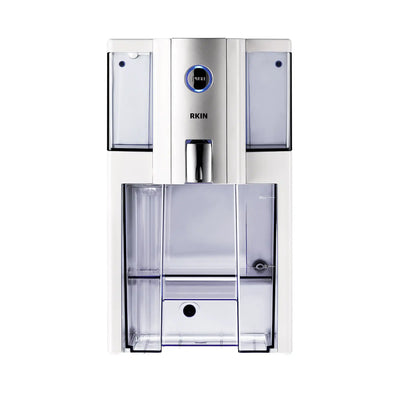
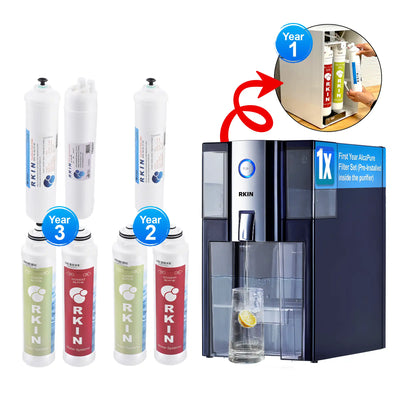
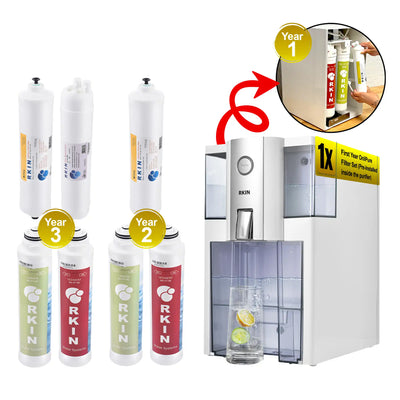
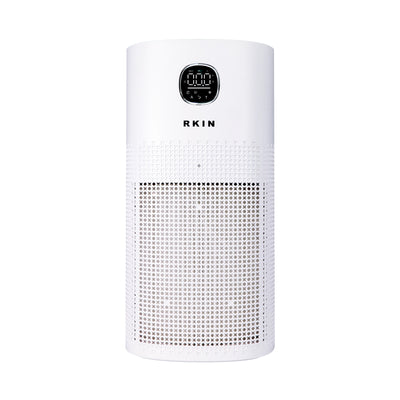
The Zero Installation Purifier is a countertop RO unit with no plumbing required — it connects to most standard faucets and fits renters, condos, and anyone who moves. For the highest leverage Earth Day swap, this is often the single most practical upgrade: the first filtered glass replaces a bottle, and the setup takes less than ten minutes.
The RKIN U1 4-in-1 Water Filter System is a countertop RO unit with a fill-tank design that plugs into a standard outlet — no faucet connection needed. It runs a 5-stage process including UV light and is 3rd-party tested for contaminant reduction (PFAS, lead, arsenic, fluoride, TDS). A good fit for kitchens where faucet compatibility is a hassle.
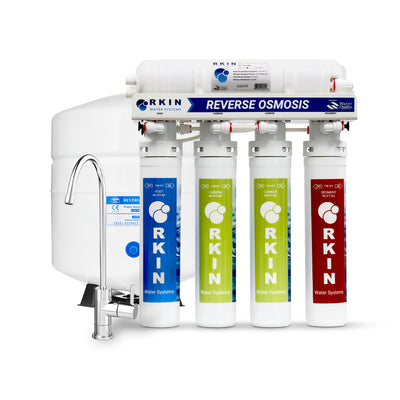
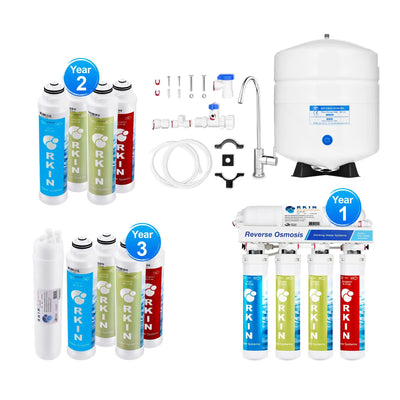
The RKIN Flash Undersink Reverse Osmosis System installs under the counter and connects to a cold-water line. It holds a 3.2-gallon tank so pot-fills are fast, and the tankless feel of its dispenser keeps the countertop clear. Best for homeowners who will stay put for years.
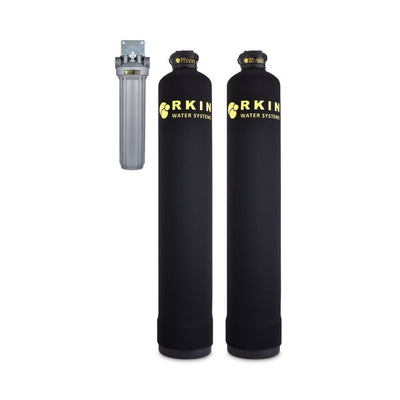
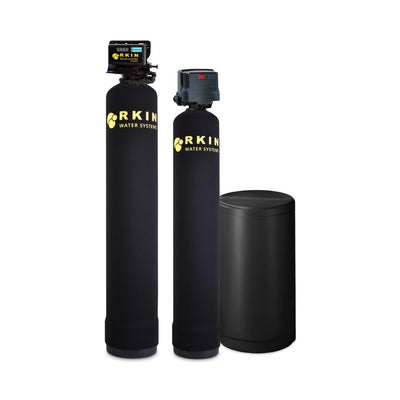
For households that also want every shower, ice maker, and laundry load to run on filtered water — the highest-leverage single upgrade for long-term sustainability — the RKIN OnliSoft Pro Salt-Free + Carbon Combo handles chlorine, chloramine, and scale in one whole-house system without salt or backwash discharge.
Frequently Asked Questions
Is filtered tap water actually safer than bottled water?
For most U.S. households, filtered tap water is cleaner on several measures — lower microplastic levels, no leached phthalates or antimony from PET bottles, and no time spent sitting on a hot warehouse pallet. Bottled water is regulated by the FDA at a lower testing frequency than municipal water is regulated by the EPA.
How much plastic do I actually save by quitting bottled water?
A four-person household drinking roughly a gallon per person per day saves about 50–100 pounds of single-use plastic per year, depending on bottle size. That is on top of the eliminated manufacturing and transport emissions.
Do I need a whole-house system to stop bottled water?
No. The fastest and most cost-effective start is a countertop or undersink RO system at the kitchen tap — that handles drinking, cooking, and refills for reusable bottles. Whole-house filtration is an upgrade for the shower, laundry, and appliance side of the house, which bottled water never addressed anyway.
What about when I travel?
A 24- to 32-ounce insulated bottle, filled at home before leaving, covers most errand runs and gym trips. For longer travel, airport refill stations are now in most U.S. terminals, and most hotels have filtered-water dispensers. The remaining gap — rare — is the one case where a sealed bottle is still the practical answer.
How often do the filters need to be replaced?
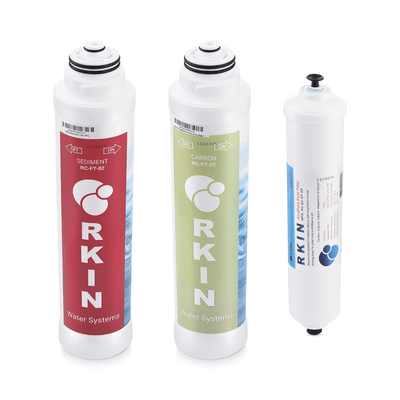
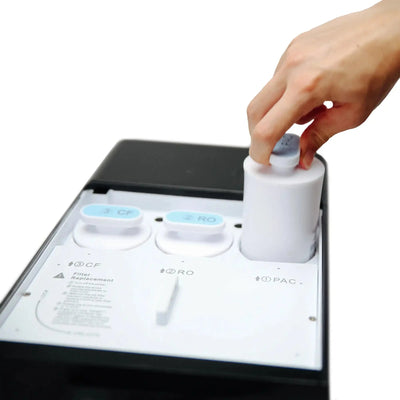
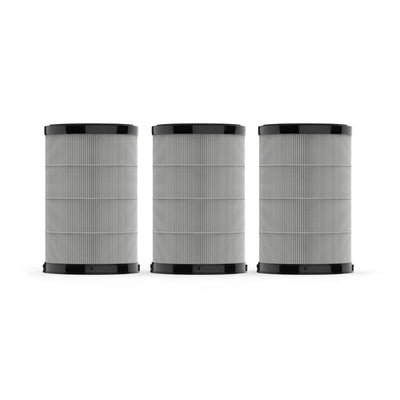
On RKIN countertop systems, pre-filters typically run 6 months and RO membranes 2–3 years depending on feed water. Whole-house carbon cartridges replace every 6–12 months. The total annual filter cost on any of these is a fraction of a year of bottled water.
What if my tap water tastes bad right now?
Taste issues almost always trace to chlorine, chloramine, or seasonal organic compounds from surface water. Carbon filtration solves all three. Reverse osmosis additionally removes dissolved solids that contribute to flat or mineral-heavy tastes. Once a proper filter is in place, most households report the tap water tastes cleaner than the bottled brand they were buying.
Ready to Make the Switch This Earth Day
Stopping bottled water at home is the rare Earth Day upgrade that saves real money, cuts real plastic, and gives you better water — all from the same swap.
Start with a test kit, match a system to the actual data, and pick the unit that fits your living situation. The Zero Installation Purifier gets most households from bottled-water habit to clean filtered water in one afternoon, and ships free.


0 comments