




hard water ice machine
Ice Machine Scale Buildup: Hard Water Fixes That Work

If your ice machine keeps growing white crust, dropping cloudy cubes, or needing service, the machine may not be the real problem. Scale is usually a water problem first and an appliance problem second.
That matters because ice machines are unforgiving. They freeze water, leave dissolved minerals behind, and repeat that cycle all day. Even a small hardness problem can become visible on evaporator plates, valves, spray arms, pumps, bins, and water lines. A 2026 search for commercial and home ice machine help turns up the same pattern again and again: hard water, mineral scale, slow ice production, and repeat cleaning. Before you replace another part, test the water feeding the machine.
Why Ice Machines Show Hard Water Problems So Fast
Hard water contains dissolved calcium and magnesium. Those minerals are invisible in a clear glass, but heat, evaporation, pressure changes, and freezing make them show up. An ice machine does the last part better than almost any appliance in the house.
When water freezes, pure water turns into ice first. Minerals, sediment, chlorine taste, iron, and other dissolved material concentrate in the unfrozen water that remains. Some of that concentrated water drains away. Some keeps moving through the machine. Over time, minerals can collect on the evaporator surface where ice forms, inside small water passages, and around sensors or valves.
That is why the symptoms often feel random. You may see cloudy ice, a smaller harvest, hollow cubes, flakes in the bin, or a machine that needs descaling more often than the manual suggested. In a home refrigerator, the same water can make the dispenser slow or the ice taste flat. In an undercounter or shop ice machine, the problem can be more obvious because the machine makes more ice and cycles more often.
The search query “ice machine scale buildup” usually comes from someone who already cleaned the machine once. Cleaning helps, but it does not change the feed water. If hardness keeps entering the machine, scale keeps coming back.
The Quick Checks Before You Blame the Machine
Start with the basic split test: is the problem only at the ice machine, or is the water leaving signs elsewhere?
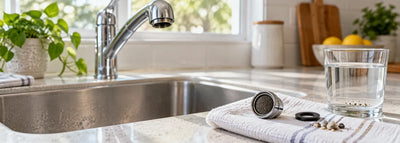
Look at the coffee maker, shower glass, dishwasher, faucet aerators, glassware, water heater, and toilet tank. White crust points toward hardness scale. Orange or brown staining points more toward iron, rust, or sediment. Black or gray staining can point toward manganese or plumbing materials. A salty taste can point toward a softener setting or regeneration issue. Cloudy water that clears from the bottom up is often trapped air, not sediment.
For ice machines, also check the feed line. Small tubing and tiny valves clog faster than a normal faucet. If the filter was changed recently and flow got worse, the cartridge may be clogged, installed backward, undersized, or not flushed. If the machine improved after descaling and then declined again, water chemistry is still the likely driver.
Testing gives you the cleanest answer. For a city-water home, check your annual Consumer Confidence Report and test hardness at the tap. For a private well, the EPA says well owners should test annually for total coliform bacteria, nitrates, total dissolved solids, and pH, and test right away when color, odor, taste, flooding, land disturbance, or repairs change conditions. Add hardness, iron, manganese, and sediment to the conversation if appliances are staining or scaling.
Why Fridge Filters and Small Inline Filters Often Miss Scale
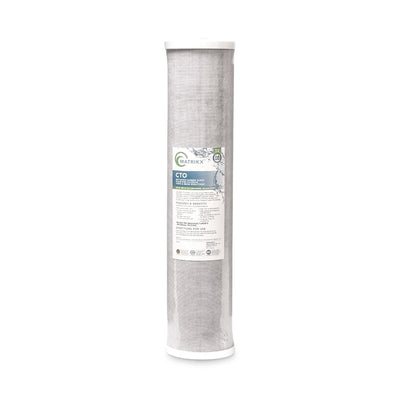
A refrigerator filter is usually built for taste and odor. Many use activated carbon to reduce chlorine taste, some sediment, and certain organic compounds. That can make drinking water taste better, but it does not automatically solve hardness.
Hardness is dissolved mineral content. If a filter does not remove or condition calcium and magnesium, those minerals still reach the ice machine. That is why a new refrigerator filter can improve flavor while the ice maker still grows scale.
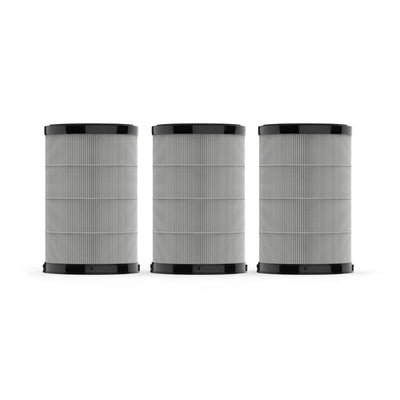
Small inline filters can help with sediment and taste when they are sized correctly, but they are easy to overestimate. A tiny cartridge feeding a hard-working ice machine has limited contact time and limited capacity. If the water has hardness, iron, manganese, or fine sediment, the cartridge can plug early or let the real problem pass through.
Boiling does not solve this either. Boiling can drive off some gases and concentrate minerals, but it is not a practical ice-machine treatment method. Bottled water in trays can work for a small batch of cubes, but it does nothing for a built-in machine connected to the home water line.
The better question is not “Which small filter can I add before the machine?” The better question is “What does my water test say is damaging this appliance?”
What Actually Helps With Ice Machine Scale
There are two broad fixes, and they solve different parts of the problem.
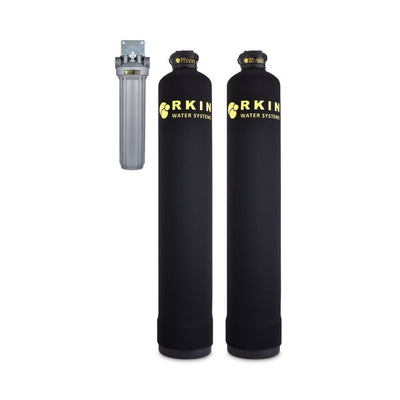
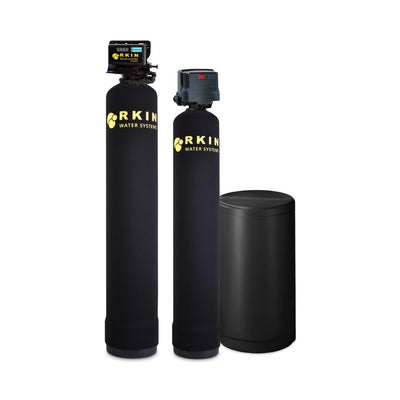
First, treat the water at the main line. Whole-house treatment addresses the water before it reaches the ice machine, dishwasher, water heater, washing machine, shower, and every faucet. If hardness is the main issue, a water softener or salt-free scale-control system may reduce the tendency for minerals to cling to surfaces. If chlorine taste, odor, sediment, or other city-water issues are also present, carbon filtration and sediment filtration may belong in the system design.
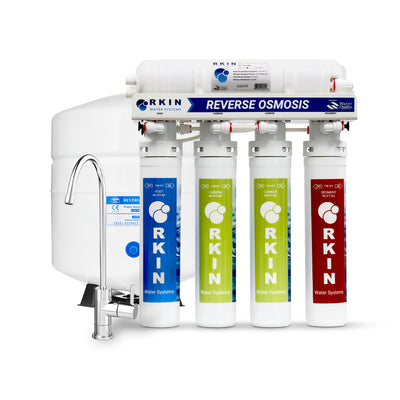
Second, use reverse osmosis for drinking and ice. Reverse osmosis pushes water through a fine membrane that can reduce total dissolved solids and many dissolved contaminants at a dedicated tap. The EPA lists reverse osmosis as one filter technology that can be effective for certain PFAS when the system is properly certified for that claim. For ice, the lower dissolved solids can mean clearer cubes, cleaner taste, and less mineral residue going into a connected ice maker.
Some homes use both: whole-house treatment to protect appliances and point-of-use reverse osmosis for drinking water, coffee, cooking, and ice. That setup makes sense when the homeowner wants broad scale control plus a dedicated high-quality water source at the kitchen.
Maintenance still matters. Any filter can become a problem if it is neglected. Carbon cartridges, sediment filters, RO filters, and membranes need replacement on the schedule for that exact system and water use. A neglected cartridge can reduce flow, change taste, or let treated water quality drift.
Where RKIN Fits
For appliance protection across the home, start with RKIN whole-house options. The RKIN Whole House Water Treatment collection is built around the problems homeowners actually see: hardness scale, chlorine taste and odor, iron, sulfur odors, sediment, and staining. The right setup depends on whether you are on city water or well water and what the water test shows.
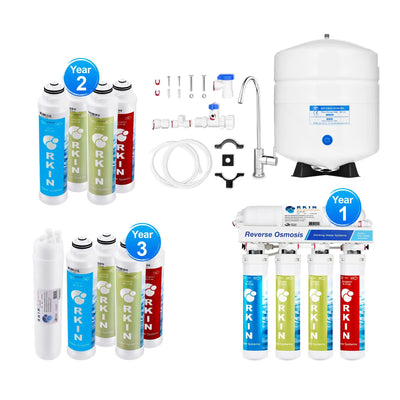
For a dedicated drinking and ice-water line, the RKIN Flash Undersink RO System is the cleaner fit when you want under-sink reverse osmosis connected to a faucet and, when installed that way, a refrigerator or ice-maker line. It uses an NSF/ANSI 58 certified reverse osmosis membrane and a compact tank design.
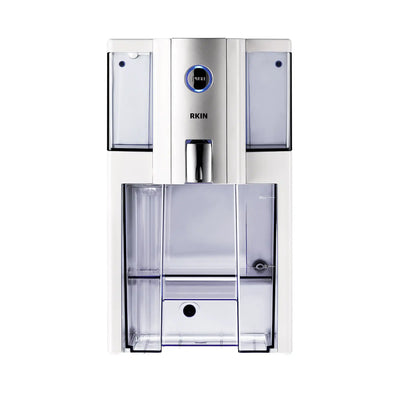
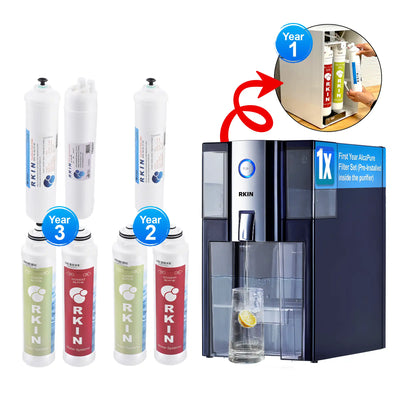
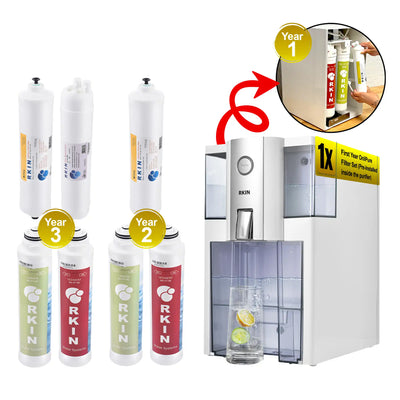
If you cannot modify plumbing, the RKIN Zero Installation Purifier Countertop Reverse Osmosis Water Filter is the no-plumbing option for drinking water, coffee, cooking, and manual ice trays. It is not a whole-house appliance-protection system, but it is useful when your main concern is better water at the counter.
When To Call a Pro
Call an appliance technician when the ice machine leaks, trips power, will not harvest, or has a mechanical fault. Call a water-treatment pro when the same mineral symptoms keep returning after cleaning, when more than one appliance has buildup, or when a water test shows hardness, iron, manganese, sediment, or high total dissolved solids.
For private wells, do not skip testing. A well can change after heavy rain, drought, nearby construction, a pump repair, or a change in water use. The water that looked fine last year may not be the same water feeding your ice machine now.
In my house, I would not keep replacing ice-machine parts until I knew the hardness number and checked the rest of the home for scale clues. A machine problem can be real, but repeat scale is usually the water telling you the same story in a more expensive language.
Frequently Asked Questions
What causes ice machine scale buildup?
Ice machine scale buildup is usually caused by dissolved hardness minerals, mainly calcium and magnesium. As water freezes and cycles through the machine, minerals can collect on evaporator plates, valves, pumps, and small water passages. Iron, manganese, and sediment can add staining or flakes, so testing matters before choosing a fix.
Will a refrigerator filter stop hard water scale in an ice maker?
Usually no. Many refrigerator filters are designed mainly for taste, odor, chlorine, and some sediment. Hardness minerals can pass through unless the filter is specifically designed and rated for scale control. If the same water leaves white residue on faucets or shower glass, the ice maker may need treatment before the fridge.
Is reverse osmosis good for ice machines?
Reverse osmosis can be a strong option for drinking water and ice because it reduces total dissolved solids. For a built-in ice maker, the RO system must be installed and sized correctly for the machine’s flow needs. Some homeowners pair whole-house treatment with under-sink RO for the kitchen and ice line.
Do I need a whole-house system for ice machine scale?
You may need whole-house treatment if hardness signs show up across the home, not just at the ice machine. A main-line system can protect the water heater, dishwasher, washing machine, faucets, and ice maker at the same time. If the issue is only drinking water taste, point-of-use RO may be enough.
How do I know if my water is too hard for an ice machine?
Test hardness at the tap feeding the machine, then compare that result with appliance symptoms. White crust, repeated descaling, cloudy cubes, clogged valves, and scale on other fixtures all point toward hard water. For well water, also test for iron, manganese, sediment, pH, and total dissolved solids.
Ready To Stop Cleaning the Same Scale Twice?
If your ice machine keeps scaling up, do not guess at the next cartridge. Test the water, match the fix to the result, and treat the problem before it reaches the appliance.
Start with the RKIN Whole House Water Treatment collection for appliance-wide protection. Ships free.



0 comments