




pfas drinking water rule 2026
PFAS Drinking Water Rule 2026: What Homeowners Do Now

The PFAS drinking water rule did not make the question go away for homeowners. It made the question more specific. Which PFAS were found, at what level, in which water system, and what can you do at your own tap while utilities work through testing and treatment?
In April 2024, the EPA finalized the first national drinking-water limits for several PFAS. In May 2026, the agency announced proposed changes that would keep enforceable limits for PFOA and PFOS while giving some water systems a possible longer compliance window. That is why homeowners are seeing mixed headlines about 2029, 2031, six PFAS, two PFAS, and “forever chemicals.” The short answer: the topic is still active, and your best next step is to look up your local water data before buying anything.
What Changed in 2026
PFAS stands for per- and polyfluoroalkyl substances, a large group of chemicals used for decades in products that resist oil, water, heat, and stains. The EPA says drinking water can be a meaningful part of a person’s total PFAS exposure. That does not mean every home has the same problem. It means homeowners should stop treating PFAS as a vague headline and start treating it as a water-report question.
The EPA’s 2024 PFAS drinking water rule set enforceable maximum contaminant levels for PFOA and PFOS at 4.0 parts per trillion, with additional limits for PFHxS, PFNA, HFPO-DA, and certain mixtures. Public water systems were required to complete initial monitoring by 2027 and work toward treatment deadlines if levels exceeded the limits.
Then, on May 18, 2026, the EPA announced a proposed PFOA and PFOS compliance extension rule. The proposal would keep the PFOA and PFOS limits at 4.0 parts per trillion but allow certain systems to request two additional years, potentially moving compliance for those systems to 2031. The EPA also announced a related proposal concerning several other PFAS compounds.
For a homeowner, the fine print matters less than three practical points: ask whether your utility tested, ask which PFAS were detected, and ask whether treatment is planned or already operating.
What the Rule Does Not Tell You About Your House
A federal rule does not test your kitchen sink. It sets obligations for public water systems. If you receive a water bill from a city or utility, that system is the place to start. Your annual Consumer Confidence Report may list PFAS data when testing is available, and utilities can tell you whether samples were taken under EPA monitoring programs.
Private wells are different. The EPA’s public-water rule does not cover your private well. If you own the well, you own the testing decision. The EPA advises private well owners to test annually for total coliform bacteria, nitrates, total dissolved solids, and pH, and to test right away after flooding, repairs, land disturbance, new construction, industrial activity nearby, or a change in odor, color, or taste. PFAS testing may be worth discussing with a certified lab if your property is near likely sources such as certain industrial sites, airports, military facilities, landfills, or areas linked to firefighting foam use.
Do not assume clear water means PFAS-free water. PFAS do not announce themselves with color, smell, or taste. That is one reason the topic creates so much frustration: the water can look normal while the homeowner still needs better data.
At the same time, do not assume every home needs the same equipment. If your utility did not detect PFAS, or if levels were below current standards, your buying decision may be driven more by taste, chlorine, lead plumbing risk, sediment, hardness, or total dissolved solids than by PFAS alone.
What Does Not Work for PFAS
Boiling is not the answer. Boiling water can help in some boil-water notice situations when bacteria are the concern, but PFAS are not handled that way. In a PFAS situation, the EPA points homeowners toward filters that are certified to reduce specific PFAS, not toward boiling.
A basic pitcher may or may not be enough. Some carbon filters can reduce certain PFAS when they are certified for that claim and maintained correctly. But “filters water” is not the same as “tested for PFOA and PFOS reduction.” Look for the exact contaminant claim, the certification body, and the performance data sheet.
Bottled water is not a clean long-term answer for most families. It creates storage, delivery, plastic waste, and cost over time, and it still leaves cooking water, coffee water, pet water, and ice to solve. If bottled water is your temporary bridge, treat it as a bridge while you get your water data and choose a better home setup.
The biggest mistake is buying on fear. PFAS headlines are serious, but the right system still depends on your water source, your test result, your installation limits, and what you want treated: one drinking-water tap or the entire home.
Which Filter Types Help Reduce PFAS?
The EPA lists granular activated carbon, reverse osmosis, and ion exchange resins as filter types that can be effective at reducing PFAS when the product is certified for the specific claim and maintained correctly.
For point-of-use drinking water, reverse osmosis is often the most familiar option. RO uses pressure to push water through a fine membrane that separates many dissolved substances from the finished water. It is commonly used under the sink or in countertop systems. For PFAS shopping, do not stop at the words “reverse osmosis.” Check the performance data sheet and confirm whether PFOA and PFOS reduction claims apply to that exact model.
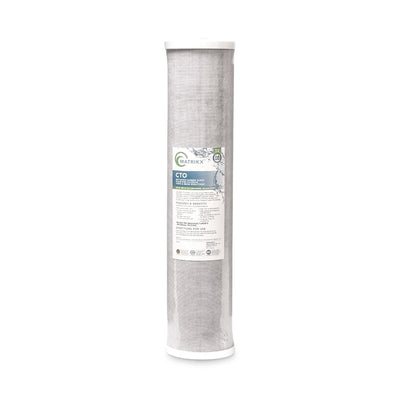
Granular activated carbon can also be useful, especially when the product is certified to NSF/ANSI 53 for PFOA and PFOS reduction. Carbon performance depends on water chemistry, contact time, cartridge size, flow rate, and maintenance. A small neglected cartridge can stop being the filter you thought you bought.
Ion exchange resins are another treatment path used in certain applications. They need proper design, monitoring, and replacement or regeneration planning. For many homeowners, the buying decision comes down to whether they want a dedicated drinking-water system, a whole-home system, or both.
One caution: the EPA notes that, as of April 2024, filter certifications focused on PFOA and PFOS and did not yet prove reduction all the way down to the new federal drinking-water standard in every case. That is not a reason to give up. It is a reason to read the data sheet and avoid vague claims.
Where RKIN Fits
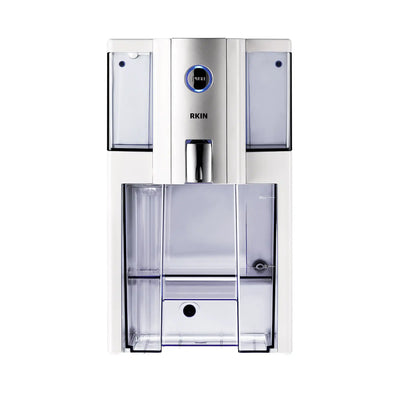
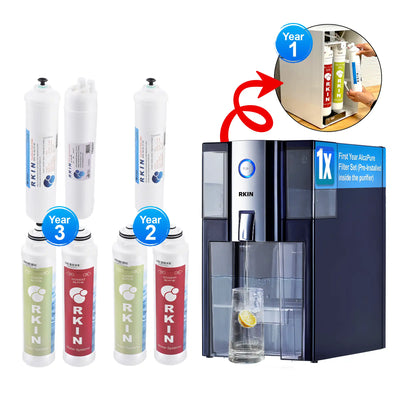
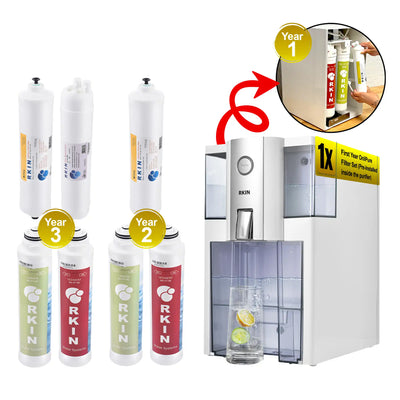
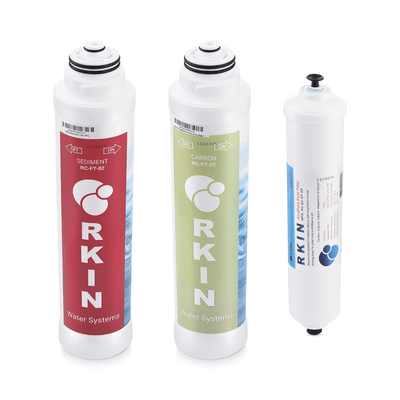
If PFAS is your main concern at the kitchen tap, the RKIN U1 4-in-1 Water Filter System is the countertop option to compare. It uses five-stage filtration with reverse osmosis and UV, and it is third-party tested for reduction of TDS, fluoride, lead, PFOA/PFOS, hexavalent chromium, and trivalent chromium. It is a countertop system with a fill tank, so it does not mount under the sink.
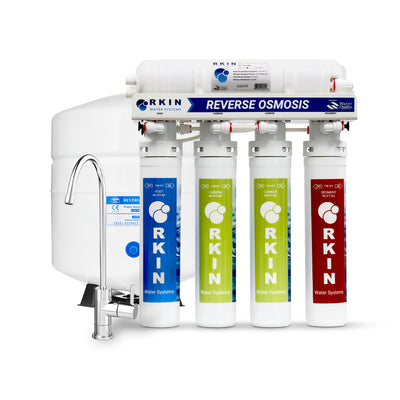
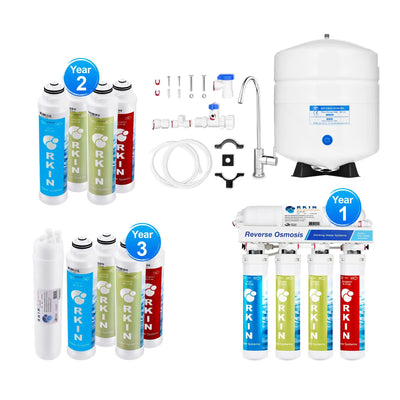
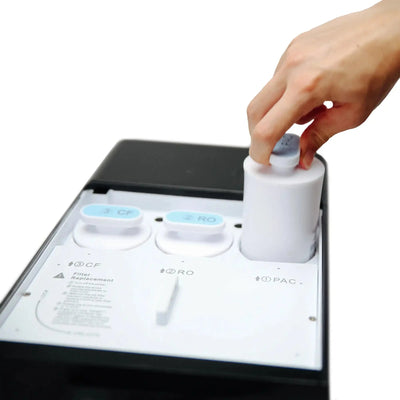
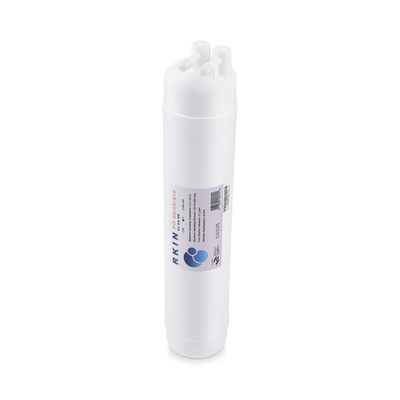
If you want under-sink reverse osmosis, compare the RKIN Flash Undersink RO System. It uses an NSF/ANSI 58 certified reverse osmosis membrane and a compact storage tank. It is the cleaner choice when you want a dedicated faucet and a plumbed setup under the sink.
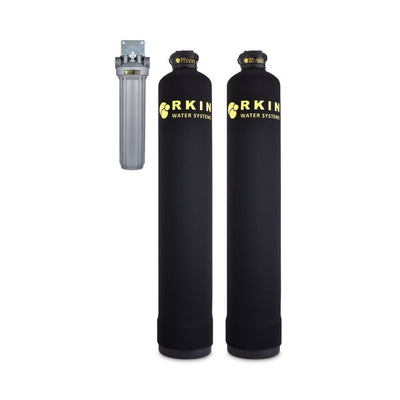
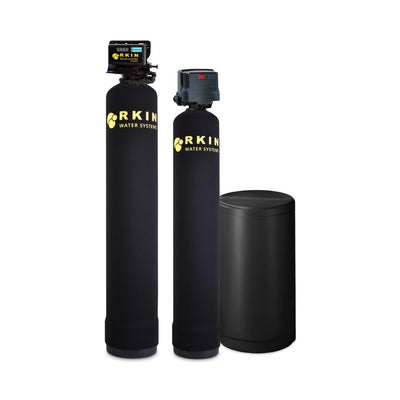
If you are thinking beyond one tap, start with the RKIN Whole House Water Treatment collection. Whole-house treatment can make sense when the same home has chlorine taste, sediment, hardness, iron, sulfur odor, or a need to address water before it reaches every fixture. For PFAS, ask RKIN to match the recommendation to your source-water data, not to a headline.
How To Read Your Water Report Without Getting Lost
Start with your water source. City-water customers should search for their utility’s Consumer Confidence Report and call the utility if PFAS data is unclear. Ask which PFAS were tested, which were detected, the units used, whether results were above any current or proposed limits, and whether treatment is planned.
Private well owners should contact a certified lab or local health department. Ask whether PFAS testing is appropriate for your location and which sample method they require. PFAS sampling can be sensitive because some packaging, waterproof clothing, stain-resistant materials, or sampling mistakes can affect results. Follow the lab’s instructions exactly.
Then match the system to the use case. If the question is drinking water, coffee, cooking, and ice, point-of-use reverse osmosis may be enough. If the question is whole-home water quality, hardness, sediment, or taste at every tap, whole-house treatment belongs in the discussion.
In my house, I would not buy a PFAS filter until I had three things in front of me: the water source, the contaminant list, and the exact product data sheet. Marketing words do not matter as much as the test claim.
Frequently Asked Questions
What is the PFAS drinking water rule in 2026?
The 2026 update is a set of EPA proposals related to the 2024 PFAS drinking water rule. The EPA proposed keeping enforceable limits for PFOA and PFOS at 4.0 parts per trillion while allowing certain water systems to request more time to comply. The rule status can change, so check EPA and your utility for current details.
Does the PFAS rule apply to private wells?
No. The federal public-water rule applies to public water systems, not private wells. If you own a private well, you decide when to test. The EPA advises annual well testing for several basics and immediate testing after flooding, repairs, water-quality changes, or nearby land-use changes.
What kind of filter reduces PFAS in drinking water?
The EPA lists granular activated carbon, reverse osmosis, and ion exchange resins as filter types that can reduce PFAS when the product is certified for the specific claim and maintained correctly. Always check the performance data sheet for PFOA and PFOS reduction claims on the exact model.
Does reverse osmosis remove PFAS?
Reverse osmosis can reduce certain PFAS when the system is tested or certified for that specific claim. Do not rely on the technology name alone. Look for PFOA and PFOS reduction in the data sheet, use the system as directed, and replace filters on schedule.
Should I wait for my utility to fix PFAS before buying a home filter?
That depends on your local water data and risk tolerance. Utilities may need years to plan, build, and operate treatment. If PFAS were detected in your water and you want a tap-level option now, compare certified or third-party tested systems while still following utility notices.
Ready To Make a PFAS Decision Based on Data?
Start with your water report or a certified lab test. Then choose the system that matches the result, the installation you can support, and the water you actually use every day.
Compare the RKIN U1 4-in-1 Water Filter System if you want countertop reverse osmosis with third-party tested PFOA/PFOS reduction. Ships free.






0 comments