


chalky residue in water bottle
White Residue in Water Bottle? What It Means at Home

That chalky ring in your stainless steel water bottle is usually not a mystery contaminant. Most of the time, white residue points to minerals that were already in the water, residue from cleaning products, or buildup that forms when a bottle stays damp between uses.
That does not mean you should ignore it. The same clues that show up inside a bottle can tell you something useful about your tap water, your dishwasher, your cleaning habits, and whether a point-of-use filter or whole-home treatment system makes sense.
Why White Residue Shows Up in a Water Bottle
White residue usually comes from dissolved minerals. When water dries, the water leaves but minerals can stay behind as a pale film, flakes, dots, or a chalky ring. Calcium and magnesium are common hardness minerals. Sodium, chloride, sulfate, and other dissolved solids can also add to taste, film, and residue.
The EPA separates primary drinking water standards from secondary standards. Primary standards are enforceable limits tied to public drinking water safety. Secondary standards are non-enforceable guidelines for taste, odor, color, staining, and scale. The EPA's secondary drinking water standards list total dissolved solids at 500 mg/L as a guideline because higher levels can affect taste and leave deposits.
A bottle makes those deposits easier to notice. A stainless steel bottle has a dark interior, a tight cap, and small seams. If you fill it with hard tap water, carry it all day, let it warm up in the car, then rinse it quickly at night, small deposits can build into a visible film.
The key is pattern. One dusty-looking ring after a bottle air-dries is different from flakes that return after every wash, a slimy feel, odor, or residue that appears in every cup, kettle, ice tray, and faucet.
First, Separate Source Water From Bottle Buildup
Before blaming your water, run a simple comparison. Wash the bottle, rinse it well, and let it dry. Then fill one clean glass with tap water and one clean glass with filtered or store-bought purified water. Let both sit uncovered overnight on the counter. The next day, look for spots, film, or rings after the water evaporates.
If the tap-water glass leaves residue and the purified-water glass does not, the source is likely dissolved solids in your tap water. If both look clean but the bottle still shows film, focus on the bottle. Narrow openings, silicone seals, caps, straws, and threads can trap detergent or organic residue.
Also check your kettle, coffee maker, shower glass, faucet aerator, and ice maker. White scale on several surfaces points toward hard water or high dissolved solids. Residue only in one bottle points toward cleaning, drying, or bottle material.
Do not use taste alone as proof. Some minerals change taste; others do not. Clear water can still carry dissolved solids, and cloudy water can sometimes be trapped air that clears from the bottom up. A basic at-home TDS meter can help you compare before and after filtration, but it cannot identify what each dissolved solid is. For contaminant-specific answers, use a certified laboratory test or your local water quality report.
What White, Slimy, Brown, or Colored Residue Can Mean
White chalky residue is often mineral scale. It may feel gritty when dry and can dissolve or loosen with an acidic cleaner such as diluted white vinegar. That pattern points toward hardness minerals or other dissolved solids.
A slippery or slimy film is different. That often points to organic buildup inside the bottle, especially around lids, gaskets, straws, and bite valves. It can happen even when the water itself is fine because a bottle is a closed, damp surface that touches hands and mouths all day.
Brown, orange, or black residue deserves more attention. Orange-brown staining can come from iron in water or from rust in plumbing. Black specks can come from rubber washers, carbon fines from a new filter, manganese, or debris in the line. If staining appears at multiple fixtures, document it and test the water rather than guessing.
Residue that arrives suddenly after city water work, a plumbing repair, a water heater flush, or heavy rain is also worth tracking. Sediment can move when lines are disturbed. If you are on a private well, rain and flooding can change water quality faster than most homeowners expect.
The practical rule is simple: one bottle can be a cleaning issue. The same residue across the house is a water issue until testing proves otherwise.
What Does Not Fix the Root Cause
Boiling water does not remove most dissolved minerals. It can drive off some water and make mineral deposits more visible. That is why kettles and coffee makers often build scale when hard water is heated again and again.
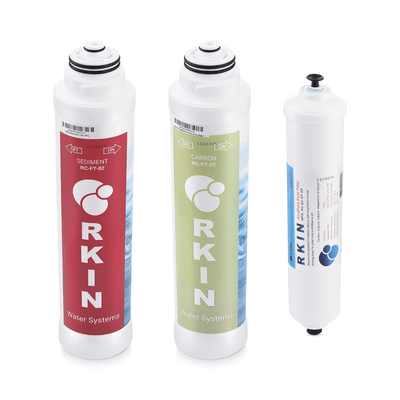
A basic refrigerator or pitcher filter may improve taste, but many are built mainly around carbon filtration. Carbon is useful for chlorine taste and odor, but it is not the same as reverse osmosis. If the problem is dissolved solids, a carbon-only filter may leave the chalky residue almost unchanged.
Bottled water can reduce the residue in a single bottle, but it creates a daily refill habit and does not solve the water coming from your taps, ice maker, coffee machine, or cooking water. If your goal is less mineral film in drinking water, a home filter with the right treatment technology is usually easier to control.
Scrubbing harder is not a water treatment plan either. Clean the bottle, yes. Remove gaskets and lids, yes. But if the same white deposits keep returning from the source water, cleaning only resets the clock.
How Reverse Osmosis Helps With Bottle Residue
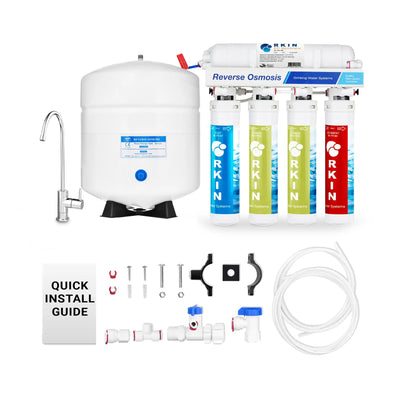
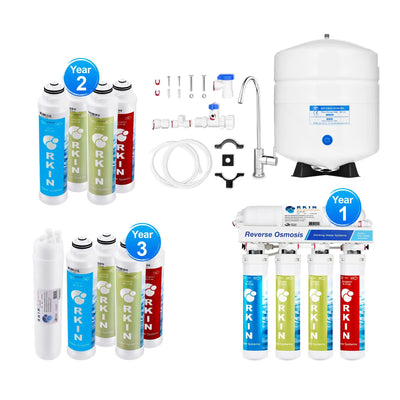
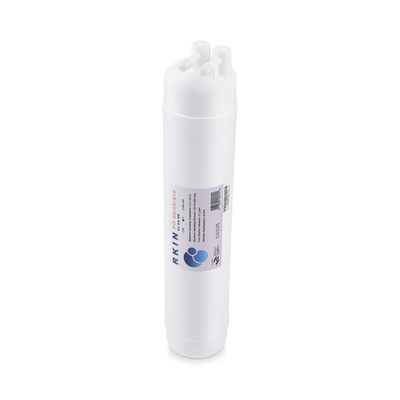
Reverse osmosis is designed to reduce many dissolved substances that pass through simpler filters. Water is pushed through a semi-permeable membrane, and many dissolved solids are separated from the drinking water stream. That is why RO is often worth comparing when the complaint is chalky residue, high TDS, or taste from dissolved minerals. Separate contaminant concerns such as PFAS, lead, arsenic, fluoride, or nitrate require their own test result and model-specific reduction data.
The EPA's 2024 water filter fact sheet lists reverse osmosis as one of the treatment technologies that can reduce certain PFAS when the system is properly selected, installed, and maintained. That same principle matters for mineral residue: technology and maintenance both matter.
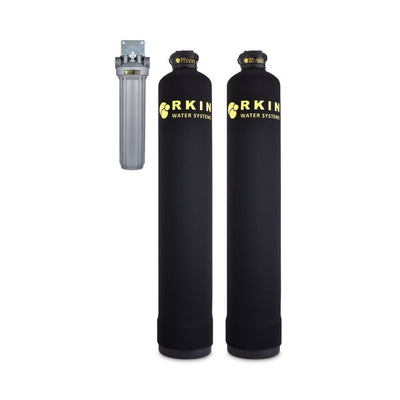
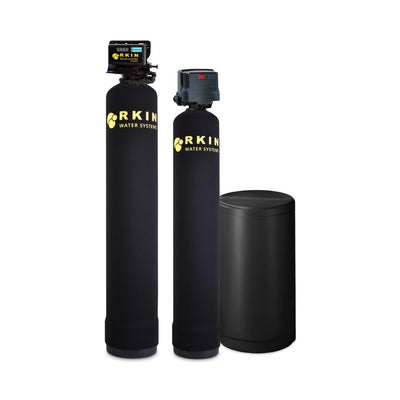
If white residue is mostly hardness scale, whole-home treatment may also be worth a look. A drinking-water RO system can improve the water you drink and use in bottles. Whole-home treatment addresses water before it reaches showers, heaters, fixtures, and appliances. Those are different jobs, and some homes need both.
Use testing to avoid overbuying. Start with your city water report or a lab test, then match the system to the issue. High chlorine taste calls for a different primary tool than high dissolved solids, iron staining, or well-water sediment.
Where RKIN Fits
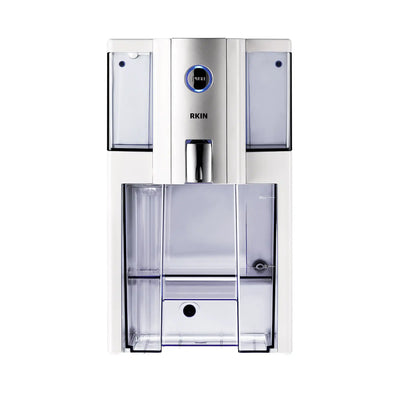
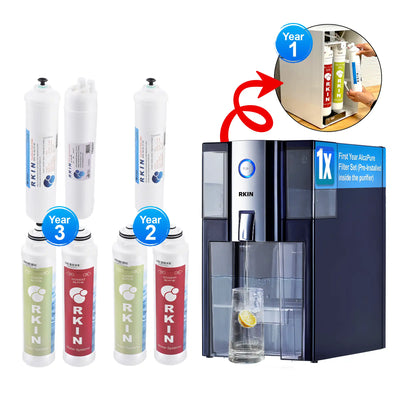
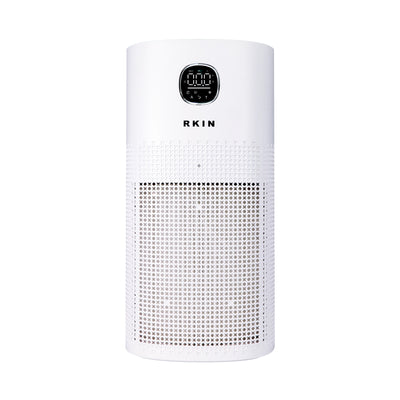
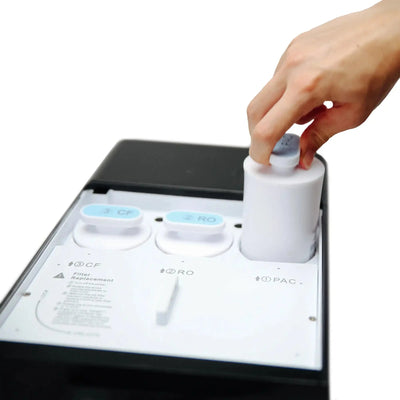
The RKIN Zero Installation Purifier Countertop Reverse Osmosis Water Filter is designed for homeowners and renters who want RO drinking water without plumbing work. It sits on the counter, uses reverse osmosis filtration, and is especially useful when the problem shows up in drinking water, reusable bottles, coffee, tea, and ice.
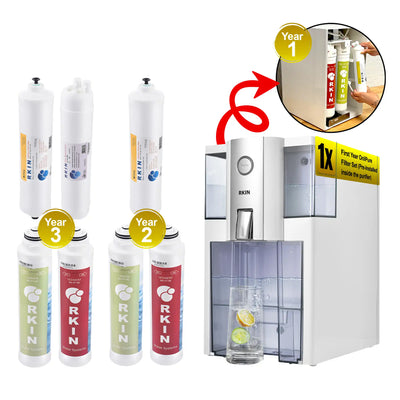
For a compact countertop format, the RKIN U1-W Space-Saving 4-in-1 Water Filter System combines reverse osmosis, remineralization, UV storage-water treatment, and hot and cold dispensing in a refill-tank design. Those features do not establish performance for PFAS, lead, arsenic, fluoride, or nitrate. If the residue points to a whole-house hardness or scale pattern, start with RKIN's whole house water treatment collection and match the system to your test results.
The point is not to buy the biggest system first. The point is to find out whether you have a bottle issue, a drinking-water issue, or a house-wide water issue.
Quick Home Checklist Before You Replace Anything
Use this short check before you spend money or change filters.
- Clean the bottle fully: Remove the cap, straw, gasket, and any silicone parts before washing.
- Compare water sources: Let tap water and purified water evaporate in separate clean glasses.
- Check other surfaces: Look at the kettle, coffee maker, faucet aerators, ice tray, and shower glass.
- Read your water report: Look for hardness, TDS, chloride, sulfate, iron, manganese, and recent notices.
- Test if the pattern repeats: Use a lab test for contaminant-specific answers, especially on well water.
If only one bottle shows residue, improve cleaning and drying first. If several fixtures show the same film, treat it as a water-quality clue.
Frequently Asked Questions
Is white residue in a water bottle dangerous?
White residue is often mineral scale from hard water or dissolved solids. By itself, a chalky ring is not enough to identify a safety problem. Look for odor, slimy film, color, sudden changes, and whether the same residue appears across multiple fixtures. If you want a clear answer, test the water rather than guessing from appearance alone.
Why does my stainless steel bottle get white flakes?
Stainless steel bottles make residue easy to see because the interior is dark and the bottle dries slowly. White flakes often form when mineral-rich water evaporates. They can also come from detergent residue or buildup under the cap gasket, so clean all removable parts before blaming the water source.
Does a carbon filter remove white residue?
A carbon filter can improve chlorine taste and odor, but it may not reduce dissolved minerals enough to stop chalky residue. If the residue is tied to high dissolved solids, reverse osmosis is usually a better drinking-water technology. A water test helps confirm which issue you are dealing with.
Will reverse osmosis stop bottle residue?
Reverse osmosis can reduce many dissolved solids that leave spots and chalky film after water dries. Results depend on the source water, filter condition, and system design. If residue comes from the bottle itself, RO will not replace proper bottle cleaning.
Should I get a whole-house system for white residue?
Maybe, but not always. If residue appears only in drinking bottles, start with point-of-use RO. If you also see scale on faucets, shower glass, water heaters, and fixtures, whole-home treatment may make more sense. Test first so the system matches the real water problem.
Ready to Upgrade Your Drinking Water?
White residue is a clue. Once you know whether it comes from the bottle or the water, the fix gets much easier.
Start with the RKIN Zero Installation Purifier Countertop Reverse Osmosis Water Filter if your main goal is better drinking water without plumbing work. For house-wide scale or hardness patterns, compare options in RKIN's whole house water treatment collection.




0 comments