




water filter quote questions
Whole House Water Filter Quote: 9 Questions Before Buying

A big whole house water filter quote can feel impossible to judge if every company uses different words. One proposal says carbon. Another says conditioner. A third bundles tanks, prefilters, add-ons, and installation into one line item.
That confusion is normal. Whole-home water treatment sits at the overlap of plumbing, water chemistry, local water reports, and household priorities. The wrong way to buy is to compare two quotes only by size or equipment count. The right way is to ask what each part is supposed to solve.
If you are on city water, the EPA explains that public water systems must follow federal drinking water rules, and many customers can review local information through annual Consumer Confidence Reports. If you are on a private well, testing falls more on the homeowner. Either way, a quote should connect the recommendation to your water, not just to a sales package.
Use these nine questions before you choose a whole-house system.
The Problem: Most Quotes Do Not Explain the Water
A whole house water filter quote can look detailed and still leave out the most important answer: why this setup? The EPA's WaterSense program also reminds homeowners that water choices affect the whole home, not just one faucet, through fixtures, appliances, and daily use. That is why the quote should tie equipment to your water source, plumbing layout, and use pattern.
Homeowners usually ask for a quote after noticing one of these issues:
- Chlorine taste or smell from city water
- Hard-water spots on glass, fixtures, or dishes
- Sediment, rust color, or particles
- Rotten-egg odor, often more common with well water
- Concern about lead, PFAS, VOCs, or other regulated contaminants
- Repeated appliance or plumbing maintenance
Those are not all the same problem. A carbon filter, water conditioner, water softener, sediment prefilter, well water system, and reverse osmosis system each has a different job. When a quote uses broad phrases like "premium filtration" without naming the water issue, you cannot tell whether the system is right-sized or padded.
A better quote should show the path from concern to test result to treatment method. If the company cannot explain that path in plain language, pause before buying. A clear quote should make you calmer after reading it, not more dependent on a sales call to decode it.
What Does Not Work: Comparing Equipment Count Alone
More tanks do not automatically mean better water. Fewer tanks do not automatically mean a better deal. Equipment count only matters when you know what each stage does.
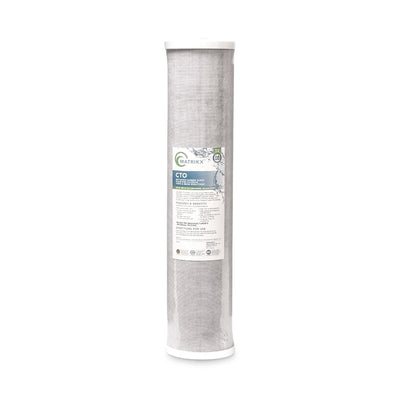
A whole-home carbon filter may be a strong fit for city-water taste and odor concerns. A salt-free conditioner may be a better fit for homes that want scale-control help without a salt-based softener. A sediment prefilter can protect downstream equipment from particles. A dedicated well water system may be needed when iron, manganese, sulfur odor, or low pH is part of the test result.
The wrong shortcut is asking, "Which quote gives me the most equipment?" The better question is, "Which quote matches my water test and use case with the fewest unnecessary parts?"
That is also why one-size-fits-all recommendations are risky. A family on city water with chlorine taste and hard-water spots does not have the same problem as a rural well with sediment and sulfur odor. A home with a tankless water heater may care more about scale behavior. A homeowner worried mainly about drinking water may be better served by a point-of-use reverse osmosis system plus a simpler whole-home setup.
The Solution: Ask These 9 Questions
Use this checklist before you compare a whole house water filter quote.
1. What water test is this based on?
A quote should name the source. City water report, in-home hardness test, lab test, well test, or visual inspection are not the same level of evidence. If no test was used, ask what assumptions are being made.
2. What problem does each stage solve?
Ask the seller to label each component. Sediment prefilter. Carbon. Scale control. Softening. Specialty contaminant reduction. If a stage cannot be explained, it may not belong.
3. Is this for city water, well water, or both?
City water and well water often need different paths. City water may center on taste, odor, disinfectants, hardness, and local plumbing concerns. Well water may need testing for bacteria, iron, sulfur odor, nitrates, pH, and sediment depending on location.
4. What flow rate is the system sized for?
A whole-house system must support showers, laundry, dishwashing, and normal household use. Undersizing can cause pressure complaints. Oversizing can add complexity without solving more water issues.
5. What maintenance will I actually do?
Every system has some maintenance. Ask which cartridges, prefilters, or media need attention and how often. Avoid quotes that hide maintenance details until after purchase.
6. Does this address hardness or only taste and odor?
This is a common confusion point. Carbon filtration and scale control are different jobs. If hard-water spots are your main concern, ask how the quote addresses scale.
7. Does this address my drinking water concern?
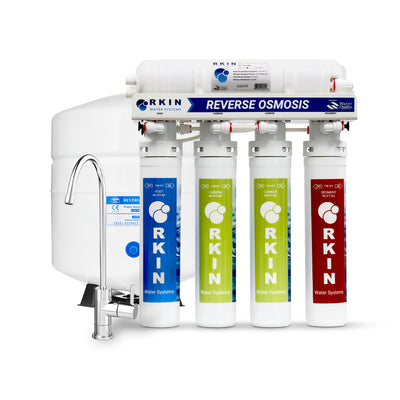
Whole-home treatment and drinking-water treatment are not always the same. If your main concern is PFAS, lead, arsenic, fluoride, or very low dissolved solids at the tap, ask whether a point-of-use reverse osmosis system should be part of the plan.
8. What happens if my water changes?
Seasonal changes, utility treatment changes, well conditions, and plumbing work can change what you notice at the tap. Ask whether the system can be adjusted or expanded later.
9. What is not included?
Ask about installation scope, bypass valves, drain needs, electrical needs, space requirements, testing after installation, and support. A clear quote should make exclusions easy to see.
Where RKIN Fits in a Whole House Water Filter Quote
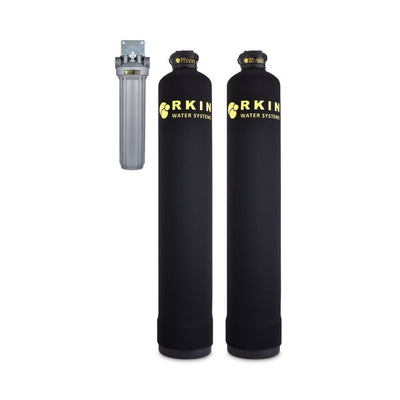
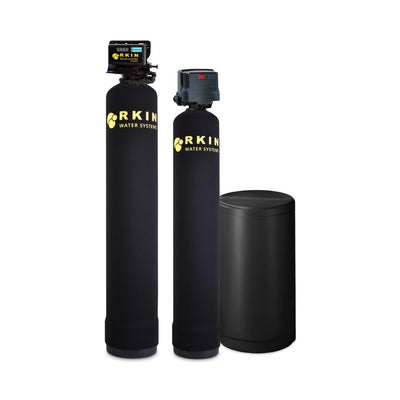
RKIN's role is to help homeowners match the system to the water problem. You can start with the RKIN whole house water treatment collection if your concern affects showers, appliances, laundry, and fixtures throughout the home.
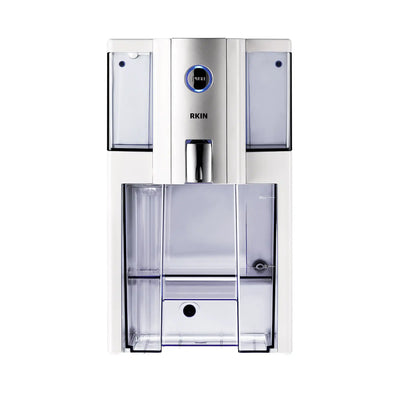
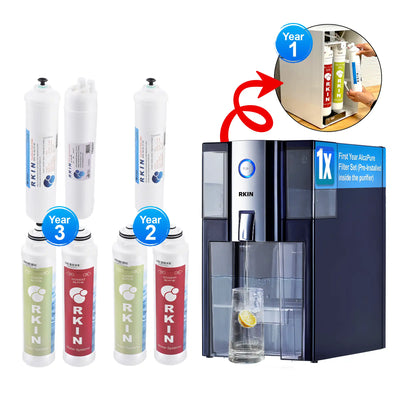
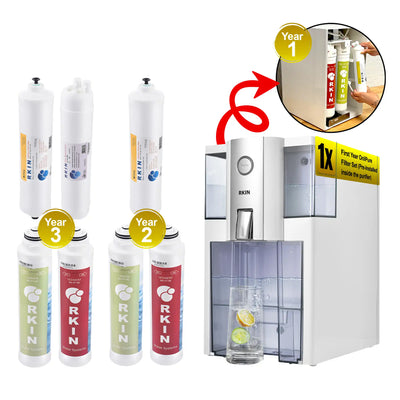
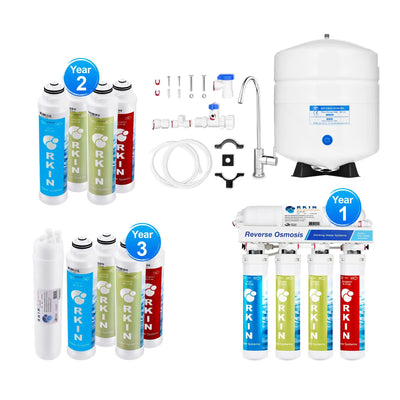
If your main issue is drinking water at the kitchen counter, a whole-home quote may be more than you need. In that case, the RKIN Zero Installation Purifier Countertop Reverse Osmosis Water Filter or the RKIN U1 4-in-1 Water Filter System may be a better starting point because they focus on drinking water without whole-home plumbing changes.
If your concern is both household scale and drinking water, the answer may be a paired approach: whole-home treatment for the main line plus reverse osmosis where you drink and cook. The important part is not buying the most complex package. It is solving the right problems in the right places.
Red Flags in a Whole House Water Filter Quote
A quote does not need to be perfect, but some signs deserve a second look.
- No test result. The system is recommended before your water is understood.
- No maintenance schedule. You cannot judge long-term ownership if cartridge or media care is missing.
- One system claims to solve everything. Different contaminants and water issues need different treatment methods.
- Vague certifications. Ask which standard applies to which claim and which product component.
- Pressure tactics. A real water plan should stand up to questions without urgency language.
- No installation boundaries. You should know what the installer is doing and what remains your responsibility.
Also be careful with quotes that treat every home as a fear problem. Water treatment should be practical. Some homes need whole-home filtration. Some need scale control. Some need a drinking-water unit. Some need well-specific testing before any equipment is chosen.
Whole House Water Filter Quote FAQ
What should be included in a whole house water filter quote?
A good quote should include the water concern, test basis, system stages, sizing logic, installation scope, maintenance plan, warranty details, and what is not included. It should explain why each part is there.
Do I need a water test before buying a whole house filter?
Yes. At minimum, you should know whether you are dealing with hardness, sediment, chlorine taste or odor, well water issues, or a specific contaminant concern. Testing helps avoid buying the wrong system.
Is a whole house water filter the same as reverse osmosis?
No. Whole-home systems usually treat water at the main line for the entire house. Reverse osmosis is often used at a point of use for drinking and cooking water. Some homes benefit from both, but they serve different roles.
What questions should I ask about maintenance?
Ask what needs to be replaced, how often, how hard the replacement is, and whether water use or water quality can change the schedule. Maintenance should be clear before you buy.
Can one system handle city water and well water?
Sometimes the same equipment type can be used in both settings, but the recommendation should be based on the actual water. Well water often needs more testing because it is not managed by a public utility.
Ready to Compare Your Quote?
Before you choose a whole-house system, make the quote explain itself. The right setup should match your water test, your home layout, and the problem you are trying to solve.
Explore RKIN whole house water treatment or contact RKIN to review which setup fits your water and home.





0 comments