

Why Does My Water Taste Salty? Causes and How to Fix It
Share
You take a sip from the tap and it tastes like the ocean. Not subtle — actually salty. The first instinct is to blame the glass, then the ice, then the pipes. But the salt usually isn't coming from any of those. It's already in the water before it reaches your kitchen.
A 2024 U.S. Geological Survey assessment found rising chloride and sodium concentrations across roughly 37% of monitored drinking water sources in the eastern and central United States. Road salt runoff, coastal saltwater intrusion, water softener discharge, and natural geology are all pushing levels up. By the time tap water tastes salty to the average person, sodium is usually north of 200 mg/L — well past the EPA's secondary guideline of 30–60 mg/L for taste.
So what's actually going on, and how do you fix it? Here's the practical breakdown.
What Salty-Tasting Water Actually Contains
"Salty" is a flavor, not a single chemical. Three different dissolved minerals can produce it, and the cause matters because the fix is different for each.
- Sodium chloride — the most common culprit. Comes from road salt, water softener regeneration, or saltwater intrusion in coastal wells.
- Magnesium sulfate or sodium sulfate — produces a bitter-salty taste. Often from natural mineral deposits in groundwater.
- Potassium chloride — found in homes using potassium-based softeners. Tastes slightly metallic-salty.
The EPA classifies sodium as a "secondary" contaminant, meaning it's regulated for taste and appearance rather than health. But the agency still recommends levels stay below 20 mg/L for people on sodium-restricted diets, and the noticeable-taste threshold sits around 200 mg/L for chloride.
The Five Reasons Your Water Suddenly Tastes Salty
1. Saltwater Intrusion (Coastal Wells and Aquifers)
If you live within 10 miles of a coast and pull from a private well or shallow municipal source, this is the most likely cause. Sea level rise and over-pumping let ocean water seep into freshwater aquifers. Florida, the Carolinas, Texas, California, and the Gulf states have all reported expanding intrusion zones. The USGS saltwater intrusion program tracks this in real time.
2. Road Salt Runoff
In northern states, winter de-icing dumps an estimated 24 million metric tons of salt onto roads every year. Snowmelt carries it into shallow wells and reservoirs. Chloride levels in many Midwest groundwater sources have tripled over the past 30 years, according to a 2022 University of Minnesota study. The taste usually peaks between February and May.
3. Your Water Softener Just Regenerated
A salt-based softener flushes brine through its resin tank during regeneration. If a valve sticks or the bypass is misconfigured, that brine can end up in your drinking line for hours. A salty taste right after the softener cycles — usually overnight — is the giveaway. Check for a leaking brine valve or a recently serviced unit.
4. Geology and Natural Mineral Springs
Some aquifers naturally run high in sodium or sulfate. Parts of West Texas, southern Arizona, the Dakotas, and central California sit on sodium-rich bedrock. If your water has always tasted slightly briny, this is usually why.
5. Municipal Source Switch or Pipe Corrosion
Cities occasionally switch water sources during droughts or repairs. The new source can carry a different mineral profile that registers as salty. Old galvanized or copper pipes can also leach corrosion byproducts that mimic a salty taste.
Why Boiling, Pitchers, and Fridge Filters Don't Help
This is the part most people learn the hard way. Boiling concentrates salt — it doesn't remove it. Pitcher filters (activated carbon) target chlorine, taste, and odor compounds, not dissolved ions. Refrigerator filters work on the same principle. They're great for chlorine and sediment, useless for sodium and chloride.
Bottled water is a workaround, not a fix. A family of four going through 3 gallons a day will spend $1,500–$2,500 a year on bottled water before counting the plastic, the storage space, or the hauling.
What Actually Removes Salt From Water
Only two technologies reliably pull dissolved salts out of drinking water at the household level: reverse osmosis and distillation. Distillation is slow, energy-intensive, and produces flat-tasting water by stripping every mineral. Reverse osmosis is the practical choice for a kitchen.
How Reverse Osmosis Handles Sodium and Chloride
A reverse osmosis (RO) membrane has pore sizes around 0.0001 microns — small enough to block sodium ions, chloride ions, sulfates, fluoride, lead, arsenic, and most pharmaceutical residues. A well-built RO system typically reduces total dissolved solids (TDS) by 90–99%. That includes the salt.
The certifications to look for:
- NSF/ANSI 58 — verifies the system reduces TDS, arsenic, lead, and other dissolved contaminants.
- NSF/ANSI 53 — covers health-related contaminants like cysts and heavy metals.
- NSF/ANSI 42 — chlorine, taste, and odor.
What to Look For in a System
Three things separate a good RO setup from a mediocre one:
- Multi-stage filtration — at minimum a sediment prefilter, carbon block, RO membrane, and polishing filter. Skipping the prefilter shortens membrane life dramatically.
- Verified reduction data — the manufacturer should publish third-party test results for actual contaminants, not just generic "removes 99%" claims.
- Installation reality — if you rent, lease, or don't want to drill into a countertop, look for systems that don't require plumbing modifications.
The Right RKIN System for Salty Water
If salty water is your problem, you have two practical options depending on your living situation.
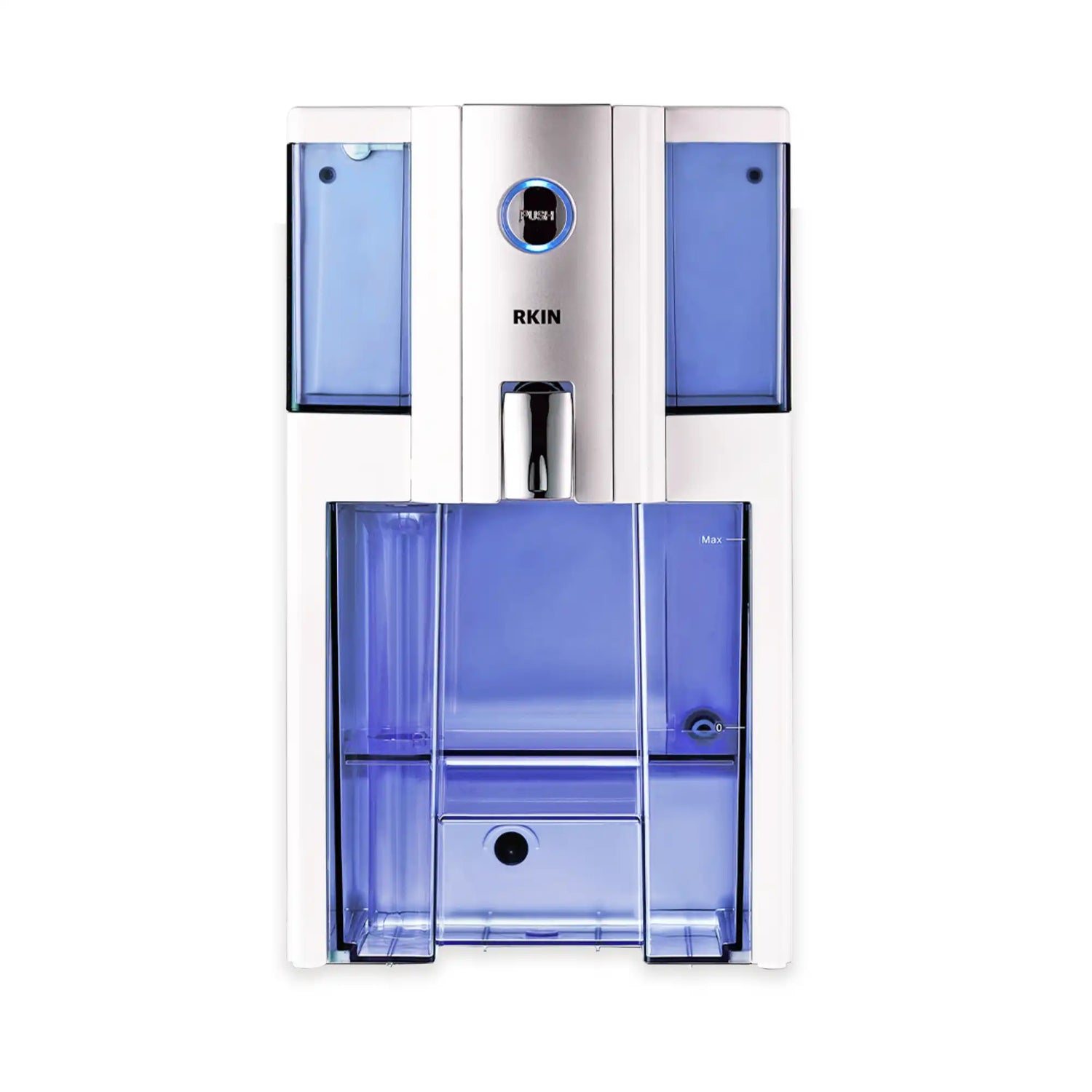
For renters or anyone who doesn't want a plumber involved, the RKIN Zero Installation Purifier is a countertop 5-stage reverse osmosis system that connects to any standard kitchen faucet in under five minutes. No drilling, no permanent fittings. It handles sodium, chloride, sulfates, and the full spectrum of dissolved contaminants you'd find in salt-affected wells or municipal supply. When you move, it moves with you.
If you own your home and want a more permanent under-counter setup, the RKIN Flash Undersink RO System sits below the kitchen sink with a 3.2-gallon storage tank and produces 75 gallons per day. It connects to your cold water line and a dedicated faucet — no electricity required.
Both systems are third-party tested for contaminant reduction including dissolved salts. If your salty water comes from a softener malfunction rather than the source, fix the softener first — an RO system downstream of a broken brine valve is solving the wrong problem.
Testing Your Water Before You Buy
Before spending money on a system, get a baseline. A certified water test ($25–$100 from a state-certified lab) will tell you:
- Sodium and chloride levels in mg/L
- Total dissolved solids (TDS)
- Sulfate levels
- Whether you have any co-occurring issues like nitrates or iron
If your TDS reads above 500 mg/L or your chloride is over 250 mg/L, a salty taste is expected. RO will bring both down to drinking quality.
Frequently Asked Questions
Is salty tap water dangerous to drink?
For most adults, occasionally drinking salty water isn't acutely harmful. But people on low-sodium diets, those with high blood pressure, kidney disease, or heart conditions should be cautious. Infants are particularly sensitive — never mix formula with water that tastes salty without testing it first. Above 200 mg/L of sodium, the EPA recommends consulting a doctor.
Will a water softener remove the salt taste?
No — a salt-based softener actually adds sodium to your water in exchange for the calcium and magnesium it removes. If your water is hard and salty, you'll need a softener for the hardness plus a reverse osmosis system at the kitchen sink for drinking water.
How fast can saltwater intrusion show up in a well?
Coastal wells can shift from fresh to brackish over a single dry season, especially if pumping rates are high. After a hurricane or major storm surge, intrusion can happen in days. Annual testing is the minimum if you live within 10 miles of a coast.
Does reverse osmosis remove healthy minerals along with the salt?
Yes — RO removes most dissolved minerals, including calcium and magnesium. Most people get the majority of their mineral intake from food, not water, so this isn't a health issue for healthy adults eating a normal diet. If you prefer mineralized water, look for systems that include a remineralization stage.
How often do RO filters need to be replaced?
Pre-filters and post-filters typically run 6–12 months depending on water quality and usage. RO membranes last 2–3 years on average. Salty source water shortens membrane life because the high mineral load fouls the membrane faster — expect to be on the shorter end of that range.
Can I just use bottled water until the problem goes away?
Saltwater intrusion and road salt accumulation aren't problems that resolve on their own. Once an aquifer is contaminated, recovery takes decades. Bottled water is a stopgap, not a solution.
Ready to Stop Drinking Salty Water?
You don't need to put up with water that tastes like the ocean. The RKIN Zero Installation Purifier sits on your counter, connects to your faucet in under five minutes, and removes the sodium, chloride, and dissolved solids that make tap water unpleasant. See current pricing and full reduction specs at rkin.com.


