


countertop reverse osmosis no plumbing
How to Filter Water Without Hiring a Plumber

A reader sent us a story last week. Plumber walked into her kitchen, looked at the cabinet under the sink, and quoted $4,000 to install an under-counter water filter. She got a second opinion. The second plumber wanted $900 for the same job. She called a third. He laughed and said she didn't need a plumber at all.
That's the part most homeowners never hear. You don't need to cut pipes, drill granite, or schedule a service call to get filtered water. The whole "you need a pro for this" framing exists because installation labor is where contractors make their margin — not because the work is hard or the equipment requires it.
If you rent, your landlord won't let you cut a supply line anyway. If you own, you might not want strangers in your kitchen for a half-day job. Either way, here's what actually works when you skip the plumber entirely.
What's Actually In Your Tap Water
Before you spend money on any filter, it helps to know what you're filtering out. The Environmental Working Group's 2024 Tap Water Database identified more than 320 contaminants across U.S. public water systems, and the median home gets water with at least 6 contaminants above the EWG's health-based guidelines.
The most common offenders showing up in 2024–2025 testing:
- Chlorine and chloramine — added by every U.S. municipal system. Safe by EPA rules, but you taste it in coffee, smell it in showers, and it dries out skin.
- PFAS ("forever chemicals") — the EPA's first national PFAS drinking water rule finalized in April 2024 set legal limits at 4 parts per trillion. Roughly 158 million Americans live in areas where utilities still exceed those limits while they work toward 2029 compliance.
- Lead — leaches from older service lines and brass fixtures, even in homes with new plumbing. There's no safe lead level per the CDC.
- Disinfection byproducts (THMs, HAA5s) — what you get when chlorine reacts with organic matter in source water.
- Microplastics and nanoplastics — a 2024 study in PNAS found bottled water contains an average of 240,000 plastic fragments per liter, and tap water carries them too at lower concentrations.
"Legal" doesn't mean "ideal." EPA limits are a regulatory floor, set with cost in mind. They aren't a personal health recommendation.
Why Pitcher Filters and Boiling Don't Cover It
Most people start with a pitcher filter. They're cheap, they're at every grocery store, and the marketing is loud. The reality: standard activated-carbon pitchers are certified to reduce chlorine taste and a handful of contaminants. Most aren't certified for PFAS, lead, fluoride, arsenic, or nitrates. You're improving the taste without addressing the contaminants that matter most.
Boiling helps with bacteria during a boil-water advisory. It does nothing for PFAS, lead, chlorine, or any chemical contaminant — in fact, boiling concentrates dissolved metals as water evaporates.
Bottled water has its own problems. Beyond the microplastic load, the cost compounds. A family drinking two gallons a day from store-bought jugs spends roughly $1,400–$2,200 a year. Over a decade, that's the cost of a small car.
The technology that actually addresses the full contaminant list is reverse osmosis (RO) — and reverse osmosis no longer requires a plumber.
How No-Plumber Reverse Osmosis Works
A traditional under-sink RO system needs a saddle valve tapped into the cold supply line, a hole drilled in the countertop for the dedicated faucet, and a drain saddle on the waste pipe. That's a 2- to 4-hour install, easy to mess up, and where the $1,500–$4,000 quotes come from.
Countertop RO systems skip all of it. They sit on the counter next to the sink. You fill the reservoir from the tap (or, in plumbed-in countertop models, attach a quick-connect adapter to your existing faucet aerator — no tools beyond what came in the box). The unit runs water through a multi-stage process:
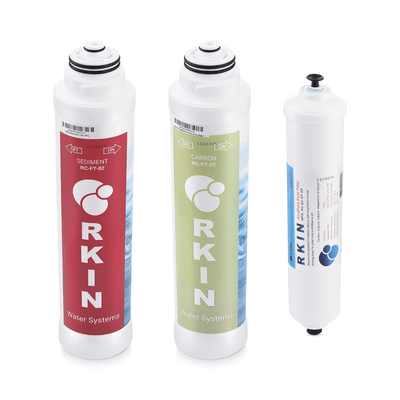
- Sediment pre-filter — catches rust, sand, and particulates
- Carbon block — removes chlorine, chloramine, taste, odor, and most volatile organic compounds
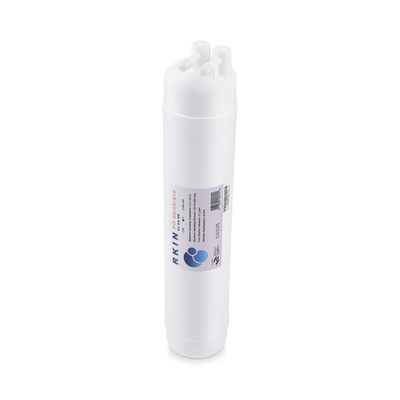
- Reverse osmosis membrane — the workhorse. A semi-permeable membrane with pores roughly 0.0001 microns — small enough to block PFAS, lead, fluoride, arsenic, nitrates, microplastics, and dissolved solids
- Post-carbon polishing filter — final pass for taste
- Optional remineralization or alkaline stage — adds back calcium, magnesium, and a slight pH bump if you prefer
NSF/ANSI 58 is the certification you want for reverse osmosis. NSF/ANSI 53 covers lead and cyst reduction. NSF/ANSI 42 covers chlorine and aesthetic effects.
When choosing a no-installation system, look for:
- Third-party tested for the contaminants you actually care about (ask for the data sheet — reputable manufacturers publish it)
- No permanent modification required — should sit on the counter or attach via quick-connect
- Reasonable filter replacement schedule — 6 to 24 months depending on the stage
- Tank capacity that matches your household — a single person needs less reservoir than a family of five
The RKIN Approach: Plug In, Pour, Done
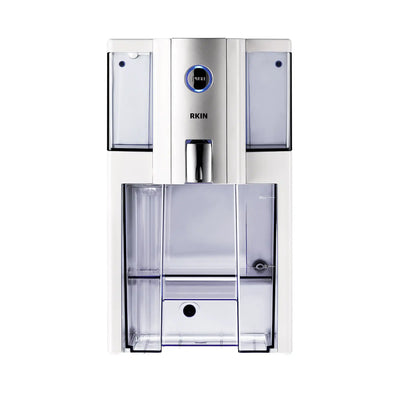
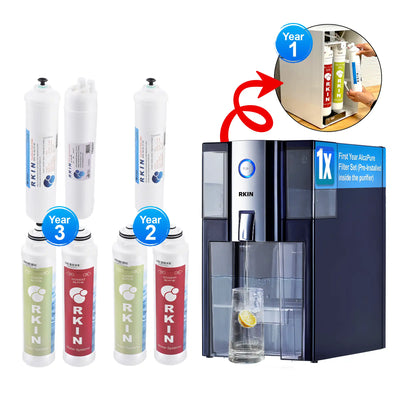
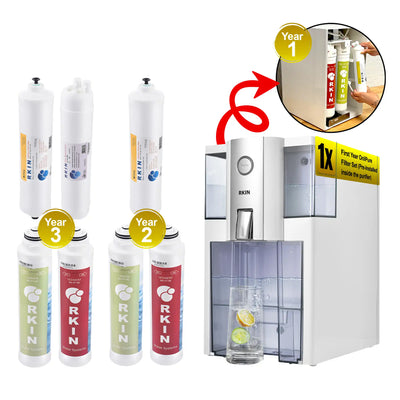
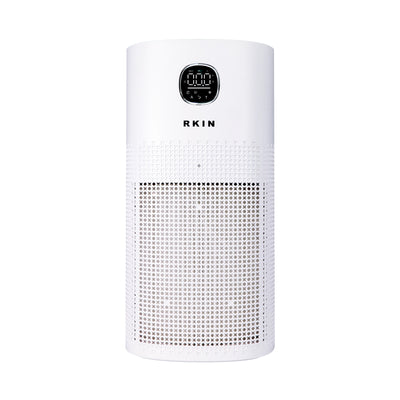
This is what the RKIN Zero Installation Purifier is built for. It's a 5-stage countertop reverse osmosis system that uses zero plumbing modifications. You plug it into a standard outlet, pour tap water into the back reservoir, and dispense purified water from the front.
It addresses the full contaminant list — PFAS, lead, chlorine, fluoride, arsenic, microplastics, and dissolved solids — at the same removal rates as a permanently installed under-sink system. There's no drain line, no saddle valve, no countertop hole, no plumber.
For renters, it's the only realistic option that delivers RO-grade water without violating a lease. For homeowners, it's the option that doesn't tie you to a contractor's schedule or a four-figure install bill. Move houses, you take it with you.
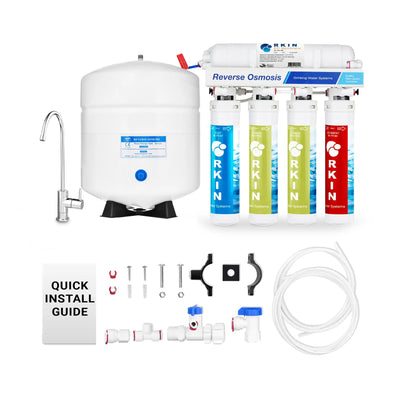
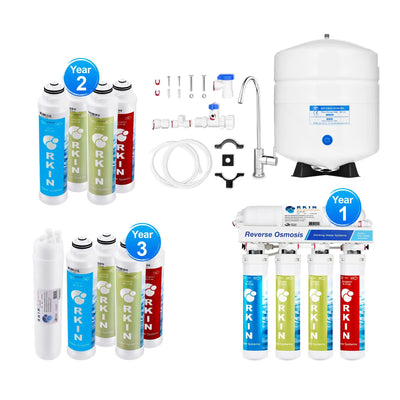
If you eventually want a permanent built-in setup, the RKIN Flash Undersink RO System is the under-sink version of the same filtration logic. Most homeowners install it themselves with the included quick-connect fittings — same job some plumbers quote $1,500 for, done in about 90 minutes.
What to Actually Pay For
If you do want professional help, here's what's worth paying for and what isn't:
Worth paying for:
- A whole-house water test (~$75–$200 from an EPA-certified lab) before you buy any equipment, so you know what you're treating
- A licensed plumber for whole-house treatment that ties into your main supply line
- A plumber for repairs, leaks, and code compliance issues — not for plug-and-play countertop equipment
Not worth paying for:
- Installation of a countertop water filter (the install is opening a box)
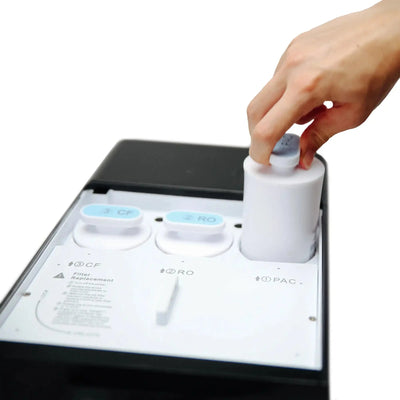
- "Filter setup" service fees (the cartridges screw in by hand)
- Annual "maintenance plans" for under-sink systems with simple replaceable filters
- Any quote where the installer won't itemize labor separately from equipment
The honest test: ask any contractor to itemize the bill. Equipment cost. Labor hours. Materials. If they refuse, that's the bigger story. The $4,000 quote in the opening of this article had $2,800 in "labor and materials" for a job that takes a homeowner 90 minutes.
When You Genuinely Do Need a Plumber
We're not anti-plumber. Real situations where you should call one:
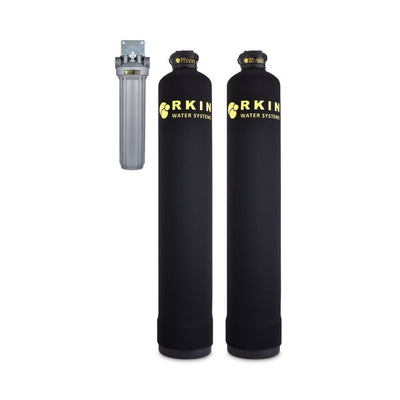
- Whole-house treatment systems that splice into the main supply line
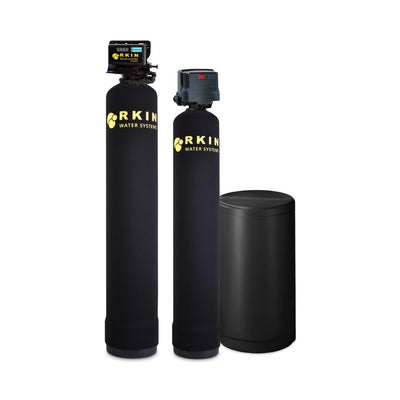
- Water softener installs in homes without an existing softener loop
- Any work that requires soldering, code inspection, or moving a drain line
- Lead service line replacement (often cost-shared with your municipality)
- Water heater issues, slab leaks, anything behind a wall
For everything that sits on a counter, on a faucet, or under a sink with quick-connect fittings — you're the plumber.
Frequently Asked Questions
Do I really not need a plumber to install a countertop reverse osmosis system?
No. Countertop RO systems like the RKIN Zero Installation Purifier are designed for renters and homeowners who don't want to modify plumbing. You unbox it, plug it into a standard wall outlet, fill the reservoir, and dispense filtered water. There's no supply line connection, no drain line, and no countertop drilling. Setup is roughly 5 minutes.
What's the difference between a countertop filter and an under-sink RO system?
Both use the same filtration technology. The difference is where they live and how water gets to them. Countertop systems sit on your counter, get filled manually or via a quick-connect on the faucet, and require zero permanent installation. Under-sink systems are plumbed into the cold supply line and have their own dedicated faucet on the counter — a permanent setup that needs either DIY skills or a plumber.
Will a countertop RO filter remove PFAS from my tap water?
Yes, when the system has an NSF/ANSI 58 certified or third-party tested reverse osmosis membrane. RO membranes have pore sizes roughly 0.0001 microns — smaller than PFAS molecules — so they physically block them. Always check the manufacturer's third-party test data for specific PFAS reduction rates.
How often do I need to replace the filters in a countertop RO system?
Most countertop RO systems use 4–5 filter stages with different replacement intervals. Sediment and carbon pre-filters typically last 6 to 12 months. The RO membrane lasts 18 to 24 months. Post-carbon and optional remineralization filters last 12 months. Filter life depends on water quality and household usage — homes with hard water replace pre-filters more often. RKIN's product pages list the exact schedule for each model.
Can I take a countertop water filter with me when I move?
Yes. That's one of the main advantages over a built-in system. A countertop RO unit unplugs, the reservoir empties, and the whole unit fits in a moving box. There's no abandoned plumbing modification at the old place, and no reinstall fee at the new one.
How much money does skipping the plumber actually save?
Quotes for under-sink RO installation run $400 to $1,500 for the labor alone in most U.S. metros. Quotes for whole-house equipment run $1,500 to $4,000+ in labor. Switching to a plug-in countertop system means $0 in installation costs over the life of the system. For most renters and small households, that's the difference between getting filtered water this week or putting it off for years.
Ready to Skip the Plumber Bill?
You don't need a contractor, a permit, or a hole in your countertop to drink reverse osmosis water at home. You need a system designed to skip all of that.
Take a look at the RKIN Zero Installation Purifier — 5-stage countertop reverse osmosis that plugs into any outlet and removes PFAS, lead, chlorine, fluoride, and microplastics with zero plumbing work. No installation, no contractor, no callback fee.
If you're treating a whole house or want a built-in under-sink setup, our whole-house water treatment collection covers the rest.





0 comments