




calcium buildup
Why Is My Toilet Flushing Slowly? Calcium Buildup Fix

You replaced the flapper. You adjusted the fill valve. You poured an entire bottle of drain cleaner down the bowl and waited 30 minutes. The flush still takes 14 seconds when it used to take 4. The problem is not in the tank, not in the drain, and not in any part you can see — it's hiding inside the parts you can't.
Inside every toilet bowl is a hidden network of small holes called rim jets, and a curved internal channel called the siphon jet. When water flows through them at full pressure, you get a strong, fast flush. When hard water minerals slowly close them off, the flush gets weaker every month until one day you notice it. A 2024 U.S. Geological Survey report found that about 85% of U.S. households have hard water, which means most homeowners are running this experiment on their toilets right now without realizing it.
The Hidden Plumbing No One Talks About
The flush mechanism inside your toilet is more like an internal engine than most homeowners think.
Open the tank, lift the lid, and you can see the float, the flapper, the fill valve. Those parts get all the attention because they're visible. But the bowl itself contains plumbing too — passages that route water from the tank into the bowl with engineered pressure. There are two main pathways:
The rim jets. These are the small holes you can feel along the underside of the bowl rim. When you flush, water shoots through them at an angle, swirling around the bowl to rinse the walls. A typical residential toilet has 30 to 40 of these jets, each smaller than a pencil eraser.
The siphon jet. This is a single, larger hole near the bottom-front of the bowl. It points down toward the trapway. The siphon jet is what creates the suction that pulls waste out. Without it, you'd just have water sloshing around.
Both passages are made of porcelain, and porcelain is slightly porous. Hard water minerals — mostly calcium carbonate and magnesium — cling to that porous surface and build up layer by layer. The buildup is invisible from outside the bowl. You only see the symptoms.
How Hard Water Quietly Strangles Your Flush
Hard water is water with high concentrations of dissolved calcium and magnesium. The harder your water, the more mineral content gets deposited every time water sits or flows through a surface.
A 2023 EPA water quality assessment estimated that homes with hard water see plumbing fixture wear two to four times faster than homes with treated water. Toilets are particularly vulnerable for three reasons:
- Water sits in them constantly. The bowl is never empty. Even when not in use, the water in the trap is in contact with the porcelain 24 hours a day, slowly depositing minerals.
- The rim jets are small. A few microns of mineral buildup is nothing on a large pipe. On a hole that's already only 2 millimeters wide, it cuts the flow area by 30% or more.
- The buildup compounds. Once a thin layer forms, it gives the next layer more surface area to cling to. The clogging accelerates over time, not the other way around.
The result is a flush that gets gradually weaker — so gradually that most people don't notice until it's been bad for months. By that point, the rim jets are typically 50-70% closed.
Signs Your Toilet Has Calcium Buildup
Before you tear into anything, check for these symptoms:
- Flush takes longer than 6-8 seconds. A healthy toilet evacuates the bowl in roughly 4-5 seconds.
- Weak swirl. Water trickles down the sides instead of swirling forcefully.
- Water hits the bowl from only some of the rim jets. Hold a small mirror under the rim while flushing. If only half the holes are spraying, the rest are clogged.
- White or rust-colored crust under the rim. Run a finger along the underside of the rim. If you feel crusty deposits, the jets behind them are also blocked.
- Multiple flushes needed. If you regularly need to flush twice to clear the bowl, you've lost significant flow.
- Sluggish refill. Mineral buildup can also accumulate in the fill valve and the small tank-to-bowl refill tube.
If you see two or more of these, calcium buildup is the most likely culprit — not the flapper, not the chain, not the float.
What Doesn't Work
Before you spend a Saturday on this, know what to skip.
Drain cleaners. Caustic drain cleaners are formulated for organic blockages (hair, soap, grease). They do nothing to calcium and can damage porcelain glaze and rubber seals.
Bleach. Bleach disinfects but does not dissolve mineral deposits. People pour bleach into toilets thinking it cleans, but it leaves the calcium buildup untouched.
Replacing the flapper or fill valve. If the tank is filling normally and the flush volume looks right, the flapper isn't the problem. You'll spend $20 and three hours and the flush will still be slow.
Plunging. A plunger pushes air through the trapway. It can't reach the rim jets at all.
How to Actually Clean Calcium Out of a Toilet
The fix is two-pronged: dissolve the existing buildup, then prevent new buildup from forming.
Dissolve the existing deposits
Calcium reacts with acids. Three options, in order of strength:
White vinegar (mild). Heat one gallon of white vinegar to about 120°F. Turn off the toilet's water supply, flush to empty the bowl and tank, then pour the heated vinegar slowly into the overflow tube in the tank (the vertical pipe inside the tank). The vinegar flows down through the rim jets the same way water does and sits inside them. Let it sit overnight. Flush in the morning. Repeat for badly clogged toilets.
CLR or Lime-Away (medium). Follow label directions. These are stronger than vinegar but safe for porcelain. Use the same overflow-tube method.
Muriatic acid (strong, for severe buildup). This works fast but it's hazardous. Wear gloves and eye protection, ventilate the bathroom, and follow product directions exactly. Most homeowners shouldn't need this option.
After soaking, use a small wire (a straightened paperclip or a piece of stiff wire) to physically clear any remaining debris from each rim jet you can reach.
Stop new buildup from forming
This is the part most homeowners skip — and the reason the slow flush comes back six months later.
If your water is hard enough to clog a toilet, it's also clogging your water heater, your dishwasher, your fixtures, and your pipes. Cleaning the toilet treats the symptom. Treating the water treats the cause.
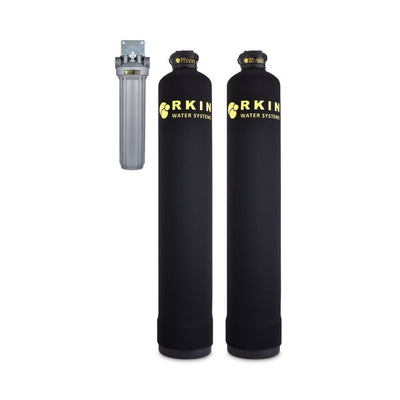
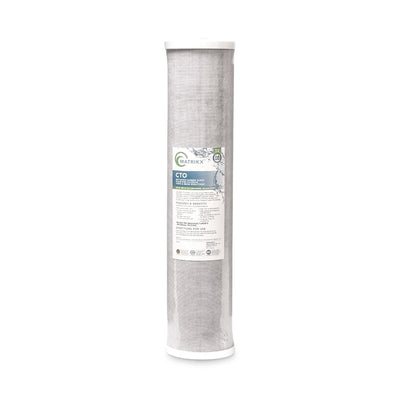
A whole-house water softening or conditioning system removes or neutralizes the calcium and magnesium before they ever reach your plumbing. That means no new buildup in the toilet, the water heater, the showerheads, or anywhere else. The RKIN OnliSoft Pro Salt-Free Whole House Water Treatment System is designed exactly for this — it conditions hard water without adding salt to your supply, and it also includes carbon filtration to handle chlorine and odor at the same point of entry.
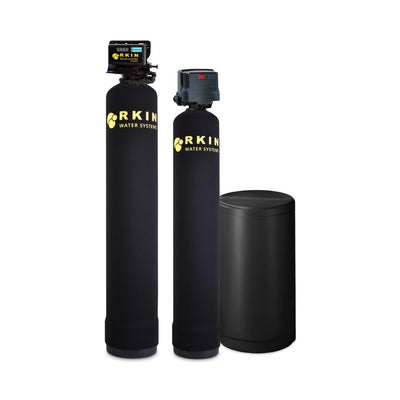
For homes that want true softening (calcium and magnesium fully removed via ion exchange), the RKIN salt-based water softener is the more aggressive option. The right choice depends on your hardness level and whether you want salt-free or traditional ion exchange — water test results will tell you.
Why "Cleaning Harder" Isn't the Answer
Some homeowners try to outwork the problem with monthly toilet cleanings, descaling tablets, or chemical drop-ins. It buys time, but it doesn't fix anything. Every drop of water that enters the toilet still carries the same load of minerals. You're just cleaning a little faster than the buildup forms.
The reason a water softener or conditioner works is simpler: it changes the water itself, before it reaches the toilet. Without minerals to deposit, the rim jets stay clear on their own.
There's also a financial side. The Water Quality Association estimates that hard water shortens the lifespan of household appliances by up to 30%. Toilets, water heaters, dishwashers, washing machines, fixtures — all of them. Treating the water at the point where it enters the house protects every appliance at once.
Frequently Asked Questions
How can I tell if my toilet's flush problem is calcium or something else?
Hold a small mirror under the bowl's rim while a helper flushes. If water comes out of only some of the rim jets — or comes out weakly from all of them — it's calcium. If all the jets are spraying strongly but the bowl still drains slowly, the issue is downstream in the trapway or drain line.
How long does vinegar take to clear toilet rim jets?
For mild buildup, 6-8 hours of soaking with heated vinegar usually does it. For moderate buildup, 24 hours. For severe buildup, you'll likely need two rounds of vinegar or a stronger acid like CLR. After soaking, clear each visible jet with a wire to dislodge softened debris.
Will a water softener stop the problem from coming back?
Yes, in almost every case. Once the water entering the house no longer carries hard minerals, the buildup stops forming. Existing deposits in the toilet still need to be cleaned out, but new ones won't accumulate.
Is salt-free water conditioning as effective as a salt-based softener for toilets?
For protecting fixtures from scale, salt-free conditioning works well. It changes the mineral structure so the minerals no longer cling to surfaces. Salt-based softening fully removes the minerals through ion exchange. For toilet protection specifically, either approach prevents the rim jet clogging that causes slow flushes.
Can hard water damage the toilet permanently?
Yes, given enough time. Calcium can fuse into the porcelain glaze, leaving permanent staining and roughened surfaces that catch more buildup faster. Toilets in hard-water homes that go untreated for a decade often need full replacement because the bowl can no longer flush properly even after cleaning.
Does my water heater have the same problem?
Almost certainly. Water heaters in hard-water homes accumulate calcium scale on the heating element and tank bottom. This reduces efficiency, increases energy bills, and shortens the heater's lifespan. If your toilet has calcium buildup, your water heater does too — flush and inspect it annually if you haven't treated your water.
Ready to Upgrade Your Water?
A slow-flushing toilet is one of the most visible symptoms of hard water, but it's rarely the only one. If your toilet is fighting calcium, every other appliance in the house is too — quietly, expensively, day after day.
The RKIN OnliSoft Pro Salt-Free Whole House Water Treatment System stops the buildup at the source. No salt, no waste water, no monthly maintenance. Protects toilets, water heaters, dishwashers, and fixtures from the same scale that's slowing your flush right now. See current pricing and learn more at rkin.com.


0 comments