




pesticidas en el agua
Do Water Filters Remove Pesticides From Tap Water?

Some water filters can reduce certain pesticides, but no filter should be assumed to handle every pesticide. Identify the compound through a water report or certified lab test, then match it to current product-specific performance data.
The EPA explains that nonpoint source pollution comes from rainfall or snowmelt moving over and through the ground, picking up natural and human-made pollutants along the way. Its stormwater guidance makes the same point for runoff: what is on the ground can move with water. For homeowners, the practical question is simple: can a home water filter reduce pesticides if they show up in your water?
How Pesticides Can Reach Drinking Water
Pesticides are a broad category. They include herbicides used for weeds, insecticides used for insects, fungicides used for mold and plant disease, and other chemicals used in yards, agriculture, golf courses, roadsides, and public spaces.
After heavy rain, water can run over treated surfaces and into storm drains, ditches, canals, streams, and lakes. Some water also moves through soil toward groundwater. That does not mean every home has a pesticide problem. It means the source water feeding a utility or private well can change with season, land use, rainfall, and geology.
Municipal water systems test for regulated contaminants and must meet federal drinking water rules. The EPA's National Primary Drinking Water Regulations include several synthetic organic chemicals, including pesticide-related compounds. Those standards are designed for public water systems, not for private wells.
Private well owners have a different responsibility. The EPA's private well guidance says homeowners are responsible for testing and maintaining their own wells. If you live near agriculture, a golf course, a nursery, a former industrial site, or an area with repeated flooding, testing is a better first step than guessing from taste or smell.
Can You Taste or Smell Pesticides in Water?
Usually, no. Taste is a poor test for pesticide contamination.
Chlorine can smell like a pool. Iron can taste metallic. Sulfur can smell like rotten eggs. Pesticides do not usually announce themselves that clearly at the tap. Water can look clear, smell normal, and still need testing if the source conditions raise concern.
That is why lab testing matters. A basic at-home strip may be useful for screening hardness, chlorine, or pH, but pesticide testing is more specific. If you are on a private well, ask a certified lab which pesticide panel fits your location and land use. If you are on city water, read your annual Consumer Confidence Report and look for regulated synthetic organic chemicals. If you do not see what you are looking for, call the utility and ask what was tested, when, and at what detection limit.
The goal is not to panic. It is to match the filter to the contaminant. A filter that works well for chlorine taste may not be the right filter for a pesticide you found in a lab report.
What Filters Work for Pesticides?
Performance depends on the pesticide and the filter’s documented reduction claim.
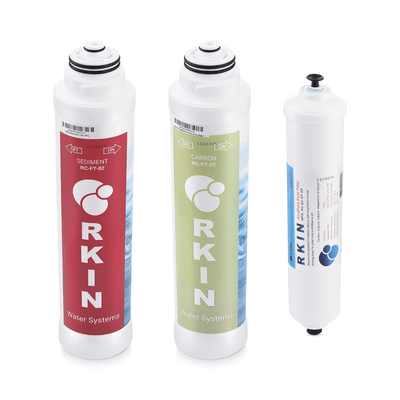
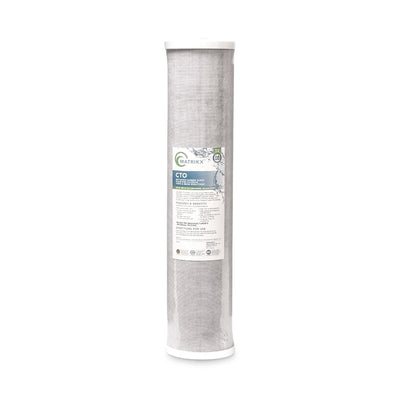
Activated carbon can reduce many organic chemicals, but performance depends on the exact compound, carbon type, contact time, flow rate, cartridge age, and certification. A small carbon filter that is overdue for replacement is not the same as a properly sized, tested system.
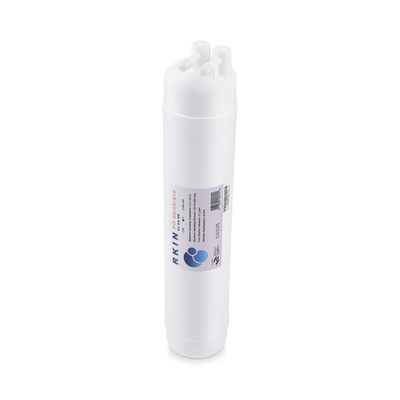
Reverse osmosis can reduce a wide range of dissolved contaminants because water is pushed through a semipermeable membrane. But reverse osmosis systems are not all identical. Prefilters, membrane quality, storage tanks, seals, and maintenance all affect real-world performance. Look for claims tied to a specific contaminant and a recognized test standard, not vague language that says a filter removes everything.
Distillation can also reduce many contaminants, but it is slower and less convenient for daily whole-family use. Boiling water is not a pesticide-removal method. Boiling may help during certain microbial advisories when local officials tell you to boil, but it does not make a chemical contaminant disappear.
For pesticide concerns, start with the lab report, then choose the system. If the report names a specific chemical, compare that chemical to the system's tested reduction claims. If the report is broad or confusing, ask the lab, your utility, or a water professional to help interpret it.
What Does Not Work Well Enough
Pitcher filters can be useful for taste, odor, and convenience, but many are not built for a serious pesticide question. If a pitcher is not certified for the compound you care about, do not assume it will handle it.
Refrigerator filters are similar. They often improve chlorine taste and odor, and some are certified for specific contaminants. But a refrigerator filter is usually a small final-stage filter for cold drinking water, not a full pesticide plan for a home.
Water softeners are often misunderstood. A salt-based softener exchanges hardness minerals such as calcium and magnesium. A salt-free conditioner addresses scale behavior in a different way. Neither should be treated as a pesticide filter unless the system includes separate filtration media with tested claims for the contaminant.
Boiling is another common mistake. Boiling can be part of emergency guidance for microbes, but pesticide concerns are chemical concerns. If your issue is a chemical in water, the answer is testing, matching the right treatment technology, and maintaining the system.
How to Choose a Home Filter for Pesticide Concerns
Use a four-step process.
First, identify your water source. Municipal customers should begin with the annual water quality report. Private well owners should schedule testing through a certified lab, especially after flooding, changes in nearby land use, or repeated heavy rain.
Second, name the contaminant. “Pesticides” is too broad for a buying decision. Atrazine, 2,4-D, alachlor, and other regulated synthetic organic chemicals have different chemistry and different treatment needs. The EPA's regulated contaminant table is a useful starting point for understanding which chemicals public systems must monitor.
Third, match technology to the contaminant. For many homeowners, the short list includes activated carbon, reverse osmosis, or a combination of both. A whole-house carbon system may make sense when the concern affects water throughout the home. A point-of-use reverse osmosis system may make sense when the priority is drinking and cooking water.
Fourth, maintain the system. Filters do not get better as they age. Carbon can become exhausted. Sediment can clog prefilters. RO membranes have service lives. If your water has high sediment, iron, or hardness, pretreatment may matter because it helps the main filter do its job under the right conditions.
How to compare RKIN systems for a documented pesticide
Start with the exact compound in the lab report. Then ask for current model-specific reduction data for that compound. The words “carbon” or “reverse osmosis” describe a technology; they do not prove that every product using it has been tested for the pesticide in your report.
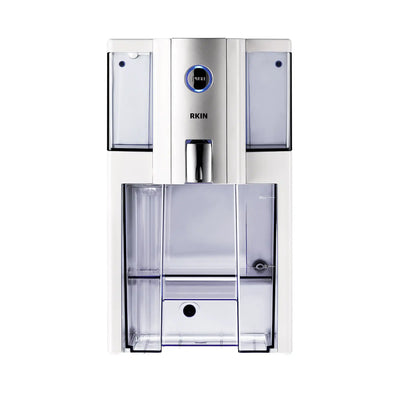
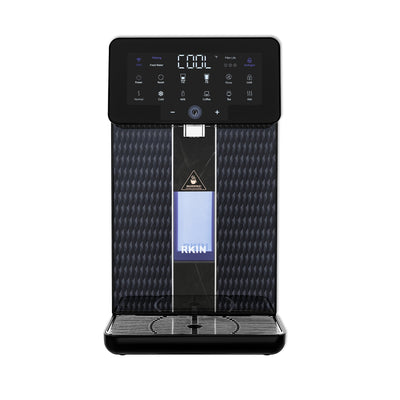
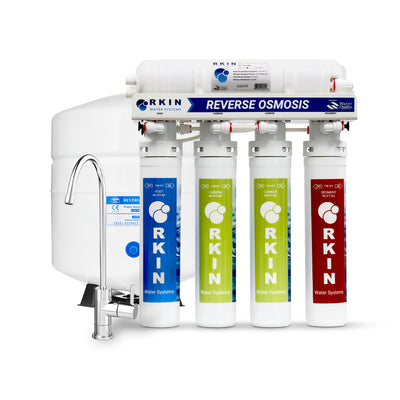
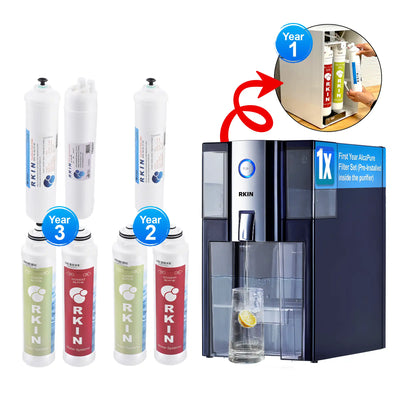
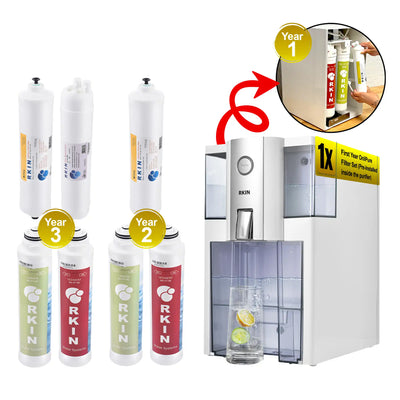
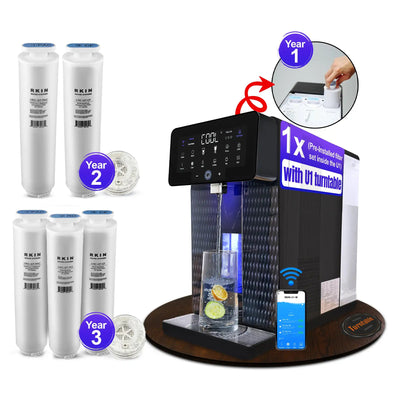
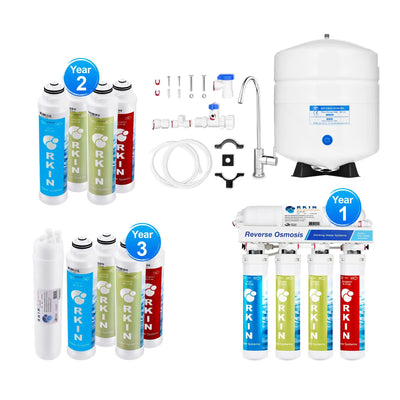
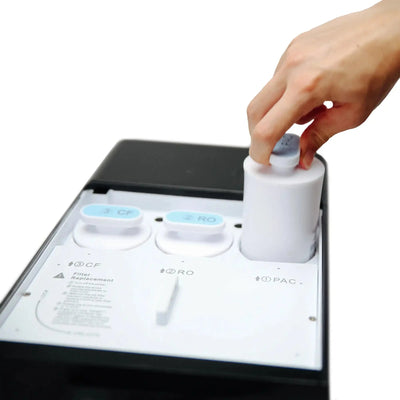
RKIN offers no-plumbing countertop RO layouts through the Zero Installation Purifier and RKIN U1-W Space-Saving 4-in-1 Water Filter System. The RKIN Flash Undersink RO System is an installed option with a 3.2-gallon storage tank and an NSF/ANSI 58 certified RO membrane. None of those hardware details establishes pesticide performance for the complete system.
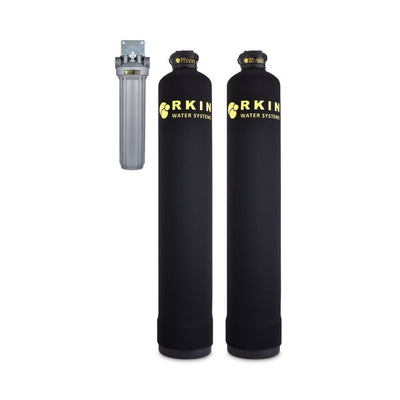
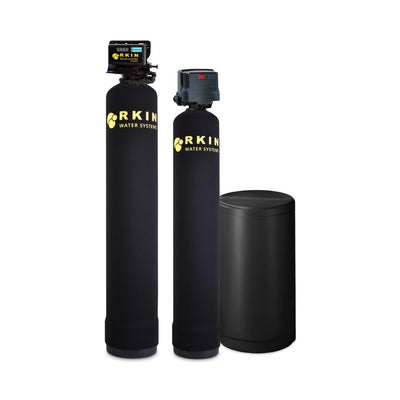
For whole-home concerns, start with testing and compare RKIN whole-house water filters only after the needed media and product-specific data are clear.
When to Test for Pesticides
Testing makes the most sense when risk factors line up.
If your private well is shallow, older, damaged, or close to treated fields, orchards, golf courses, nurseries, canals, or stormwater flow paths, ask a certified lab about pesticide testing. If your area recently flooded, wait until the well is safe to access, inspect the wellhead, and follow local guidance before sampling.
If you are on municipal water, use your annual water quality report. Look for regulated synthetic organic chemicals and any detected levels. If your utility pulls from a river, lake, or reservoir that receives heavy runoff, you can ask how seasonal runoff is monitored.
Also test when water conditions change. New odor, unusual color, construction nearby, a damaged well cap, or a neighbor's confirmed issue can all justify a closer look. Pesticides are not always visible, so context matters more than appearance.
Keep results. A single test is useful, but records over time are better. If levels change after rainy seasons or land-use changes, you will have a clearer basis for choosing or adjusting treatment.
Frequently Asked Questions
Do water filters remove pesticides from tap water?
Some filters can reduce some pesticides, but no single filter should be assumed to remove every pesticide. Activated carbon and reverse osmosis are common technologies used for chemical reduction, but you need to match the system's tested claims to the specific contaminant.
Is reverse osmosis good for pesticides?
Reverse osmosis may reduce some pesticides, but the exact compound, complete-system design, membrane condition, and maintenance schedule all matter. Look for current product-specific reduction data for the pesticide in your report.
Does boiling water remove pesticides?
No. Boiling is not a pesticide-removal method. It may be recommended by officials for certain microbial advisories, but chemical concerns require testing and the right treatment technology. Follow local emergency instructions when an advisory is active.
Should I test city water for pesticides?
Start with your annual water quality report. Public water systems must monitor regulated contaminants, including certain synthetic organic chemicals. If you have a specific concern that is not listed, call the utility and ask what was tested and when.
Should private well owners test for pesticides?
Private well owners should consider pesticide testing when the well is near agriculture, golf courses, nurseries, heavy stormwater flow, or flooded areas. The EPA says private well owners are responsible for testing and maintaining their wells, so a certified lab is the best next step.
Is a whole-house filter or drinking-water filter better?
It depends on the test result and how you use the water. If the concern is drinking and cooking water, a point-of-use reverse osmosis system may be enough. If the concern affects water throughout the home, a whole-house system may be part of the plan.
Ready to Match Your Filter to Your Water?
If you are worried about pesticides, do not guess from taste. Start with your water source, review your report or test your well, and choose a system based on the contaminants you need to reduce.
Compare RKIN countertop, under-sink, and whole-house layouts only after a current performance document matches the pesticide in your report.





0 comentarios