


countertop reverse osmosis filter
Microplastics in Tap Water: 2026 Home Filter Guide

Microplastics have been reported in tap and bottled water, but methods and product claims are still developing. Check your local water information, define the particle-size concern, and require system-specific test data before treating any home filter as a microplastics solution.
The evidence is narrower than the headlines. Microplastics have been reported in treated tap water and bottled water, but testing methods are still catching up. The World Health Organization’s drinking-water report notes that the issue raises real questions about occurrence, treatment, and exposure, while the health evidence is still developing. That means the smart home response is not panic. It is source check, report check, and choosing filtration based on what you actually want reduced.
Why Microplastics Are Showing Up in Tap Water Searches
Microplastics are small plastic pieces usually defined as less than 5 millimeters. Nanoplastics are smaller still. They can come from larger plastic items breaking down, synthetic fabrics, tire wear, packaging, industrial discharge, stormwater runoff, and wastewater pathways. Once particles enter rivers, lakes, reservoirs, and groundwater-influenced systems, utilities may face source-water challenges that were not part of older treatment assumptions.
That is why Great Lakes and public-water-policy discussions travel fast online. The Great Lakes are not just scenery. They are a drinking-water source for millions of people across the region. When plastic pollution shows up in those conversations, homeowners outside the Great Lakes still pay attention because the pattern feels familiar: big source-water issue, slow policy response, and a homeowner left deciding what to do today.
This is also why “legal” and “preferred” are not the same thing. Public water in the United States is regulated under the Safe Drinking Water Act, and water systems must follow enforceable standards for many contaminants. But not every emerging contaminant has a final federal drinking-water limit. The EPA drinking-water regulations page explains that the agency tracks some unregulated contaminants to collect data before standards exist. For microplastics, that gap is exactly what makes homeowners ask extra questions.
Start With the Report You Already Have
Before you buy a filter, pull your Consumer Confidence Report. The EPA says public water customers can ask their supplier for this annual report, which lists detected contaminants and whether the system meets state and federal drinking-water standards. It will not answer every microplastic question, but it tells you your source water, disinfectant approach, and regulated contaminant baseline.
Look for three things. First, check the source: lake, river, reservoir, groundwater, purchased water, or a blend. Surface-water systems tend to be more exposed to runoff events than deep protected aquifers, though every source has its own issues. Second, check treatment notes: filtration, disinfection, corrosion control, and any recent violations. Third, check the “unregulated contaminants” section if your utility includes one. You may not see microplastics listed, but you may see PFAS, lithium, manganese, or other items that tell you how transparent the utility is with emerging concerns.
If your home uses a private well, the report step changes. Private wells are not regulated the same way as public water systems. The EPA’s basic drinking-water guidance notes that about 10 percent of people in the United States rely on private wells, and those owners are responsible for testing and maintenance. In that case, start with a local lab panel and local geology, not a city report.
What Usually Does Not Solve Microplastics Concerns
Boiling water is not a microplastics plan. Boiling may be part of a public boil-water notice for microbes, but it does not make plastic particles disappear. It can also concentrate minerals as water evaporates.
A basic pitcher filter may improve taste, odor, and some listed contaminants, depending on the media and certification. That does not mean it is built for every particle-size question. Read the actual performance sheet. If the sheet does not name the contaminant class, do not assume it handles it.
A refrigerator filter is also limited. It is usually a carbon block built for taste, odor, chlorine, and a short list of certified reductions. It sits late in the water path, after the water has already traveled through the home’s plumbing and appliance tubing. It can be useful, but it is not the same as a serious point-of-use drinking-water system.
Bottled water is not a clean escape hatch either. Research attention around bottled water has grown because plastic packaging, caps, and storage can all affect what ends up in the bottle. Bottled water can be useful in emergencies, but using it every day just moves the question from the tap to the bottle.
What Filtration Approach Makes More Sense
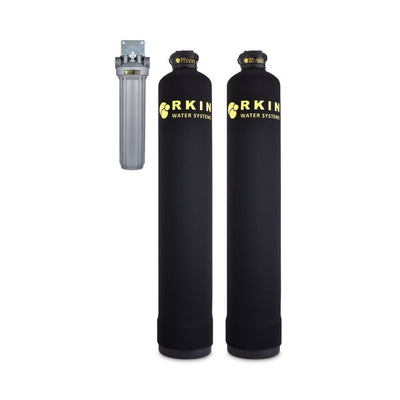
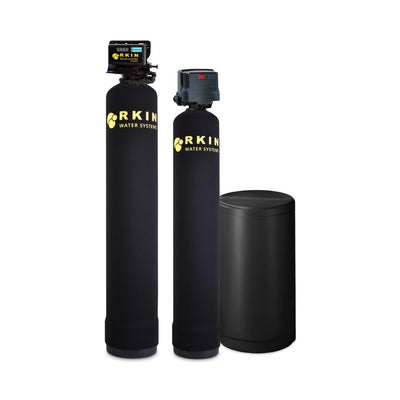
For microplastics in tap water, think in layers. A whole-house sediment filter can catch larger particles before they move through fixtures and appliances. That matters if your water has visible grit, sediment, rust, or storm-related particles. But microplastics and nanoplastics are not always visible, and a coarse sediment filter is not a complete drinking-water answer.
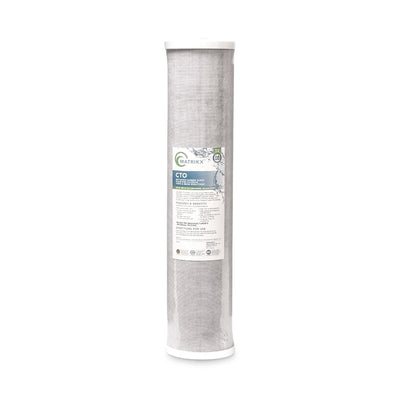
Carbon filtration is useful for taste, odor, chlorine, chloramine, and many organic compounds, depending on the carbon type and contact time. It is often part of a better system because carbon also protects downstream stages. But again, read the test data. “Carbon filter” is a category, not a guarantee.
Reverse osmosis is the stronger point-of-use option for homeowners who want a serious drinking-water reduction step. An RO membrane separates water through a very tight barrier, while prefilters and post-filters handle sediment, chlorine, taste, and polishing. In practical terms, RO is usually the step people look at when they want more than taste improvement.
The key is to avoid overclaiming. If microplastics are your main concern, ask for testing that names microplastics or particle reduction, and ask which particle sizes were tested. If PFAS, lead, arsenic, fluoride, TDS, nitrate, or other contaminants are also part of your report, make sure the system’s performance data matches those concerns too.
Where RKIN Fits
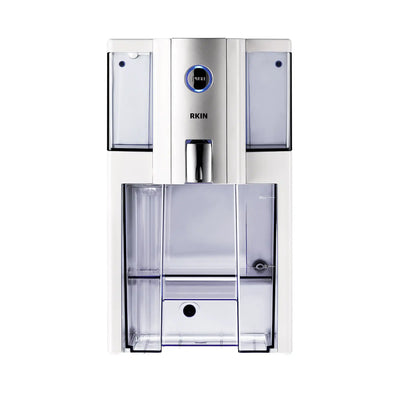
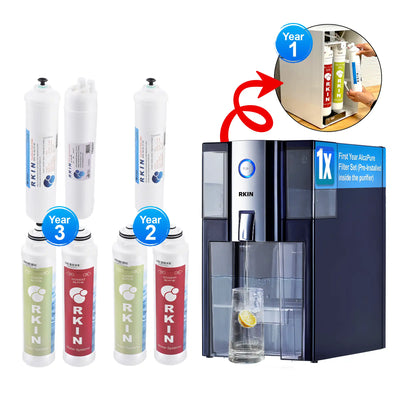
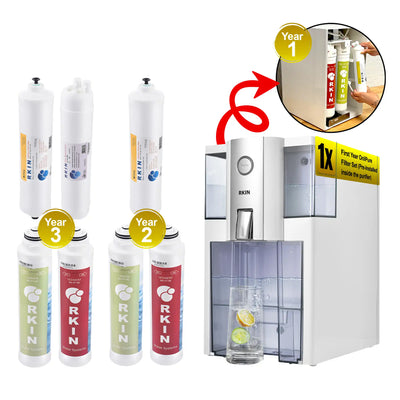
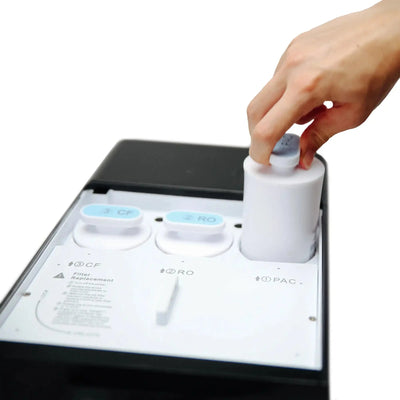
This is what the RKIN Zero Installation Purifier Countertop Reverse Osmosis Water Filter is designed for: homeowners and renters who want RO drinking water without drilling into the sink cabinet or changing plumbing. It sits on the counter, front-loads at counter height, and gives you a point-of-use RO option when the concern is what you drink and cook with.
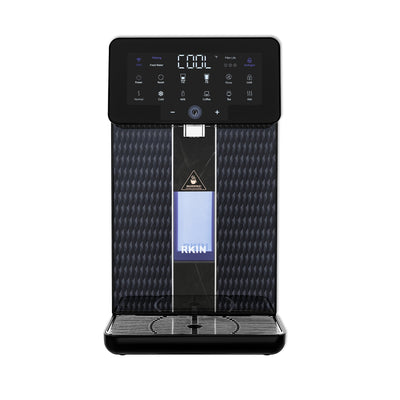
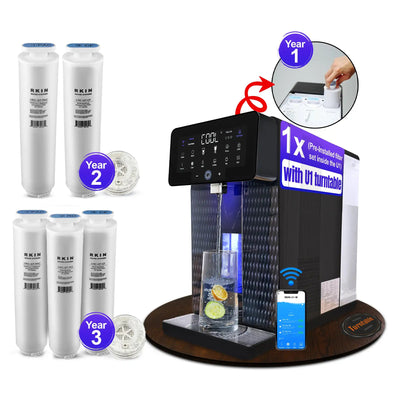
If you want a compact no-plumbing countertop system with RO, remineralization, UV storage-water treatment, and hot and cold dispensing, the RKIN U1-W Space-Saving 4-in-1 Water Filter System is another layout to compare. No current system certification or model-specific microplastics claim was verified for U1-W in this review.
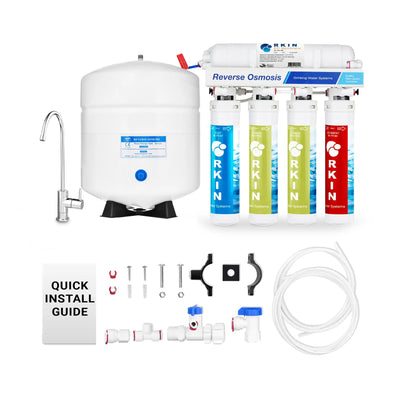
For an under-sink layout, the RKIN Flash Undersink RO System uses a cold-water connection, dedicated faucet, 3.2-gallon tank, and an NSF/ANSI 58 certified RO membrane. That component certification does not establish microplastics performance for the complete system.
How to Make a Calm Decision
Use a simple filter decision path. If your water looks dirty, has grit, or changes after storms, start with source and sediment. If the issue is taste or smell, look at carbon and disinfectant type. If the issue is drinking-water contaminants, review your report and choose a point-of-use system with relevant test data.
Do not treat every headline as a reason to buy the biggest system. A family on city water with normal pressure, no visible sediment, and a drinking-water concern may need a good RO system at the kitchen. A private well with sediment, iron, and bacteria indicators may need source testing and whole-house treatment first. A renter may need a no-plumbing countertop option. A homeowner renovating a kitchen may prefer under-sink.
The best move is not fear. It is matching the filter to the water.
Frequently Asked Questions
Are microplastics in tap water regulated?
Microplastics are an emerging drinking-water concern, but they do not have the same mature federal drinking-water standard structure as contaminants such as lead, nitrate, arsenic, or disinfectant byproducts. The EPA tracks some unregulated contaminants to gather data before standards are set. Check your local report and ask your utility what, if anything, it is testing.
Does reverse osmosis remove microplastics from tap water?
Reverse osmosis is a point-of-use category worth comparing because it uses a membrane plus supporting filters. For microplastics, ask for tested particle-size ranges and complete-system results. Performance depends on the exact system, seals, installation, maintenance, and test method.
Is bottled water better than tap water for microplastics?
Not automatically. Bottled water can be useful during emergencies, but plastic bottles and caps raise their own particle questions. If your goal is daily drinking water at home, filtered tap water from a properly chosen system is usually the more practical path than carrying plastic bottles into the house every week.
Should I use a whole-house filter or a countertop RO system?
Use whole-house filtration when the issue affects every fixture, such as sediment, chlorine taste, odor, or scale. Use countertop or under-sink RO when the main concern is drinking and cooking water. Some homes need both, but many do not. Start with the water report and symptoms.
What should I ask before buying a filter for microplastics?
Ask what contaminants were tested, what particle sizes were measured, whether the testing was third-party, how often filters are replaced, and whether the system fits your home. If a product page only says “removes everything,” keep asking. Good filtration claims are specific.
Ready to Upgrade Your Drinking Water?
If microplastics in tap water are on your mind, start with your local report, then choose the smallest system that matches the concern. For no-plumbing RO at the counter, compare the Zero Installation Purifier with the RKIN U1-W Space-Saving 4-in-1 Water Filter System by features and current performance documents. Do not infer microplastics performance from either product’s RO category.





0 comentarios