




estacional
Control de Calidad del Agua de Manantial: Qué Analizar Este Abril

La primavera es cuando la calidad del agua del hogar cambia discretamente. El deshielo y la lluvia empujan los escurrimientos hacia las aguas subterráneas, el fertilizante agrícola se aplica en los campos, los servicios públicos municipales purgan sus líneas de distribución y la química de tratamiento que su proveedor de agua utiliza en abril suele ser diferente a la que utilizó en enero. Si va a analizar su agua una vez al año, a mediados de abril es el mejor momento para hacerlo: así detectará los contaminantes estacionales en su punto máximo y obtendrá una base real para el año siguiente.
Un análisis de 2023 publicado por el Servicio Geológico de EE. UU. rastreó los niveles de nitrato en las fuentes de agua rurales de EE. UU. y encontró picos consistentes en primavera relacionados con el escurrimiento del suelo y la aplicación de fertilizantes. Las lecturas de primavera fueron rutinariamente un 30-60 % más altas que las de mediados de verano. Ese es un contaminante en un tipo de sistema de agua. El patrón de lecturas elevadas en primavera aparece en docenas de otros, desde herbicidas en regiones agrícolas hasta subproductos de desinfección en las tuberías principales de la ciudad.
Por qué la primavera es diferente
Tres cosas convergen entre finales de marzo y principios de mayo que cambian lo que hay en el agua del grifo residencial.
El deshielo y la lluvia transportan contaminantes a acuíferos y embalses. Cualquier cosa que permaneció en la superficie durante el invierno —sal de carretera, productos químicos para el césped, insumos agrícolas, goteos de petróleo de las entradas— se moviliza y es arrastrada hacia abajo. Los pozos poco profundos son los más expuestos, pero los servicios de agua superficial ven el mismo efecto en sus embalses de captación.
La purga de las líneas de servicios públicos remueve los sedimentos. Muchos sistemas municipales realizan purgas unidireccionales en marzo y abril para eliminar la biopelícula, las incrustaciones minerales y los sedimentos acumulados durante el invierno. La purga en sí es un buen mantenimiento preventivo, pero para los clientes, puede significar picos temporales en la turbidez, el hierro y el manganeso, y a veces un breve aumento en los subproductos de la desinfección a medida que la química del tratamiento se restablece.
Cambios estacionales en la química del tratamiento. Los servicios públicos ajustan la dosificación de cloro y cloramina según la temperatura del agua y la carga microbiana. El agua más caliente requiere más desinfectante para mantener un residuo en el sistema de distribución, lo que puede elevar los niveles de trihalometanos (THM) y ácidos haloacéticos (HAA5) aguas abajo. La primavera es el punto de inflexión: las condiciones de bajo cloro de finales de invierno dan paso a las condiciones de alto cloro de finales de primavera en cuestión de semanas.
En conjunto, abril es el mes en el que una sola prueba de agua le informa más sobre lo que su hogar está bebiendo y usando para bañarse durante el resto del año.
Qué analizar
No todas las pruebas se aplican a todos los hogares. El panel adecuado depende de si usted usa agua de pozo, agua de la ciudad, vive en una región agrícola o en un vecindario antiguo con tuberías antiguas. Un marco de partida razonable:
Si usa agua de un pozo privado:
- Coliformes totales y E. coli (requerido anualmente para cualquier pozo)
- Nitrato y nitrito (la primavera es el pico de exposición por escorrentía de fertilizantes)
- Sólidos disueltos totales (TDS) y dureza
- Hierro, manganeso y azufre (el deshielo primaveral a menudo los moviliza)
- Arsénico (si se encuentra en una región conocida propensa al arsénico; consulte con su departamento de salud del condado)
- pH
Si usa agua de la ciudad:
- Residual de cloro o cloramina
- Plomo y cobre (especialmente en casas construidas antes de 1986)
- Subproductos de la desinfección (THM y HAA5)
- PFAS, si su servicio público ha publicado alguna detección
- Dureza y TDS para contexto
Si vive en una región agrícola (ya sea con pozo o agua de la ciudad):
- Agregue pruebas de atrazina y glifosato a su panel
- Solicite pruebas de herbicidas y pesticidas si su pozo es poco profundo o está cerca de campos
Si sospecha un problema:
- No confíe solo en el olor o el sabor: muchos contaminantes graves (plomo, arsénico, PFAS, nitrato) son inodoros e insípidos
- Obtenga el Informe anual de confianza del consumidor de su servicio público y compárelo con los resultados de su grifo doméstico
La Línea Directa de Agua Potable Segura de la EPA puede indicarle laboratorios certificados en su estado. La mayoría de los departamentos de salud estatales también mantienen una lista de instalaciones de prueba aprobadas.
Cómo realizar la prueba
Tiene tres opciones, con diferentes costos y precisiones:
Los kits de tiras o gotas de bricolaje son económicos y útiles para una lectura rápida de la dureza, el cloro, el pH y, a veces, el hierro. No son lo suficientemente cuantitativos para el plomo, el arsénico, el nitrato en niveles bajos o los PFAS. Trátelos como herramientas de detección, no de diagnóstico.
Las pruebas de laboratorio certificadas por correo son el estándar de oro para las pruebas residenciales. Usted recolecta una muestra en las botellas provistas, la envía el mismo día y recibe un informe cuantitativo completo en 1 a 2 semanas. Un panel de pozo estándar cubre la mayoría de los elementos enumerados anteriormente; los paneles ampliados agregan pesticidas, PFAS o contaminantes radiológicos. Esto es lo que recomendamos para las pruebas anuales de primavera tanto en pozos como en conexiones urbanas.
El programa de pruebas gratuitas de su servicio público. Muchos servicios públicos de la ciudad ofrecen pruebas gratuitas de plomo y cobre para hogares con tuberías anteriores a 1986. Vale la pena verificarlo: la prueba es limitada, pero el precio es correcto y se combina bien con un panel más amplio por correo.
Para una base creíble, intente realizar una prueba de laboratorio certificada por correo al año, idealmente en abril. Complemente con kits de bricolaje para un monitoreo continuo entre las pruebas de laboratorio.
Interpretación de los resultados
Los informes de laboratorio pueden ser intimidantes. Algunas reglas generales ayudan:
Compare con los Niveles Máximos de Contaminantes (MCL) de la EPA. Su informe de laboratorio debe enumerar cada detección junto con el MCL actual. Una lectura por debajo del MCL es "conforme", pero para ciertos contaminantes —plomo, arsénico, nitrato, PFAS— los objetivos basados en la salud son más bajos que el MCL exigible, y los números más bajos son genuinamente mejores.
Preste atención a las tendencias, no a los números absolutos. Una lectura de nitrato de 4 mg/L está por debajo del MCL de 10 mg/L. Pero si la lectura de abril pasado fue de 1,5 mg/L y la de este abril es de 4 mg/L, algo cambió en su fuente de agua o en su tubería. La dirección importa.
La dureza no es un problema de contaminación, pero afecta a todo lo demás. El agua muy dura (más de 180 mg/L como carbonato de calcio) incrusta los electrodomésticos, acorta la vida útil del calentador de agua y puede interferir con algunos medios de filtración. Si su prueba de primavera muestra una alta dureza, es una señal para considerar un ablandador o acondicionador como parte de su estrategia para toda la casa.
Los TDS por sí solos no son un indicador de contaminación. Un TDS bajo no significa agua limpia; un TDS alto no significa agua sucia. El TDS es una medida a granel que incluye todo lo disuelto, incluidos los minerales beneficiosos. Úselo como contexto, no como una alarma de contaminación.
Coincidencia de resultados con un plan de filtración
El objetivo de la prueba no es la prueba en sí, sino tomar una buena decisión sobre qué filtrar, si es que hay algo. Algunos patrones comunes:
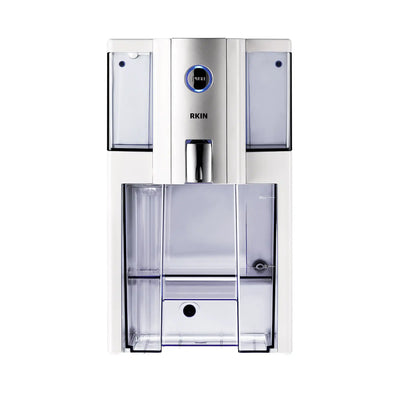
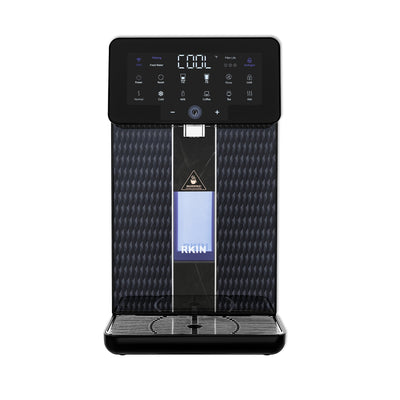
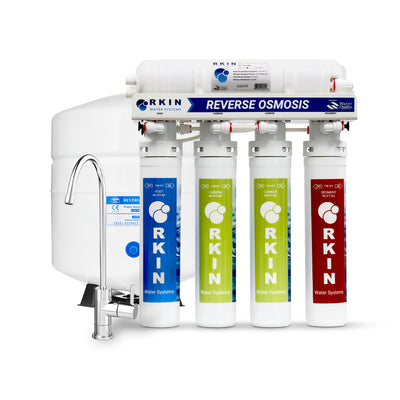
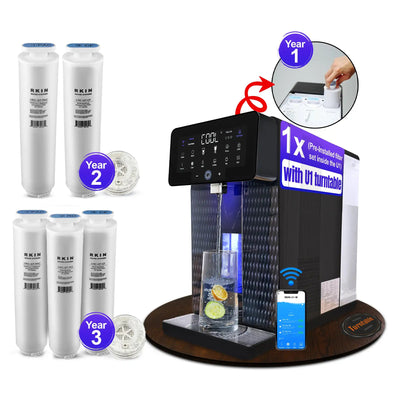
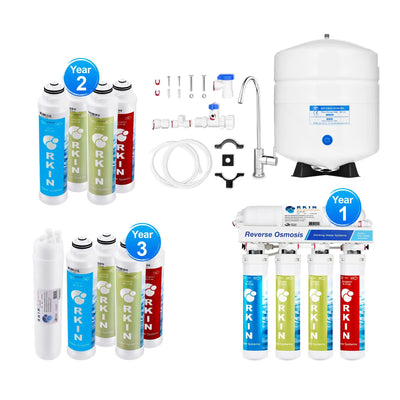
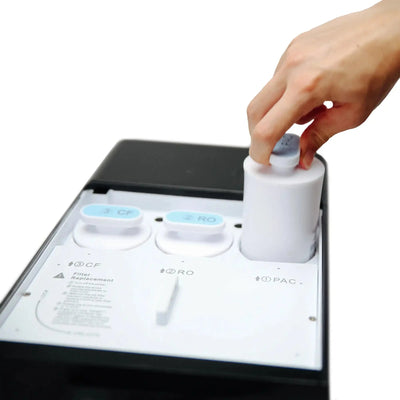
Plomo o indicios de tuberías antiguas: Un sistema de ósmosis inversa de punto de uso en el fregadero de la cocina es la forma más fiable de eliminar el plomo, junto con el arsénico, los PFAS y el flúor. Las unidades de encimera como el Sistema de filtro de agua 4 en 1 que ahorra espacio RKIN U1 se instalan en minutos sin necesidad de trabajos de fontanería, lo que es importante para los inquilinos o cualquier persona que no quiera modificar su cocina.
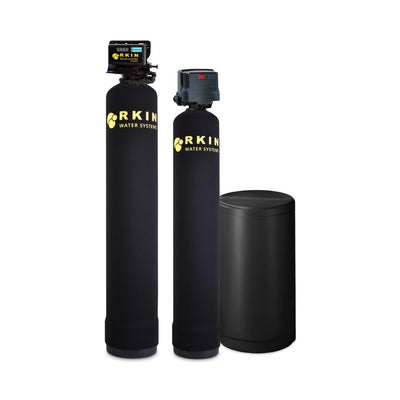
Agua dura más preocupaciones generales de calidad: Una solución para toda la casa combina bien: el Combo de tratamiento de agua para toda la casa RKIN OnliSoft Pro sin sal + carbón se encarga de la prevención de incrustaciones y la reducción de cloro para toda la casa, mientras que un sistema de ósmosis inversa de punto de uso se encarga del pulido del agua potable.
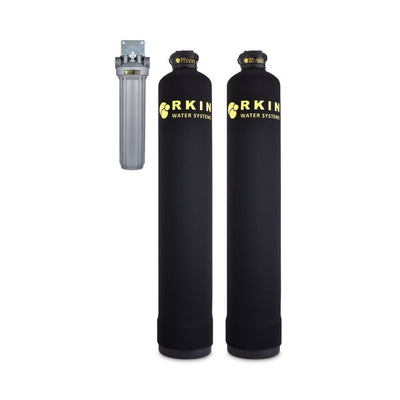
Hierro, manganeso u olores a azufre de un pozo: El Filtro de agua para pozos de toda la casa RKIN está diseñado específicamente para los contaminantes que el deshielo primaveral tiende a movilizar en los pozos privados.
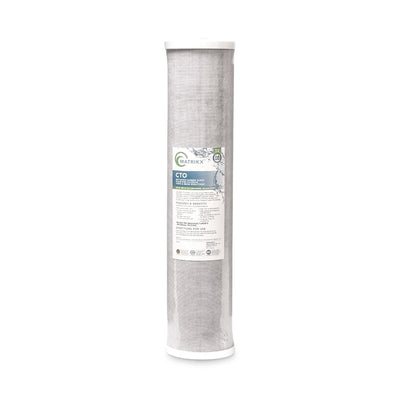
Cloro del agua de la ciudad y subproductos de la desinfección: Un sistema de carbón para toda la casa como el Filtro de carbón dual para toda la casa RKIN CBS reduce el cloro, las cloraminas y los compuestos orgánicos que causan problemas de sabor y olor.
Consulte los precios y especificaciones actuales en rkin.com.
Mantenimiento de primavera para sistemas existentes
Si ya tiene un sistema de filtración instalado, abril también es el momento adecuado para el mantenimiento anual:
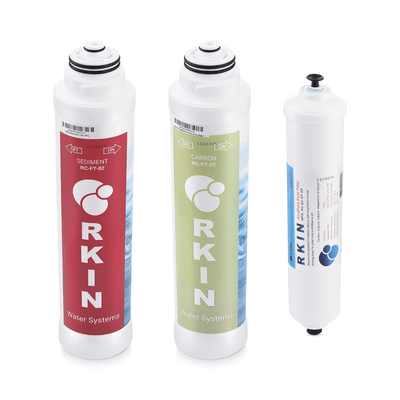
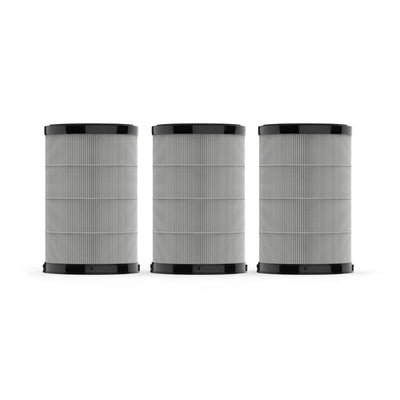
- Reemplace los prefiltros de sedimentos: la escorrentía primaveral acorta notablemente su vida útil.
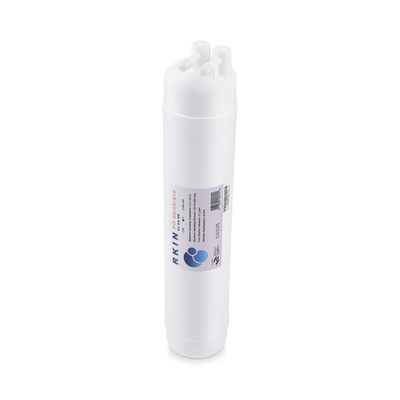
- Verifique el rendimiento de la membrana de ósmosis inversa (RO): un medidor de TDS en la salida de la RO confirma que la membrana sigue rechazando correctamente.
- Revise su registro de reemplazo de filtros: es fácil dejar pasar los cronogramas de los cartuchos.
- Gire la sal del ablandador o verifique la salud de la resina si tiene un ablandador a base de sal.
- Sanitice el sistema si el manual de su unidad lo recomienda (la mayoría de los sistemas de ósmosis inversa se benefician de la sanitización anual).
Combine la visita de mantenimiento con su análisis de laboratorio anual, y habrá establecido una base de referencia más filtros nuevos contra el mismo conjunto de contaminantes estacionales que es más probable que encuentren durante los próximos doce meses.
Preguntas frecuentes
¿Cuánto cuesta una buena prueba de agua para el hogar?
Las pruebas de laboratorio certificadas por correo para un panel de pozo estándar generalmente cuestan entre $150 y $300, dependiendo del panel. Las pruebas básicas de agua de la ciudad para plomo y algunos metales pesados pueden costar entre $50 y $100. Los kits de tiras de bricolaje cuestan menos de $30 pero cubren menos parámetros con menor precisión. Consulte a su departamento de salud estatal para conocer las opciones con descuento.
¿Necesito analizar el agua de la ciudad si la empresa de servicios públicos ya lo hace?
Las empresas de servicios públicos realizan pruebas en la planta de tratamiento y en los puntos de muestreo de distribución, no en su grifo. El plomo, el cobre y cualquier contaminación del lado de la distribución ocurren después de los puntos de prueba de la empresa de servicios públicos. Las pruebas anuales en el grifo son la única forma de saber lo que realmente llega a su vaso.
¿Puedo hacerme una prueba de PFAS en casa?
Las pruebas de PFAS requieren análisis de laboratorio; no existe un kit de bricolaje creíble para los bajos límites de detección (nanogramos por litro) necesarios. Varios laboratorios certificados ahora ofrecen paneles residenciales dedicados a PFAS. Espere un precio más alto que las pruebas de metales estándar.
¿Qué pasa si mi pozo es compartido con vecinos?
Cada hogar que comparte un pozo debe seguir realizando pruebas en su propio grifo anualmente. Las tuberías de distribución, el tratamiento en el punto de entrada y los accesorios del hogar afectan lo que sale del grifo. Un pozo compartido no significa resultados de grifo compartidos.
¿Es la primavera el único momento en que debo realizar la prueba?
Es el momento más informativo. Idealmente, los propietarios de pozos realizan pruebas dos veces al año, una en primavera y otra a fines del verano, para detectar cambios estacionales. Las casas con agua de la ciudad generalmente se arreglan bien con una sola prueba anual, a menos que algo cambie (aviso de la empresa de servicios públicos, renovación, nuevo electrodoméstico) que justifique una ronda adicional.
¿Hervir el agua soluciona la contaminación?
Hervir el agua elimina algunos contaminantes biológicos (bacterias, virus) pero concentra sustancias químicas como nitratos, plomo, arsénico y PFAS en lugar de eliminarlos. Es una medida de emergencia a corto plazo para problemas biológicos, no una solución de tratamiento para contaminantes químicos.
¿Listo para actuar en base a sus resultados?
Las pruebas solo importan si conducen a una decisión. Si su panel de abril detecta plomo, PFAS, dureza o metales pesados, combinar el contaminante con la etapa de filtración correcta convierte un montón de números en agua más limpia todos los días durante el resto del año.
Explore la gama completa en rkin.com, o comience con una unidad de encimera como el Sistema de filtro de agua 4 en 1 RKIN U1 que ahorra espacio para una filtración de grado de agua potable sin trabajos de fontanería. Consulte los precios actuales en las páginas de productos.






0 comentarios