




medidor de TDS y calidad del agua
What Does a TDS Meter Measure in Water?

A TDS meter can make water quality look simple, but that little number is not a full water test. The EPA lists total dissolved solids under its secondary drinking water standards, which focus on taste, odor, color, and scaling concerns rather than every regulated contaminant.
That matters because many homeowners use a TDS meter as if it grades drinking water. A reading of 2 can look “perfect.” A reading of 300 can look “bad.” Neither number tells you whether the water contains chlorine, chloramine, PFAS, lead, nitrate, microbes, or treatment byproducts. TDS is useful, but only when you understand what it can and cannot show.
What a TDS Meter Actually Measures
TDS stands for total dissolved solids. A handheld TDS meter does not identify individual contaminants. It measures electrical conductivity, then estimates the amount of dissolved charged material in the water. Minerals, salts, and some metals conduct electricity, so they affect the number. Many other water concerns do not show up clearly on a basic meter.
That is why two glasses of water can have the same TDS reading and very different chemistry. One may contain mostly calcium and magnesium from limestone. Another may contain sodium from softening, chloride from road salt, or other dissolved ions. The meter reports one combined estimate, not the ingredient list.
The EPA’s secondary standard for TDS is 500 mg/L. Secondary standards are non-enforceable federal guidelines tied to taste, staining, odor, and appearance issues. In plain English: TDS is often a comfort and performance signal, not a pass-fail safety score.
A TDS meter can still be useful at home. It can help you compare tap water to reverse osmosis water, spot a sudden change after months of stable readings, or check whether an RO membrane is still reducing dissolved solids. The mistake is treating the number as the whole answer.
What TDS Does Not Tell You
A low TDS number does not prove water is free of every concern. Some substances can be present at levels that matter for testing or treatment decisions without pushing the TDS number very high. Others may not be charged in a way that a basic conductivity meter captures well.
Common examples include:
- Chlorine or chloramine used by many water utilities for disinfection.
- PFAS, which are tracked under newer federal drinking water rules.
- Lead that may come from older plumbing or service lines.
- Nitrate, arsenic, or other contaminants that require targeted testing.
- Microbes in private wells, after flooding, or during certain local advisories.
- Taste and odor compounds that can be noticeable even when TDS looks normal.
In 2024, the EPA finalized national drinking water limits for several PFAS compounds. That move did not make TDS meters a PFAS test. It made the opposite point: when a concern is specific, the test needs to be specific too. The EPA’s PFAS drinking water information is a better starting point than a handheld TDS reading if PFAS is your concern.
The same idea applies to lead, nitrate, and private well bacteria testing. A TDS meter can flag general dissolved solids. It cannot replace a lab report, a Consumer Confidence Report, or a test kit designed for a specific contaminant.
Why Very Low TDS After RO Can Be Normal
Reverse osmosis systems are designed to reduce dissolved solids. If your tap water is 250 ppm and your RO water reads 15 ppm after the system is flushed, the meter is showing a strong reduction. That is one of the reasons TDS meters are common in RO troubleshooting.
But a very low number after RO does not automatically mean something is wrong, and a slightly higher number does not automatically mean the system failed. The best reading depends on incoming water, pressure, membrane condition, filter age, storage tank behavior, and whether the system includes a mineral or alkaline post-filter.
Some systems intentionally add selected minerals after the RO membrane for taste. That post-treatment can raise the TDS reading while the membrane is still working. If a homeowner sees a reading of 2 after RO and then worries that the water is “too pure,” the better question is not whether the number is scary. The better question is whether the system is being used as designed, whether filters are replaced on schedule, and whether the water tastes the way the household prefers.
If you want a better RO check, compare before and after readings. Test the tap water. Test the RO water after flushing according to the system instructions. Then calculate the percent reduction. A stable reduction over time is more useful than chasing one universal number.
What Actually Works Better Than Guessing
Start with the source. If you are on city water, look up your local water quality report. Utilities publish annual Consumer Confidence Reports with regulated contaminant information. The EPA’s drinking water rules page explains how regulated contaminants are handled at the federal level, and your local report fills in the details for your water system.
If you are on a private well, do not rely on a city report. Private wells are the homeowner’s responsibility, and testing is the right first step when taste, odor, flooding, nearby construction, or staining changes. A TDS meter can be one data point, but it should not decide the whole plan.
Then match the treatment to the problem:
- Use reverse osmosis when you want strong point-of-use reduction of dissolved solids and many drinking water contaminants.
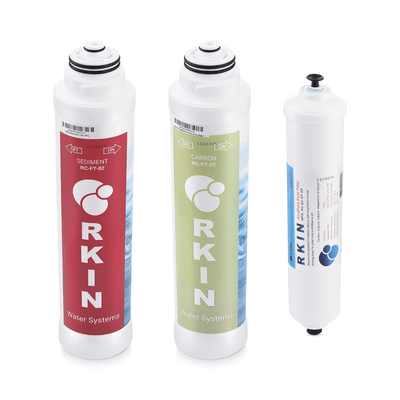
- Use activated carbon when taste, odor, chlorine, and some organic compounds are the main concern.
- Use sediment filtration when visible particles or grit are part of the issue.
- Use whole-house treatment when the problem affects showers, laundry, fixtures, appliances, or every tap.
- Use targeted lab testing when the concern is PFAS, lead, nitrate, arsenic, bacteria, or another specific contaminant.
This approach keeps the TDS meter in its proper place. It is a fast screening tool, not a diagnosis.
Where RKIN Fits
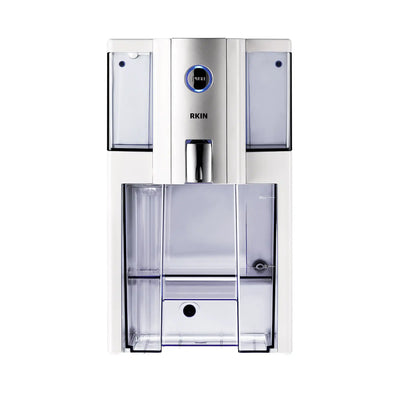
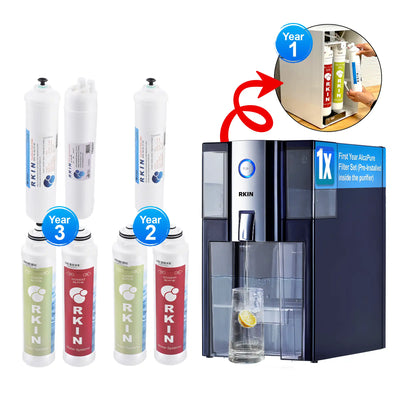
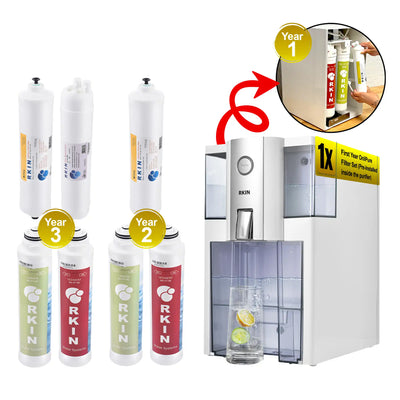
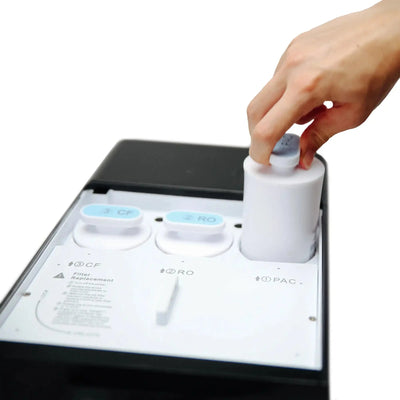
If your main question is drinking water quality at the tap, a reverse osmosis system is usually the right category to compare. The RKIN Zero Installation Purifier Countertop Reverse Osmosis Water Filter is built for homes that want RO filtration without under-sink plumbing. It sits on the counter and connects without a permanent install, which makes it practical for renters, apartments, and homeowners who do not want to modify cabinets.
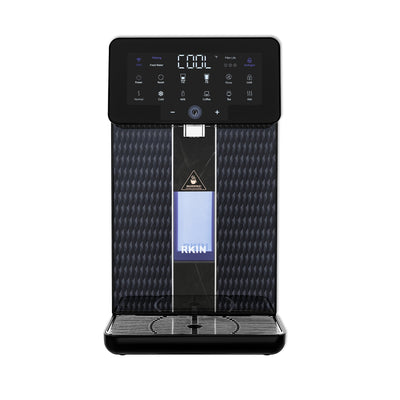
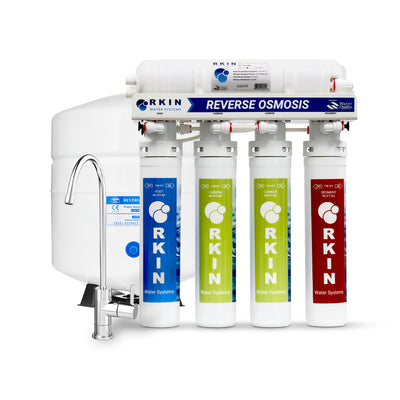
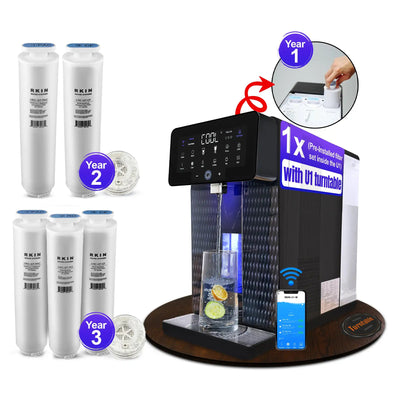
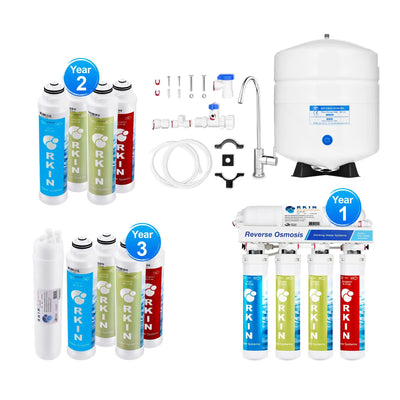
For a compact countertop option with multiple treatment stages, the RKIN U1 4-in-1 Water Filter System is designed as a countertop RO system with a fill tank. If you prefer an under-sink setup, the RKIN Flash Undersink RO System is the better product family to review.
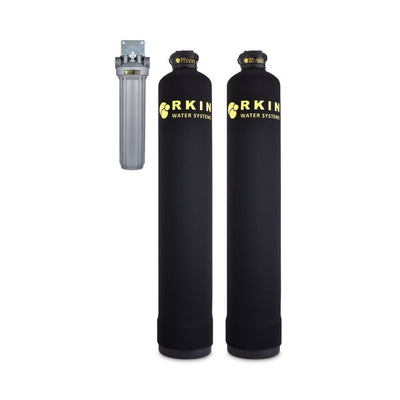
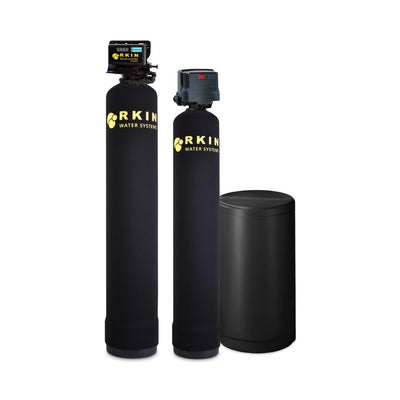
For hardness, scale, odor, staining, or water issues that affect the whole home, start with the RKIN whole-house water treatment collection. A low TDS number at one glass does not solve hard water scale in every bathroom. The treatment point should match the problem location.
How to Use a TDS Meter the Right Way
Use the same clean glass each time. Rinse it well. Test cold tap water first, then filtered water. Let the meter stabilize before recording the number. Rinse the probe between samples, and do not touch the probe tips with your fingers.
For an RO system, test after the required flushing step. If the system has a storage tank, test a full tank and then test again after drawing several cups. Tank behavior, post-filters, and sitting time can affect the reading.
Keep a small log. Write down the date, tap TDS, filtered TDS, filter age, and anything unusual about taste or flow. A single number is easy to overread. A trend is much more helpful. If filtered TDS slowly rises after months of stable readings, it may be time to check the membrane, seating, pressure, or filter replacement schedule.
Most important: do not use TDS to answer a question it was not built to answer. If you are worried about PFAS, lead, nitrate, arsenic, bacteria, or a local advisory, use the right report or test.
Frequently Asked Questions
Is a low TDS reading always good?
Not always. Low TDS often means fewer dissolved minerals and salts, which is expected after reverse osmosis. But TDS does not identify every contaminant. A low number should be read alongside the water source, the treatment system, filter maintenance, and any specific test results.
Can a TDS meter detect PFAS?
No. A consumer TDS meter is not a PFAS test. PFAS testing requires methods designed for those compounds. If PFAS is your concern, review your local water report, check EPA guidance, or use a qualified test rather than relying on conductivity.
What should TDS be after reverse osmosis?
Many RO systems reduce TDS sharply compared with tap water, but there is no single perfect number for every home. Incoming TDS, water pressure, membrane condition, and remineralization can all affect the final reading. Compare tap water to RO water and watch the trend over time.
Does a mineral stage make TDS higher?
It can. A mineral or alkaline post-filter may add selected minerals after the RO membrane for taste. That can raise the final TDS reading while the RO membrane is still reducing dissolved solids before that stage.
Should I choose a filter based only on TDS?
No. Choose the filter based on what you are trying to reduce. TDS is one clue for dissolved solids, but taste, odor, PFAS, lead, hardness, sediment, and well water issues may require different treatment methods.
Ready to Stop Guessing From One Number?
A TDS meter is helpful when you use it for trends and RO performance checks. It becomes misleading when it turns into a water quality score. Start with your source water, test for the concerns that matter, and choose treatment based on the problem you are solving.
Review RKIN’s Zero Installation Purifier Countertop Reverse Osmosis Water Filter if you want RO drinking water without a permanent installation, or compare RKIN’s whole-house options when the issue affects every tap.



0 comentarios