

How Drought Affects Your Tap Water Quality at Home
Share
Corpus Christi watched its main reservoir hit historic lows this month, and the regional response wasn't just about lawn restrictions — chemical plants started lining up for what was left, and South Texas aquifers started seeing a stampede of new permit requests. That story isn't isolated. According to the U.S. Drought Monitor's April 2026 update, more than a third of the contiguous United States is in some level of drought, and dozens of municipalities are pulling from backup sources, deeper wells, or stressed aquifers to keep taps running.
Here's what most homeowners miss: the water still comes out of the faucet, but what's in it changes. Drought doesn't just shrink supply — it concentrates contaminants, shifts which water sources cities draw from, and changes how aggressively water has to be treated to meet EPA limits. If your water has tasted, smelled, or looked different in the last few months and you live in a drought-affected region, it's not your imagination.
Why drought changes what's in your water
When a reservoir or aquifer drops, three things happen at once. None of them are good for the water you drink.
Contaminants concentrate. Naturally occurring minerals — calcium, magnesium, sulfates, chlorides, total dissolved solids (TDS) — don't evaporate when water levels fall. They stay behind in a smaller volume of water, which means higher concentrations per gallon. A 2023 USGS analysis of Western reservoirs documented TDS jumping 30 to 50% during prolonged drought conditions. That's why "hard water" complaints spike during dry years — the same pipes are now delivering noticeably mineral-heavy water.
Cities switch sources. When a primary reservoir is rationed, utilities pull more from secondary sources: deeper wells, neighboring systems, or recycled water blends. Each source has its own contaminant fingerprint. A switch from a surface-water source to a groundwater source can mean more iron, manganese, or naturally occurring radium. A switch in the other direction can mean more agricultural runoff and disinfection byproducts.
Treatment changes get more aggressive. Lower water levels often mean more algae blooms in surface reservoirs, which utilities counter with stronger disinfectants — often more chlorine or chloramine. Higher disinfectant levels react with organic matter to produce disinfection byproducts (DBPs) like trihalomethanes. The EPA's Stage 2 DBP rule caps these compounds, but plenty of utilities run close to the limit during drought stress events.
What you'll actually notice at the tap
Drought-affected water rarely shows up as a dramatic change. It's usually a slow drift — and homeowners blame the wrong thing.
- Taste shifts. Water can taste flatter, saltier, or more "swimming pool" depending on the source change and disinfection level.
- Stronger chlorine smell. Especially in the morning when the first water from the line hits your nose.
- White scale on dishes and showerheads. Higher mineral concentration leaves visible deposits faster than usual.
- Soap doesn't lather as well. Hardness has crept up since the dry season started.
- Coffee and tea taste off. Higher TDS changes how flavors extract.
- Boiled water leaves more residue. The white powder ring in a kettle is mineral, and it grows during drought.
None of these mean your water is suddenly unsafe. They mean the baseline composition has shifted, and your existing setup — whether that's a pitcher filter, a fridge filter, or nothing at all — may not be keeping up.
What doesn't work (and why)
The reflex during a water-quality scare is to run to the bottled-water aisle or grab a basic carbon pitcher. Neither one solves the actual problem.
Pitcher filters use small carbon cartridges that handle chlorine taste and smell reasonably well, but they pass minerals, dissolved solids, and most disinfection byproducts straight through. During drought, when the contaminants you most want to reduce are exactly those, a pitcher is doing very little of the work you think it's doing.
Bottled water isn't a long-term answer. The American Chemical Society's 2024 nanoplastics analysis showed bottled water averages roughly 240,000 plastic particles per liter — about 90% of them nanoplastics. It's also expensive, heavy, and the storage logistics get worse the longer drought conditions last.
Boiling kills bacteria, but it concentrates dissolved solids and minerals — the opposite of what you want when TDS is climbing. It also doesn't touch chlorine, chloramine, DBPs, or PFAS.
What actually addresses drought-shifted water
The technology that handles concentrated minerals, disinfection byproducts, and a shifting source profile in one shot is reverse osmosis (RO). An RO membrane uses water pressure to push water molecules through a semipermeable barrier that rejects 95–99% of dissolved solids — including the calcium, magnesium, sulfates, chlorides, and TDS that climb during drought. Combined with a multi-stage carbon prefilter, RO also handles chlorine taste, chloramine, and the organic precursors to disinfection byproducts.
What to look for when picking a system:
- NSF/ANSI 58 certification or equivalent third-party testing for contaminant reduction claims.
- Multi-stage carbon prefiltration ahead of the RO membrane to extend membrane life and handle chlorine.
- A clear filter replacement schedule. RO membranes typically last 2–5 years; carbon prefilters need swapping every 6–12 months.
- Honest contaminant data. Reputable manufacturers publish what their systems are tested to reduce and at what efficiency.
RO doesn't fix everything. If your home has heavy hard-water scale on appliances and showerheads, you'll likely also want a whole-home conditioner or softener upstream so your dishwasher, water heater, and pipes aren't fighting drought-concentrated minerals every day. But for drinking and cooking water, RO is the workhorse.
The RKIN approach for drought-affected homes
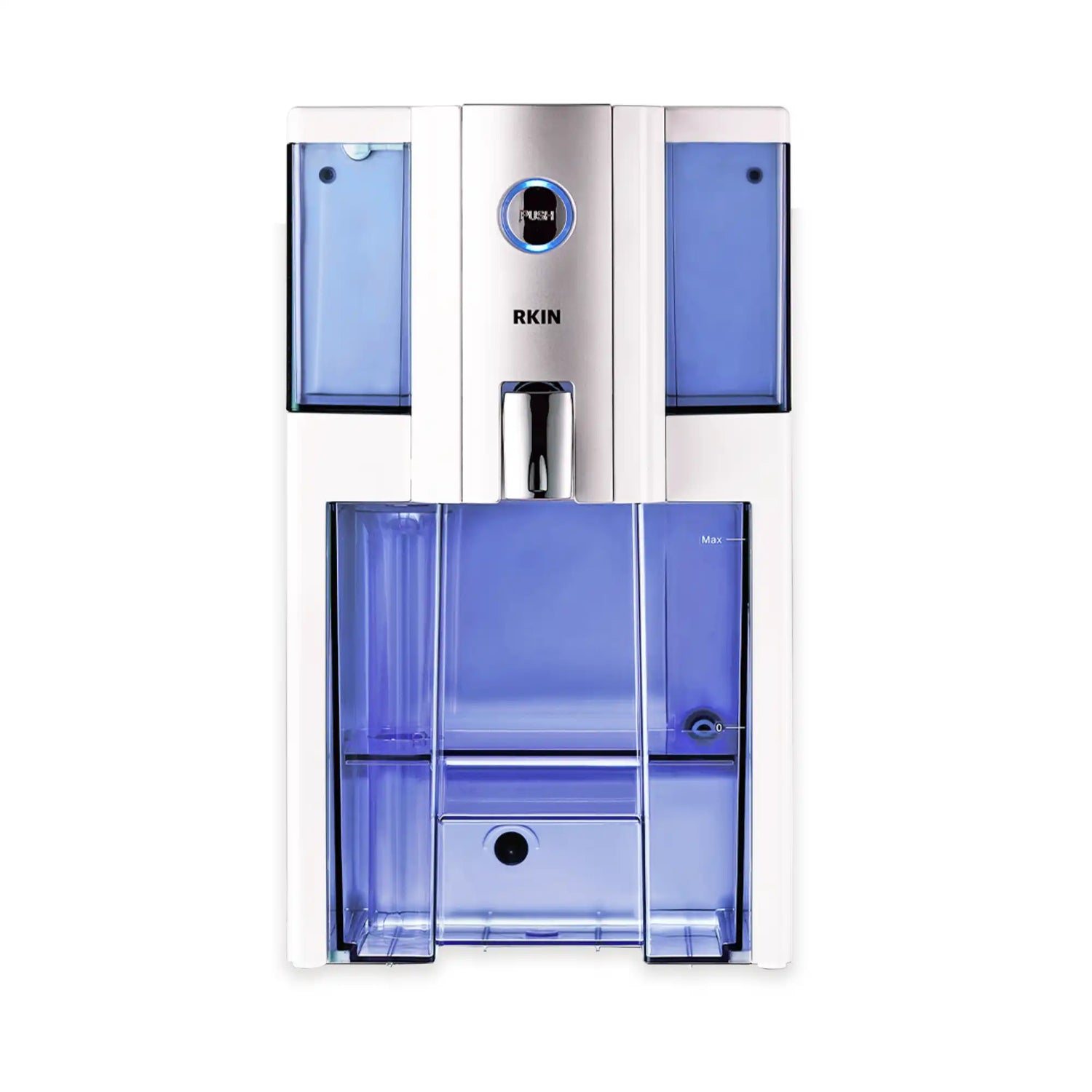
The Zero Installation Purifier is a countertop reverse osmosis system designed for renters, homeowners, and anyone who doesn't want to modify their plumbing. It connects to a standard kitchen faucet, runs water through five stages (sediment, carbon, RO membrane, post-carbon, and a remineralization or alkaline option depending on configuration), and produces purified water on demand. For households that want under-sink installation and higher daily output, the RKIN Flash Undersink RO System delivers 75 gallons per day with a 3.2-gallon storage tank.
If drought-driven hardness is showing up everywhere — water heater, showerheads, dishwasher streaks — the RKIN OnliSoft Pro Salt-Free + Carbon Combo is a whole-home option that conditions hardness without salt and adds carbon filtration for chlorine and chloramine. See current pricing at rkin.com.
Frequently Asked Questions
Does drought make tap water unsafe?
Tap water in drought-affected regions usually still meets EPA limits, but the composition shifts: higher TDS, more minerals, often stronger chlorine, and sometimes a different source entirely. "Meets the limit" and "tastes and feels the same" aren't the same thing. Most homeowners in long-term drought areas notice changes in taste, scale, and chlorine smell.
How can I tell if my water source has changed during drought?
Check your local utility's annual Consumer Confidence Report — it lists every source the utility drew from in the past year. If the list grew or the percentages shifted noticeably, your water is being blended differently than it used to be. Some utilities also publish source-mix updates during declared drought stages.
Will reverse osmosis remove the extra minerals from drought-stressed water?
Yes. RO membranes reject 95–99% of dissolved minerals, which is why TDS readings drop dramatically after RO treatment. That's also why many RO systems include a remineralization stage — water with no minerals at all tastes flat to most people, so a small amount is added back after filtration.
Do I need a whole-home system or is a countertop unit enough?
A countertop RO system covers drinking and cooking water, which is what most people care about for taste, contaminants, and what their family ingests. A whole-home conditioner or softener is what you add when scale on appliances, dry skin in the shower, or soap-scum buildup are the bigger pain points. Many drought-affected households end up running both: whole-home conditioning for the house, RO at the kitchen faucet for what they drink.
How often should I replace filters during drought?
Higher contaminant loads can shorten filter life. Carbon prefilters that normally last 12 months may need replacement closer to every 6–9 months when source water is heavily concentrated. Watch for slower flow rates and any return of chlorine taste — those are the practical signals that prefilters are saturating faster than usual.
Ready to Stop Letting Drought Decide What's in Your Water?
You can't control reservoir levels. You can control what comes out of your kitchen faucet. The RKIN Zero Installation Purifier connects to a standard faucet, removes 95–99% of dissolved solids, and ships free. For whole-home options that handle hardness and carbon filtration in one system, see the whole-house water treatment lineup.


