


does reverse osmosis remove nanoplastics
Nanoplastics in Tap vs Bottled Water: 2026 Homeowner Guide

If you switched to bottled water because you thought it was "cleaner" than tap, the 2024 data is going to sting. A Columbia University study published in PNAS (January 2024) used a new hyperspectral imaging technique and found that a one-liter bottle of water contains an average of 240,000 plastic particles — roughly 90% of them in the nanoplastic size range, which is much smaller than the microplastics prior research had been able to detect. Earlier work in 2018 flagged a few hundred particles per liter. The 2024 count is two to three orders of magnitude higher.
That doesn't mean tap water is a miracle. A 2024 study in Environmental Science & Technology also found nanoplastics in treated municipal tap water. The point is that the "bottled is safer" default many homeowners run on is outdated — and there's a specific category of home filtration that actually addresses the particles both tap and bottled water carry.
Nanoplastics vs Microplastics: The Size Matters
The two terms get used interchangeably, but they are not the same problem from a filtration standpoint.
- Microplastics are plastic particles from 5 millimeters down to 1 micron. Most sediment filters and carbon blocks catch the larger end of this range.
- Nanoplastics are below 1 micron — roughly 1 to 1,000 nanometers. They slip through almost every standard residential filter. The Columbia team's imaging method is what made them countable in drinking water for the first time at that resolution.
Any filter marketed as reducing "microplastics" needs to be read carefully. A filter that captures 5-micron particles isn't wrong — it's just not doing anything about the nanoplastic fraction, which is where the bottled-water concentration lives.
Why Bottled Water Carries More Nanoplastics
The Columbia study tested three major bottled water brands sold in the U.S. The authors traced much of the nanoplastic load back to the polyethylene terephthalate (PET) bottle and the polyamide reverse-osmosis membrane used upstream in some bottling plants. Squeezing, heat during shipping, and time on a warehouse shelf all accelerate particle shedding from the bottle itself.
A 2022 review in the Journal of Hazardous Materials noted that temperature cycles — like a case of bottled water sitting in a hot car, garage, or delivery truck — increase plastic leaching into the water over time. That's an exposure pathway municipal tap water doesn't have, because the distribution system isn't a sealed plastic container warming in the sun.
None of this is an argument that bottled water is "bad." It's an argument that the common assumption — bottled is cleaner by default — doesn't hold up against the current particle data.
What's in Municipal Tap Water
U.S. municipal water is regulated under the Safe Drinking Water Act, which sets enforceable limits on roughly 90 contaminants — including lead, copper, disinfection byproducts, nitrate, arsenic, and as of 2024, five PFAS compounds. Nanoplastics are not currently regulated. Most utilities don't test for them, because the analytical methods weren't available at a regulatory scale until recently.
That leaves a gap: your tap water is compliant with the contaminants the EPA requires it to test for, but it may still carry nanoplastics, pharmaceuticals, and other unregulated compounds that the utility isn't tracking. For homeowners who want to close that gap, the answer is point-of-use treatment at the kitchen sink — not switching from one unmeasured source to another.
What Doesn't Work
Three shortcuts keep showing up in online advice and none of them address nanoplastics at the size range the 2024 research identified.
Pitcher filters and faucet mounts. Standard pitchers use granular activated carbon with a pore size far larger than nanoplastic particles. They're useful for chlorine taste, but they let nanoplastic-sized particles pass.
Boiling. Boiling does not remove plastic particles. A 2024 Environmental Science & Technology Letters paper suggested boiling hard water in a kettle could co-precipitate some nanoplastics with calcium carbonate scale — but that effect is inconsistent, requires pouring through a filter to separate the scale, and doesn't work on soft water.
Boiling is also a bad idea for PFAS, lead, and nitrate — it concentrates them as water evaporates rather than removing them.
"Alkaline" or "ionized" machines. These devices adjust pH but do not have a filtration stage rated for sub-micron particles. Any nanoplastic or PFAS present at the tap passes right through.
What Actually Works: Reverse Osmosis
Reverse osmosis pushes water through a semi-permeable membrane with effective pore sizes in the 0.0001 micron (1 nanometer) range — three orders of magnitude smaller than "microplastic" filtration. That's the mechanism that gives RO its reduction capability across dissolved solids, heavy metals, PFAS, and the nanoplastic fraction the Columbia team measured.
Independent testing organizations rate RO systems under NSF/ANSI standards 58 (reduction of dissolved solids), 42 (aesthetic chlorine, taste), and 401 (emerging contaminants — pharmaceuticals, pesticides, some PFAS). A well-built RO system for home use will carry reduction data under at least 58 and 42.
For nanoplastics specifically, reduction testing is still catching up with the research. The underlying physics — a membrane with pores smaller than the target particle — is the same whether the target is a dissolved salt ion or a 50-nanometer plastic fragment. The RO membrane doesn't distinguish.
Countertop vs Undersink: Which One for You
Point-of-use RO comes in two form factors, and the choice is usually driven by your home situation rather than performance.
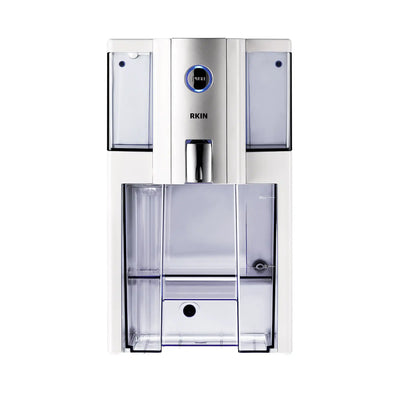
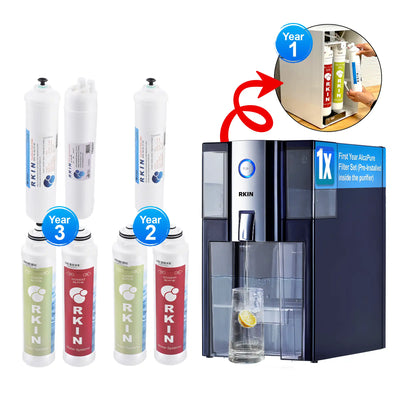
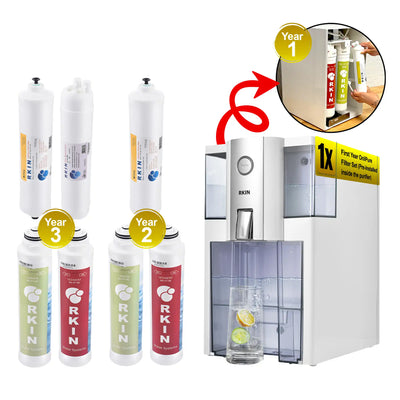
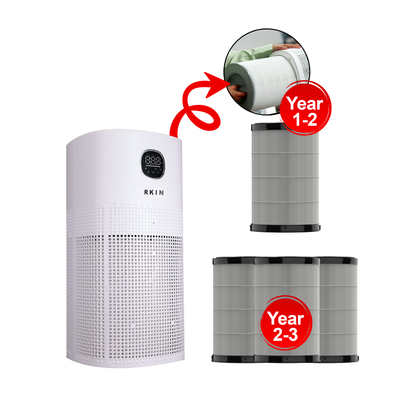
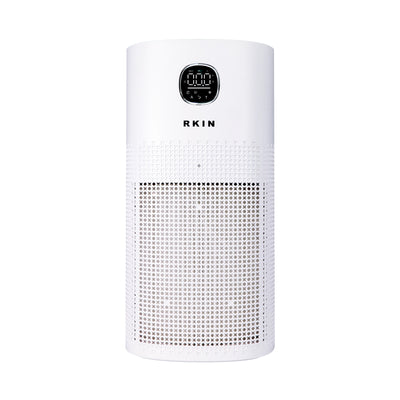
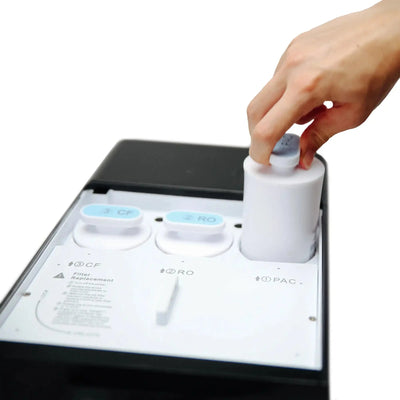
- Countertop RO. Connects to your faucet with a quick-connect adapter. No plumbing modification, no drilling. Portable, which matters for renters. The RKIN Zero Installation Purifier is the example — a 5-stage RO that sits on the counter and needs only a standard outlet.
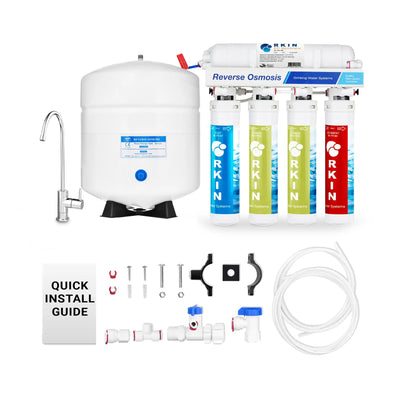
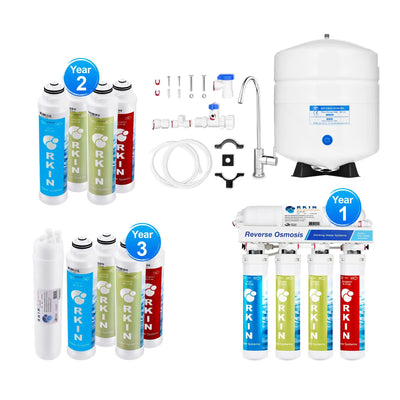
- Undersink RO. Tees into the cold-water line under your sink and delivers filtered water through a dedicated faucet. Higher capacity, storage tank for instant delivery. The RKIN Flash Undersink RO System fits that use case — a 3.2-gallon tank, 75 gallons per day of production, fits vertically or horizontally under most kitchen cabinets.
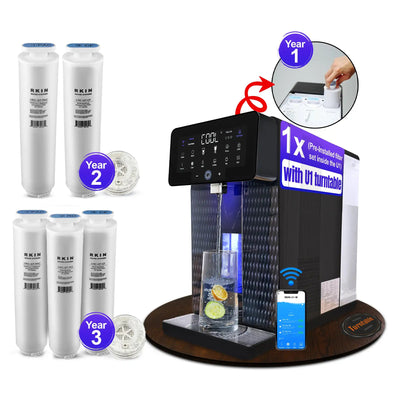
- Zero-installation countertop with fill tank. The RKIN U1 4-in-1 Water Filter System is a countertop unit with a fill-tank design — pour water in, plug it in, no faucet connection needed at all. Useful for apartments, RVs, and kitchens without a convenient faucet adapter.
What About the Bottle Side?
If you want to reduce bottled-water nanoplastic exposure without giving up portability, the practical moves are: use a refillable stainless-steel or glass bottle, fill it from a home RO system, and skip bottled cases that have been sitting in warm warehouses or cars. The exposure pathway the Columbia researchers flagged — heat plus time plus PET — is what you're actually trying to avoid.
This also cuts household plastic waste. U.S. consumers buy roughly 50 billion plastic water bottles a year, per Container Recycling Institute data — and most of them are downcycled or landfilled. A home RO on a refill station replaces that stream entirely.
Frequently Asked Questions
Does reverse osmosis remove nanoplastics?
RO membranes have effective pore sizes around 0.0001 microns (1 nanometer), which is smaller than the nanoplastic size range (1–1,000 nanometers). The physics of the membrane rejects particles larger than the pore size, which means nanoplastics down to the membrane's rejection limit are removed. Formal NSF testing for nanoplastics is still evolving, but the underlying mechanism is consistent with the reduction.
Are nanoplastics worse than microplastics?
From an exposure standpoint, nanoplastics can move through biological tissues that microplastics cannot — that's the subject of active research. From a filtration standpoint, they are harder to remove because most filters are not rated below 1 micron. Reverse osmosis is the main residential option that operates below that size.
Is bottled water safer than filtered tap water?
The 2024 Columbia study found roughly 240,000 plastic particles per liter in bottled water, with most in the nanoplastic size range. Municipal tap water also carries some nanoplastics, but without the added exposure from the plastic bottle itself. Filtered tap water from a well-built RO system generally has the lowest particle count of the three options.
Do I need to replace my whole plumbing system?
No. Nanoplastic exposure at home comes primarily from the source water and from plastic containers — not from your home's supply pipes in most cases. A point-of-use RO at the kitchen faucet addresses the drinking and cooking water without any plumbing replacement.
How often do RO filters need to be replaced?
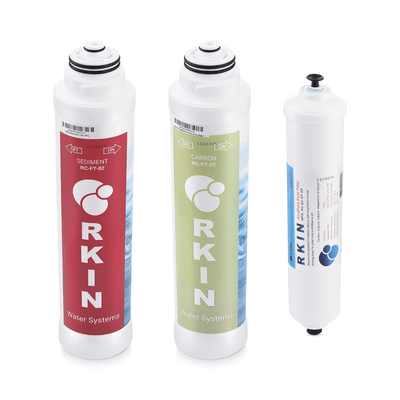
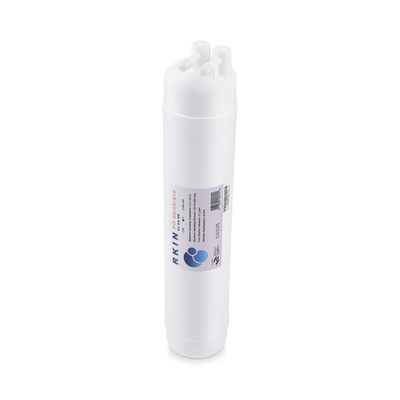
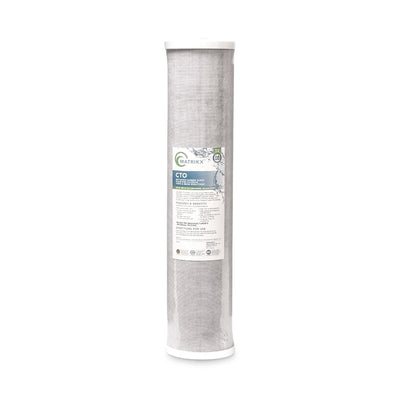
Pre-filters (sediment and carbon) on a countertop or undersink RO typically run 6–12 months depending on water quality and usage. The RO membrane itself lasts longer — check each product's spec page for the manufacturer's rating. Water that's high in sediment or hardness shortens the cadence; pre-treatment extends it.
Does a refrigerator filter help with nanoplastics?
Most refrigerator filters use carbon block rated for particles 0.5 microns and larger. That helps with chlorine taste and some larger microplastics but does not address the nanoplastic fraction identified in the 2024 research. For that, you need reverse osmosis.
Ready to Filter the Particles You Can't See?
The nanoplastic data is newer than the filtration market has caught up with. The right tool for it — reverse osmosis — has been around for decades and works for everything from dissolved salts to PFAS to the sub-micron particles the 2024 research finally put a number on.
Start at the kitchen sink. The RKIN Zero Installation Purifier is a zero-plumbing countertop option; the RKIN Flash Undersink RO System handles higher daily volume for families. Both produce filtered water ready for refillable bottles, so the bottled-water step disappears entirely. No plumbing required on the countertop option. Ships free.




0 comments