




city water testing
PFAS and City Water: What to Test For and How to Protect Your Family

PFAS — per- and polyfluoroalkyl substances, commonly called "forever chemicals" — are now detectable in the drinking water of thousands of American cities. The EPA finalized enforceable limits for six PFAS compounds in 2024, and utilities have until 2029 to comply.
That means for the next several years, your city water may contain PFAS levels above the new federal limits, and your utility is not yet required to fix it.
Here is what you need to know: which PFAS to test for, how to read your city's water report, and what actually removes these chemicals from your drinking water.
What Are PFAS and Why Should You Care?
PFAS are a group of over 12,000 synthetic chemicals that have been used since the 1950s in nonstick cookware, waterproof clothing, food packaging, firefighting foam, and industrial processes. They earned the name "forever chemicals" because they do not break down naturally in the environment or in your body.
Health concerns linked to PFAS exposure include:
- Increased cholesterol levels
- Immune system suppression (reduced vaccine response in children)
- Thyroid disease
- Kidney and testicular cancer (at higher exposure levels)
- Developmental effects in infants and children
- Liver damage
The new EPA limits set maximum contaminant levels at 4 parts per trillion (ppt) for PFOA and PFOS — the two most studied PFAS compounds. For context, 4 ppt is roughly equivalent to four drops of water in an Olympic swimming pool.
What to Test For in Your City Water
Your annual Consumer Confidence Report (CCR) from your water utility may or may not include PFAS data yet. If it does not, you can request it directly or order an independent test.
The key compounds to check:
- PFOA (Perfluorooctanoic acid) — EPA limit: 4 ppt
- PFOS (Perfluorooctane sulfonic acid) — EPA limit: 4 ppt
- PFNA (Perfluorononanoic acid) — Part of the "Hazard Index" group
- PFHxS (Perfluorohexane sulfonic acid) — Part of the "Hazard Index" group
- PFBS (Perfluorobutane sulfonic acid) — Part of the "Hazard Index" group
- GenX (HFPO-DA) — EPA limit: 10 ppt
Beyond PFAS, your city water may also contain:
- Lead — From aging pipes, especially in homes built before 1986
- Chlorine/Chloramines — Added for disinfection, affects taste and skin
- Nitrates — From agricultural runoff, particularly dangerous for infants
- Arsenic — Naturally occurring in groundwater in some regions
- Disinfection byproducts (THMs, HAAs) — Formed when chlorine reacts with organic matter
What Actually Removes PFAS From Drinking Water?
Not all water filters remove PFAS. Here is what the science says:
Reverse Osmosis — Most effective. RO membranes physically block PFAS molecules. Studies show 90-99% removal rates for both long-chain and short-chain PFAS compounds. This is the gold standard for household PFAS protection.
Activated Carbon (GAC) — Partially effective. Granular activated carbon can reduce some PFAS (primarily longer-chain compounds like PFOA and PFOS), but effectiveness varies significantly based on contact time and carbon quality. It is less reliable for short-chain PFAS.
Ion Exchange — Effective but specialized. Anion exchange resins can target PFAS, but these systems are typically used in municipal or commercial settings, not residential.
Boiling — Does not work. Boiling water actually concentrates PFAS because the water evaporates but the chemicals remain.
RKIN Systems That Remove PFAS
For your drinking and cooking water, a reverse osmosis system is the most reliable household defense against PFAS:
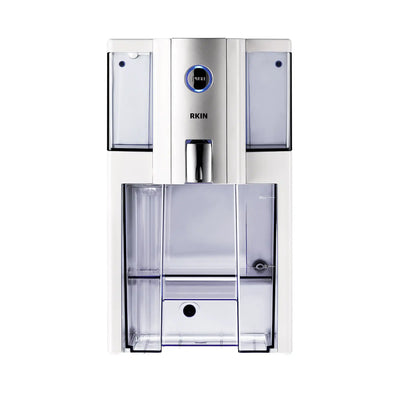
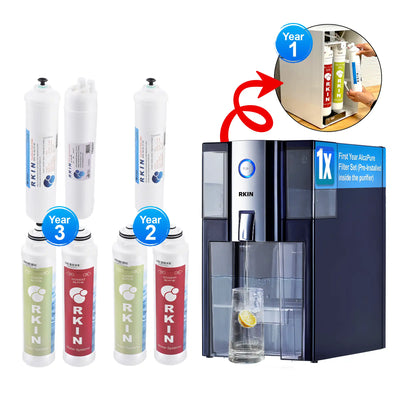
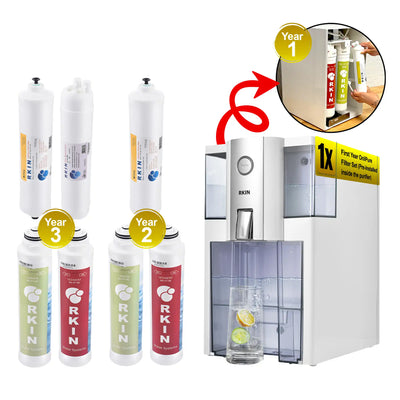
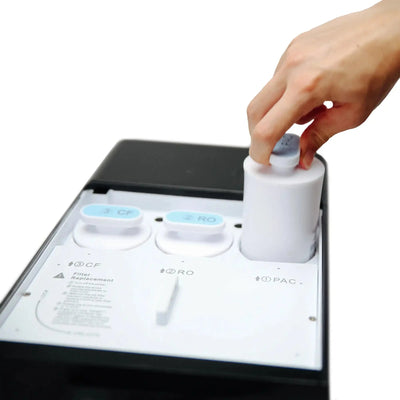
- RKIN Zero Installation Purifier (Zero Installation Purifier) — Countertop RO with zero installation. Fill the reservoir, press a button, and get purified water in minutes. The RO membrane rejects PFAS along with lead, fluoride, arsenic, and other dissolved contaminants.
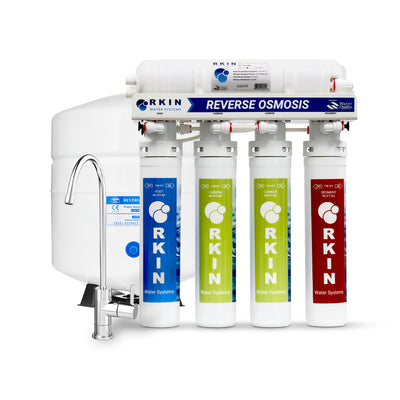
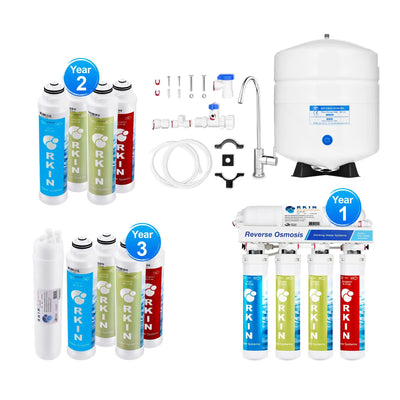
- RKIN Flash Undersink RO — Installs under your kitchen sink with a dedicated faucet. Higher daily capacity for families.
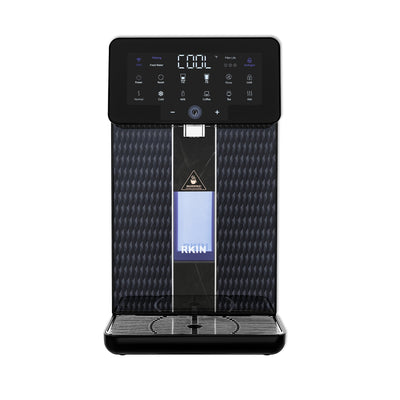
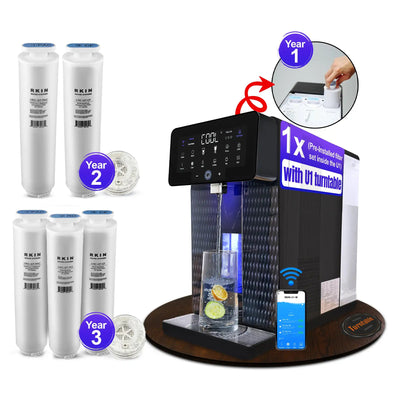
- RKIN U1 4-in-1 Water Filter System — Advanced countertop RO with hot and cold dispensing. Ideal for families who want instant hot water for baby formula, tea, or cooking.
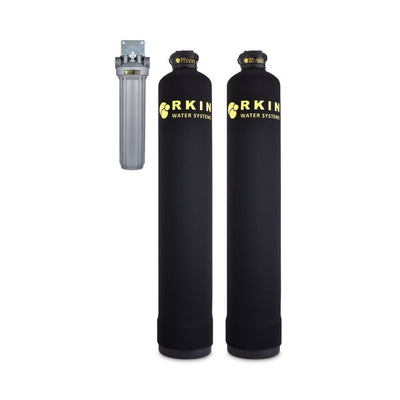
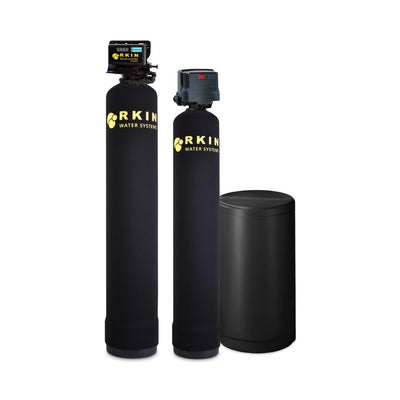
For whole-house chlorine and scale protection (which does NOT remove PFAS but protects your plumbing and appliances), pair any of the above with the RKIN OnliSoft Pro.
How to Check Your City's Water
- Find your CCR: Search "[your city name] water quality report" or visit the EPA's CCR search tool
- Look for PFAS data: Check for PFOA, PFOS, and the other compounds listed above
- Check for lead: Pay attention to the 90th percentile lead level (should be below 15 ppb, but the new proposed limit is 10 ppb)
- Note your hardness: Measured in grains per gallon (gpg) or mg/L — above 7 gpg is considered hard
If your report does not list PFAS: that does not mean they are absent. Many utilities have not yet tested. Consider an independent lab test (around $200-$400 for a full PFAS panel).
Frequently Asked Questions
Does boiling water remove PFAS? No. Boiling concentrates PFAS because the water evaporates but the chemicals do not. Reverse osmosis is the most effective household method for PFAS removal.
Are pitcher filters like Brita effective against PFAS? Standard Brita-style carbon pitchers are not reliably effective against PFAS. Some newer pitcher filters with specialized media claim partial PFAS reduction, but RO systems provide significantly higher and more consistent removal rates.
Should I worry about PFAS in my shower water? The primary health concern with PFAS is ingestion (drinking and eating), not skin absorption. For shower water, chlorine removal (via a whole-house carbon filter like the OnliSoft Pro) is more impactful for skin and hair health.
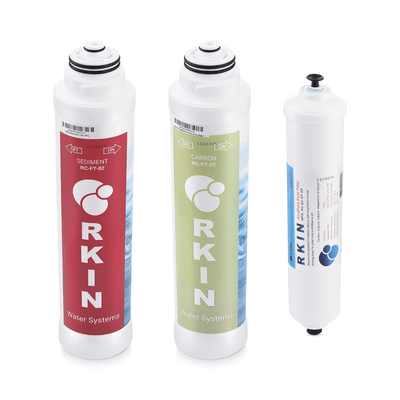
How often do RO filters need replacing for PFAS removal? Follow the standard replacement schedule: pre-filters every 6-12 months, RO membrane every 1-2 years. Consistent filter changes ensure the membrane maintains its rejection rate.
Is bottled water PFAS-free? Not necessarily. Some bottled water brands have tested positive for PFAS. An at-home RO system gives you control over your water quality and is significantly cheaper over time.






0 comments