


reverse osmosis low pressure
Reverse Osmosis System Slow? 6 Causes and How to Fix Them

You turn on the RO faucet expecting a steady stream and you get a thin trickle. Or it starts strong and dies after half a glass. Or it takes thirty seconds to fill what used to fill in five.
A slow reverse osmosis system is one of the most common service calls in residential water treatment, and the good news is the cause is almost always one of six things. Five of them you can diagnose at home in under ten minutes. One of them is a sign you've been putting off filter changes too long.
Here's the order to check, what each problem looks like, and how to fix it.
How RO Flow Actually Works
Before you start swapping parts, understand what you're hearing at the faucet.
Most under-sink RO systems don't deliver water directly from the membrane. The membrane produces filtered water slowly — somewhere between 50 and 100 gallons per day — and stores it in a pressurized tank. When you open the faucet, you're drawing from the tank, not from the membrane in real time.
That tank is what gives you the steady stream you expect. If the tank pressure is low, or the tank itself has failed, the flow at the faucet drops. If the membrane is fouled, the tank refills slowly between uses. If the inlet pressure is low, both the tank fill rate and the faucet flow drop together.
So when you diagnose slow flow, you're really asking two questions: Is the tank delivering what it should? Is the membrane refilling the tank fast enough?
Cause 1: Low Air Pressure in the Storage Tank
This is the most common cause of slow flow on a system that used to work fine. Standard RO storage tanks have an air bladder that needs about 7 to 8 PSI of pressure when the tank is empty. Over time, that air leaks out. The tank still fills with water, but without the air pressure pushing back, the water dribbles out instead of flowing.
How to diagnose: Open the RO faucet and let it run until completely empty. With the faucet still open, find the small Schrader valve (looks like a tire valve) on the side of the tank. Press it briefly. If air hisses out, your tank still has some pressure. If a few drops of water come out, the bladder has ruptured and the tank needs replacement.
How to fix: If the tank just lost pressure, drain it completely and use a low-pressure bicycle pump or a tire gauge with an inflator to add air through the Schrader valve. Target 7 PSI on a fully drained tank. Check the manufacturer's spec — some tanks call for slightly different numbers. If water came out of the valve, the bladder is shot and the tank needs to be replaced.
Cause 2: Inlet Water Pressure Is Too Low
Reverse osmosis membranes need pressure to work. Most residential membranes are spec'd for 50 to 80 PSI inlet pressure. Below 40 PSI, production drops sharply. Below 30 PSI, the system barely produces at all.
If your home water pressure has dropped — common in older homes, on well systems, or when a pressure regulator starts to fail — your RO system slows down with it.
How to diagnose: Get a pressure gauge that screws onto a hose bib (under twenty dollars at any hardware store). Test pressure at the laundry hose bib or the outdoor spigot. Anything under 40 PSI is a problem for an RO system.
How to fix: If your home pressure is low, the issue is upstream of the RO system — a failing pressure regulator, a partially closed main shutoff, or low municipal supply. A booster pump can be added to the RO system itself if your home pressure is consistently low and you don't want to fix the source.
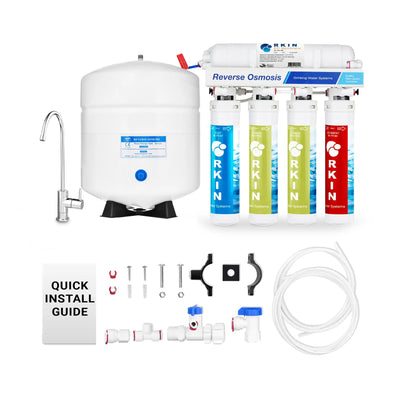
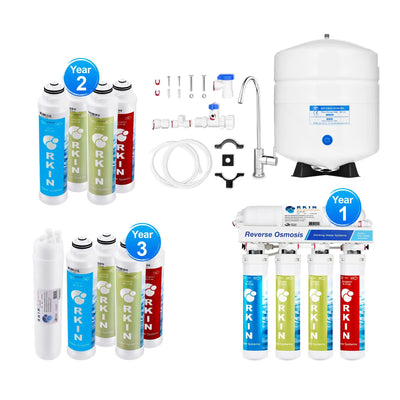
The RKIN Flash Undersink RO System is a non-electric system that runs strictly on home water pressure — no booster pump, no electrical outlet required. It produces 75 gallons per day on standard residential pressure (40+ psi), so most homes have plenty of feed pressure to drive its membrane efficiently. If your home pressure is below 40 psi, address the supply-side issue first (check the regulator, well pressure tank, or main shut-off) before assuming the system is the bottleneck.
Cause 3: The Pre-Filters Are Clogged
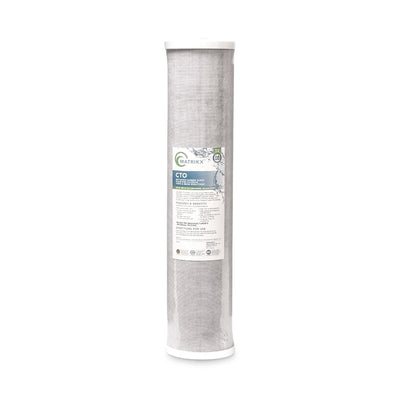
Every RO system has at least one sediment pre-filter and one or two carbon pre-filters ahead of the membrane. Their job is to protect the membrane from sediment, chlorine, and chloramines that would destroy it.
When pre-filters clog, two things happen. First, they restrict the flow of water reaching the membrane, which slows production. Second, if you let them go too long, they stop protecting the membrane, and the membrane itself starts to foul.
How to diagnose: Look at when you last changed the pre-filters. Most are on a 6 to 12 month schedule. If it's been longer than 12 months, that's almost certainly part of the problem. Some systems have clear housings on the sediment filter — if it's brown, gray, or full of sludge, replace it.
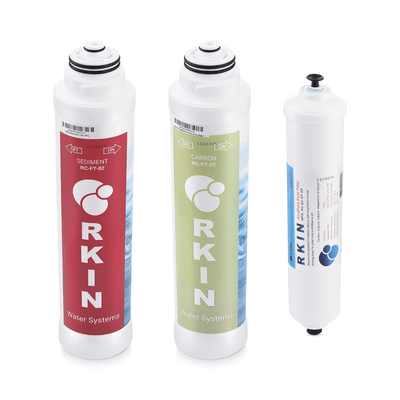
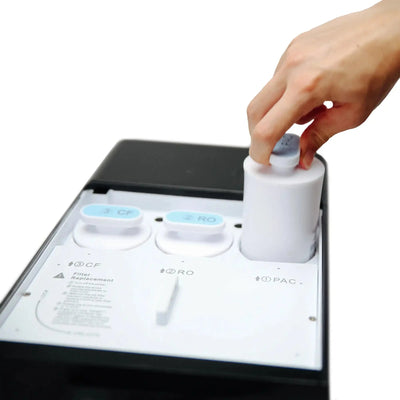
How to fix: Replace the sediment filter and the carbon block(s) with the cartridges specified by the manufacturer. Run the system for 10 to 15 minutes after the change to flush carbon fines, then drain the storage tank once and refill before drinking.
Cause 4: The RO Membrane Is Fouled or Failing
If your pre-filters are fresh, your tank pressure is right, and your inlet pressure is solid, the membrane is the next suspect. RO membranes typically last 2 to 5 years depending on water quality and how well the pre-filters were maintained.
A fouled membrane produces less water and may also let more dissolved solids through. The clearest sign is a TDS test — if your filtered water TDS reads more than about 10 percent of your tap water TDS, the membrane is failing.
How to diagnose: Use a handheld TDS meter (under twenty dollars). Test your tap water TDS, then test your RO water TDS. A healthy membrane rejects 90 to 98 percent of dissolved solids. If your tap water reads 300 PPM and your RO reads under 30 PPM, the membrane is fine. If RO reads 100+ PPM, the membrane has failed.
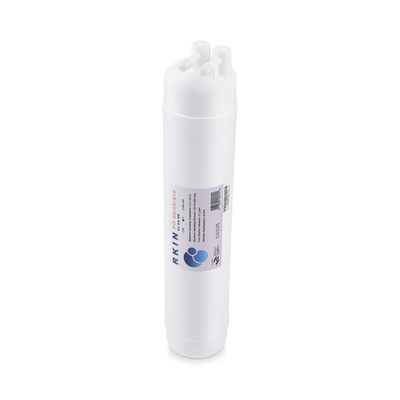
How to fix: Replace the membrane with the cartridge specified for your system. While you're in there, also replace the post-carbon filter — the polishing filter that conditions the water after the membrane. This is also the right time to check the automatic shutoff valve and the check valve, both of which can fail in ways that mimic membrane problems.
Cause 5: A Kinked or Crimped Tube
RO systems run on quarter-inch tubing — usually flexible polyethylene. It's easy for that tubing to get kinked when the system is installed, when a cabinet is reorganized, or when something heavy gets pushed against it under the sink.
A kink at the tank line restricts flow to the faucet. A kink at the inlet line restricts flow to the membrane. Either one slows the system down.
How to diagnose: Pull the trash can and other items out from under the sink and trace each line by hand. Look for sharp bends, anywhere the tubing rubs against a sharp edge, or anywhere it's been pinched against the cabinet wall.
How to fix: If the kink is fresh, you can usually straighten it by hand and reroute the line so it doesn't kink again. If the tube has a permanent crease, cut out the damaged section and replace it. Most quarter-inch RO tubing pushes into quick-connect fittings and comes out with a thumb release.
Cause 6: A Failed Automatic Shutoff Valve
The automatic shutoff valve (ASO) tells the membrane to stop producing water when the storage tank is full. When it fails open, the system runs constantly and dumps water down the drain. When it fails closed, the system stops producing entirely or produces extremely slowly.
How to diagnose: Listen near the system. If you hear water continuously running into the drain saddle even when the tank is full and the faucet is closed, the ASO is stuck open. If the system never seems to refill the tank no matter how long you wait, the ASO may be stuck closed.
How to fix: The ASO is a small inline component, typically a few dollars. Most RO systems make it accessible by following the line from the membrane housing toward the tank. Replacing it is a five-minute job once you've identified it.
When to Call It and Replace the System
If you've worked through all six causes and the system is still slow — or if the housing is leaking, the faucet is wobbling, or you've replaced parts more than twice in two years — it's usually time to retire the system. Most under-sink ROs are designed for a 10 to 15 year service life, and beyond that the failure rate climbs sharply.
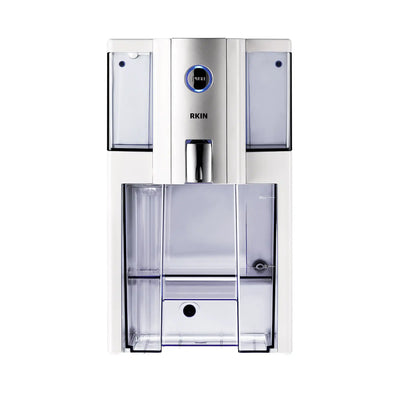
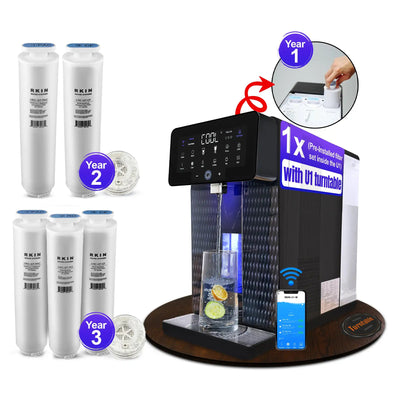
A modern system like the RKIN Flash Undersink RO System produces 75 gallons per day, runs entirely on home water pressure (no booster pump, no electrical outlet), and stores water in a 3.2-gallon tank that fits vertically or horizontally under most sinks. If you'd rather skip the under-sink install entirely, the RKIN U1 4-in-1 Water Filter System is a countertop option that plugs into a standard outlet — no plumbing, no tank, no installer.
Frequently Asked Questions
Why is my reverse osmosis water coming out slow all of a sudden?
The most common sudden cause is loss of air pressure in the storage tank. The tank's air bladder leaks slowly over months, then crosses a threshold where the flow drops noticeably. Drain the tank and check the Schrader valve pressure — it should read about 7 PSI when empty.
How long should it take to fill a glass from an RO system?
A healthy RO system with a properly pressurized tank should fill an 8-ounce glass in 5 to 10 seconds. If it's taking 30 seconds or more, something is restricting flow — usually tank pressure, clogged pre-filters, or a kinked line.
How often should I change RO filters?
Sediment and carbon pre-filters: every 6 to 12 months depending on water quality and usage. RO membrane: every 2 to 5 years. Post-carbon polishing filter: every 12 months. Going longer than 12 months on pre-filters can damage the membrane and shorten its life by years.
Can I increase RO water pressure at the faucet?
Yes — by addressing the cause. Re-pressurize the storage tank to 7 PSI, replace fouled filters, fix any kinked lines, or add a booster pump if your home water pressure is below 40 PSI. The flow at the faucet is a direct reflection of the pressure in the tank, so fixing tank pressure is usually the fastest improvement.
What does it mean if my RO water tastes funny after a filter change?
Carbon filters release fine carbon particles when first installed. The first tank of water after a change will often look cloudy or taste of carbon. Drain the tank completely once after a filter change, let it refill, and the next batch should be clear and clean-tasting.
Get a System That Doesn't Slow Down
If you're tired of troubleshooting an aging RO system, take a look at the RKIN Flash Undersink RO System for a non-electric, line-pressure-driven 75 GPD undersink RO, or the RKIN U1 4-in-1 for a countertop unit that skips the under-sink complications entirely.





0 comments