
hard water filter or softener
Well Water White Crust: Filter or Softener First at Home?

White crust on a well-water faucet is usually not a dirt problem. It is often hardness: dissolved calcium and magnesium left behind after water dries on glass, chrome, showerheads, dishes, and hot-water appliances.
That distinction matters because buying a bigger filter can leave the exact same white scale behind. The U.S. Geological Survey explains that hard water is mainly dissolved calcium and magnesium, and those minerals can form scale when water is heated. If your well water is coating fixtures, your first job is to identify the problem lane before buying equipment.
The Problem: White Crust Means Minerals, Not Just Particles
Homeowners on private wells often describe the same pattern. The kitchen faucet gets a chalky ring. Shower glass looks cloudy a day after cleaning. The coffee maker needs descaling. A water heater starts making more noise than it used to. The dishwasher leaves spots on glassware even when the water looks clear in a cup.
Those signs point toward dissolved minerals, not floating debris. A sediment filter catches sand, grit, rust flakes, and other particles. Hardness minerals are different because they are dissolved in the water. They can pass through a basic cartridge and then show up later as white deposits when water evaporates or gets heated.
The test result to ask for is hardness, usually reported as grains per gallon or milligrams per liter as calcium carbonate. Grains per gallon matters because that is the number a salt-based softener uses for sizing and programming. A visual check can tell you something is going on. A hardness test tells you how much correction the home actually needs.
Private wells add another layer because the homeowner, not a city utility, is responsible for routine testing and upkeep. The EPA notes that private well quality is not regulated by the federal government under the Safe Drinking Water Act. That does not mean well water is bad. It means the owner has to be more deliberate about testing before choosing treatment.
What Does Not Work: Using One Filter for Every Water Problem
The most common mistake is treating every symptom as a filter problem. A cartridge filter can be the right first step when water has sand, silt, rust particles, or visible cloudiness from suspended solids. It is not the right tool for dissolved hardness by itself.
Boiling water is not a fix either. Heat can make scale more obvious because calcium carbonate can drop out and coat heating surfaces. That is why hard water often announces itself in water heaters, kettles, humidifiers, and coffee makers before a homeowner thinks about the main line.
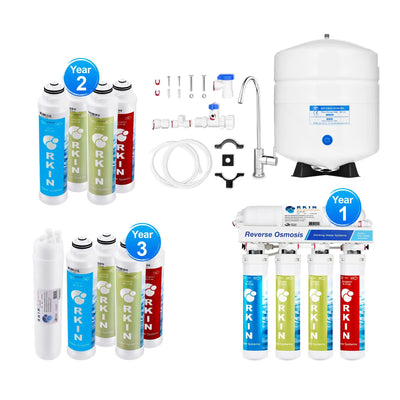
A drinking-water reverse osmosis system has a different job. Reverse osmosis can reduce many dissolved substances at the tap where you drink and cook, but it does not protect every shower, washer, dishwasher, and water heater unless it is part of a much larger whole-home design. For white crust across the house, the main-line hardness problem still needs its own answer.
The other trap is buying equipment from a symptom list alone. White scale can mean hardness. Orange stains can mean iron. Black staining can point toward manganese. Rotten-egg odor can involve sulfur. More than one issue can exist in the same well. That is why a real test beats guessing from a photo.
The Three-Job Map: Filter Dirt, Soften Hardness, Polish Drinking Water
A cleaner way to think about well water is to divide treatment into three jobs.
First, filter dirt. This is the sediment lane. If your well kicks up sand, grit, rust flakes, or visible particles, a sediment prefilter helps protect valves, fixtures, appliances, and downstream treatment equipment. It is often placed early in the treatment train because debris can shorten the life of anything installed after it.
Second, soften hardness. This is the scale lane. If your test shows high hardness and your home has white crust on faucets, showerheads, glass, and hot-water appliances, a salt-based water softener is the classic tool because it exchanges hardness minerals before they form scale in the home. The question is not whether the water looks dirty. The question is the hardness number.
Third, polish drinking water. This is the taste and dissolved-contaminant lane. A point-of-use reverse osmosis system can improve drinking water at a specific tap after the home’s main problems have been mapped. For many well homes, this means a main-line setup for the whole house plus a dedicated drinking-water system in the kitchen.
Those jobs can overlap in a treatment plan, but they should not be confused. A sediment filter does not become a softener because it is bigger. A softener does not become a drinking-water purifier because it reduces scale. A reverse osmosis drinking-water system does not become a main-line scale solution just because it makes great water at the kitchen tap.
How to Decide What Goes First
Start with the symptom, then verify it with data.
If the main issue is white crust, glass spots, soap that struggles to rinse, and scale around hot-water appliances, ask for hardness in grains per gallon. If the number is high, softening belongs near the front of the conversation.
If the main issue is visible grit in faucet aerators, cloudy water after the pump kicks on, or sediment in toilet tanks, ask about turbidity, sediment, and well construction. A sediment filter may be needed before other equipment.
If the main issue is drinking-water taste, odor, or a specific contaminant concern, look at a lab test and match the treatment to the contaminant. A countertop or under-sink reverse osmosis system may be the right drinking-water lane, but it should be chosen for the specific tap and test result.
Order matters. On many well systems, a prefilter protects the treatment train, a softener handles hardness, and drinking-water reverse osmosis is installed at the kitchen after the whole-home equipment. But there is no single layout that fits every well. Iron, pH, sulfur, tannins, bacteria indicators, and flow rate can change the plan.
Where RKIN Fits
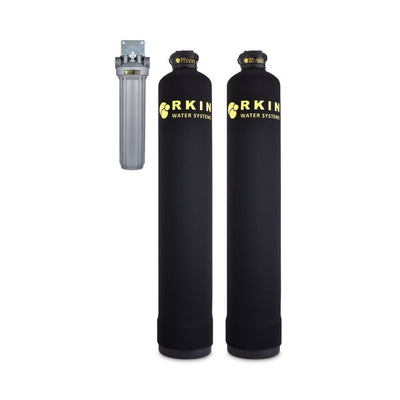
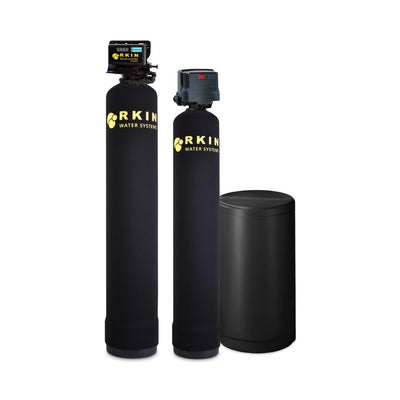
This is what RKIN whole-house water treatment is designed to make clearer: match the system to the job instead of forcing one device to do everything. If the problem is white crust from hard well water, the whole-house lane matters because scale forms wherever that water travels.
Start by reviewing RKIN’s whole-house water treatment systems and comparing your symptoms with a real water test. If your home also needs better drinking water at the kitchen tap, a separate reverse osmosis system can handle that lane without pretending to be a whole-house softener.
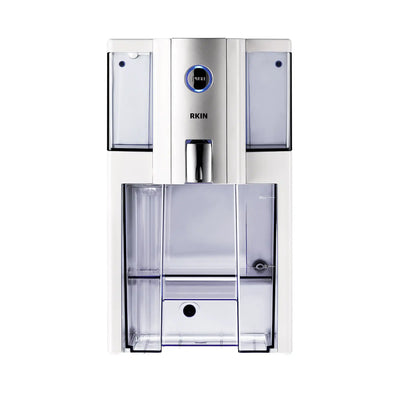
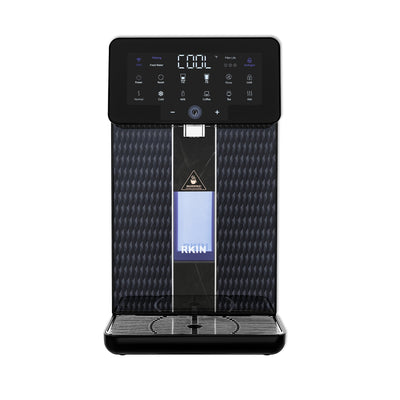
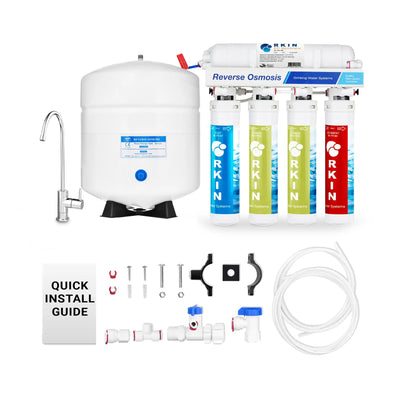
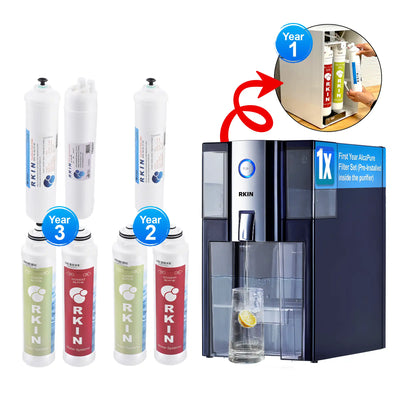
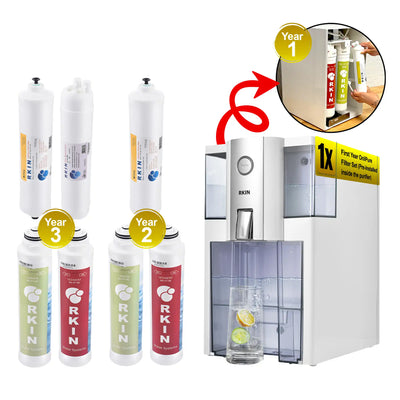
For renters, smaller homes, or homes where plumbing changes are not practical, the RKIN Zero Installation Purifier is a countertop reverse osmosis option for drinking water. For homeowners who want an installed kitchen RO system, the RKIN Flash Undersink RO System fits the point-of-use lane. Neither replaces a hardness solution for the whole house, and that honesty is the point.
Me personally, I would confirm hardness before buying a filter or softener.
Frequently Asked Questions
Why does my well water leave white crust on faucets?
White crust is usually mineral scale left after hard water dries. The most common hardness minerals are calcium and magnesium. A faucet can look clean while the water still carries dissolved minerals that later dry into a chalky film. Confirm it with a hardness test reported in grains per gallon or milligrams per liter.
Will a sediment filter remove white scale from well water?
A sediment filter can catch particles such as sand, silt, and rust flakes. It usually will not remove dissolved hardness minerals by itself. If your water looks clear but leaves white crust after drying, ask for hardness testing before assuming a larger filter will solve it.
Do I need a water softener or a reverse osmosis system?
You may need either one or both, depending on the job. A softener addresses hardness across the home. A reverse osmosis system polishes drinking water at a specific tap. If scale is on showers, faucets, and appliances, start with the whole-house hardness question. If the concern is drinking water, look at RO for the kitchen.
What hardness number is considered hard water?
Water hardness can be reported in several ways, so read the unit before reacting. USGS classifies hardness by milligrams per liter as calcium carbonate, while many softener settings use grains per gallon. A water treatment pro can convert the numbers and size equipment around your actual flow rate and household use.
Can hard water damage a water heater?
Hard water can form mineral deposits when heated, and USGS notes that scale can affect water heaters and other equipment. That does not mean every noise or failure is caused by hardness, but a home with heavy fixture scale should include the water heater in the inspection.
Should I test my private well before buying equipment?
Yes. Private well owners are responsible for their own testing and treatment choices. At minimum, match your complaint to a test: hardness for scale, iron and manganese for staining, bacteria indicators for sanitary concerns, and contaminant-specific lab testing when a drinking-water issue is suspected.
Ready to Stop Guessing at White Scale?
If your well water leaves white crust everywhere, do not start with the biggest filter on the shelf. Start with a water test, identify the lane, and then choose the right system for that job.
See RKIN’s whole-house water treatment options to compare main-line solutions, then add a drinking-water RO system only where it fits your home’s test results and daily use.





0 comments