




OnliSoft Pro
Whole-Home RO vs Under-Sink RO in 2026: Which Filtration Strategy Makes Sense?

If you have been researching water filtration systems, you have probably noticed two very different approaches: treating every drop of water in your entire house, or filtering only the water at your kitchen sink. Both have strong arguments, and the right answer depends on your water quality, your budget, and what problems you are actually trying to solve.
Here is a straightforward breakdown of whole-home reverse osmosis versus under-sink (point-of-use) RO, so you can decide which strategy fits your situation in 2026.
What Is Whole-Home RO?
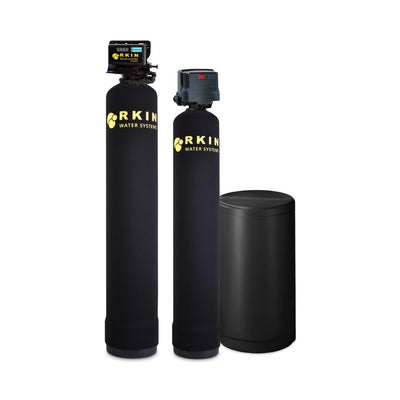
A whole-home reverse osmosis system installs at the point where water enters your house. Every faucet, shower, appliance, and outdoor spigot receives RO-purified water.
This sounds ideal on paper, but whole-home RO systems come with significant trade-offs:
- High upfront cost — Commercial-grade membranes and high-flow pumps push installation costs well above $8,000-$12,000+
- Significant wastewater — Producing enough RO water for showers, laundry, and toilets generates a large amount of reject water
- Maintenance complexity — Larger membranes, pre-treatment systems, and remineralization stages all require regular attention
- Overkill for most homes — Your toilet and washing machine do not need 99% contaminant-free water
Whole-home RO makes sense in specific situations: well water with extremely high TDS, homes with dangerous arsenic or uranium levels, or areas where the municipal supply is severely compromised.
What Is Under-Sink (Point-of-Use) RO?
An under-sink or countertop RO system filters water at a single point — typically your kitchen sink. You get purified drinking and cooking water without treating the 80+ gallons per day your household uses for bathing, laundry, and flushing.
The advantages are clear:
- Affordable — Quality under-sink RO systems start around $300-$700
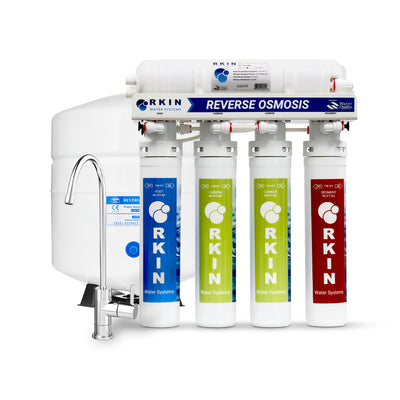
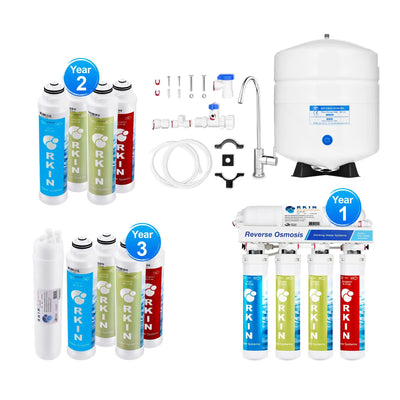
- Minimal wastewater — Modern systems like the RKIN Flash Undersink Reverse Osmosis System have high recovery rates
- Simple maintenance — Filter changes take minutes, not hours
- Targeted protection — Removes lead, PFAS, fluoride, arsenic, and other contaminants from the water you actually drink
If your primary concern is lead or PFAS at every tap (not just the kitchen), the RKIN OP1L Certified Whole House Lead, Cyst, PFOA, and PFOS Water Filter System is purpose-built for that job — certified whole-house protection without the cost and wastewater of a full RO system.
The Smarter 2026 Strategy: Combine Both Approaches
For most homeowners, the best strategy is NOT choosing one or the other. It is combining a whole-house conditioner/filter with a point-of-use RO system.
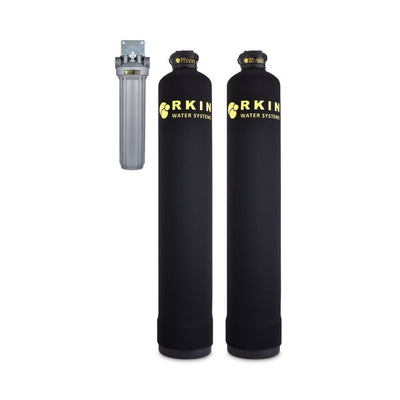
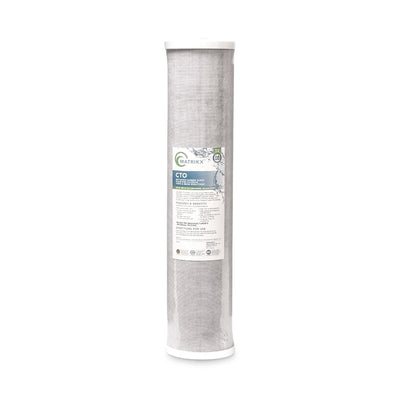
For the whole house: The RKIN OnliSoft Pro Salt-Free Water Conditioner and Whole House Carbon Filter handles scale prevention and chlorine removal at every tap. It uses Template Assisted Crystallization (TAC) to neutralize hard water minerals without salt, wastewater, or electricity. The integrated carbon block strips chlorine and chloramines from your shower, laundry, and dishwasher water.
For drinking water: Pair it with an under-sink or countertop RO system:
- The RKIN Flash tucks under your counter with a dedicated faucet — clean lines, no counter clutter
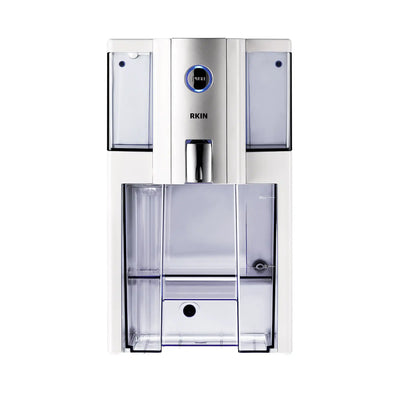
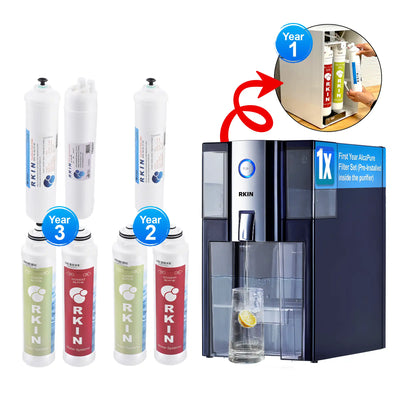
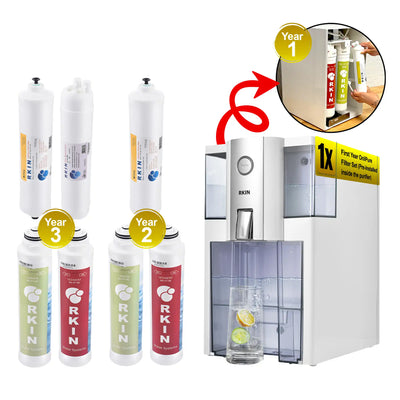
- The RKIN Zero Installation Purifier (Zero Installation Purifier) sits on your countertop and requires zero plumbing — fill, press, pour
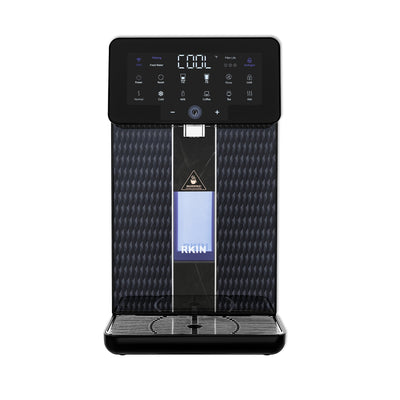
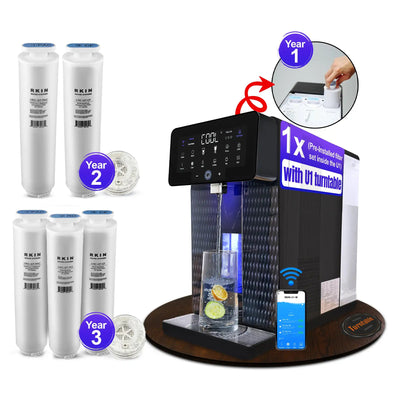
- The RKIN U1 4-in-1 Water Filter System adds hot and cold dispensing to advanced RO filtration
If lead or PFAS contamination is a concern beyond just the kitchen, add the RKIN OP1L Certified Whole House Lead, Cyst, PFOA, and PFOS Water Filter System to your stack. The OP1L provides certified whole-house reduction of lead, cysts, PFOA, and PFOS — protecting every faucet, shower, and appliance from these specific contaminants.
This combination gives you whole-house protection against scale and chlorine, plus point-of-use RO purity for drinking and cooking — at a fraction of the cost of a whole-home RO system.
Decision Table: Which Setup Is Right for You?
| Your Situation | Recommended Setup |
|---|---|
| City water, hard water + chlorine complaints | OnliSoft Pro (whole house) + Zero Installation Purifier or Flash (kitchen) |
| City water, concerned about lead/PFAS at kitchen only | Zero Installation Purifier, Flash, or U1 (kitchen only) |
| City water, concerned about lead/PFAS at every tap | OP1L (whole house) + Zero Installation Purifier or Flash (kitchen) |
| Well water, high TDS or specific contaminants | OnliSoft Pro + Flash or U1 (kitchen) |
| Well water, dangerous arsenic/uranium levels | Whole-home RO (consult a water treatment pro) |
| Renter, limited installation options | Zero Installation Purifier or U1 (countertop, no plumbing needed) |
| Budget-conscious, want maximum protection | OnliSoft Pro + Zero Installation Purifier (best value combo) |
Frequently Asked Questions
Does the OnliSoft Pro remove contaminants like lead and PFAS? No. The OnliSoft Pro is designed for scale prevention (TAC) and chlorine/chloramine removal (carbon). For lead, PFAS, fluoride, and other dissolved contaminants, you need a reverse osmosis system at the point of use. If you want certified whole-house lead and PFAS removal without RO, the RKIN OP1L is designed specifically for that — it is certified for lead, cyst, PFOA, and PFOS reduction at every faucet in your home.
Can I use an under-sink RO system without a whole-house filter? Yes. An under-sink or countertop RO system works independently. However, pairing it with a whole-house conditioner extends the life of your RO filters and protects your appliances and plumbing from scale.
Is a whole-home RO system worth the cost? For most municipal water supplies, no. The cost, wastewater, and maintenance of a whole-home RO system are excessive when the primary concern is drinking water purity. A point-of-use RO system delivers the same water quality at the kitchen tap for a fraction of the price.
Which RKIN RO system is best for a family of four? The RKIN Flash (under-sink) or the U1 (countertop with hot/cold) both handle family-sized demand. The Flash is better if you want a clean countertop. The U1 is better if you want instant hot water for tea or baby formula.
Do I need a plumber to install the RKIN Flash? Basic DIY skills are enough. The Flash comes with all fittings and connects to your existing cold water line under the sink. Most homeowners complete the install in under an hour.






0 comments