



earthy taste tap water
Why Does My Water Taste Like Dirt? Causes & Fix Guide

You pour a glass of water from the tap, take a sip, and suddenly it tastes like you licked a freshly tilled garden. The water looks clear. The utility says it meets every federal standard. Your neighbor's tasting it too. So what's going on?
The answer is almost always two molecules with names you've never heard: geosmin and 2-methylisoborneol (MIB). They're produced by algae and bacteria that bloom in lakes and reservoirs each spring as water warms up. Humans can detect geosmin at concentrations as low as 5 parts per trillion — that's one of the most sensitive odor detection thresholds in nature. Your tap water can be perfectly safe and still taste exactly like wet soil.
What Geosmin and MIB Actually Are
Geosmin is a natural organic compound made by certain blue-green algae (cyanobacteria) and soil bacteria called actinomycetes. MIB is a closely related compound from the same culprits. When these microbes die off in a reservoir, the cells rupture and release geosmin and MIB into the water. The compounds pass through standard municipal treatment because chlorine doesn't break them down well — it can actually amplify the off-flavor in some cases.
A 2024 American Water Works Association report flagged taste-and-odor events as one of the top three customer complaints for surface-water utilities, with reservoir-fed systems getting hit hardest from April through September.
How Geosmin Tastes vs. MIB
Most people describe the flavor profile like this:
- Geosmin: earthy, beet-like, freshly turned dirt
- MIB: musty, moldy, like a damp basement
- Combined: "swampy" or "lake water" taste
If your water tastes more like rotting leaves or a sulfur stench, that's a different problem — likely hydrogen sulfide from a well or biofilm in your plumbing.
Why It Spikes in Spring and Summer
Three factors drive the seasonal pattern:
- Warmer water — algae growth accelerates above 60°F
- Spring runoff — fertilizer and organic matter wash into reservoirs, feeding algae
- Stratification — lakes form temperature layers, trapping nutrients near the surface where algae thrive
The 2025 EPA Source Water Protection bulletin noted that harmful algal blooms have expanded across the U.S. over the past decade, with reservoir incidents up roughly 40% since 2010. That trend is why earthy-tasting tap water has become a more frequent complaint, not a rarer one.
If your home is on a private well, the same compounds can show up — especially shallow wells near agricultural land or surface-water-influenced wells where runoff infiltrates the aquifer.
Is It Safe to Drink?
Geosmin and MIB are not regulated as health hazards. The EPA does not list them as contaminants of concern, and there's no evidence they cause illness at the concentrations found in finished drinking water. Your utility isn't violating anything by sending you water that tastes like dirt — it's an aesthetic issue, not a safety one.
That said, "safe" doesn't mean "drinkable." If your family stops drinking tap water and switches to bottled, the cost adds up fast — a household of four spending $50 a month on bottled water spends $600 a year just to avoid a flavor problem. Filtering at home is almost always cheaper.
What Doesn't Work
Most quick fixes either don't work or work poorly:
- Boiling — concentrates geosmin instead of removing it
- Refrigerator chilling — masks the taste slightly but doesn't remove the compound
- Adding lemon — covers the flavor for one glass, doesn't fix it
- Standard pitcher filters — most use limited carbon and only partially adsorb geosmin; the taste often breaks through within a few weeks
- Refrigerator filters — better than pitchers but still inconsistent on geosmin/MIB
Boiling is actually the worst option. It evaporates water but leaves the compound behind in higher concentration in whatever's left in the pot.
What Actually Removes Earthy Taste
Two technologies handle geosmin and MIB reliably:
1. Activated Carbon (Especially Catalytic Carbon)
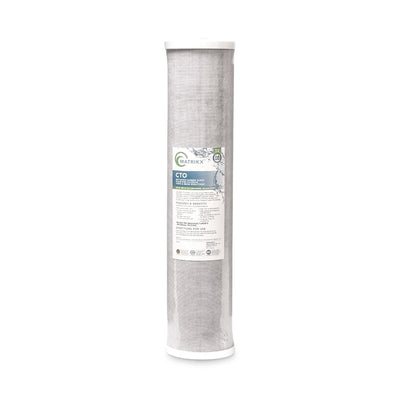
Geosmin and MIB adsorb well onto activated carbon, especially the catalytic carbon used in modern whole-house systems. The key variables are contact time (how long water touches the carbon) and carbon volume (how much carbon it has to flow through). A small pitcher filter has seconds of contact time. A whole-house carbon tank gives the water minutes.
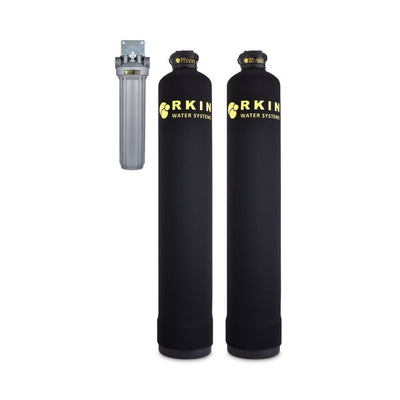
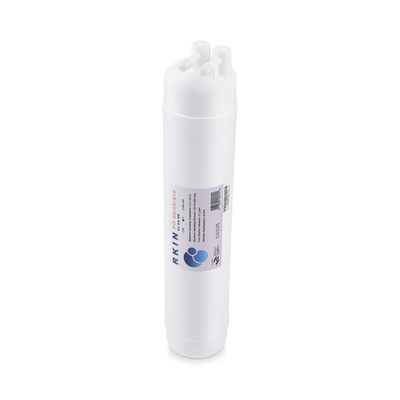
For chronic seasonal earthy taste, a whole-house carbon filter solves the problem at every faucet, every shower, and every appliance — not just the kitchen. The RKIN CBS Dual Carbon Whole House Filter uses two stages of catalytic carbon specifically because dual-stage extends contact time and improves removal of taste-and-odor compounds.
2. Reverse Osmosis
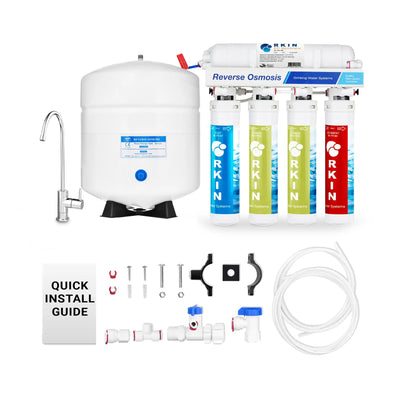
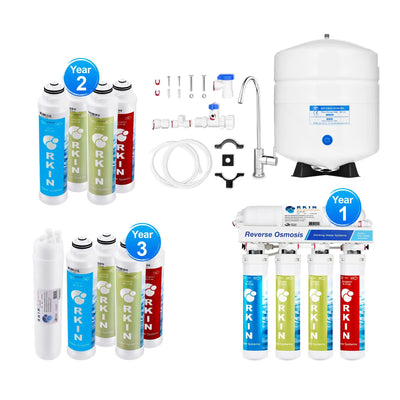
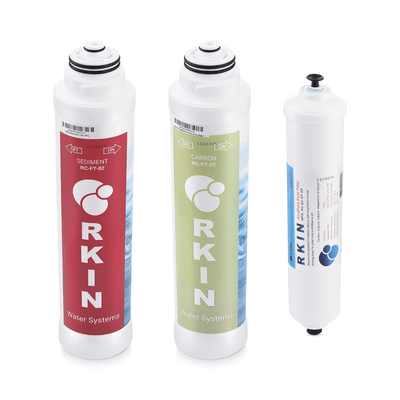
RO membranes physically reject organic molecules above roughly 100 daltons. Geosmin (182 daltons) and MIB (168 daltons) sit comfortably above that cutoff. A multi-stage RO system with carbon pre- and post-filters effectively removes both compounds along with chlorine, fluoride, lead, PFAS, and most other dissolved contaminants.
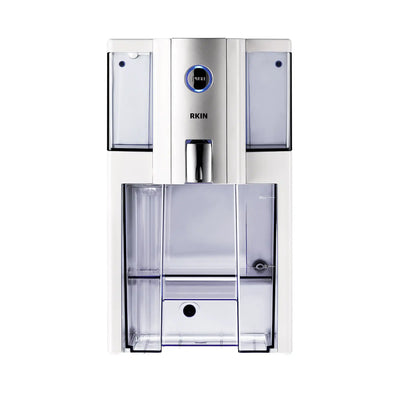
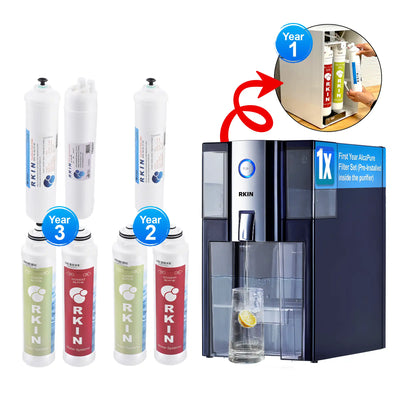
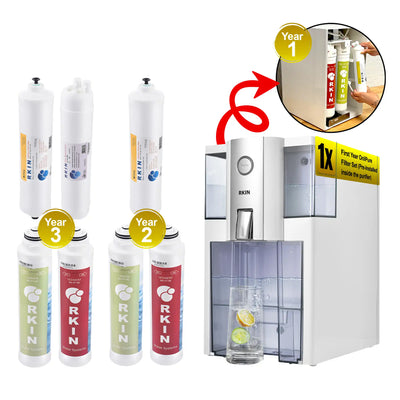
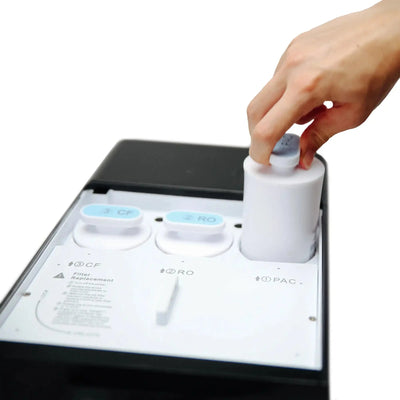
For renters or anyone who can't modify plumbing, a countertop RO unit handles drinking and cooking water without any installation. The Zero Installation Purifier connects to a standard kitchen faucet in about 60 seconds and uses 5-stage RO with catalytic carbon — the same combination water utilities use to combat seasonal taste-and-odor events, just sized for one household.
The RKIN Approach
If earthy taste shows up only at the kitchen sink and you want a fast fix without changing anything in your home, a countertop RO system like the Zero Installation Purifier solves it in the kitchen. Plug it in, connect to the faucet, done.
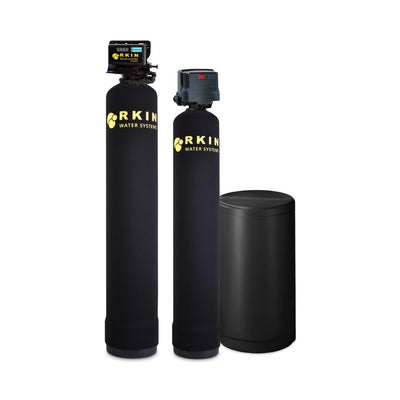
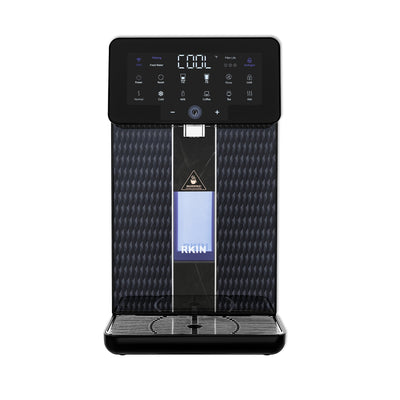
If the taste is bad enough that you notice it in the shower or in your morning coffee made with whole-house water, the better answer is treating water at the point it enters your home. The RKIN Whole House Water Filter System uses a high-capacity catalytic carbon bed rated for hundreds of thousands of gallons, designed specifically for chlorine, chloramines, and taste-and-odor compounds like geosmin and MIB. Pair it with a RKIN U1 4-in-1 Water Filter System on the countertop for finished drinking water and you've covered both the whole-home and the polish stage.
For homes on a well that's seeing surface-water influence, the RKIN Well Water Whole House Filter targets iron, sulfur, and manganese — the contaminants most often paired with seasonal organic taste issues in shallow wells.
Frequently Asked Questions
Why does my tap water suddenly taste like dirt?
It's almost always geosmin or MIB — natural compounds released by algae and soil bacteria when reservoirs warm up in spring and summer. The compounds are detectable to humans at parts per trillion, so even tiny amounts taste strong. Your utility's water is still safe; it's an aesthetic issue caused by seasonal algae blooms.
Is earthy-tasting water safe to drink?
Yes. Geosmin and MIB are not regulated as health hazards by the EPA and there's no evidence of illness from typical exposure levels in finished drinking water. The taste is unpleasant but not dangerous. If the taste is paired with cloudiness, color changes, or a sulfur smell, contact your utility — those can indicate other issues.
Will a refrigerator filter remove the dirt taste?
Sometimes, partially. Most fridge filters use limited carbon and short contact time, so they reduce geosmin inconsistently and the taste tends to break through before the cartridge expires. A dedicated countertop RO system or a whole-house catalytic carbon filter removes geosmin much more reliably.
How long do spring taste events last?
Reservoir-driven taste-and-odor events typically last two to eight weeks, peaking in late spring and recurring in late summer when reservoirs turn over. Some utilities switch source water or add powdered activated carbon at the plant to manage it, but residual taste often reaches your tap regardless.
Can a whole-house carbon filter handle geosmin year-round?
Yes — that's what catalytic carbon is designed for. A properly sized whole-house carbon system gives the water minutes of contact time with carbon, which is enough to adsorb geosmin and MIB consistently. RKIN's whole-house filters use catalytic carbon specifically for this reason.
Does reverse osmosis remove the earthy taste?
Yes. RO membranes reject organic molecules in the geosmin/MIB size range, and the carbon pre- and post-filters in a multi-stage RO unit polish anything that slips through. RO is the most reliable single technology for removing earthy and musty taste from drinking water.
Ready for Water That Just Tastes Like Water?
You now know that earthy-tasting tap water is a seasonal nuisance caused by harmless but stubborn compounds — and that pitcher filters and boiling won't fix it. Reverse osmosis or catalytic carbon will.
For a fast kitchen-only fix with no plumbing, start with the Zero Installation Purifier. For whole-home coverage that handles every tap, look at the RKIN Whole House Water Filter System. Both are designed to handle exactly this kind of seasonal taste-and-odor event — the same problem utilities have been fighting at the source for decades.





0 comments