


apartment water filter
Best Water Filter for Apartments: No Plumbing Required

Renting is the great equalizer for water quality. Your building, your neighbor's building, and the high-rise across the street all draw from the same municipal main — and that main carries the same chlorine, disinfection byproducts, lead leached from old service lines, and increasingly, the PFAS that the EPA confirmed in 45% of U.S. tap water samples in a 2023 USGS study. The difference between renters and homeowners is not the water. It is what you are allowed to do about it.
If you cannot drill into a cabinet, plumb a line under the sink, or modify the building plumbing — and your lease almost certainly says you cannot — you need filtration that requires zero installation, zero permanent changes, and travels with you when the lease ends. Here is what works, what doesn't, and how to pick a system that fits an apartment kitchen without violating a single lease clause.
What Apartment Renters Are Actually Up Against
Three constraints define every filter decision a renter makes.
- No plumbing changes: Most leases explicitly prohibit modifying fixtures, lines, or the under-sink area. Even if your landlord is friendly, drilling a hole in a granite countertop for an undersink RO faucet is not coming out of your security deposit cleanly.
- Limited counter and cabinet space: Apartment kitchens are small. A filter that takes up half the counter or all of an under-sink cabinet is a non-starter.
- It has to move: The average renter relocates every 2 to 3 years. A filter you cannot uninstall in 15 minutes and roll into a moving box is a filter you will abandon.
Add to that the unique water-quality risks of older apartment buildings: lead solder in pre-1986 plumbing, biofilm in shared hot water lines, and stagnation in upper-floor units where water sits in vertical risers between uses. The 2023 USGS national PFAS survey found higher detection rates in urban water systems — which is where most apartments sit. You need real filtration, not a marketing badge on a pitcher.
What Doesn't Work for Apartments
Skip these if you want filtered water that actually matches your water situation.
- Pitcher filters: Most use activated carbon only. They reduce chlorine taste and a small amount of lead, but do not touch dissolved solids, PFAS at meaningful levels, fluoride, or the nitrates common in cities near agricultural runoff. Capacity is measured in gallons per cartridge — a household burns through them faster than the box implies.
- Faucet-mount filters: Marginal upgrade over pitchers. Most apartment faucets are aerator-style and the filter housing blocks the sink, drips, and feels flimsy after a month. Flow drops dramatically as the cartridge loads.
- Refrigerator filters: If your apartment fridge has one and the building hooked up the water line, great. But most rental fridges do not — and the filter is carbon-only, same as a pitcher.
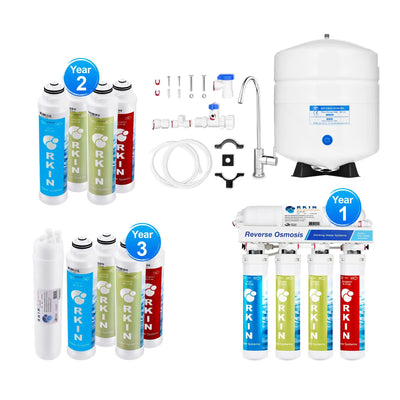
- Undersink RO systems with permanent installation: The best filtration technology, but they require drilling the countertop for a dedicated faucet, tapping the cold water line with a saddle valve, and routing a drain line. None of that is renter-legal.
- Bottled water delivery: Expensive, heavy, generates plastic waste, and the water has been sitting in BPA-adjacent plastic for weeks. A 2024 study published in PNAS found that 1-liter bottled water samples contain on average 240,000 plastic particles, mostly nanoplastics that pass right through bottling-plant filtration.
What Actually Works: Countertop Reverse Osmosis
Reverse osmosis is the only filtration technology with documented removal of PFAS, lead, fluoride, nitrates, chlorine, and dissolved solids in one pass. Traditional RO systems live under the sink and need plumbing. Countertop RO systems put the same technology on top of the counter with no installation.
The way modern countertop RO works: a built-in pump pressurizes water through a sediment stage, a carbon stage, an RO membrane, and a final polish — then dispenses purified water from a tap on the top of the unit. Plug it into a standard outlet, fill the input tank from your sink, and use the output tank as your drinking and cooking source. No tools, no holes, no landlord permission slip.
What to look for when choosing a countertop RO unit for an apartment:
- Truly zero installation: No saddle valve, no faucet adapter, no drain line. The unit should fill from a removable tank and dispense from a sealed tank.
- Footprint under 12 inches deep: Standard apartment countertops are 24 to 25 inches deep with a backsplash. A unit deeper than 12 inches blocks too much counter.
- Membrane that handles real contaminants: Look for third-party test data on PFAS, lead, arsenic, fluoride, and TDS reduction — not just chlorine taste.
- Reasonable production rate: A 0.5 to 0.8 gallon per hour rate keeps up with a household of 2 to 4. Slower units empty their output tank between meals.
- Filter change interval that works for renters: Six to twelve month replacements are standard. Anything shorter and you will start skipping changes.
Wait — What About TDS, Minerals, and Taste?
RO removes nearly everything, including beneficial minerals. Most people prefer the cleaner taste, but some want the mineral content back for taste or pH balance. The fix is a remineralization stage built into the unit — sometimes called "AlcaPure" or "alkaline" — that adds back calcium, magnesium, and trace minerals after the RO membrane. If you want a less flat, more spring-water taste, choose a unit with this stage included.
How a Countertop RO Fits Real Apartment Life
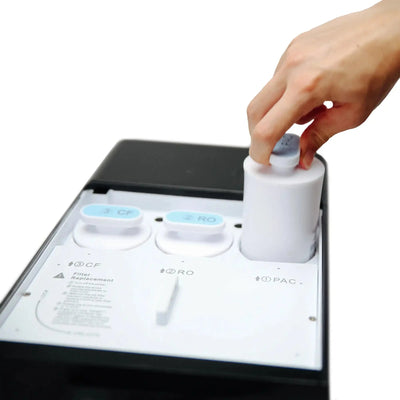
The unit sits on the counter near the sink. You fill the input tank from the tap once or twice a day. The output tank holds 0.5 to 1 gallon of purified water ready to dispense. You move it when you move. No drilling, no plumbing, no security deposit risk. Filter cartridges arrive by mail every 6 to 12 months and twist in and out without tools.
For renters in older buildings with documented lead service lines (check the EPA's drinking water search tool for your address), this is the only renter-legal way to get below the EPA action level of 15 ppb without a building-wide infrastructure project that will not happen during your lease.
RKIN's Zero Installation Purifier
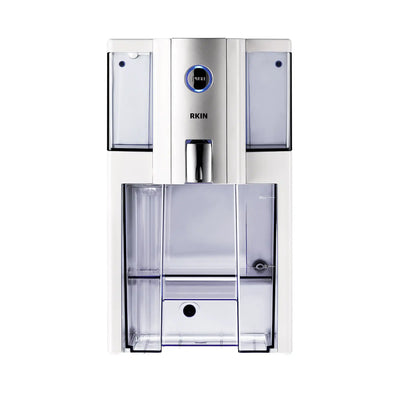
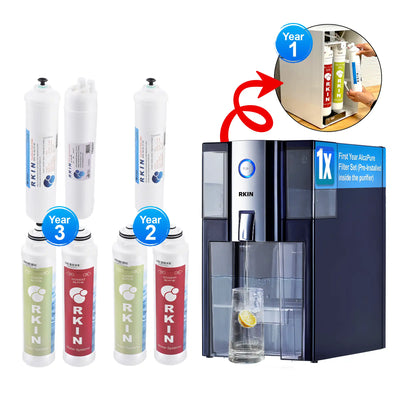
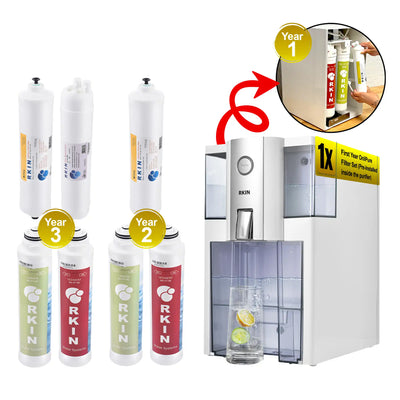
The RKIN Zero Installation Purifier is built around the renter use case from the ground up. Five-stage reverse osmosis with a remineralization polish, a removable input tank that fills from any sink, a sealed output tank with built-in dispenser, and a footprint that fits on standard apartment counters. No drilling, no plumbing, no permanent changes — and the entire unit packs into its shipping box if you move.
If you want a larger capacity option with a fill tank instead of input/output tanks, the RKIN U1 4-in-1 Water Filter System is also a countertop unit and includes 3rd-party testing data on PFAS, lead, arsenic, fluoride, and TDS reduction. Both fit apartments. Both come out the door when you do.
See current pricing and the apartment-friendly options at rkin.com.
Frequently Asked Questions
Can I install a water filter in an apartment without my landlord's permission?
Yes, as long as the filter requires no plumbing changes, drilling, or modifications to fixtures. Countertop reverse-osmosis systems, pitcher filters, and faucet-attached filters (where the aerator threading matches) typically fall within standard lease terms. Always check your specific lease for prohibitions on appliances or fixture changes.
What is the best water filter for a small apartment kitchen?
A countertop reverse-osmosis system with a footprint under 12 inches deep is typically the best fit. It delivers the most thorough filtration available (PFAS, lead, fluoride, dissolved solids) without taking up counter space the size of a coffee maker. The Zero Installation Purifier from RKIN was designed specifically for this constraint.
Do countertop RO systems waste a lot of water?
Modern countertop RO units capture the brine reject in a separate compartment rather than sending it down the drain. The ratio of purified water to reject varies by model, but well-designed countertop systems typically run between 1:1 and 1:2 — far more efficient than older undersink RO systems that wasted 4 gallons for every 1 gallon purified.
Will a pitcher filter remove the same contaminants as a countertop RO?
No. Pitcher filters use activated carbon, which reduces chlorine taste and a fraction of lead. They do not remove PFAS at meaningful levels, fluoride, nitrates, arsenic, or dissolved solids. Reverse osmosis is the only widely available technology with documented removal across all of those contaminant classes in a single pass.
How often do I have to change the filters in a countertop RO system?
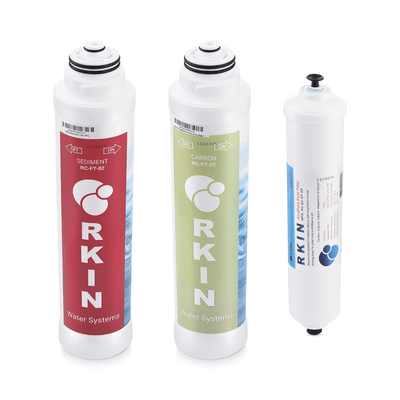
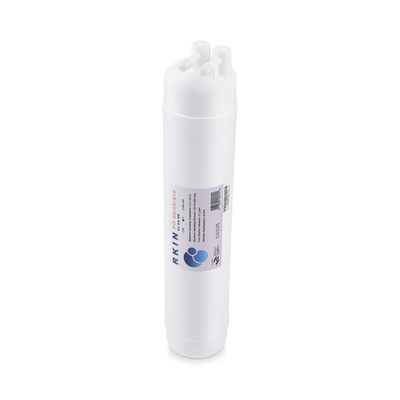
The carbon and sediment pre-filters typically need replacement every 6 to 12 months depending on your water quality and usage. The RO membrane itself lasts longer — usually 2 years or more for a household of 2 to 4. Filter cartridges are mailed directly and replace by hand without tools.
Can I take the filter with me when my lease ends?
Yes. Because countertop RO systems require no installation, you unplug, empty the tanks, and pack the unit back into its shipping box. The same unit moves with you to the next apartment or home with no plumbing reversal required — one of the main reasons renters choose countertop RO over any under-sink option.
Get Cleaner Water Without Touching the Lease
Renters do not need to settle for pitcher water just because they cannot install a permanent system. The RKIN Zero Installation Purifier delivers full reverse-osmosis filtration on your counter — plug in, fill, dispense. No plumbing, no drilling, no security-deposit risk, and the unit comes with you when you move.




0 comments