




does refrigerator water filter remove TDS
Does a Refrigerator Water Filter Remove TDS? Guide

Most refrigerator filters do not materially reduce TDS unless the exact model documents that performance. They commonly target chlorine taste, odor, or selected contaminants, while dissolved minerals remain and keep the meter reading similar.
That does not always mean the filter failed. It usually means the filter was never designed to lower total dissolved solids in the first place. The U.S. EPA lists total dissolved solids under its secondary drinking water standards, which are taste, odor, color, and nuisance guidelines rather than federal health-based limits. In plain English: TDS is useful, but it is easy to misread.
What TDS Actually Measures
TDS stands for total dissolved solids. It is a broad measurement of charged minerals, salts, and dissolved substances in water. A handheld TDS meter does not identify what those substances are. It simply estimates how electrically conductive the water is, then converts that reading into parts per million.
That number may include calcium, magnesium, sodium, potassium, bicarbonate, chloride, sulfate, nitrate, and other dissolved ions. Some are common minerals. Some may point to source-water or plumbing concerns. The meter alone cannot tell the difference.
This is why two homes can both show 350 PPM and have very different water stories. One may have mostly hardness minerals. Another may have a blend of sodium, chloride, nitrate, and other dissolved material. A TDS meter gives you a clue, not a diagnosis.
The EPA's secondary guideline for TDS is 500 mg/L because higher levels can affect taste, scaling, and mineral residue. It is not a simple line between safe and unsafe. If you want to know what is in your water, start with your local water quality report, a recent lab test, or a targeted test kit instead of relying on one number.
What Refrigerator Water Filters Are Built to Do
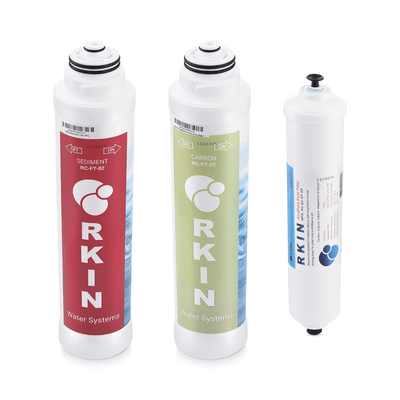
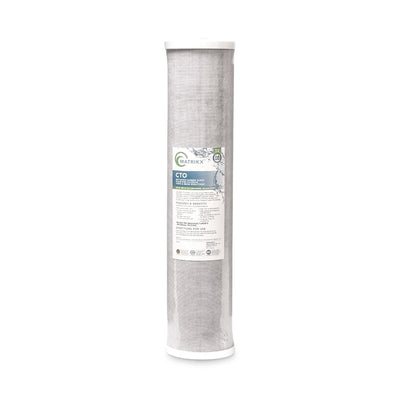
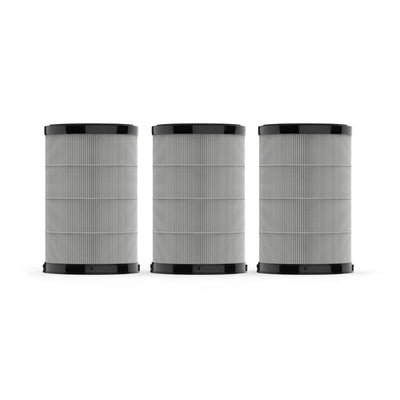
Most refrigerator water filters are carbon-based. Their main job is to improve taste and odor at the dispenser and ice maker. Depending on the filter design and certification, a fridge filter may reduce chlorine taste, certain volatile organic compounds, some particulates, and some other listed contaminants.
That is a useful job. Chlorine taste is one of the most common reasons people dislike tap water, especially in warm months when utilities may adjust treatment conditions. A fridge filter can make water taste cleaner and make ice less harsh.
But carbon filtration is not the same as reverse osmosis. Carbon is very good at adsorbing certain chemicals that affect taste and smell. It is not designed to remove most dissolved minerals. Calcium and magnesium can pass right through many refrigerator filters. Sodium and chloride can pass through. Many dissolved salts pass through.
So if your tap water reads 353 PPM and your fridge water reads 345 PPM, that does not automatically mean the cartridge is defective. It may be doing its taste-and-odor job while leaving dissolved minerals mostly unchanged.
The real question is not, "Why didn't the number drop?" The better question is, "What am I asking this filter to remove?"
Why Your Fridge Filter May Not Lower TDS
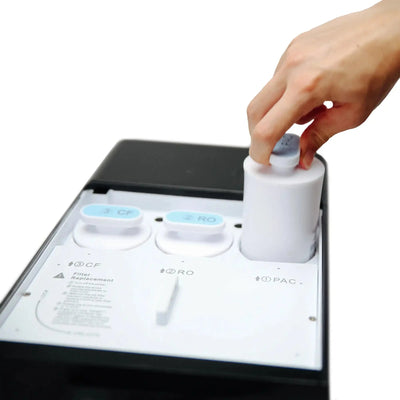
A refrigerator filter usually sits near the end of the water line. It treats a small flow of cold water before it reaches the dispenser. The filter cartridge has limited space, limited contact time, and a narrow job description.
Here are the common reasons TDS stays high after a new cartridge:
- The filter uses activated carbon, not reverse osmosis.
- The dissolved solids are mostly minerals and salts that carbon does not remove well.
- The filter is focused on chlorine taste and odor, not broad dissolved-solid reduction.
- The home's incoming water already has high mineral content.
- The meter is reading harmless minerals along with substances you may care more about.
Flushing the cartridge is still worth doing because it clears carbon fines and conditions the filter. But flushing will not turn a carbon cartridge into an RO membrane.
This is where a lot of homeowners get stuck. They buy a TDS meter because it is cheap and fast. Then they use it to judge every filter in the house. The problem is that many filters are not trying to change that number. A softener can change mineral form without making water "purer." A carbon filter can improve taste while leaving TDS. A sediment filter can catch particles while dissolved salts keep passing through.
TDS is one data point. It should not be the only scorecard.
What TDS Does Not Tell You
A low TDS number does not prove water is perfect. A high TDS number does not prove water is dangerous. The reading leaves out too much.
For example, some contaminants matter at very low levels and will not meaningfully move a TDS meter. PFAS is a good example. In 2024, the EPA finalized national drinking water standards for several PFAS compounds and keeps public guidance on PFAS and drinking water. These compounds can be relevant even when a basic TDS meter looks ordinary.
The same is true for lead from old plumbing, certain pesticides, and some volatile chemicals. A TDS meter is not a lead test. It is not a PFAS test. It is not a bacteria test. It cannot tell you whether your refrigerator filter is certified for a specific contaminant.
That matters because many homeowners use the TDS number as a shortcut. They see 20 PPM and assume the water is good, or they see 350 PPM and assume the water is bad. Both reactions can miss the point.
A better approach is to match the filter to the contaminant or problem:
- Bad chlorine taste or odor: look at carbon filtration.
- Dissolved minerals and salts: look at reverse osmosis.
- Sediment or visible particles: look at sediment filtration.
- PFAS, lead, arsenic, fluoride, nitrate, or other specific concerns: look for test data and the right technology for that target.
The filter should be chosen for the job, not for the meter alone.
What Actually Lowers TDS at the Tap
If your goal is lower TDS in drinking water, reverse osmosis is the technology most homeowners should look at first. RO uses pressure to push water through a semi-permeable membrane. That membrane rejects many dissolved ions and sends them to drain, while treated water goes to a storage tank or reservoir.
That is why RO systems usually show a clear TDS drop compared with untreated tap water. The exact result depends on incoming water, system design, membrane condition, and maintenance. But the mechanism is different from a fridge carbon filter.
This is also why comparing a fridge filter to an RO system can get confusing. They are not two versions of the same tool. They solve different problems.
A refrigerator filter is convenient because it is built into the appliance. It is useful for taste and ice. It may be enough for someone who only dislikes chlorine taste and already trusts the rest of their water profile.
Reverse osmosis is a better fit when the target includes dissolved solids or contaminants that require more than basic carbon. It is also a better fit when a homeowner wants a dedicated drinking-water system instead of depending on an appliance cartridge.
The practical move is simple: test or read your water report first, then pick the filter around your target. If the target is just taste, a fridge filter may be fine. If the target is lower TDS at the glass, you need RO.
Where RKIN Fits
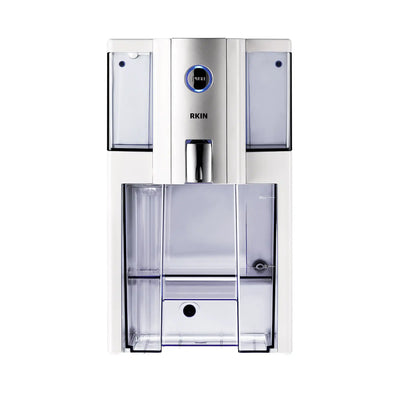
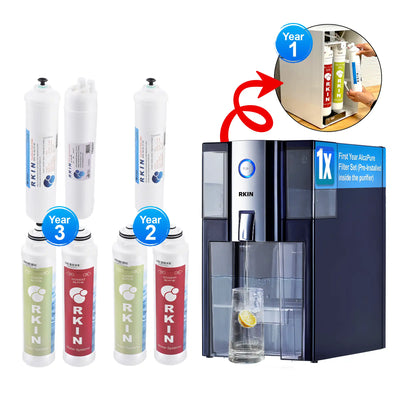
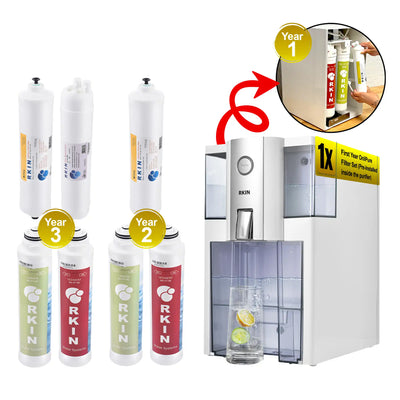
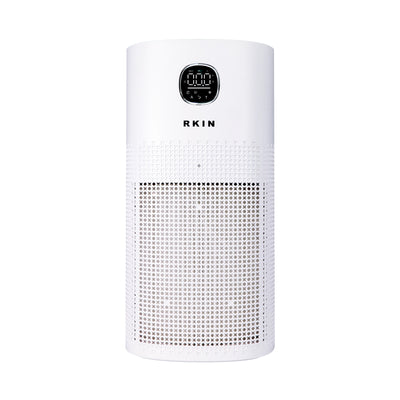
This is what the RKIN Zero Installation Purifier is designed for: homeowners and renters who want reverse osmosis drinking water without plumbing work. It sits on the countertop, connects without permanent installation, and gives you a dedicated RO option outside the refrigerator dispenser.
If you want a countertop system with a compact fill-tank design, the RKIN U1 4-in-1 Water Filter System is another countertop RO option. It is built for people who want filtered drinking water without modifying the sink cabinet.
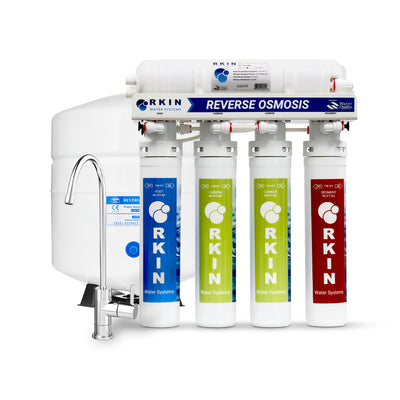
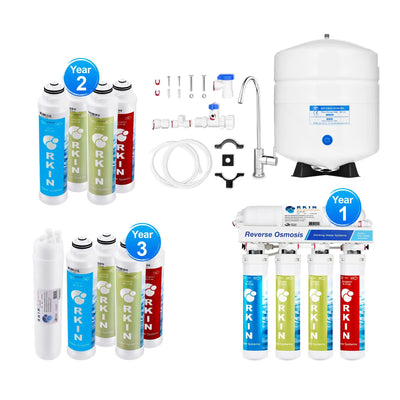
If you prefer an under-sink setup, the RKIN Flash Undersink RO System gives you a dedicated RO path at the kitchen sink.
The right tool follows the water report and the result you want. If your fridge water tastes fine and the report is clear for the items you care about, keep the current setup. If high dissolved solids are the problem you want to solve, a refrigerator filter is probably the wrong tool.
How to Check Your Setup Before Buying Anything
Before replacing cartridges over and over, take five minutes to define the target.
First, measure the water in three places: cold tap, refrigerator dispenser, and any separate filtered tap you already have. Write down each number. If the fridge reading is close to the cold tap, that is normal for many carbon cartridges.
Second, check your local water quality report if you are on city water. Search your utility name plus "Consumer Confidence Report." Look for hardness, TDS, nitrate, disinfectant residual, disinfection byproducts, and any listed violations or notices.
Third, if you are on a private well, do not rely on the fridge filter as your main water plan. Private wells are not managed the same way municipal systems are. Use a certified lab or county guidance for bacteria, nitrate, iron, manganese, hardness, pH, and anything common in your area.
Fourth, match the filter to the target. Do not buy a pitcher, fridge cartridge, faucet filter, and countertop unit just to see which number looks best. That is how people end up filter hopping without better water.
Frequently Asked Questions
Does a refrigerator water filter remove TDS?
Usually, not much. Most refrigerator filters are carbon-based and are built mainly for taste, odor, and certain listed contaminants. TDS includes dissolved minerals and salts that often pass through carbon. If your goal is a meaningful TDS drop, reverse osmosis is usually a better fit than a fridge filter.
Is high TDS always bad?
No. TDS is a broad measurement, not a contaminant list. Higher TDS can affect taste, scaling, and mineral residue, and the EPA treats it as a secondary guideline. To know whether the number matters for your home, pair the reading with a water quality report or lab test.
Why did my new fridge filter still read 300 PPM?
Because the filter may be working on chlorine taste and odor while leaving dissolved minerals in the water. That is common. A TDS meter does not show whether chlorine taste improved or whether the cartridge is certified for other listed reductions.
What type of filter lowers TDS?
Reverse osmosis is the common home technology for lowering TDS in drinking water. RO uses a membrane to reject many dissolved solids. Carbon filters, sediment filters, and refrigerator cartridges may improve other aspects of water but usually do not lower TDS the same way.
Should I stop using my refrigerator filter?
Not necessarily. If you like the taste and your water target is simple, the fridge filter may still be useful. Just do not expect it to act like an RO system. If you want lower TDS or broader drinking-water treatment, add a dedicated RO system at the countertop or sink.
Ready to Stop Guessing From One Number?
A TDS meter is helpful, but it is not a full water test. If your refrigerator water still reads high after a new filter, the next step is not another random cartridge. It is choosing the right technology for the target.
Start with the RKIN Zero Installation Purifier if you want countertop reverse osmosis without plumbing changes, or compare RKIN countertop and under-sink options at rkin.com before you decide.


0 comments