
best filter for city tap water
Is City Tap Water Safe to Drink? 2026 Homeowner Guide

Most U.S. city tap water is regulated and treated to meet applicable standards, but the answer for your faucet depends on the latest utility report, active notices, and your building’s plumbing. Start with those sources before deciding whether testing or filtration is needed.
The useful answer is not “yes” or “no.” Public water systems in the United States are regulated, tested, and reported under federal and state rules. But your water can still change after it leaves the treatment plant. The EPA explains that water customers should contact their supplier and review the annual Consumer Confidence Report for detected contaminants and compliance status. That report is the starting point. Your home is the second step.
What “Safe” Means for City Water
City tap water is usually treated to meet legal drinking-water standards. Utilities disinfect water, monitor regulated contaminants, manage corrosion control, and report violations. That is a real safety system, and it is one reason public water works as well as it does for most households.
But “safe” in a legal report does not mean “nothing is present.” It means the water system met the standards that apply to regulated contaminants during the reporting period. Many contaminants have maximum levels, action levels, treatment technique rules, or monitoring rules. The EPA drinking-water regulations page also notes that some contaminants are monitored before health-based standards are set.
That distinction matters at home. If a utility meets standards, the water may still have chlorine taste, chloramine taste, hardness minerals, old-pipe metals, disinfection byproducts, or seasonal changes. Those issues do not all mean the water is unsafe. They do mean the right filter depends on what you are trying to improve.
The best first move is to separate three questions: Is the utility in compliance? Is my home’s plumbing adding anything? And what do I want filtered at the tap?
What Your Water Report Covers
Your Consumer Confidence Report is the city-water receipt. It usually lists the water source, detected contaminants, highest or average levels, allowed limits, likely sources, and any violations. It may also mention disinfectant type, lead and copper sampling, PFAS results, source-water notes, or special monitoring.
Read it with a highlighter. Circle lead, copper, nitrate, arsenic, PFAS, disinfection byproducts, chlorine or chloramine, total dissolved solids, hardness, and any violation language. If a contaminant is listed as not detected, note the reporting limit. If it is detected but below the legal limit, decide whether that is acceptable for your household or whether you want an added reduction step.
Also look at the report year. A 2024 or 2025 report tells you more than a five-year-old screenshot in a neighborhood group. If your water changed this week, the annual report may not show the event yet. Call the utility and ask whether there was hydrant flushing, a main break, a treatment change, a source-water blend change, or nearby construction.
The report is not a filter recommendation. It is the evidence you use before choosing one.
What the Report Can Miss Inside Your House
The water report covers the system, not every inch of your plumbing. After water leaves the main, it moves through the service line, shutoff valves, house pipes, fixtures, refrigerator lines, water heater, and sometimes an old filter that no one has changed in years. Each point can affect taste, particles, color, or metals.
Older homes may have lead service lines, galvanized pipes, brass fixtures, or solder that adds lead or copper under certain water conditions. Even newer homes can have stagnant water in rarely used lines. If the first glass in the morning tastes metallic or looks discolored, flush the cold line for a short period and compare it with a sample after the water has run.
Hot water is its own category. Do not use hot tap water for drinking or cooking. Water heaters can collect sediment, and hot water can draw more metals from plumbing. If only the hot side has particles or odor, a drinking-water filter is not the first fix. The heater or plumbing needs attention.
Apartment and condo buildings add another layer. The utility may deliver compliant water to the building, while building storage tanks, risers, old pipes, or maintenance gaps affect the water at your unit. That is why the online debate about “officially safe” water versus what residents actually drink keeps coming back. Both can be true: the city system can pass, and a building can still create a taste or plumbing issue.
What Usually Does Not Answer the Question
A taste-only filter does not answer a lead, PFAS, arsenic, nitrate, or microplastics question unless the product is tested for those reductions. It may make the glass taste better while leaving the main concern unchanged.
Boiling is also commonly misunderstood. Boiling can be the right instruction during certain public notices, but it does not remove lead, PFAS, salt, hardness minerals, or many dissolved contaminants. If the utility issues a notice, follow the exact notice. If there is no notice and your concern is chemical or mineral-related, boiling is not the plan.
A water softener is not a drinking-water purifier. It addresses hardness minerals through ion exchange. It can protect appliances and reduce scale, but it is not the answer for every contaminant in a city report.
A refrigerator filter can help with taste and odor from that dispenser. It does not treat the sink, the shower, or the water used for cooking unless you pull everything from the fridge. It also depends on replacement timing, which many households miss.
How to Choose the Right Filter for City Water
Start with the exact problem. If your water tastes like a pool, look at chlorine or chloramine and choose carbon filtration that names the disinfectant you have. Chloramine is harder to reduce than chlorine, so the difference matters.
If your report or home test shows lead, choose a filter with lead-reduction testing, and address plumbing risk if applicable. If PFAS shows up, look for PFAS reduction data. If your concern is dissolved solids, fluoride, arsenic, or a broad drinking-water reduction step, reverse osmosis usually deserves a close look.
If every faucet has taste, odor, sediment, or hard-water symptoms, whole-house treatment may make sense. If the concern is mainly drinking and cooking water, a point-of-use system at the kitchen is usually the cleaner move. It costs less to treat the water you drink than to over-treat every shower and hose bib when the whole-house symptoms are not there.
This is where homeowners save themselves from buying the wrong equipment. Match the filter to the report, the symptom, and the fixture where you care most.
Where RKIN Fits
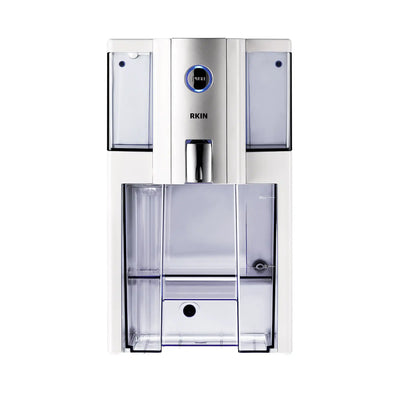
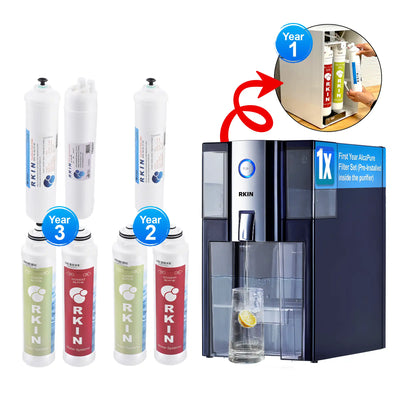
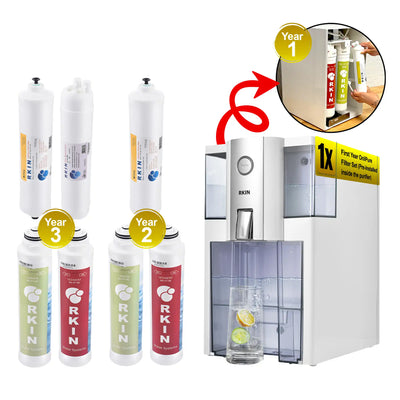
For renters, apartments, and homeowners who want a no-plumbing drinking-water upgrade, the RKIN Zero Installation Purifier Countertop Reverse Osmosis Water Filter is the direct fit. It sits on the counter, front-loads at counter height, and avoids sink-cabinet installation.
If you want a compact no-plumbing countertop system with RO, remineralization, UV storage-water treatment, and hot and cold dispensing, the RKIN U1-W Space-Saving 4-in-1 Water Filter System is built for that use case. No current system certification or model-specific PFAS, lead, or arsenic claim was verified for U1-W in this review.
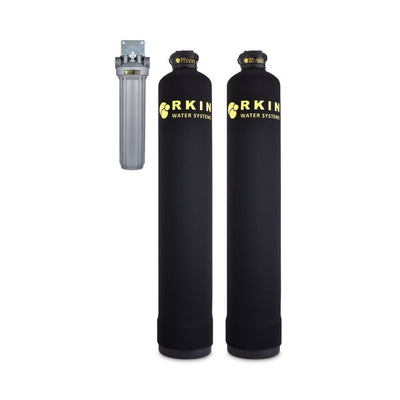
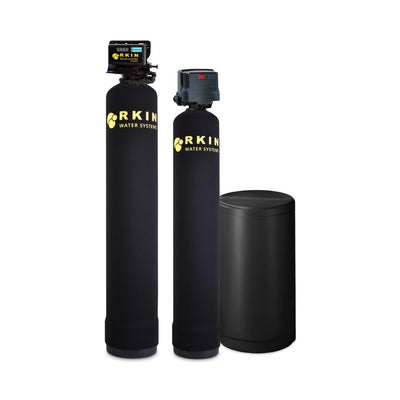
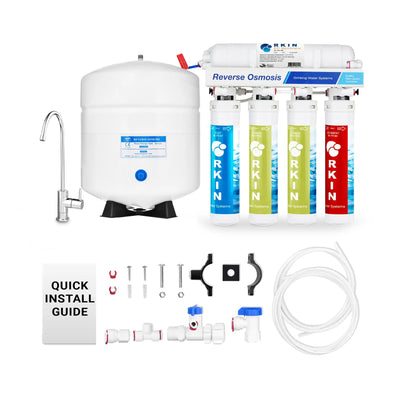
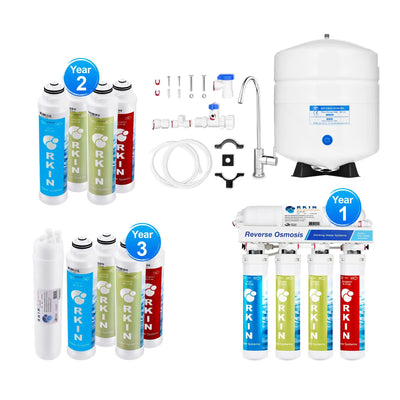
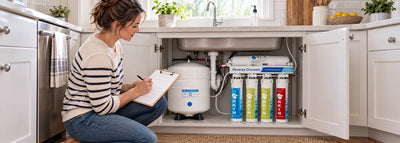
If you own the home and prefer a tucked-away RO system, the RKIN Flash Undersink RO System connects under the sink and uses a 3.2-gallon storage tank. Its NSF/ANSI 58 certification applies to the RO membrane, not the complete system. If the issue affects every fixture, start with RKIN’s whole house water treatment collection instead of forcing a sink filter to solve a whole-home problem.
A Simple Home Check Before You Decide
Do a three-glass test. Fill one glass first thing in the morning from the cold kitchen tap. Fill a second after the water runs for a short period. Fill a third from another cold fixture. Compare color, odor, particles, and taste. Then check hot water separately, but do not drink it.
Next, read your report and write down your top concern. Is it chlorine taste? Lead risk? PFAS? Hardness? Cloudiness? Sediment? A vague sense that “the water is bad” is hard to solve. A named problem can be matched to a test and a product.
Finally, decide whether this is a drinking-water issue or whole-house issue. Drinking-water issues usually point to countertop or under-sink RO. Whole-house taste, odor, sediment, or scale points to entry-point treatment. When in doubt, test before buying.
Frequently Asked Questions
Is city tap water safe to drink in the United States?
Most public water systems are regulated and tested under federal and state rules. Your local Consumer Confidence Report shows detected contaminants and whether the system met applicable standards. That report is the starting point, but home plumbing, old fixtures, and building storage can still affect water at your faucet.
Why does safe city water still taste like chlorine?
Utilities use disinfectants to help keep water protected as it moves through pipes. Chlorine or chloramine taste can remain at the tap, especially in warmer months or long distribution systems. That taste does not automatically mean the water is unsafe, but carbon filtration can help when taste and odor are the main problem.
Does boiling city water make it cleaner?
Boiling can be useful when a public notice tells you to boil water for microbes. It does not remove lead, PFAS, hardness minerals, salt, or many dissolved contaminants. Follow official boil-water notices exactly, but do not use boiling as a general chemical filtration plan.
What filter is best if I rent an apartment?
If you rent and cannot alter plumbing, a countertop RO system is usually the practical option for drinking and cooking water. The RKIN Zero Installation Purifier Countertop Reverse Osmosis Water Filter is designed for no-plumbing use, while whole-house systems are usually for homeowners.
Do I need a whole-house filter for city water?
You may need whole-house treatment if every fixture has taste, odor, sediment, or scale symptoms. If your concern is mainly drinking water at the kitchen, start with a point-of-use system. The right answer depends on the report, symptoms, and whether you own or rent.
Ready to Stop Guessing About City Water?
City tap water decisions should start with evidence: your report, your plumbing, and the glass in front of you. If the main concern is drinking and cooking water, start with the RKIN Zero Installation Purifier Countertop Reverse Osmosis Water Filter for no-plumbing RO at home, or compare it with the RKIN U1-W Space-Saving 4-in-1 Water Filter System if you want a compact fill-tank countertop setup.





0 comments