




drinking-water
Nanoplastics in Drinking Water: What 2024 Research Reveals

For a decade, the conversation about plastic in drinking water was a microplastics conversation — particles you can sometimes see, often filter, and occasionally measure in the parts-per-trillion range. That conversation got a lot more uncomfortable in early 2024.
A team at Columbia University and Rutgers, publishing in the Proceedings of the National Academy of Sciences, used a new laser-based imaging technique called stimulated Raman scattering to count plastic particles in three popular U.S. bottled water brands. They found an average of 240,000 plastic particles per liter — roughly 100 times more than earlier microplastic-focused studies had reported. The reason: 90% of those particles were too small for older instruments to detect. They were nanoplastics.
What Nanoplastics Actually Are
The line between microplastic and nanoplastic is one micrometer — 1,000 nanometers. A microplastic is something you can sometimes catch on a 1-micron sediment filter. A nanoplastic is up to a thousand times smaller. For comparison, a human red blood cell is about 7,000 nanometers across. The smallest nanoplastics measured in the Columbia study were on the order of 100 nanometers, small enough to cross biological membranes that microplastics cannot.
This matters for two reasons. First, nanoplastics are everywhere the source plastic is — in bottled water, yes, but also in tap water, wastewater discharge, snow at high altitudes, and ocean spray. Second, the standard water-quality testing methods most utilities use don't detect them. They aren't in your municipal water report because they're not measured, not because they aren't there.
Where the Plastic Comes From
The 2024 PNAS paper traced the bottled-water particles to three primary plastics: polyethylene terephthalate (PET, the bottle itself), polyamide (often used in the reverse-osmosis membranes at bottling plants, ironically), and polystyrene. In tap water, the source mix is broader. A 2023 review in Environmental Science & Technology identified the main contributors:
- Plastic distribution mains and service lines. PVC, HDPE, and PEX shed at low rates over decades.
- Treatment plant equipment. Tanks, gaskets, and the membranes mentioned above.
- Atmospheric deposition. Tire wear and synthetic textile fibers fall into reservoirs and open water systems.
- In-home plumbing. Plastic fittings, supply lines, and even kettles release particles when heated.
The same review estimated that the average American adult ingests somewhere between 39,000 and 52,000 microplastic particles per year through diet and drinking water — and that figure was calculated before the nanoplastic-detection breakthrough multiplied the count tenfold or more.
What Researchers Are Watching For
The honest answer: human-health research on nanoplastic exposure is still early. What's known so far comes from a mix of cell studies, animal models, and a small number of human tissue surveys. A 2024 New England Journal of Medicine letter reported finding microplastics and nanoplastics in carotid artery plaque from a majority of cardiovascular surgery patients, with associations to follow-up cardiovascular events. The authors were careful to note correlation, not causation.
The mechanisms researchers are tracking are exposure pathway questions, not disease claims. Nanoplastics small enough to cross cellular membranes carry whatever was on their surface — additives like phthalates and bisphenols, or environmental adsorbents picked up along the way. Whether that translates to measurable health outcomes at typical drinking-water exposure levels is what the next decade of research will work out.
What's settled enough to act on: the particles are real, the exposure is daily, and the standard "boil and bottle" defenses don't reduce them.
What Doesn't Remove Nanoplastics
Most of the conventional advice fails on something this small.
- Boiling. Some studies suggest boiling can co-precipitate plastics with calcium scale in hard water, but the effect is inconsistent and depends on water chemistry. Not a primary defense.
- Pitcher carbon filters. A standard pitcher filter is rated for chlorine taste and some lead reduction. Pore sizes are nowhere near the 100-nanometer scale.
- Refrigerator filters. Same story — useful for taste, not effective on nanoplastics.
- Bottled water. The 2024 PNAS study made clear that bottled water often delivers more plastic per liter than the tap it replaced. Switching to bottled is the wrong direction.
- Sediment-only filters. A 1-micron sediment filter catches some microplastics. Nanoplastics pass through.
What Actually Works
The technologies that can physically reduce particles in the nanometer range are short-listed. There are essentially three:
Reverse Osmosis
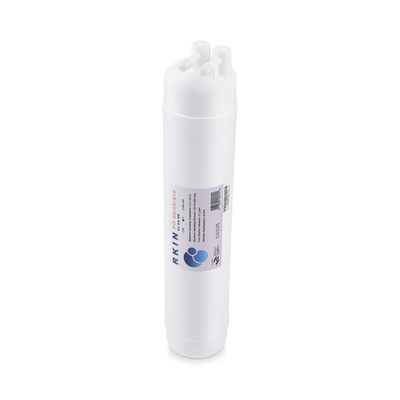
An RO membrane has nominal pore sizes around 0.0001 microns — 0.1 nanometers. That's an order of magnitude smaller than the smallest nanoplastics measured in the Columbia study. RO is the most thoroughly validated barrier to nanoplastic-scale particles for residential use, and it also reduces the contaminants commonly found alongside them — heavy metals, PFAS, dissolved solids, and disinfection byproducts.
Ultrafiltration
UF membranes operate in the 0.01 to 0.1 micron range, which catches most microplastics but leaves the smallest nanoplastics on the wrong side of the membrane. Useful as a stage, not as a complete answer.
Distillation
Effective on nanoplastics in theory, slow and energy-intensive in practice, and stripped water tastes flat to most drinkers. Not a typical home solution.
Among these, reverse osmosis is the standard residential choice — proven barrier to particles below 1 nanometer, no electricity required, fits on a counter or under a sink, and produces enough drinking and cooking water for a household.
The RKIN Approach
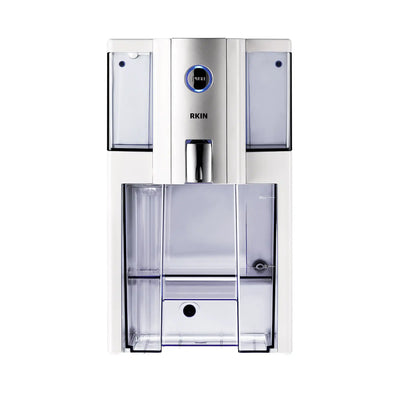
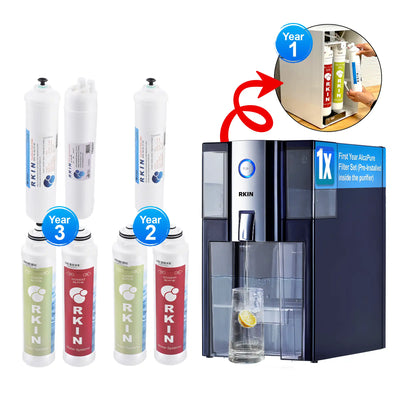
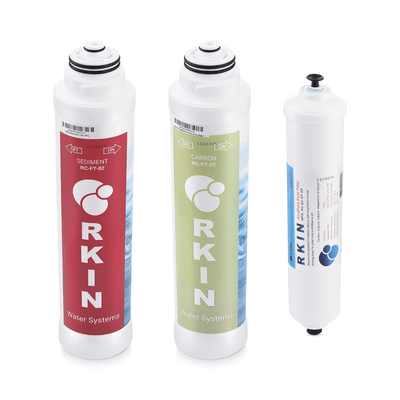
If your priority is removing nanoplastic-scale particles from the water you actually drink and cook with, a point-of-use RO system at the kitchen is the right scale. The RKIN U1 4-in-1 Water Filter System is a countertop unit with a five-stage RO process — sediment, carbon, RO membrane, UV, and post-filter — that handles nanoplastics, PFAS, lead, arsenic, and chlorine in the same pass. No plumbing modification, no electrician, plug it in and fill the tank.
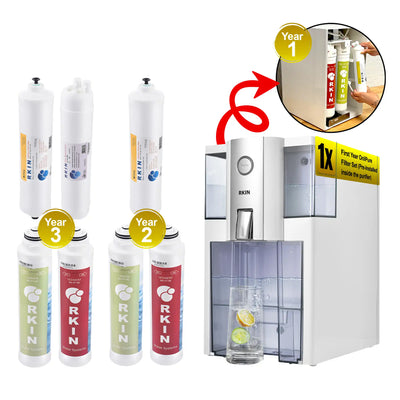
For renters or smaller spaces, the Zero Installation Purifier is the same RO core in an even smaller footprint that connects to a standard kitchen faucet without permanent installation.
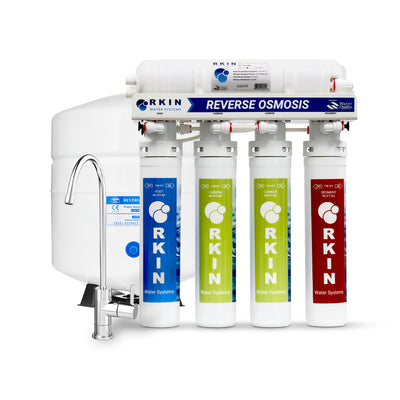
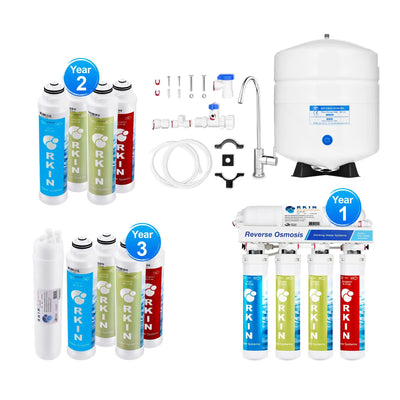
For homeowners who'd rather have the system tucked under the sink with a dedicated faucet at the counter, the RKIN Flash Undersink RO System stores filtered water in a 3.2-gallon tank and produces 75 gallons per day — more than enough for a family's drinking, cooking, and ice maker.
Whichever form factor fits your kitchen, the underlying physics is the same: a properly maintained RO membrane is one of the few residential technologies that meaningfully reduces particles at the nanoplastic scale.
What to Look For When Choosing a System
If you're shopping specifically for nanoplastic reduction, three things matter more than marketing copy.
- RO membrane in the stack. Carbon-only or sediment-only filters won't get there. The RO stage is what does the work.
- Independent third-party testing for the contaminants you care about. PFAS, lead, and arsenic reduction data is widely published and is a useful proxy for membrane integrity.
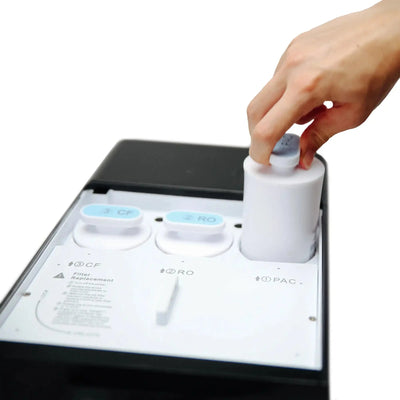
- Filter replacement schedule you'll actually follow. A neglected RO membrane underperforms. RKIN systems use cartridges with 6 to 12 month replacement intervals depending on water source — long enough to be practical, short enough to keep performance honest.
Frequently Asked Questions
How many nanoplastics are in tap water?
Studies measuring nanoplastics specifically in U.S. tap water are still scarce because the laser-based imaging method that made the 2024 bottled-water count possible only recently became available for water samples. Earlier microplastic-focused tap-water studies reported particle counts in the thousands per liter range. Updated nanoplastic-aware counts are likely to be substantially higher when those studies publish.
Is bottled water better than tap for avoiding nanoplastics?
The 2024 PNAS study indicates the opposite is more often true. Bottled water averaged 240,000 plastic particles per liter in that study, with 90% being nanoplastics shed from the PET bottle and from RO membranes used in bottling. Filtered tap water from a residential RO system is the more controlled option.
Does reverse osmosis remove nanoplastics?
Yes. RO membranes have nominal pore sizes around 0.1 nanometer, which is below the size of the smallest nanoplastics measured to date. RO is currently the most thoroughly validated point-of-use technology for nanoplastic-scale particle reduction in residential settings.
Can I see nanoplastics in my water?
No. Nanoplastics are well below the threshold of human vision, and below the size most home microscopes can resolve. Their presence is detected with specialized lab instruments, not by visual inspection. Clear-looking water can still contain hundreds of thousands of nanoparticles per liter.
How often do RO filters need replacing?
Most residential RO systems have multi-stage cartridges. Sediment and carbon prefilters typically need replacement every 6 to 12 months. The RO membrane itself runs longer, often 2 to 3 years depending on source water hardness and usage. Specifics vary by system — always follow the manufacturer's replacement schedule for your unit.
Is there a whole-house option for nanoplastic removal?
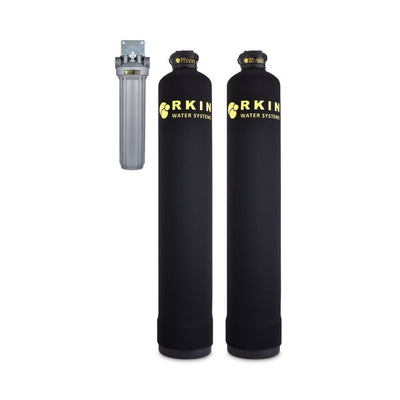
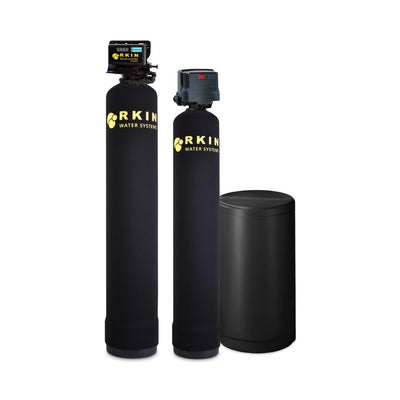
Whole-house RO exists but is uncommon for nanoplastic-driven decisions because it's expensive to scale RO for shower and laundry water. The more practical pattern is a whole-house carbon-and-sediment filter for everything plus a point-of-use RO at the kitchen for drinking and cooking water, where exposure matters most.
The Practical Takeaway
Nanoplastics are a real, measurable, and growing part of modern drinking water — including, often especially, bottled water. The defenses most homes already have aren't designed for particles this small. Reverse osmosis is.
If nanoplastic reduction is what's driving your decision, see the RKIN U1 4-in-1 Water Filter System for the countertop solution, or browse the full countertop RO collection to compare options for your kitchen.






0 comments