




reverse osmosis
RO Water Test Results: TDS, pH, Hardness, Chlorine

Short answer: RO water test results make sense only when you know what each reading measures. TDS, pH, hardness, and chlorine are four different clues. None of them, by itself, proves that every possible water concern has been tested.
That is why homeowners get stuck after buying test strips and a TDS pen. One number looks great, another looks odd, and then the internet turns the whole thing into a guessing game. The better way is to read each result in its lane.
Why RO Test Results Can Look Contradictory
Reverse osmosis changes water in more than one way. It can reduce many dissolved substances, lower a TDS reading, remove much of the hardness that simple filters leave behind, and change how the finished water tastes. If the system also has remineralization or an alkaline stage, some readings can move back up on purpose.
That is the part most test kits do not explain. A strip may show low chlorine, a TDS meter may show a big drop, a pH pad may look slightly acidic, and a hardness pad may not match what your softener test says. Those readings are not automatically fighting each other. They may be measuring different points in the system.
The Water Quality Association explains reverse osmosis as a pressure-based process that moves water through a semi-permeable membrane. That membrane is the main reason RO can reduce many dissolved substances. But a home test kit still cannot tell you everything about the water. It can only report the narrow thing each pad or meter is built to measure.
So start with this rule: test results are clues, not a full diagnosis.
What Does TDS Mean After Reverse Osmosis?
TDS stands for total dissolved solids. A handheld TDS meter usually estimates conductivity and converts it into a parts-per-million style number. Calcium, magnesium, sodium, chloride, bicarbonate, nitrate, sulfate, and other dissolved ions can all affect the reading.
RO usually lowers TDS because the membrane rejects many dissolved ions. If your tap water reads much higher than your RO water, that is a useful sign that the membrane is doing meaningful work. If your RO water suddenly reads far higher than its normal baseline, it is a reason to check filter age, membrane condition, water pressure, storage tank behavior, or whether the system was just serviced.
But TDS has a big limitation: it does not identify the dissolved material. A low TDS number does not prove the water has been tested for lead, PFAS, arsenic, fluoride, nitrate, chlorine byproducts, bacteria, or every local concern. It only says the water has low conductivity.
The EPA’s secondary drinking water standards list total dissolved solids at 500 mg/L as a non-enforceable guideline for taste, odor, color, and other nuisance effects. That is not the same as a contaminant-specific safety report.
In my house, I would use TDS as a before-and-after check, not as the final word. It is a speedometer, not a full inspection.
What Does pH Mean in RO Water?
pH measures how acidic or basic water is on a 0 to 14 scale. A reading of 7 is neutral. Below 7 is acidic. Above 7 is basic. RO water can test slightly below neutral because the process removes buffering minerals that would otherwise resist pH movement.
That does not mean the system failed. It also does not mean the water is automatically better or worse. pH is one piece of water chemistry. It is affected by carbon dioxide, minerals, alkalinity, source water, storage, and whether the system adds minerals back after filtration.
This is where many homeowners chase the wrong target. A strip shows a color that looks a little low, so they assume they need alkaline water. Maybe they do. Maybe they do not. The first question is whether taste, plumbing compatibility, and your actual water report point to a problem.
If your system includes remineralization, pH and TDS may rise after the RO stage. That can be normal because minerals were added back. Test at the right point: straight RO water before remineralization will not always match finished drinking water after remineralization.
What Does Hardness Mean After RO?
Hardness usually refers to calcium and magnesium in water. Hard water can leave scale on fixtures, spots on dishes, film in bottles, and buildup in appliances. A water softener exchanges hardness minerals for sodium or potassium ions. Reverse osmosis uses a membrane to reduce many dissolved substances in drinking water.
That distinction matters. A whole-home softener is usually installed to protect plumbing, fixtures, heaters, and appliances from scale. A drinking-water RO system is usually installed to improve the water you drink and cook with. They overlap in the kitchen, but they are not the same job.
If hardness is low after RO, that usually makes sense. If hardness still reads high, check where you sampled. Did you test tap water, softened water, water from the RO faucet, water after a remineralization cartridge, or water from a refrigerator line that bypasses the RO system?
Also check the test strip itself. Some strips are broad, old, or hard to read under kitchen lighting. If hardness results drive a buying decision for a whole-house system, use a better test than a color pad alone.
What Does Chlorine Mean After RO?
Chlorine is different from TDS and hardness. Cities often use chlorine or chloramine for disinfection. Many people notice it as pool-like taste or odor. Carbon filtration is commonly used to reduce chlorine taste and odor before water reaches the RO membrane.
If a test strip shows chlorine at the tap but little or none after the RO system, that can be a good sign. If chlorine is still showing after the system, check filter age, flow path, whether the test is reading free chlorine or total chlorine, and whether your city uses chloramine instead of free chlorine.
Do not boil water to “fix” a confusing chlorine test unless your utility or local agency has issued a specific boil-water notice. Boiling is not a general water-filtration substitute. It can concentrate dissolved solids as water evaporates, and it does not solve many taste, scale, or contaminant-specific concerns.
For city water, the best place to start is still your water supplier’s report. The EPA says community water systems provide Consumer Confidence Reports each year with detected contaminants and compliance details. For private wells, the EPA private wells page reminds homeowners that they are responsible for testing and maintenance.
What Test Kits Cannot Tell You
Home tests are useful, but they have boundaries. A TDS pen is not a PFAS test. A pH strip is not a lead test. A hardness strip is not a bacteria test. A chlorine strip does not explain every taste or odor problem.
The EPA’s National Primary Drinking Water Regulations are contaminant-specific. They set limits for individual substances, not one universal “good water” number. If your concern is lead, nitrate, arsenic, PFAS, bacteria, or a private-well issue, use the right test for that substance.
A practical testing sequence looks like this:
- Start with the source: Read your city water report or get a private-well lab test.
- Test before and after filtration: Compare tap water with RO water using the same tool, on the same day.
- Know the sample point: Test before or after remineralization on purpose, not by accident.
- Track the baseline: Your normal RO TDS matters more than a random number from someone else’s home.
- Use lab testing for specific concerns: Do not ask a strip to answer what only a lab can answer.
That keeps the results useful without turning every color change into a panic.
How RKIN Fits the Testing Conversation
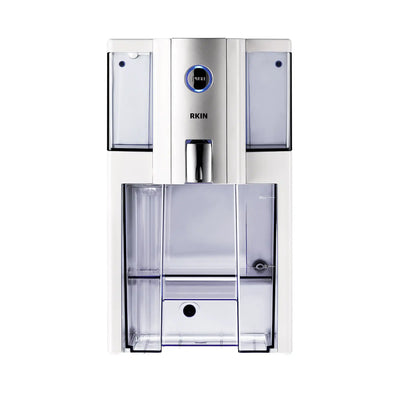
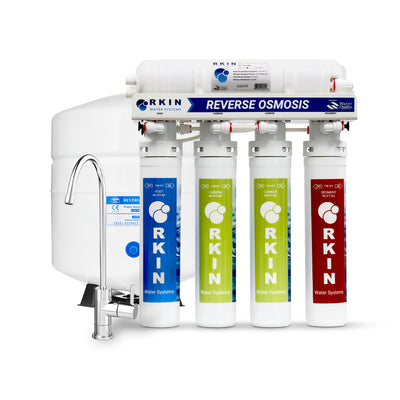
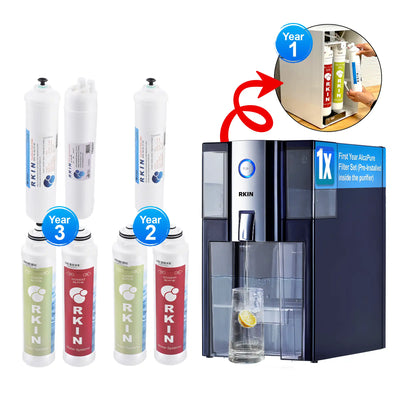
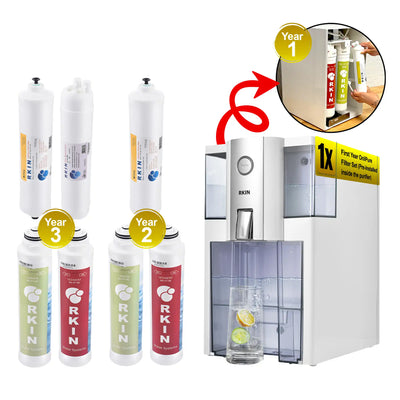
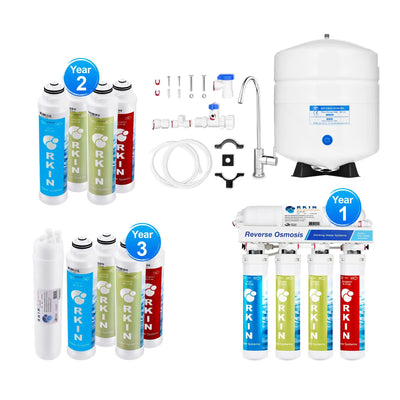
RKIN reverse osmosis systems are built for homeowners who want a clear, practical drinking-water lane. The RKIN Zero Installation Purifier Countertop Reverse Osmosis Water Filter is a strong fit if you want RO drinking water without under-sink plumbing. The RKIN U1 4-in-1 Water Filter System is a countertop RO option with a fill tank and no plumbing changes. The RKIN Flash Undersink RO System fits homeowners who want a dedicated under-sink setup.
The honest part: no at-home meter should be treated as a full lab report, even when the filter is working well. Use your meter to confirm a trend. Use your source-water report or a certified lab test to answer contaminant-specific questions. Then choose the system that matches the water concern and the installation you actually want.
A Simple Way to Read the Four Numbers
If it helps, use this four-gauge model:
- TDS: “How much dissolved ionic material is the meter estimating?” Useful for before-and-after RO trends.
- pH: “How acidic or basic is this sample?” Useful for taste and chemistry context, not a pass/fail filter score.
- Hardness: “How much calcium and magnesium are showing up?” Useful for scale, spots, and softener questions.
- Chlorine: “Is disinfectant showing at this sample point?” Useful for taste, odor, and carbon-filter checks.
If one gauge looks odd, do not jump straight to a product conclusion. Confirm the sample point, retest with fresh strips, compare tap and filtered water, then decide whether you need a lab test.
Frequently Asked Questions
What should RO water TDS be?
There is no single perfect TDS number for every home. Incoming water, membrane condition, pressure, temperature, filter age, storage design, and remineralization can all affect the reading. The useful number is your baseline: compare tap water to RO water, then watch for sudden changes from your normal result.
Why did my pH go down after reverse osmosis?
RO can remove minerals that buffer water, so finished water may test slightly below neutral. That does not automatically mean the system failed. If your system has a remineralization stage, pH may rise after minerals are added back. Test at the same point each time so you are comparing the same water.
Should hardness be zero after RO?
RO often reduces hardness minerals, but a home strip may not show a perfect zero. Sampling point, strip quality, remineralization, and system condition all matter. If hardness is still high from the RO faucet, retest, confirm the line you sampled, and check filter or membrane age.
Does a low TDS reading prove my water is safe?
No. A low TDS reading means low conductivity. It does not identify specific substances or replace a lab test for lead, PFAS, arsenic, nitrate, bacteria, or other concerns. Use TDS for trends, not as a full water-quality report.
Why does chlorine still show after my filter?
Check filter age, flow path, whether your city uses chlorine or chloramine, and whether your strip reads free chlorine or total chlorine. If the result stays high after retesting, contact the filter manufacturer or use a more specific test before assuming the whole system failed.
Ready to Make Sense of Your RO Results?
Use the numbers as a map, not a verdict. If you want reverse osmosis without plumbing, start with the RKIN Zero Installation Purifier Countertop Reverse Osmosis Water Filter. If you prefer a countertop fill-tank design, compare the RKIN U1 4-in-1 Water Filter System. If you want an under-sink faucet, look at the RKIN Flash Undersink RO System.



0 comments