




hard water damages water heater
Water Heater Popping or Rumbling? Here's Why (and the Fix)

The first time it happens, you think the house settled. Then it happens again — a sharp pop from the utility closet, then a low rumble that lasts ten or fifteen seconds, then silence. Some nights it sounds like microwave popcorn. Other times it's a deep knock that vibrates the wall.
That's your water heater telling you it's in trouble. According to the U.S. Department of Energy, sediment buildup is the number-one cause of premature water heater failure in American homes — and it's almost entirely preventable. Once you understand why the popping happens, you'll see why every month you ignore it costs you money in three different ways.
What's Actually Making the Noise
Inside a typical 40- or 50-gallon storage tank, water sits and heats. The minerals dissolved in that water — mostly calcium carbonate and magnesium — don't stay dissolved when the temperature climbs. They precipitate out, settle to the bottom of the tank, and form a hard crust over the burner (gas) or heating element (electric).
When the burner fires or the element kicks on, that crust traps a thin layer of water underneath. The water flashes to steam, builds pressure, and explodes through the sediment with a sharp pop. Over and over, every heating cycle.
The rumbling is the same physics on a bigger scale — sheets of scale lifting and dropping as steam vents from underneath. The knocking is sediment chunks tumbling and striking the tank wall.
You're listening to your tank cook itself.
Why This Gets Worse, Not Better
Sediment is self-reinforcing. The thicker the layer, the more heat it traps, the more steam it generates, the more aggressive the cycling. A 2019 Engineering Research Center study measured efficiency loss at roughly 8% per quarter-inch of accumulated scale. Most water heaters in hard-water homes hit that quarter-inch within 18–24 months. By year five, many tanks have an inch or more of compacted sediment — and a heating element that's been overworking for years.
Three things happen as the sediment thickens:
- Your energy bill climbs. The heater runs longer to deliver the same hot water. In an electric tank, the element draws full load for longer cycles. In a gas tank, the burner runs minutes longer per cycle.
- Hot water output drops. Sediment displaces water volume in the tank. A 50-gallon tank with two inches of sediment effectively becomes a 40-gallon tank, with shorter showers and faster recovery dropouts.
- The tank fails earlier. The sustained heat damages the glass lining, accelerates corrosion of the anode rod, and stresses the heating element. The American Water Works Association estimates hard-water sediment cuts the average water heater lifespan from 10–12 years to 6–8.
The popping you're hearing now is the early warning. The leak across your utility room floor is the late one.
"Just Flush the Tank" — and Why That Stops Working
The standard advice is to flush the tank annually: connect a hose to the drain valve, run the water out the back of the house, and refill. For a relatively new tank with light sediment, that works. For a tank with two or three years of buildup in hard water, it usually doesn't — and may actively make things worse.
Here's what tends to happen:
- The drain valve clogs. Compacted scale lodges in the small plastic valve, and the tank either won't drain or won't fully shut off afterward.
- The sediment is fused to the bottom. Hard scale layers don't rinse out. A flush moves the loose stuff and leaves the cement.
- A partial flush stirs the rest. Loose sediment that was sitting quietly gets churned up and lodges in fixtures, supply lines, and faucet aerators throughout the house.
A flush is good preventive maintenance for a new heater in soft water. It's a poor recovery tool for an old heater in hard water.
The Real Fix Is Upstream
The sediment in your tank came in through your supply line. As long as the supply keeps delivering hardness, every flush only buys a few weeks before the cycle restarts.
The root-cause fix is to treat the water before it ever enters the heater. That means a whole-house treatment system installed at the main water line, where it can protect every appliance, fixture, and faucet — not just the water heater.
Two technologies actually solve this, and they work differently:
Salt-Based Softening (Ion Exchange)
A traditional water softener uses resin beads to swap calcium and magnesium ions for sodium ions. The result is genuinely soft water — under 1 grain per gallon — that won't form scale anywhere. Showers feel slippery, soap lathers easily, and appliances last dramatically longer.
Trade-offs: salt purchases, periodic regeneration cycles that discharge brine, and added sodium in the water you drink. For homes with very hard water (over 15 gpg) or households where the softened feel is preferred, this is the gold standard.
Salt-Free Conditioning (TAC)
Template-assisted crystallization media converts dissolved calcium and magnesium into microscopic crystals that flow through plumbing without sticking. The minerals stay in the water (so it's still healthy to drink and tastes the same), but they no longer form scale on heating elements, in pipes, or on fixtures.
Trade-offs: no salt, no electricity, no wastewater, no monthly upkeep, but the water doesn't feel softened. Independent testing shows TAC systems achieve 88–95% scale-formation reduction — enough to stop heater sediment in nearly all real-world conditions.
Which RKIN System Solves This
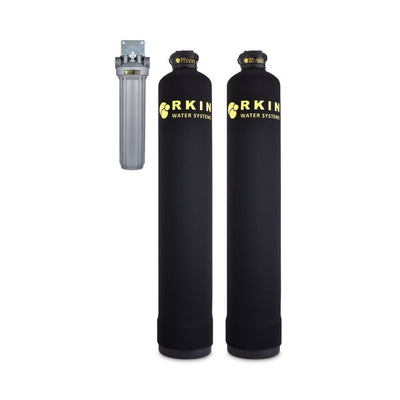
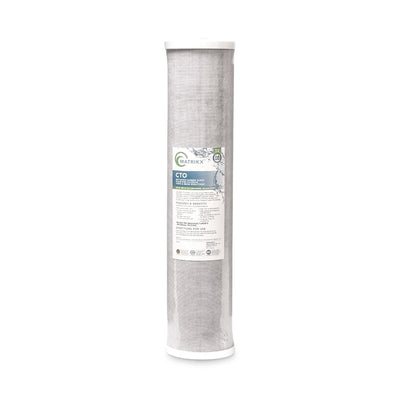
For most homes dealing with water heater sediment, the RKIN OnliSoft Pro Salt-Free + Carbon Combo is the right starting point. It pairs salt-free TAC scale control with high-capacity carbon filtration that removes chlorine, chloramines, taste, odor, and sediment in a single tank. No salt, no electricity, no maintenance beyond a sediment prefilter change every 6–12 months.
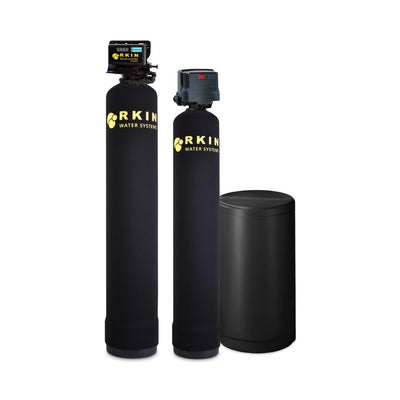
If you'd rather have classic salt-based softening — especially if your water tests above 15 grains per gallon or your skin reacts to high mineral content — the RKIN Whole House Salt-Based Water Softener is the conventional ion-exchange option. To combine softening with carbon filtration in one system, look at the Salt-Based Softener + Carbon Combo.
For homes on well water where sediment in the heater is paired with iron staining, sulfur smell, or sand, the RKIN Whole House Well Water Filter handles iron, sulfur, manganese, and sediment in one tank — and pairs naturally with a softener or conditioner downstream.
All three install at the main water line and protect every downstream fixture in the house at once.
What to Do Right Now (Before You Replace the Heater)
If your water heater is already popping, you don't have to scrap it. Three steps will buy you time and stop the damage from getting worse:
- Lower the thermostat to 120°F. That's the Department of Energy's recommended setting for residential tanks. Higher settings (140°F+) accelerate sediment formation dramatically. Most heaters ship at 130–140°F and benefit from being turned down.
- Install whole-house treatment. Stop the new sediment from arriving. This is the only step that actually solves the root cause.
- Do one careful flush. After the new system has been online for 4–6 weeks (so incoming water is conditioned), flush the tank with the burner/element off. If the drain valve is clogged, replace it with a brass full-port valve while you have it open. Refill, restart, and listen.
In most cases, the popping diminishes within a few weeks and stops entirely within two to three months as the existing scale slowly breaks down under conditioned water flow. Tanks that were six or seven years deep into sediment damage may still need replacement — but you'll get the next decade out of the new one instead of three years.
Frequently Asked Questions
Is a popping water heater dangerous?
Not immediately — the noise is sediment trapping water and steam, not a pressure failure. But the same conditions damage the tank lining and the heating element, which can cause leaks and electrical failures over time. A modern water heater has temperature and pressure relief valves that prevent catastrophic rupture, but a heater that's been popping for years is statistically far more likely to fail and leak. Treat it as an early warning.
Will flushing my water heater fix the noise?
For light sediment in a newer tank, yes. For a tank that's been popping for months or years, often no — the scale is compacted and fused, and a standard flush only moves loose material. You can try one flush after lowering the thermostat, but the lasting fix is to stop the incoming hardness so new sediment can't form.
How do I know if I have hard water?
Hardware-store test strips (under $10) give a reading in about a minute. Anything over 7 grains per gallon (gpg) is considered hard and will form scale in a water heater. Florida, Texas, the Midwest, and the Southwest commonly run 15–25 gpg. RKIN also offers a free home water test that covers hardness, chlorine, TDS, and common contaminants — request one from the contact page.
Does a tankless water heater avoid this problem?
Tankless heaters don't store water, so they don't accumulate sediment the same way — but their heat exchangers scale up faster and more critically than tank heaters. Most tankless manufacturers require annual descaling and recommend a softener or conditioner upstream to maintain warranty. The popping goes away; the scaling problem doesn't.
Will a salt-free system really stop sediment in my water heater?
Independent testing shows TAC (template-assisted crystallization) media reduces scale formation by 88–95% — enough to stop new sediment buildup in nearly all residential water heaters. The dissolved minerals are still present, but they're converted into microscopic crystals that flow through the system instead of plating onto hot surfaces.
Should I replace my water heater now or wait?
If the tank is under 8 years old, treat the water first and give the heater 60–90 days to recover. Many tanks regain most of their original output once new sediment stops forming and old scale slowly breaks down. If the tank is over 10 years old, leaking, or shows visible rust around fittings, plan replacement — but install the whole-house treatment first so the new tank doesn't repeat the cycle.
Quiet the Noise. Save the Tank.
The popping isn't going away on its own. Every cycle is more efficiency lost, more lining stressed, and more weeks shaved off the heater's life. Treating the water at the main line is the only fix that stops it for good — and protects every other appliance in the house at the same time.
The RKIN OnliSoft Pro Salt-Free + Carbon Combo addresses the two things doing the most damage in most American homes: hardness and chlorine. No salt, no electricity, no monthly upkeep. Pair it with a free home water test to confirm your hardness level and pick the right system the first time.






0 comments