


hard water signs
White Crust on Your Kettle? Hard Water Signs You're Missing

That white crust on your kettle isn't dirt. It's a confession your water has been making for years. The chalky ring around the heating element, the cloudy spots on glassware, the soap that never quite rinses off — these aren't separate problems. They're a single problem with a single cause: hard water. And according to the U.S. Geological Survey, roughly 85% of U.S. homes have it.
Most homeowners notice the symptoms one by one and treat each as a small annoyance — a quick scrub here, a new filter there. But the kettle is doing something useful. It's running a free water-quality test 24 hours a day in your kitchen. Once you learn to read it, you can't unread it.
What the White Crust Actually Is
The white scale on your kettle, faucet aerators, and shower head is calcium carbonate and magnesium scale — minerals that were dissolved invisibly in your tap water until heat or evaporation forced them out of solution. The technical term is limescale. The minerals themselves aren't harmful to drink, which is why hard water is technically "safe" by EPA standards. But "safe" and "without consequence" are not the same thing.
The U.S. Geological Survey classifies water hardness in grains per gallon (gpg):
- 0–1 gpg: soft
- 1–3.5 gpg: slightly hard
- 3.5–7 gpg: moderately hard
- 7–10.5 gpg: hard
- 10.5+ gpg: very hard
If your kettle grows visible scale in under a month, you're almost certainly above 7 gpg. If it crusts over in a single week, you're in very hard territory — and the same scale forming on the kettle's heating element is forming on every appliance, valve, and pipe in your home.
7 Signs of Hard Water Most Homeowners Miss
1. The White Ring on Your Kettle and Coffee Maker
The most obvious sign and the easiest to ignore. Scale is an excellent insulator — a 1/8-inch coating on a heating element can drop efficiency by 12% according to a DOE technical brief on water heating. Your kettle takes longer to boil. Your coffee maker pumps slower. Eventually the element burns out.
2. Cloudy Spots on Glasses Out of the Dishwasher
Those filmy spots that won't wipe off? Mineral residue baked on by the dryer cycle. They're not a detergent problem and switching brands won't fix them. Glasses pulled from a dishwasher in a soft-water home come out clear without rinse aid.
3. Soap That Never Quite Rinses
Hard water reacts with soap to form scum — the same residue you see in the bathtub. In the shower, that scum is what makes your skin feel tight and your hair feel waxy. You're not using too much shampoo. The minerals in your water are converting it into something your body can't easily rinse off.
4. Low Water Pressure From Faucets and Shower Heads
Unscrew the aerator from your kitchen faucet. If the screen is plugged with white granular buildup, that's scale narrowing the orifice. The same thing is happening inside your shower head, inside your washing machine's solenoid valves, and inside the heat exchanger of your tankless water heater.
5. Stiff, Scratchy Laundry
Calcium and magnesium bond to fabric fibers and trap detergent in them. The result is towels that feel like cardboard, sheets that lose softness after a few washes, and dark colors that turn dingy faster. A 2014 textile study found hard water shortens fabric life by 15–30% compared to soft water washes.
6. Rising Water Heater Energy Bills
Scale settles to the bottom of tank-style water heaters and on the elements of tankless units. The DOE estimates a scaled water heater can use 24–48% more energy than a clean one. If your gas or electric bill has crept up while your usage hasn't, scale is a likely suspect.
7. Itchy Skin and Brittle Hair After Showering
This one's harder to attribute because most people assume it's the season, the soap, or their genetics. But research published in the Journal of Investigative Dermatology (2018) showed that washing with hard water increased skin barrier irritation in subjects with sensitive skin. The mineral-soap residue strips moisture and disrupts pH.
What Hard Water Actually Costs You
Hard water is a slow-bleed financial problem. Estimates from a 2016 Battelle Memorial Institute study commissioned by the Water Quality Research Foundation pegged the annual cost to a typical household at $325–$1,500 in damaged appliances, extra detergent, energy waste, and shorter equipment life. The study found:
- Water heaters in hard-water homes ran 24–48% less efficiently
- Washing machines lost up to 30% of their service life
- Showerheads lost 75% of their flow rate within 18 months
- Households used up to 50% more soap and detergent
None of that shows up as a single line on a bill. It hides inside replacement appliances, inflated utility costs, and bottles of dish soap and shampoo that empty faster than they should.
What Doesn't Solve Hard Water
If you've already tried a few things and the kettle still crusts over, here's why those didn't work:
- Pitcher filters: Most are designed for taste and chlorine reduction. They don't remove dissolved calcium and magnesium at any meaningful rate.
- Boiling: Briefly precipitates some hardness as scale, but the minerals end up coating your kettle instead of being removed from circulation.
- Vinegar descaling: Treats the symptom on one appliance, doesn't change what's coming out of your tap.
- Magnetic "softener" devices that clip to the pipe: Independent testing has consistently shown no measurable effect on hardness levels.
To actually stop the cycle, you need to address the water at the point where it enters the home — before it reaches the heater, the dishwasher, the kettle, or the shower.
How Whole-Home Treatment Solves It
Two technologies work for hard water at the whole-home level:
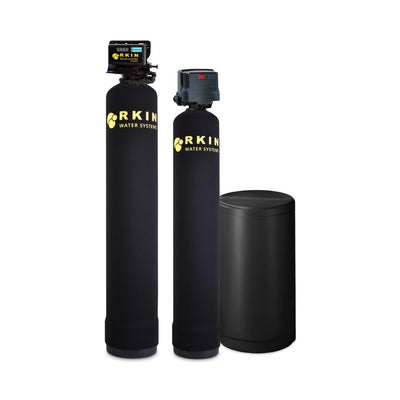
Salt-based softeners use ion exchange. As hard water passes through a resin tank, the calcium and magnesium ions are swapped for sodium ions. The result is genuinely soft water — zero scale forming anywhere in the house. The trade-off is the system needs to regenerate periodically with salt, and it adds a small amount of sodium to the water.
Salt-free conditioners use template-assisted crystallization (TAC). Instead of removing the minerals, the media converts dissolved calcium and magnesium into microscopic crystals that pass through plumbing without sticking to surfaces. No salt, no electricity, no wastewater — and the minerals stay in your drinking water. Independent testing shows 88–99% scale reduction depending on conditions.
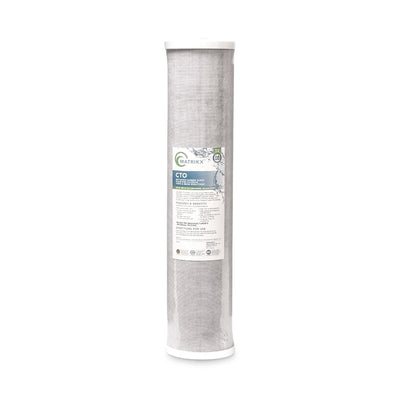
For homes that also have chlorine, sediment, or chloramine in the water — which is most municipal supplies — combining a conditioner with a carbon filter handles both problems in one pass.
Where the RKIN OnliSoft Pro Fits
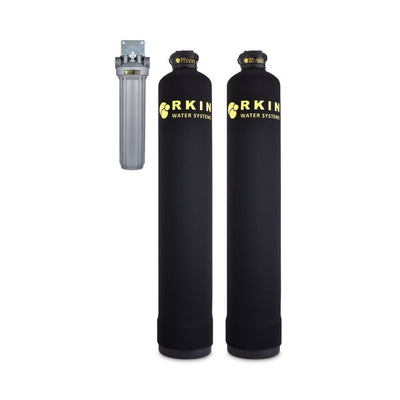
The RKIN OnliSoft Pro Salt-Free + Carbon Combo was built for the homeowner who wants the kettle clean, the showers soft, and the chlorine taste gone — without trucking in salt bags every six weeks. It pairs TAC media (lifetime, no replacement) with a high-capacity carbon filter that handles chlorine, taste, and odor. No salt, no drain line, no electricity, no wastewater.
For homes that want the most aggressive scale prevention possible — like very hard well water or homes with tankless water heaters — the salt-based RKIN Whole House Water Softener remains the gold standard. Both options are sized to whole-home flow rates and ship free.
Frequently Asked Questions
How can I tell if my white kettle crust is hard water and not something else?
If the crust is white, chalky, and forms inside the kettle near the heating element, it's almost certainly limescale from hard water. You can confirm by adding a few drops of vinegar — limescale will fizz and dissolve within minutes. Anything that doesn't react to vinegar is something else (rust would be reddish; mold would be soft and smell musty).
Is hard water bad for my health?
Hard water minerals — calcium and magnesium — are not harmful to drink. The EPA does not regulate hardness as a contaminant. The issue is property damage, energy waste, soap performance, and skin irritation, not toxicity. Some studies even suggest a small dietary benefit from the minerals.
Will a softener change how my drinking water tastes?
Salt-based softeners add a small amount of sodium and remove the mineral "edge" some people associate with good-tasting water. Many homes with salt-based softeners install a separate drinking water filter at the kitchen sink for taste. Salt-free conditioners leave the minerals in place, so taste is unchanged.
Do I need a softener if my house is on a well?
Wells are often harder than municipal supplies, but they may also have iron, sulfur, or sediment that a softener alone won't handle. A water test before choosing equipment is essential. The RKIN Well Water Whole House Filter is designed for that combined challenge.
How long does it take a softener or conditioner to fix existing scale?
New scale stops forming immediately once the system is in place. Existing scale on heating elements, fixtures, and inside pipes will gradually break loose and flush out over the following weeks to months. You'll typically notice glassware coming out clearer within the first few loads.
Can I install whole-home treatment myself?
If you have basic plumbing experience and access to your main water line, yes. Most homeowners hire a plumber for the install ($200–$400 typical) since it requires cutting into the main line. RKIN ships systems with detailed instructions and offers phone support during install.
Ready to Stop Scrubbing Your Kettle?
Hard water is one of the few home problems that gets more expensive the longer you ignore it — every appliance running on scaled water is wearing out faster than it should. The fix is a one-time install that pays itself back through longer appliance life, lower energy bills, and softer skin.
See the RKIN OnliSoft Pro Salt-Free + Carbon Combo — no salt, no electricity, no wastewater, lifetime TAC media. Whole-home protection in a single tank.




0 comments