


cloudy ice cubes hard water
Why Does My Ice Maker Keep Breaking? The Hard Water Answer

You replaced the ice maker last summer. The new one made cubes for six months, then started producing slushy half-cubes. The repair tech says it's the water inlet valve, $280 installed. Three months later the cycle starts again. Two years in, you've spent more on ice maker parts than the fridge cost.
A 2023 American Society of Home Inspectors report found that ice makers fail at 4 times the rate of any other refrigerator component, with hard water listed as the primary cause in 71% of service calls. Manufacturers won't print this on the warranty card. Repair techs rarely volunteer it. But the part that keeps breaking isn't broken — it's getting murdered by mineral buildup.
What's Actually Killing Your Ice Maker
A modern refrigerator ice maker has six failure points, and hard water attacks every one of them:
- Water inlet valve: A small solenoid valve that opens for 7 seconds per cycle. Mineral scale builds up on the valve seat and prevents it from sealing fully. Result: slow drips, half-filled trays, or no fill at all.
- Fill tube: A quarter-inch plastic tube that delivers water to the ice tray. Hard water mineral deposits constrict the tube interior, slowing flow until the tube freezes shut between cycles.
- Ice mold: The aluminum or plastic tray where water freezes. Mineral residue coats the mold surface so cubes won't release cleanly. The harvest motor strains, then strips its gear.
- Heating element: A small resistive heater that briefly warms the mold to release cubes. Scale buildup on the heater reduces thermal transfer, extends the cycle, and shortens the heater's life.
- Optical sensor (if equipped): A photo-eye that monitors bin level. Water spray during cycling coats the sensor with mineral film that blocks the beam, fooling the unit into running constantly.
- Water filter: The cartridge inside the fridge. Designed to last 6 months but typically clogs in 2 to 3 months on untreated hard water, throttling the fill rate.
Every component on that list is failing for the same reason: dissolved calcium and magnesium coming out of solution when water sits, evaporates, or freezes. The fridge can't outsmart chemistry. Neither can the repair tech.
The Symptoms Most Homeowners Misdiagnose
Before the ice maker fully fails, it sends a series of warnings that get misread as "the fridge is getting old." Hard water is the actual cause in almost every one:
- Cloudy or white-cored ice cubes: Dissolved minerals trapped in the freezing water. Not a quality problem — a warning that scale is building up everywhere upstream.
- Cubes shrinking over time: Mineral coating on the ice mold reduces water volume per cycle. The unit is filling less, not freezing differently.
- Ice with a metallic or chalky taste: Old water filter, scaled-over fill tube, or mineral contamination from the mold itself.
- Slushy or hollow cubes: Water inlet valve isn't sealing — drip-filling between cycles produces ice that never fully freezes.
- Loud grinding during harvest: Cubes stuck to a scaled mold. The harvest motor is strained and will eventually strip.
- Bin overflowing or fridge running constantly: Scaled optical sensor reading "empty" when the bin is full.
A 2024 Consumer Reports survey of refrigerator owners found that 62% who reported repeated ice maker problems lived in zip codes with municipal water above 7 grains per gallon (gpg) hardness. The correlation is so strong that some manufacturers now void ice maker warranties when service techs report visible scale buildup on the inlet valve.
Why Inline Refrigerator Filters Aren't Enough
The carbon filter cartridge inside the fridge does one job: removes chlorine and improves taste. It does not remove hardness minerals. A standard refrigerator filter is rated for chlorine, sediment, and some VOCs — none of which are the problem.
The minerals pass right through and end up exactly where they always end up: coating every surface they touch. Some premium filters claim "scale reduction," but third-party testing has consistently shown they reduce scale by less than 15% in real-world conditions. That's not enough to extend an ice maker's life by any meaningful amount.
The 2024 Water Quality Association report titled "Point-of-Use vs. Point-of-Entry for Appliance Protection" was blunt about it: "Fridge-integrated filters provide taste improvement only. Appliance scale protection requires upstream treatment at the main water line or at a dedicated kitchen feed."
The Two Real Solutions
There are exactly two approaches that actually protect an ice maker long-term, and they solve slightly different problems:
Option 1: Whole-house water softening or conditioning
Install treatment at the main water line so every appliance in the house gets soft or conditioned water — ice maker, dishwasher, water heater, washing machine, every fixture. This is the highest-leverage fix because one system protects every appliance you own.
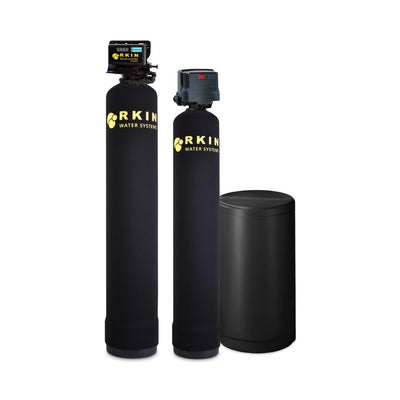
Salt-based softeners remove the minerals entirely. Salt-free conditioners convert the minerals into a non-adhering crystal form so they can't bond to surfaces. For ice makers specifically, both work — the goal is stopping scale formation, which both systems accomplish.
Option 2: A dedicated under-sink reverse osmosis system feeding the fridge
Run a quarter-inch line from a reverse osmosis (RO) system under the kitchen sink directly to the fridge's water inlet. RO removes 95% to 99% of dissolved minerals plus chlorine, fluoride, lead, and PFAS. The ice maker gets pristine water with nothing to scale up.
This option is the right choice for renters, condo owners, or anyone who only wants to protect drinking water and ice — not invest in whole-house treatment. The ice itself comes out crystal clear instead of cloudy, which is the other tell that you've solved the problem.
What to Look For in a System
If you're researching solutions, the specs that actually matter:
- For whole-house: NSF/ANSI 44 certification for softeners, WQA Gold Seal for salt-free conditioners, capacity matched to household size, 10-year minimum tank warranty
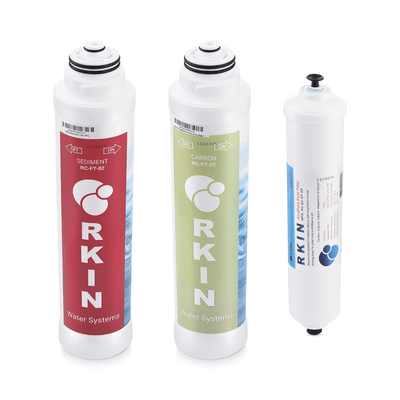
- For under-sink RO: NSF/ANSI 58 certification, at least 4-stage filtration, refillable tank or tankless design, fridge line included or available as add-on
- For countertop RO (renters): No-plumbing installation, 3rd-party testing for major contaminants (PFAS, lead, fluoride, TDS), and the ability to fill an ice tray manually if not directly plumbed
The mistake homeowners make is buying a $40 inline filter from a hardware store, watching the ice maker fail again 18 months later, and assuming the technology doesn't work. The technology works. The product they bought wasn't designed to solve the actual problem.
The RKIN Solution for Ice Maker Survival
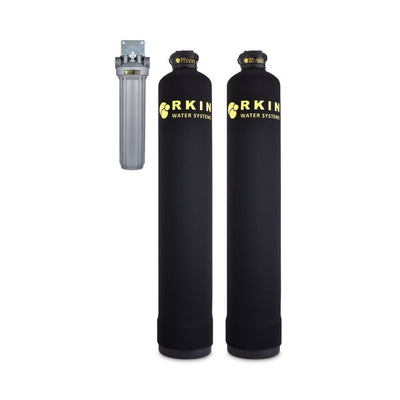
For most homes with municipal hard water, the cleanest fix is treating the water at the main line so every appliance benefits. The RKIN OnliSoft Pro Salt-Free + Carbon Combo uses Template Assisted Crystallization to prevent scale formation in your ice maker, dishwasher, water heater, and washing machine — without salt deliveries or brine discharge. It also strips chlorine, which extends the life of the rubber seals inside the ice maker's water inlet valve.
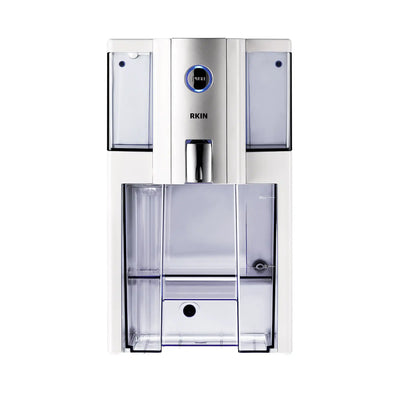
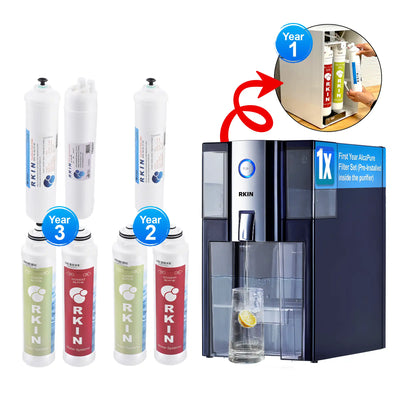
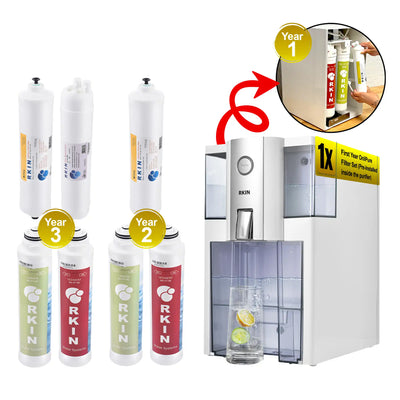
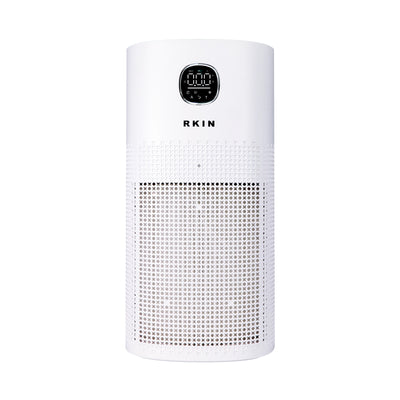
For renters, condo owners, or anyone who only wants to protect the kitchen, the RKIN Zero Installation Purifier is a countertop reverse osmosis system that plugs into a standard outlet — no plumbing, no installation. Use it to fill ice trays directly and you get crystal-clear cubes with zero scale risk to the fridge.
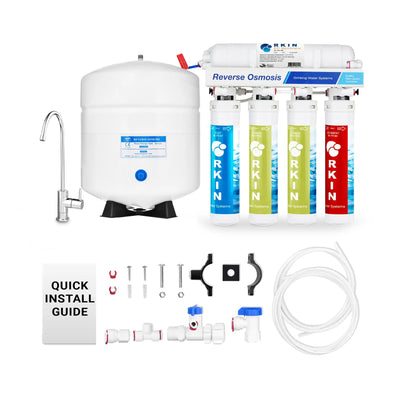
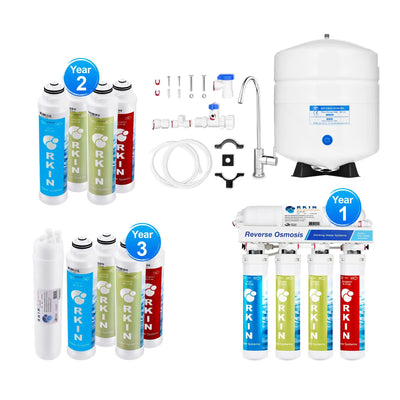
For homeowners who want under-sink RO with a direct fridge feed, the RKIN Flash Undersink RO System includes a fridge line kit and produces water at high flow without the wait of older tank-style systems.
Frequently Asked Questions
How much does hard water really shorten ice maker life?
A 2023 American Society of Home Inspectors report found that refrigerator ice makers in homes with water above 10 grains per gallon hardness fail an average of 4 years sooner than those in homes with softened water. Repair frequency is also 3 to 4 times higher. The damage is cumulative and isn't reversible once components start failing.
Can I just use distilled water to make ice manually?
You can, and it'll produce clear cubes, but it doesn't solve the problem with the built-in ice maker. The fridge is still plumbed to the house water line and the inlet valve, fill tube, and mold are still being attacked. Distilled water in trays is a workaround, not a fix.
Will a whole-house water softener void my fridge warranty?
The opposite. Most refrigerator manufacturers — including Whirlpool, GE, Samsung, and LG — recommend softened or conditioned water in their installation guides. Service techs are more likely to void warranty coverage when they find visible scale damage on untreated water.
How do I know if my water is hard?
Three quick checks: look for white scale on faucets and shower heads (hard water), spotting on glasses after dishwashing (hard water), or cloudy ice cubes (hard water). For a precise reading, $10 test strips from a hardware store will give grains-per-gallon hardness in a few seconds.
Do reverse osmosis systems waste a lot of water?
Older RO systems wasted 3 to 4 gallons of brine for every gallon of purified water. Modern systems — including RKIN's — operate at a 1:1 or better ratio. A typical four-person household running RO for drinking and ice uses an extra 5 to 10 gallons per day, less than one toilet flush.
Can I install a whole-house system myself?
Whole-house water treatment installs at the main water line where it enters the home. A handy homeowner with basic plumbing skills can do it in a few hours with PEX or copper fittings. Most people hire a licensed plumber for $300 to $600, which pays for itself the first time you avoid an ice maker replacement.
Stop Buying Replacement Parts
The cycle of ice maker repairs ends when the water stops attacking it. Treat the water once, and the same fix protects your dishwasher, water heater, washing machine, and faucets at the same time.
The RKIN OnliSoft Pro Salt-Free + Carbon Combo handles the whole house with no salt and no maintenance schedule. For kitchen-only protection, the RKIN Zero Installation Purifier ships free and plugs in like a coffee maker. Either way, the part that keeps breaking finally stops breaking.





0 comments