


iron in tap water
Why Does Tap Water Taste Like Metal? Causes and Fixes

A metallic taste in tap water is your house telling you to slow down and check the clues. It might be iron from a private well. It might be copper from corrosion. It might be stagnant water after a long weekend away. It might be a city-water change that will clear after flushing.
The one mistake is guessing from taste alone. The EPA's 2026 lead in drinking water guidance is blunt on one point: lead in drinking water cannot be reliably seen, tasted, or smelled. So if the question is "why does my tap water taste like metal?" the answer starts with pattern-matching, then testing when the clues point beyond a simple taste issue.
Start With the Pattern, Not the Panic
Metallic taste has several common causes. The right next step depends on when it happens, which fixture has it, and what else you see.
Ask five quick questions:
- Is the taste only in the first glass after water has been sitting?
- Is it only hot water, only cold water, or both?
- Is it only one faucet or every tap in the house?
- Do you see orange, brown, black, blue, or green staining?
- Are you on city water or a private well?
Those answers matter more than the word "metallic." Iron and manganese often show up with stains. Copper corrosion may leave blue-green marks. Stagnant water is often worse first thing in the morning or after vacation. Lead concerns are tied more to plumbing age and test results than taste.
The honest move is to narrow the source before buying anything. In my house, I would rather run a simple test and choose the right fix than install the wrong filter because one glass tasted strange.
Iron: Metallic Taste With Orange or Brown Stains
If the water tastes metallic and you also see orange, rust-colored, or brown stains, iron is a likely suspect. This is especially common on private wells, but it can show up in city water after main work, hydrant flushing, or pipe disturbance.
The EPA Secondary Drinking Water Standards page, updated in 2026, lists iron as a nuisance contaminant with a secondary standard of 0.3 mg/L. Secondary standards are not federal health limits. They are guidance for taste, odor, color, staining, and other household effects.
Iron can make water taste like pennies, leave orange marks in toilets, stain laundry, and darken coffee or tea. If it is coming from a private well, the fix usually starts with a water test that measures iron level, pH, hardness, manganese, sulfur, and related well-water conditions.
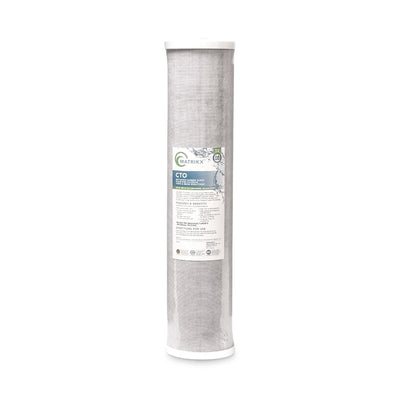
A small cartridge at the kitchen sink may improve drinking water taste at one tap, but it will not stop iron from staining toilets, showers, laundry, and fixtures throughout the house. When iron is a whole-house problem, treatment usually belongs at the main water line.
Manganese: Metallic Taste With Black Specks or Dark Stains
Black specks, black rings, or dark staining can point toward manganese. Manganese often travels with iron in well water, and the two can create a mix of orange, brown, gray, and black deposits.
Penn State Extension's iron and manganese in private water systems guidance explains that these metals can cause staining, discoloration, and taste issues in household water. The key word is household. If every fixture shows the same pattern, do not treat only one glass of water.
Manganese can also fool homeowners because the water may look clear at first and darken after contact with air or after it sits. That is why photos help. Take a picture of the stain, note where it appears, and test the water before choosing treatment.
For private wells, include bacteria, nitrate, hardness, pH, iron, manganese, and sulfur-related markers in the broader test plan. A metallic taste is one clue. The lab report is the map.
Copper or Corrosion: Bitter-Metallic Taste and Blue-Green Stains
If the taste is bitter-metallic and you see blue-green staining around drains or fixtures, copper corrosion may be part of the story. Copper plumbing can be affected by low pH, water chemistry, high dissolved solids, or long stagnation time in pipes.
Penn State Extension's common drinking water problems guide connects blue-green staining and bitter taste with copper corrosion. Again, the fix is not to guess. Test pH, copper, alkalinity, hardness, and related water chemistry so you know whether the issue is corrosion, source water, or a fixture-specific problem.
Corrosion issues can be expensive if ignored because the same water that tastes metallic is also moving through faucets, valves, water heaters, and appliances. A filter at the sink may help the drinking-water experience, but it does not correct corrosive water in the pipes before that tap.
If the metallic taste is only at one faucet, inspect that fixture, aerator, and supply line first. If every tap has the same taste, think source water or whole-house plumbing chemistry.
Lead: Do Not Use Taste as the Test
Lead deserves its own section because it is the place where taste-based guessing can mislead you. Lead does not announce itself with a reliable metallic flavor. A home can have no taste issue and still need testing, or it can taste metallic because of iron or copper while lead is not the driver.
The EPA says lead can enter water from lead service lines, lead solder, and some older fixtures. Homes built before 1986 deserve extra attention because older plumbing materials are more likely to be involved. The EPA's Protect Your Tap quick check helps homeowners look for possible lead service lines and decide what to ask their utility.
Use cold water for drinking and cooking. If water has been sitting in pipes for hours, flushing the tap can reduce water age before use. Clean aerators because particles can collect there. But do not treat flushing as proof. If lead is a concern, use a certified lab test and choose treatment based on results.
Stagnant Water: Metallic Taste After Vacation or Overnight
If the metallic taste is strongest first thing in the morning or after several days away, water age may be the issue. Water sitting in pipes has more time to pick up taste from plumbing materials. This is common after vacation, in guest bathrooms, at rarely used sinks, or in houses with long plumbing runs.
EPA guidance on water quality in buildings with low or no use focuses on larger buildings, but the home version is simple: flush stagnant water before drinking, especially at taps that have not been used.
Run cold water until it is noticeably colder. Flush rarely used fixtures. Clean faucet aerators. If the taste clears and does not return during normal use, stagnation may have been the main issue. If it returns every day or appears at every faucet, keep investigating.
What Does Not Work
Do not boil metallic-tasting water as a catch-all fix. Boiling can help during certain biological advisories when officials tell you to boil, but it does not remove metals. In some cases, boiling can concentrate dissolved material as water evaporates.
Do not rely on taste strips alone for a full answer. Basic strips can be useful for pH, hardness, or chlorine screening, but metals need better testing when the decision matters. A lab report gives you numbers, not guesses.
Do not buy the biggest system first. If the issue is one faucet, start at the fixture. If it is every tap, test at the source. If it is only drinking water, a point-of-use system may be enough. If staining and appliance issues are whole-house, point-of-entry treatment may make more sense.
Which Filter Makes Sense for Metallic Tap Water?
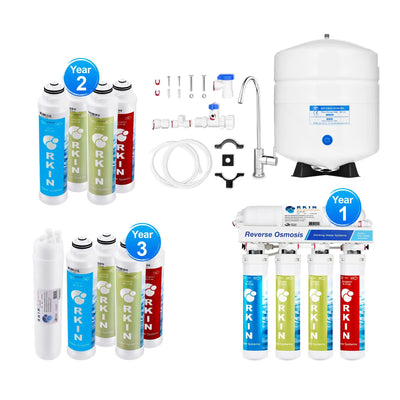
Start with the contaminant and the use case. For drinking and cooking water, reverse osmosis is often the right point-of-use technology because it filters the water at the tap you use most. For whole-house staining from iron or manganese, a well-water system at the main line usually makes more sense than a sink filter.
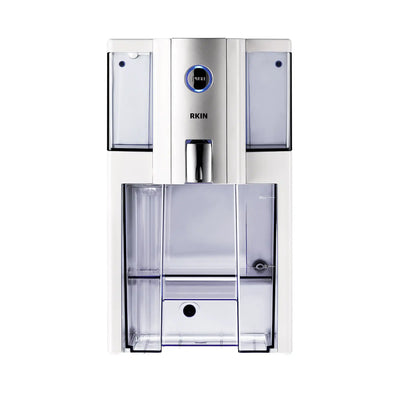
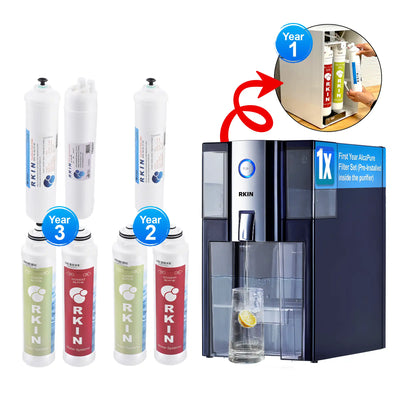
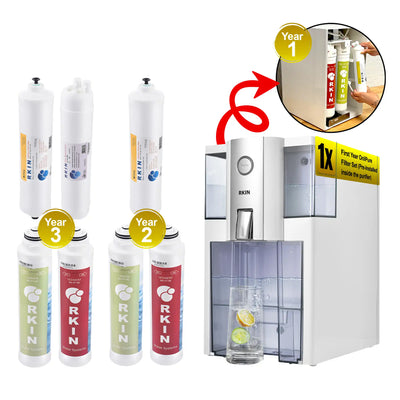
If your priority is drinking water from the kitchen and you want no plumbing project, the Zero Installation Purifier is a countertop reverse osmosis system built for everyday drinking and cooking water. It is a good fit when you want a controlled indoor drinking-water source without modifying the sink cabinet.
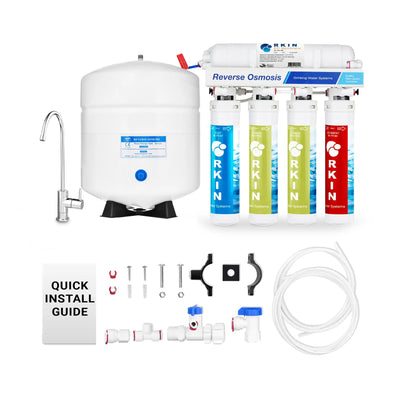
The RKIN U1 4-in-1 Water Filter System is another countertop option with a fill tank and five-stage process. It is useful for renters, small kitchens, and homes where installation is not the path you want.
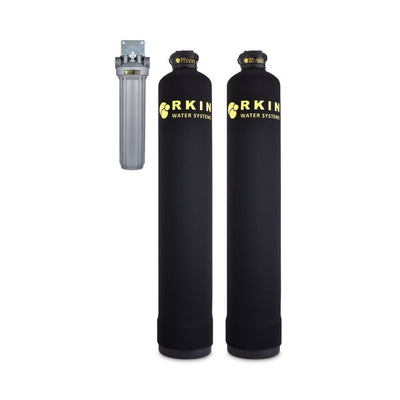
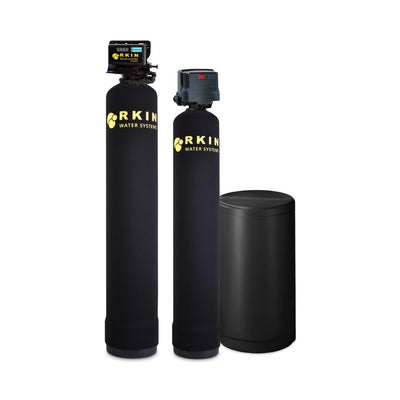
If lab results point to iron, sulfur, or manganese in a private well and the problem affects the whole house, the RKIN Well Water Whole House Filter may be the more relevant direction. That is a different problem than one metallic-tasting glass at the kitchen sink, and the solution should match that difference.
When to Test Instead of Guessing
Test when the metallic taste is new, persistent, whole-house, or paired with staining. Test if the home has older plumbing, a private well, blue-green stains, orange or black deposits, or a known lead-service-line question. Test after flooding, well work, nearby construction, or a sudden city-water notice.
For city water, start by checking your utility's water quality report and any current service alerts. For well water, schedule a lab test that includes the likely metals plus pH and hardness. If the taste only appears at one faucet, compare first-draw and flushed samples from that fixture and from another tap.
The goal is not to make water complicated. The goal is to stop guessing. A metallic taste gives you a clue. The test tells you what to fix.
Frequently Asked Questions
Why does my tap water taste like metal?
Metallic tap water can come from iron, manganese, copper corrosion, low pH, stagnant water, older fixtures, or source-water changes. The pattern matters. Look for stains, note whether one tap or every tap is affected, and test if the taste persists.
Does metallic taste mean there is lead in my water?
No. Lead cannot be reliably identified by taste, smell, or appearance. Metallic taste may come from other metals or plumbing conditions. If lead is a concern because of home age, service line material, or test history, use a certified lab test.
Why does my water taste metallic only in the morning?
Water can pick up taste after sitting in pipes overnight. Run cold water until it becomes colder, clean the aerator, and compare the first glass with water after flushing. If the taste returns every day, test the water instead of guessing.
Can a reverse osmosis system help with metallic-tasting water?
Reverse osmosis can be a good point-of-use option for drinking and cooking water when the concern is at the kitchen tap. It should be chosen based on water test results and product claims, not taste alone. Whole-house staining may need whole-house treatment.
What if metallic taste comes from well water?
Test the well for iron, manganese, pH, hardness, sulfur markers, bacteria, nitrate, and any local concerns. Well-water treatment should match the lab report. Iron and manganese problems that affect every fixture usually need treatment at the main water line.
Should I drink water that tastes metallic?
If the taste is sudden, strong, persistent, or paired with staining or a utility notice, use another drinking-water source until you check the cause. If lead, copper, or well contamination is possible, testing is the right next step.
Ready to Stop Guessing at the Tap?
Metallic taste is a clue, not a diagnosis. Start with the pattern, check the source, and use testing when the answer affects what system you buy.
If you want a controlled drinking-water tap without plumbing changes, start with the Zero Installation Purifier. If your lab report points to a whole-house well issue, compare RKIN's whole-house well-water options before choosing a fix.





0 comments