








black specks one faucet
Black Specks at One Faucet: Aerator, Washer, or Carbon?

Black specks at one faucet call for a local inspection before a whole-home filter. The aerator can trap pipe debris, a degrading rubber washer or hose can shed dark fragments, and a newly changed carbon cartridge can release fine particles if it was not flushed as directed.
This guide starts with location and texture. Compare cold taps, remove and inspect the aerator, note whether specks smear or feel gritty, and trace any filter or flexible connector serving only the affected fixture.
Use Location and Texture to Narrow the Cause
Start by looking at where the specks appear. If they show up only at one faucet, the cause may be local to that fixture, aerator, supply line, or faucet cartridge. If they show up throughout the house, the issue may be coming from the water source, a whole-home filter, a softener, the water heater, or the main plumbing line.
The EPA lists manganese and iron under its secondary drinking water standards because they can affect color, taste, odor, and staining. Manganese can create dark brown or black staining. Iron can create orange, red, brown, or metallic-looking sediment. Both are common in private-well conversations, but city-water homes can still see particles after main work, hydrant flushing, or disturbed plumbing scale.
Black specks can also be rubber. Older faucet washers, flexible supply lines, water heater parts, or appliance hoses can break down and release small dark bits. Those particles often smear when rubbed on a white paper towel. Mineral particles usually feel gritty instead.
A newer carbon filter can release fine black carbon dust if it was not flushed enough after installation. That should usually fade after flushing. If it continues for days, appears from every tap, or comes with pressure changes, it needs a closer look.
Compare Cold, Hot, and Nearby Fixtures
Use a clean white cup or clear jar and collect water from three places: the problem faucet, another cold-water faucet, and an outdoor hose bib or utility sink if you have one. Let each sample sit for 15 minutes.
Remove and rinse the faucet aerator too. Aerators catch grit, pipe scale, and washer fragments before you see them in the glass. If the aerator is full of dark debris but another faucet looks clean, the issue may be local to that fixture or supply line. If several aerators are collecting the same dark particles, widen the search to the incoming water, water heater, filter housing, softener, or well equipment.
If the particles sink quickly and feel gritty, sediment or mineral particles are more likely. If they float, smear, or feel soft, rubber or carbon fines may be more likely. If the problem only happens with hot water, check the water heater path. If it happens only after a filter cartridge change, review the filter flushing instructions and inspect the cartridge and housing.
Private-well homes should treat repeated black specks as a testing trigger. The CDC’s private well testing guidance recommends annual testing for total coliform bacteria, nitrate, total dissolved solids, and pH, with extra testing when conditions change. If you see new sediment, color, odor, flooding, nearby construction, or a change in taste, update the water test before choosing equipment.
Municipal-water homes should check the utility’s alerts, recent hydrant flushing schedule, and Consumer Confidence Report. If the particles started after water main work, ask the utility whether customers should flush cold water lines. If the problem stays after flushing, test at the tap.
Why a Generic New Filter May Miss the Source
Do not assume boiling water solves it. Boiling does not remove grit, rubber, iron, manganese, carbon fines, or dissolved metals. It can be useful only in specific advisory situations, and even then, it does not replace flushing, testing, or filtration.
Do not rely on a pitcher filter to protect the whole home. A small pitcher may improve drinking-water taste at one point, but it will not stop sediment from reaching showers, washing machines, toilet valves, ice makers, or water heaters.
Do not keep swapping random cartridges. If black particles are coming from a degrading hose or water heater part, a drinking-water filter will not fix the source. If they are coming from a well, a cartridge may clog quickly unless the system is sized for the water. If they are carbon fines from a new filter, the fix may be proper flushing or replacing a defective cartridge, not adding another stage.
Match the Repair or Treatment to the Finding
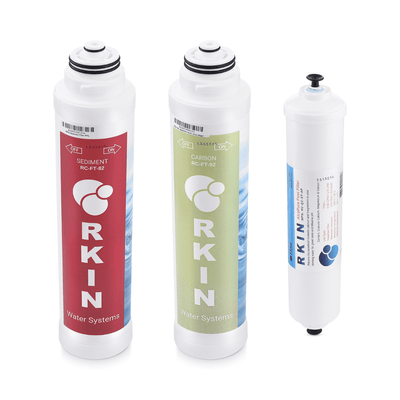
For visible grit, sand, rust, or disturbed sediment, the first layer is usually sediment filtration. A sediment filter catches particles before they move deeper into the plumbing. The micron rating, housing size, and maintenance schedule should match the water flow and sediment load.
For taste, odor, chlorine, and some chemical concerns, carbon can play a useful role. Carbon is not a catch-all for every black particle or every dissolved contaminant, but it can be part of a layered setup when the water test supports it.
For drinking water at a kitchen tap, reverse osmosis can be a strong point-of-use choice when the issue includes dissolved solids or certain metals. The CDC’s filter selection guidance recommends matching the filter type and certification to the contaminant you want to reduce. That matters because “water filter” can mean a small carbon cartridge, a sediment filter, RO, UV, or a whole-home media system.
For well water with repeated black or brown staining, iron, manganese, or sulfur notes, whole-home treatment may be the right conversation. A proper well-water setup starts with a lab report, flow rate, pressure, and the source of the particles. Without that information, the system may clog, underperform, or treat the wrong problem.
Maintenance history matters here. A cartridge that is overdue can release trapped debris when flow changes. A filter housing that was opened recently may need flushing. A softener or treatment tank that is not cycling correctly can send particles downstream. Before buying new equipment, confirm what is already installed, when each cartridge or media bed was last serviced, and whether the problem started before or after that work.
Where RKIN Fits After the Cause Is Known
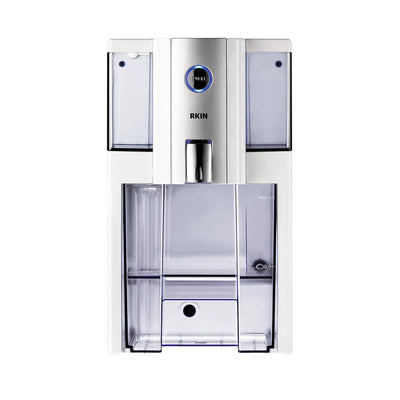
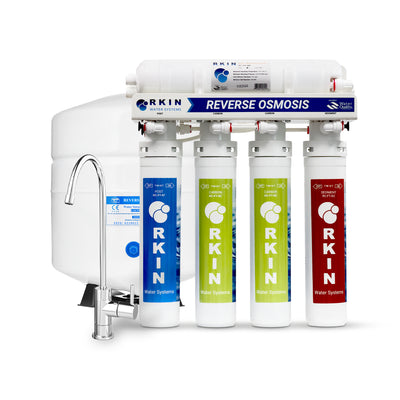
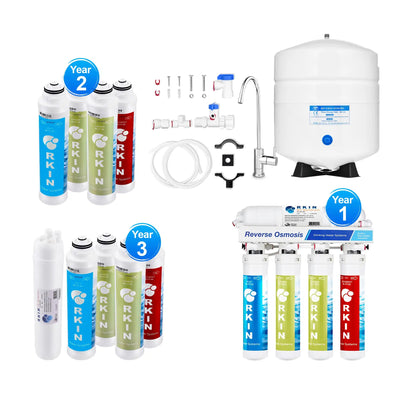
If black specks are showing up only in drinking water and your test points toward a point-of-use solution, compare countertop and under-sink RO options. The RKIN Zero Installation Purifier Countertop Reverse Osmosis Water Filter is designed for homes that want RO drinking water without drilling or under-sink installation.
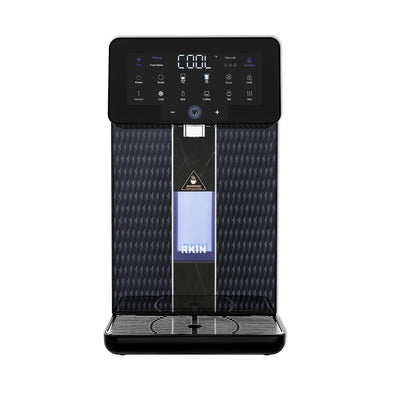
For a compact countertop setup, review the RKIN U1 4-in-1 Water Filter System. For a dedicated under-sink drinking-water setup, compare the RKIN Flash Undersink RO System.
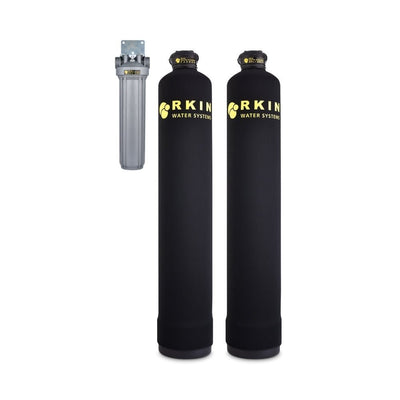
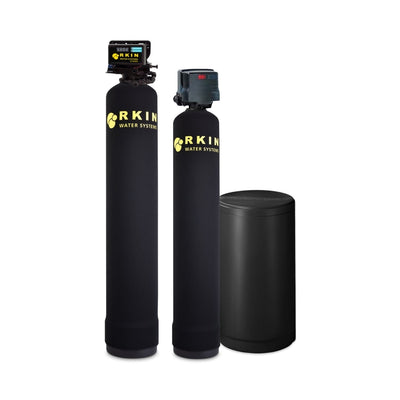
If particles are appearing at multiple fixtures, start with the RKIN whole house water treatment collection and build from the water test. Whole-home systems are not chosen by symptom alone. They should match the water source, flow rate, plumbing layout, sediment load, and the contaminant profile.
Run a One-Faucet Isolation Check
Collect cold water in a clean white bowl with the aerator installed, then follow the faucet manufacturer's instructions to remove and inspect the aerator. Repeat the sample without damaging the fixture.
Check another cold faucet before moving upstream. Specks at one outlet suggest a local component; specks across the home justify checking the service line, water heater where relevant, well equipment, or utility notices.
- Photograph the particles against a white background.
- Compare cold and hot water separately.
- Inspect the aerator screen, gasket, flexible hose, and shutoff connection.
- Check the date and flushing instructions for any local carbon filter.
- Stop using the outlet and seek help if material is oily, sewage-like, sharp, or accompanied by a safety notice.
Do not taste unknown particles or diagnose them by appearance alone. If the source remains uncertain, save a sample and contact the utility, plumber, filter manufacturer, or qualified laboratory as appropriate.
Document the Part You Replace
If a washer, hose, aerator, or cartridge is replaced, photograph the old part and note its model and date. Flush the repaired outlet according to the manufacturer's instructions, then repeat the white-bowl comparison. If the particles return, the record will help a plumber or manufacturer continue the diagnosis without starting over.
Frequently Asked Questions
Why are black specks coming from only one faucet?
A local aerator, rubber washer, flexible hose, valve component, or point-of-use carbon filter may be shedding or trapping material.
How can I tell carbon fines from rubber?
Carbon fines are often very small and may follow a filter change, while deteriorated rubber may smear or appear as irregular fragments. Appearance alone is not definitive.
Should I remove the faucet aerator?
You can inspect it if the faucet manufacturer permits and you can do so without damage. Keep parts in order and reinstall them correctly.
What if black specks appear at every faucet?
Investigate a broader source such as building plumbing, a water heater, well equipment, or the utility supply rather than one aerator.
Will a whole-home sediment filter fix black specks?
Only if the particles are confirmed sediment entering upstream. It will not repair a degrading local washer, hose, or carbon cartridge.
Fix the Source Before Selecting Treatment
After the material and location are identified, RKIN can help compare point-of-use or whole-home options for the verified need. A treatment system should follow the diagnosis, not replace it.






0 comments