


does reverse osmosis remove nitrates
Does Reverse Osmosis Remove Nitrates from Well Water?

If your private well test comes back with nitrate or nitrite, a regular taste-and-odor filter is not the answer. Nitrate is colorless, odorless, and tasteless, so a glass can look fine while the lab result says the water needs attention.
That is why “does reverse osmosis remove nitrates?” is such a practical search. The short answer: a properly selected reverse osmosis system may reduce nitrate at the drinking water tap, but you need a real water test, the right reduction claim, and a plan for the rest of the home if levels are high or changing.
Why nitrate shows up in well water
Nitrate is a form of nitrogen that can enter groundwater from fertilizer, septic systems, animal waste, storm runoff, and natural soil conditions. It is more common in agricultural areas, but it can appear in suburban and rural wells too, especially when wells are shallow, poorly sealed, close to septic systems, or affected by heavy rain patterns.
The EPA notes that millions of Americans use private wells, and those wells are not regulated under the federal Safe Drinking Water Act in the same way as public water systems. EPA’s private wells guidance puts routine testing responsibility on the well owner.
The CDC also tells private well owners to test at least once a year for bacteria, nitrate, total dissolved solids, and pH, and to test more often when a well is new, repaired, flooded, or close to a known source of contamination. That guidance is one reason nitrate questions rise after stormy seasons, spring fertilizer use, and fall property checks.
What nitrate testing tells you
A nitrate result should come from a certified lab or a water testing program your local health department recommends. Test strips can be a rough screen, but they are not a substitute for a lab report when you are choosing treatment.
The EPA maximum contaminant level for nitrate in public drinking water is 10 milligrams per liter as nitrogen. Nitrite has a separate limit of 1 milligram per liter as nitrogen. Private well owners can use those public-water benchmarks as a reference point, but local guidance matters too because wells can change after rain, drought, nearby land use, or septic repairs.
A good nitrate test plan answers four questions:
- What was the nitrate result, and was it reported as nitrogen or as nitrate?
- Was nitrite measured too?
- Was the sample taken before any treatment equipment?
- Is the result stable over repeat tests, or does it change with season and rainfall?
Do not buy treatment based only on taste. Nitrate has no reliable taste warning.
Does reverse osmosis remove nitrates?
Reverse osmosis is one of the common technologies used for nitrate reduction at a drinking water tap. The CDC’s home water treatment guide lists reverse osmosis as a treatment method that may reduce several inorganic contaminants, and NSF/ANSI 58 includes optional reduction claims for nitrate and nitrite on point-of-use RO systems.
The phrase “optional claim” is the part to remember. You should not assume every RO unit is tested or certified for nitrate reduction. Ask for the product’s performance data sheet and look for nitrate/nitrite reduction if that is the reason you are buying the system.
For many households, point-of-use RO is used at the kitchen sink or countertop because nitrate is mainly a drinking and cooking water concern. Whole-house nitrate treatment is a bigger design question. It may involve different media, brine handling, flow sizing, maintenance, and local rules. If the lab result is high, variable, or paired with bacteria concerns, start with a qualified water professional and your local health department before choosing equipment.
Why carbon filters and softeners are not the same answer
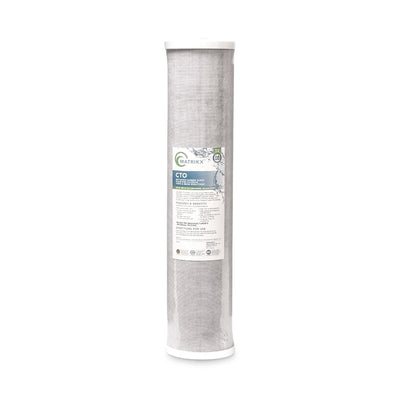
Carbon filters are excellent for many taste, odor, chlorine, chloramine, and some organic compound concerns when they are designed and maintained correctly. But carbon is not the default answer for nitrate.
Water softeners also solve a different problem. A softener is built to exchange hardness minerals such as calcium and magnesium. It is not a drinking water nitrate treatment system. A salt-free conditioner addresses scale behavior differently from a softener, but it is still not a nitrate filter.
That distinction matters because homeowners often see “whole house filter” and assume one tank solves everything. Water treatment does not work that way. Iron, hardness, sediment, chlorine, PFAS, arsenic, nitrate, and bacteria can require different treatment paths. The water test should lead the system design, not the other way around.
Point-of-use RO versus whole-house treatment
If nitrate appears only as a drinking water concern and other well results are manageable, point-of-use RO may be the simplest place to start. It treats the water you drink, cook with, and use for coffee or ice.
If nitrate levels are high, changing, or tied to a source issue such as septic placement, agricultural runoff, or a damaged well cap, treatment is only part of the plan. You may also need well inspection, source correction, repeat testing, and professional design. A filter at the kitchen tap does not repair a failing well seal or septic setback problem.
Use this simple split:
- For drinking and cooking water: compare point-of-use RO systems with nitrate/nitrite reduction claims.
- For the whole home: ask a water professional to size treatment from a full lab report.
- For sudden changes: retest, inspect the well, and check local health guidance before treating the result as stable.
If bacteria are also present, follow local boil or disinfection guidance. Do not use nitrate equipment as a substitute for microbiological safety steps.
Where RKIN fits into the nitrate conversation
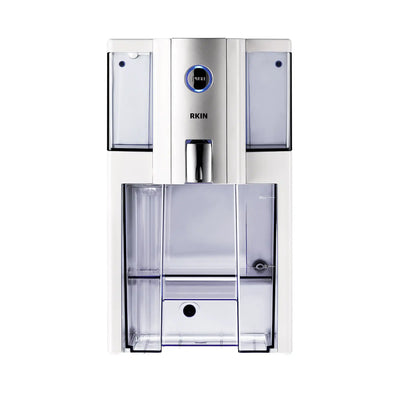
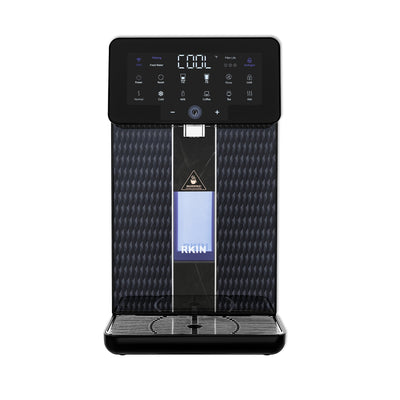
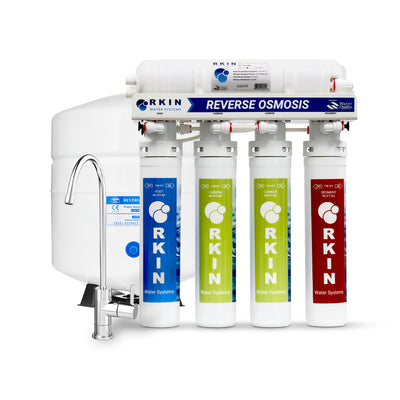
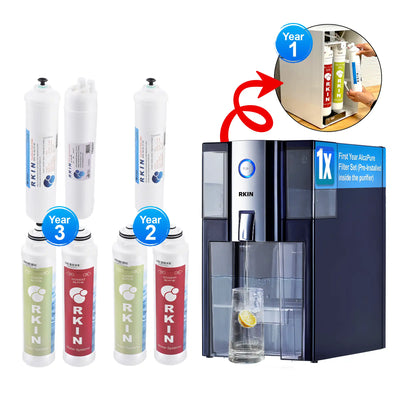
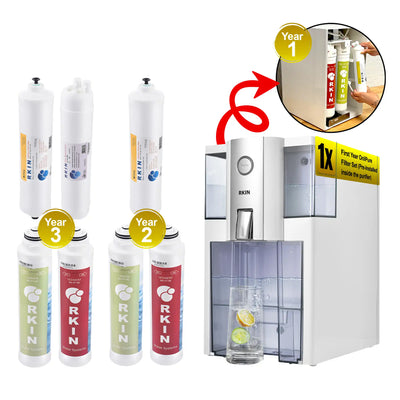
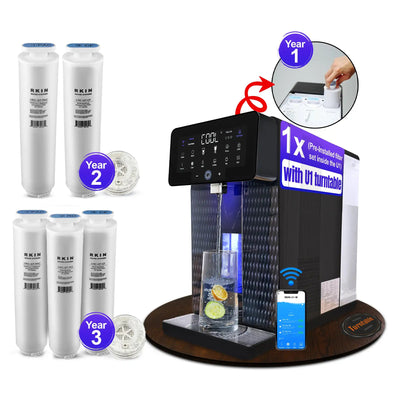
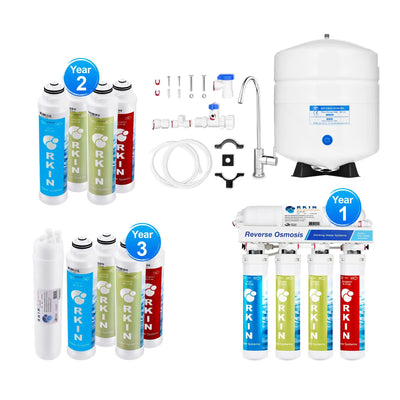
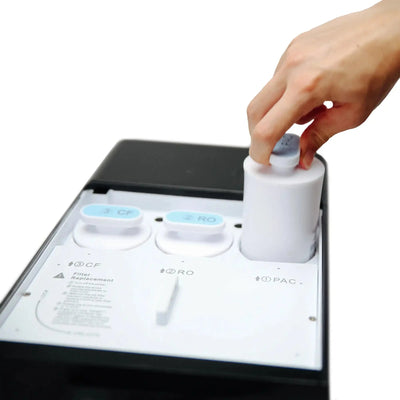
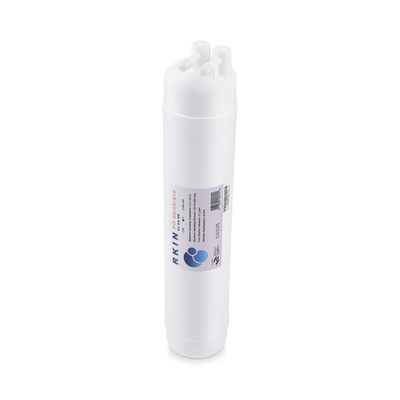
RKIN offers reverse osmosis systems for point-of-use drinking water needs, including the RKIN Zero Installation Purifier, the RKIN U1 4-in-1 Water Filter System, and the RKIN Flash Undersink RO System.
The right starting point depends on your installation needs. The RKIN Zero Installation Purifier is a countertop reverse osmosis option for homes where permanent plumbing changes are not ideal. The RKIN U1 4-in-1 Water Filter System is a compact countertop system with a fill-tank design. The RKIN Flash Undersink RO System is an under-sink option for homeowners who want a dedicated installed setup.
For nitrate specifically, match your lab result to the product’s current performance data and talk with RKIN or a qualified water professional before deciding. That protects you from buying a general filter when the water test calls for a specific reduction claim.
What to do after a nitrate result
First, confirm the result. If the number is unexpected, retest with a lab and take the sample before any treatment equipment. If your well was recently flooded, repaired, or opened, follow local sampling instructions.
Second, check the well site. Look for a loose cap, visible cracks, surface water pooling near the casing, nearby fertilizer use, animal waste, or septic issues. Treatment can reduce what reaches the tap, but source control can matter just as much.
Third, choose the treatment location. Most nitrate drinking water decisions start at the kitchen because point-of-use RO is easier to install and maintain than whole-house treatment. If your lab report shows several issues at once, do not guess. Use the full report.
Fourth, schedule repeat testing. A single nitrate result tells you what was in the sample on that day. Wells can vary by season. A maintenance calendar is better than waiting until water tastes different, because nitrate usually will not announce itself.
Frequently Asked Questions
Does boiling water remove nitrates?
No. Boiling is not a nitrate-removal method and can concentrate dissolved substances as water evaporates. Follow local advisories during emergencies, but use tested treatment for nitrate reduction.
What kind of filter removes nitrate from well water?
Common options include point-of-use reverse osmosis systems with nitrate/nitrite reduction claims and other professionally sized treatment methods. The right choice depends on the lab result, flow needs, and whether you are treating drinking water only or the whole home.
How often should private well owners test for nitrate?
CDC guidance says private well owners should test at least once a year for bacteria, nitrate, total dissolved solids, and pH, and test more often after flooding, repair, or nearby contamination concerns.
Is nitrate visible in water?
No. Nitrate is colorless, odorless, and tasteless. Clear water can still have a nitrate result that needs attention. Use lab testing instead of taste, smell, or appearance.
Can a water softener remove nitrate?
A standard water softener is not a nitrate treatment system. Softeners are used for hardness minerals. If nitrate is the concern, look for treatment designed and tested for nitrate reduction.
Should I treat the whole house for nitrate?
Sometimes, but it is not always the first step. Many homes start with drinking water treatment at the point of use. Whole-house nitrate treatment needs careful sizing, maintenance planning, and a full lab report.
Ready to Match Your Well Test to the Right System?
If nitrate showed up on your well report, start with the result, not a generic filter claim. Confirm the number, check whether it is nitrate or nitrate as nitrogen, and compare systems by the exact reduction data.
Review the RKIN Zero Installation Purifier if you want a countertop reverse osmosis option, or contact RKIN with your water test so the recommendation starts from the water you actually have.






0 comments