


drinking-water
Reverse Osmosis Slow in Winter? Cold Water Checks First

Reverse osmosis slow in winter? Cold feedwater can increase refill time without proving that the membrane has failed. The Water Quality Association's RO performance and sizing guide, reviewed on 10/20/2026, describes typical membrane rating conditions of 77°F and 60 psi. Colder water and different pressure mean your kitchen may not match those test conditions.
That matters when morning coffee, cooking, and visiting family empty the storage tank faster than usual. Before ordering parts, separate three questions: Is the faucet dispensing slowly, is the tank refilling slowly, or is the system failing to produce water? Those are different problems, and a few observations make the next step clearer.
Why Cold Feedwater Changes RO Refill Time
Reverse osmosis uses pressure to move water through a membrane. Some water passes through as treated water; the remaining stream carries rejected dissolved material to the drain. The membrane's production rate depends on operating conditions, not just the number printed on its label.
WQA identifies feedwater temperature, pressure, dissolved-solids concentration, and storage-tank back pressure among the factors affecting performance. Colder water has higher viscosity, which means it takes more pressure to push through the membrane. With other conditions unchanged, production slows.
A daily production rating is therefore a reference point, not a promise that every home will collect that amount on every winter day. Use the correction information for the actual membrane rather than copying a percentage from an unrelated system. A whole-house commercial membrane example does not predict your kitchen unit's refill time.
Storage creates another distinction. The water coming out of a tank-fed RO faucet is not necessarily being made at that moment. A full tank can deliver a useful stream even while the membrane produces water relatively slowly. After several large draws, the reserve is smaller and the refill rate becomes more noticeable.
Consider when the change began. A gradual slowdown as the incoming water cooled points toward a seasonal influence. A sudden loss of flow immediately after cartridge service, a new leak, or a tank that never refills calls for troubleshooting rather than a weather explanation.
Also separate performance from water quality. A longer refill time alone does not prove the water is unsuitable, and a normal-looking stream does not prove that a particular contaminant is being reduced. If you rely on treatment for a specific measured water problem, verify that result through appropriate testing and the system's documented performance claims.
What Does Not Fix a Winter Slowdown
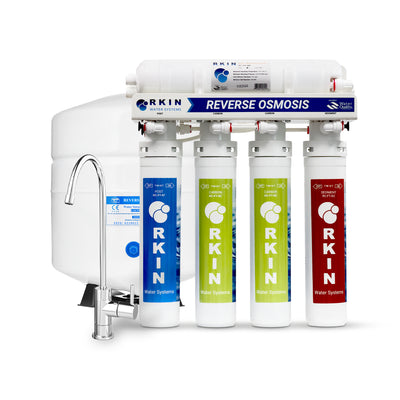
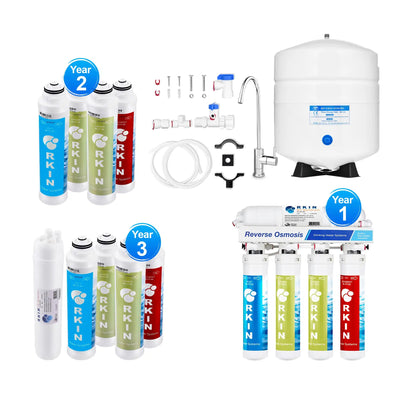
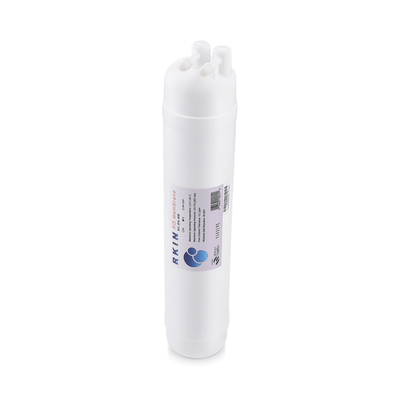
Connect the RKIN Flash Undersink RO System to the cold-water line and follow its installation instructions. Do not switch an RO system to a hot-water supply to increase production.
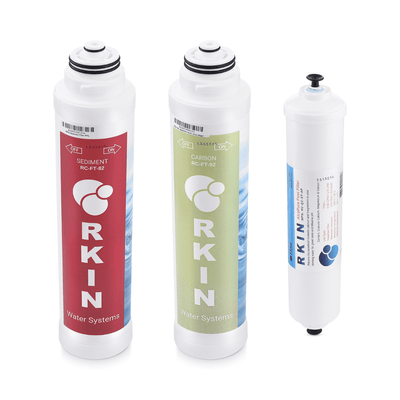
Replacing every cartridge at once is not a diagnosis either. Required maintenance still matters, but a seasonal temperature change is not, by itself, evidence that a membrane needs replacement. Check the maintenance history and the manufacturer's troubleshooting procedure together.
A higher-capacity membrane is not automatically a drop-in fix. Membrane selection interacts with the flow restrictor, pressure, storage, and other components. Changing one part without checking compatibility can change how the whole system operates. Have the manufacturer approve changes rather than building around a headline production number.
Finally, do not raise a pressure regulator or adjust the tank's air charge by guesswork. WQA explains that tank back pressure affects both storage and production. A setting copied from a forum may not be right for your tank. Use the model's procedure, or have a qualified technician measure and adjust it.
A Practical Cold-Weather RO Checklist
Start with observations that do not require opening housings or disconnecting tubing. If it's okay, gather these details before calling for service. The reason we're asking is simple: they help distinguish slower production from a restriction or storage problem.
Record the temperature and the timing
Measure cold tap-water temperature with a suitable thermometer after it stabilizes. Note the date, approximate time, and whether the water came from the same supply that feeds the RO system. A room thermostat reading does not tell you the incoming water temperature.
Then describe the actual symptom. Does a full tank dispense normally at first? Does the stream weaken after a large draw? How long does the system take to recover under the manual's normal operating procedure? Repeat observations under similar conditions instead of comparing a quiet weekday with a holiday meal.
Check the simple visible conditions
Look for tubing that has been pinched by stored items and for moisture around accessible connections. Confirm that the system's normal supply and tank valves are in their intended operating positions, using the manual. Avoid forcing a valve or moving a connection that you cannot identify.
Note whether other cold-water fixtures are also weak. That can point toward a broader supply issue, although a normal kitchen faucet does not rule out a pressure problem at the RO inlet. A technician can measure feed pressure while water is flowing and compare it with the system's requirements.
Match capacity to the way you use water
WQA recommends matching storage and membrane production to household usage patterns. Several people drawing water together create a different demand than the same volume spread throughout a day. Record those busy periods before deciding the system is undersized.
Use the product's performance data and any applicable certification listing to evaluate its stated treatment claims. Those documents answer a different question from winter refill speed. A certification mark is not a guarantee of a particular refill time in your home.
If there is a leak, suspected freezing, no production, or an unexplained persistent change, stop routine troubleshooting and contact the manufacturer. Treat a confirmed equipment fault as a fault, even when the weather is cold.
Where the RKIN Flash Undersink RO System Fits
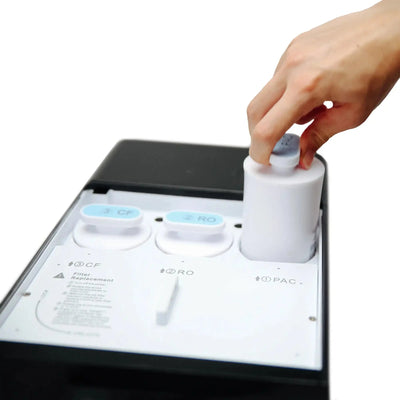
This is the kind of kitchen application the RKIN Flash Undersink RO System is designed for: drinking-water treatment under the sink, with a dedicated faucet and storage tank. Its live product page lists a 3.2-gallon tank and pump-less operation using household water pressure. It does not require electricity to run the filtration process.
That design makes both supply conditions and storage relevant to winter planning. The tank's nominal size is not a promise that the same volume is available at every pressure. Ask about expected usable storage and refill performance for your installation. Follow the RKIN Flash Undersink RO System's installation instructions and confirm its approved feedwater temperature limits before use. Keep the system in a suitable indoor location and follow both the manual and current product instructions.
We would begin with temperature, pressure, and a description of your busiest water-use period before recommending equipment changes. A replacement system should fit a verified need, not just an assumption that every slower winter refill means the existing membrane has failed.
Frequently Asked Questions
Does cold water make reverse osmosis slower?
Yes. WQA explains that colder feedwater has higher viscosity and slows membrane production when other conditions remain the same. The size of the change depends on the membrane and operating conditions. Use the manufacturer's temperature correction information, not a universal percentage. Also check pressure and maintenance history before attributing the entire change to winter.
Why does my RO faucet start strong and then slow down?
In a tank-fed system, the initial stream comes from stored water. As that reserve is drawn down, tank pressure and the amount of available water change. The faucet may then deliver less water while the membrane replenishes storage. If this is new or unusually severe, have the tank, supply pressure, valves, and tubing checked using the model's troubleshooting instructions.
Can I use warm water to make my RO system faster?
Do not improvise a warm-water connection or mix hot water into the feed. The RKIN Flash Undersink RO System connects to the cold-water line. Follow its installation instructions and confirm its approved temperature limits with RKIN. A warmer membrane test condition is not permission to change the installation.
Should I replace my RO membrane every winter?
Winter alone is not a replacement schedule. Follow the manufacturer's maintenance instructions and evaluate actual performance. A membrane can require service for reasons unrelated to temperature, but a longer refill time after the feedwater cools does not establish that it has failed. Give support your temperature, pressure, symptom history, and cartridge-service records before ordering replacement parts.
Does a full RO tank hold its labeled capacity in water?
Not necessarily. A pressurized storage tank contains an air side as well as a water side, so nominal tank size and usable water volume are different. Available volume depends on operating conditions and the correct air charge. Ask for the system's usable-storage guidance rather than assuming a tank's label represents water ready to dispense.
Does slow winter production mean my RO water is unsafe?
Refill speed alone cannot answer that question. WQA identifies pressure and other operating conditions as factors affecting performance as well as production. Follow the manual and any water advisories. If treatment is intended to address a specific contaminant, use the appropriate laboratory analysis and documented system claims to verify the result; neither flow nor taste is a substitute.
Ready to Upgrade Your Water?
Start with the conditions in your kitchen: cold feedwater temperature, measured inlet pressure, and the amount of water you draw during your busiest period. Those details help separate a normal seasonal change from a repair or sizing issue. If an under-sink setup fits your home, review the RKIN Flash Undersink RO System product page, including its storage design and installation documents. Use that information to confirm the system matches your water supply and daily routine before choosing it.





0 comments