
city water filter
TTHMs in Water: How to Read Your City Water Report

If your city water report lists TTHMs, do not ignore the number just because the report says the utility met the standard. That line is telling you something specific: chlorine or another disinfectant did its job, then reacted with natural material in the source water.
EPA's Stage 1 and Stage 2 Disinfectants and Disinfection Byproducts Rules explain that disinfectants can react with naturally occurring materials to form byproducts including trihalomethanes and haloacetic acids. EPA says these rules limit exposure to those byproducts, and that byproducts consumed above EPA's standard over many years may increase health risks. The useful homeowner move is not panic. It is reading the report correctly and matching any next step to the actual contaminant listed.
What TTHMs Are in Plain English
TTHM stands for total trihalomethanes. It is a group measurement, not one single chemical. The four regulated trihalomethanes are added together and reported as a total. You may also see HAA5, which means five haloacetic acids. Both groups are disinfection byproducts.
Disinfection itself is important. Public water systems use disinfectants such as chlorine or chloramine to control microbes before water reaches your home. The trade-off is that disinfectants can react with organic matter from lakes, rivers, reservoirs, or other source water. That reaction can create byproducts that utilities monitor under federal rules.
EPA's Stage 1 and Stage 2 DBPR page says the Stage 2 rule tightened compliance monitoring requirements for TTHM and HAA5 and targets public water systems with the greatest risk. The point is not just whether the water leaving the treatment plant looks good. The point is what reaches customers across the distribution system.
That is why your address matters. Water age, distance from the plant, storage tanks, pipe routes, temperature, and local hydraulics can all affect disinfection byproduct levels. Your Consumer Confidence Report gives you the utility's monitored data. It is the right starting point, but it is not always the whole story for your kitchen tap.
Why This Topic Spikes After CCR Season
EPA requires community water systems to send Consumer Confidence Reports each year by July 1. The CDC's 2024 guide says public water systems must provide a water quality report every year, and that the report includes where tap water comes from, levels of germs and chemicals, violations, and source-water details.
That makes late summer a smart time to review the report. Homeowners have fresh 2026 reports in hand, warm weather can affect water quality conditions, and many utilities publish the PDF quietly rather than explaining each line. A number near the legal limit may be easy to miss if you do not know what TTHM or HAA5 means.
Look for the table in your report. It may list:
- the contaminant name,
- the highest level detected,
- the range of detections,
- the EPA limit,
- the likely source,
- whether there was a violation.
For TTHMs, the EPA limit is commonly shown as 0.080 mg/L, which is the same as 80 parts per billion. For HAA5, the limit is commonly shown as 0.060 mg/L, or 60 parts per billion. Utilities may report in mg/L or ppb, so check the units before comparing numbers.
A "no violation" line means the utility met the compliance rule for that reporting period. It does not mean every sample was zero, and it does not mean every household has the same level at the tap. It means the reported data met the regulatory standard.
How to Read the TTHM Row Without Overreacting
First, find the units. If the report says mg/L, multiply by 1,000 to convert to ppb. A TTHM result of 0.045 mg/L equals 45 ppb. If the report already says ppb, use that number directly.
Second, compare the range, not only the average. Some reports show a detected range such as low to high. A higher top-end number can tell you whether certain parts of the system or certain sampling periods ran closer to the limit.
Third, read the "likely source" line. It will usually say disinfection byproducts formed from drinking water treatment. That tells you the issue is tied to treatment chemistry and distribution, not usually a single pipe inside your home.
Fourth, look back at prior reports. One elevated year may reflect unusual source-water conditions or operational changes. A pattern over several years suggests you should ask better questions and consider a tap-specific test.
The CDC guide recommends contacting your water utility, health department, or EPA's Drinking Water Hotline if you have questions after reading your report. That is a practical step if the report shows violations, missing details, or a number that is close to the limit.
When a Tap Test Makes Sense
A Consumer Confidence Report is useful, but it is not a custom test of your faucet. A tap test makes sense when your report lists TTHMs or HAA5 near the limit, when your utility had a violation, when you live far from the treatment plant, or when taste and odor change with the season.
Testing is also useful when you are choosing a filter. Different filters are built for different contaminants. NSF's consumer water-treatment guidance points shoppers toward matching the treatment system to the contaminant they want addressed. A pitcher, carbon filter, under sink RO, countertop RO, and whole-house system are not interchangeable tools.
If TTHMs are the concern, ask for proof tied to volatile organic compounds, chlorine disinfection byproducts, or the exact contaminant group. For PFAS, lead, fluoride, arsenic, nitrate, or TDS, look for the proof that matches that contaminant instead. Broad phrases like "better water" do not tell you enough.
Do not use a TDS meter to measure TTHMs. TDS meters estimate dissolved ions. TTHMs are a different contaminant group. A low TDS number can be helpful for checking RO membrane performance, but it is not a TTHM test.
Which Filter Type Fits a TTHM Concern?
The answer depends on where you want treatment and what else is in the water. For drinking and cooking water, reverse osmosis is often the point-of-use technology homeowners compare because it can address a wide range of dissolved contaminants when the system is tested for the relevant claims. Carbon stages also matter because they target chlorine taste, odor, and many organic compounds while protecting the RO membrane.
For water throughout the home, a whole-house carbon system may be worth discussing when the concern includes chlorine or chloramine taste, odor, and disinfection byproducts at showers, laundry, and every faucet. Whole-house treatment is a bigger planning decision because flow rate, source water, installation point, and maintenance all matter.
If the report shows multiple concerns, do not stack products randomly. Start with the water report and a tap test if needed. Then match the system to the contaminant profile. City water with chlorine taste and scale needs a different plan than city water with PFAS concerns, high TDS, or lead from older plumbing.
Where RKIN Fits for City Water Homeowners
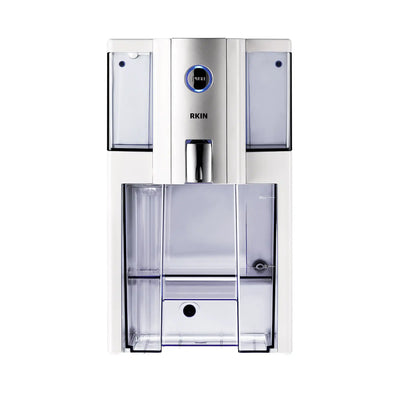
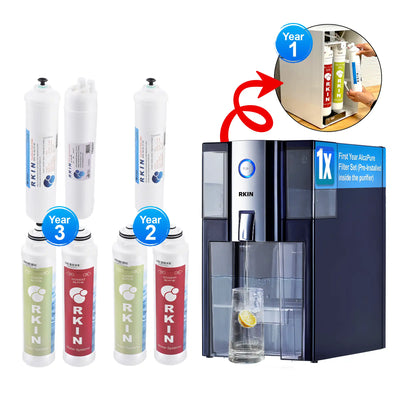
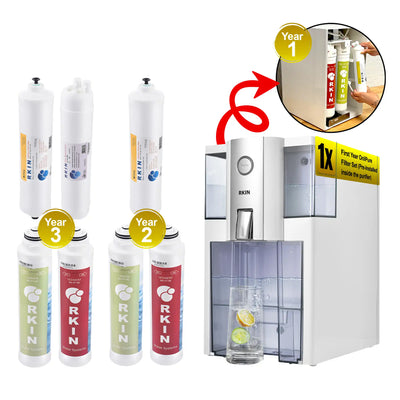
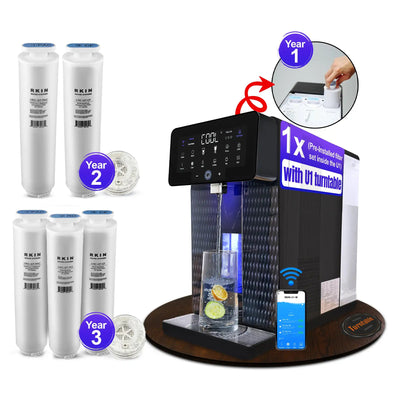
For point-of-use drinking water, the Zero Installation Purifier Countertop Reverse Osmosis Water Filter gives homeowners an RO path without modifying plumbing. It is available in AlcaPure and OnliPure editions, uses front filling at counter height, and is IAPMO R&T certified to NSF/ANSI 58 for TDS, fluoride, lead, PFOA/PFOS, chromium, and related claims listed for the system.
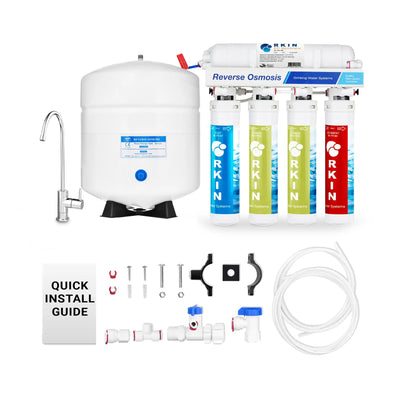
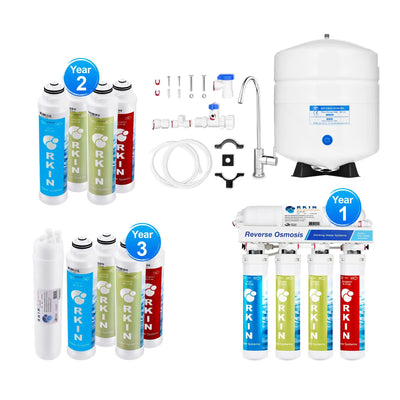
For a built-in sink option, the RKIN Flash Undersink RO System uses a dedicated faucet and storage tank under the sink. It is a fit for homeowners who want filtered water at the kitchen sink and have room for an under-cabinet setup.
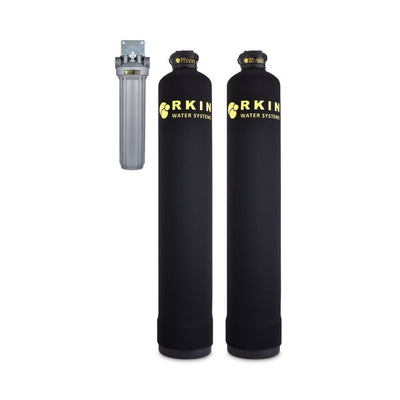
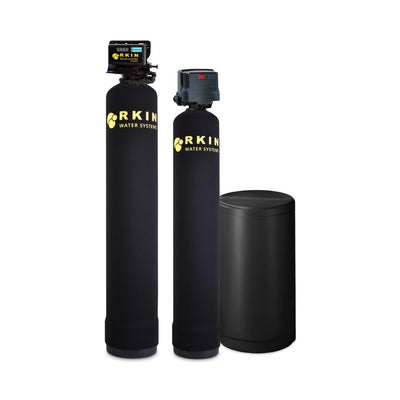
For whole-home planning, start with RKIN whole house water treatment. A whole-house carbon approach can make sense when city water taste, odor, chlorine, chloramine, or disinfection byproducts are part of the concern. If your report also shows PFAS, lead, hardness, or other issues, talk to RKIN before choosing the system so the treatment path matches the test data.
What to Ask Your Utility or Filter Company
If your report shows TTHMs or HAA5, ask better questions before buying anything.
Ask your utility:
- Was the number based on an annual average or a single sample?
- Where were the highest sample locations?
- Were there any operational changes, main breaks, or treatment changes during the year?
- Are levels usually higher in warm months?
- Where can I find the prior three Consumer Confidence Reports?
Ask the filter company:
- Which contaminant claims are tested for this exact model?
- Is there a performance data sheet or certification listing?
- Which filters handle chlorine or organic compounds before the RO membrane?
- How often are those pre-filters replaced?
- What water conditions shorten filter life?
If the answer is vague, keep asking. A good filter choice should be based on your water report, your tap, and proof for the model you are buying.
Me personally, I would read the report and test the tap before choosing equipment.
Frequently Asked Questions
What does TTHM mean in a water report?
TTHM means total trihalomethanes, a group of disinfection byproducts that can form when disinfectants react with natural organic material in source water. Your report lists the measured amount and compares it with EPA's regulatory limit.
Is 0.080 mg/L the same as 80 ppb?
Yes. For water reports, 0.080 mg/L equals 80 parts per billion. HAA5 is often listed with a limit of 0.060 mg/L, or 60 parts per billion. Always check the units before comparing rows.
Does a Consumer Confidence Report test my kitchen faucet?
No. It reports required utility monitoring data for the water system. It is the best place to start, but it is not a custom sample from your sink. If your report raises questions, a certified tap test can give a more specific picture.
Can a TDS meter show TTHMs?
No. A TDS meter estimates dissolved solids, not disinfection byproducts. It can help track RO membrane performance, but it cannot tell you whether TTHMs or HAA5 are present.
What filter should I use for TTHMs in drinking water?
Start by matching the filter to the actual contaminant claim. For drinking water, homeowners often compare reverse osmosis systems with strong carbon stages and clear performance data. For whole-home concerns, ask about carbon filtration and verify the claims for the exact system.
Ready to Understand Your City Water Report?
Your CCR is not just fine print. It is the map for choosing the right next step. Find the TTHM and HAA5 rows, check the units, compare the range, and save the report before shopping for a filter.
If you want help matching your report to a system, start with RKIN's countertop water filters for drinking water or whole house water treatment for every-faucet planning.






0 comments