
reverse osmosis water taste changed
Under Sink RO Water Tastes Different After 4 Months

Short answer: if your under sink RO water tastes different after four months, do not assume the system failed. Taste can change because of filter break-in, storage-tank behavior, feed-water changes, pressure changes, or a maintenance step that was missed.
The key is to separate taste clues from test results. Your tongue can tell you something changed. It cannot tell you whether the membrane, carbon filter, tank, incoming water, or faucet line is responsible. That takes a simple, step-by-step check.
Why can RO water taste different after a few months?
Reverse osmosis systems are not single-filter devices. They usually use a sediment prefilter, carbon filtration, an RO membrane, storage, and a final polishing stage. Each part affects the finished taste in a different way.
The Water Quality Association reverse osmosis fact sheet, accessed in 2026, explains that RO separates water and contaminants by forcing water through a thin semipermeable membrane. It also notes that many RO systems use activated carbon and other treatment stages because no single treatment method addresses every water-quality concern.
That is why a taste change at month four can have more than one cause. The membrane may still be doing its job. The carbon stage may be loaded with chlorine taste and odor. The storage tank may have sat unused while you traveled. The incoming city water may have changed seasonally. Or a new refrigerator line, faucet, shutoff valve, or plumbing repair may have introduced a taste that has nothing to do with the RO unit itself.
Four months is also long enough for habits to show up. If the household uses far more water than expected, a filter can load faster. If the system sits idle, the first draw can taste different than water produced after a few minutes of use. If the home has low pressure, production can slow and tank behavior can change.
What does the taste tell you?
Taste is a clue, not a lab report. Still, the type of taste helps you decide what to check first.
A flat taste is often normal with reverse osmosis because RO reduces dissolved minerals. Some people like that clean finish. Others miss the mineral taste they were used to. If the taste has been flat from day one, it may simply be the profile of RO water.
A stale or storage-tank taste points more toward low use, long idle time, tank sanitation, or a post-filter issue. This can show up after vacations, guest-room sinks, seasonal homes, or a system that produces more water than the household uses.
A chlorine-like taste often points upstream. Carbon filtration is the stage that handles chlorine taste and odor. If city water treatment changed or usage is high, that stage may need attention sooner than expected.
A metallic taste can come from plumbing, a faucet, a new fitting, the source water, or a filter issue. Do not guess. Compare unfiltered cold tap water against RO water and, if needed, test both.
A plastic or rubber taste can come from new tubing, a new storage tank bladder, faucet parts, or a line that has not been flushed enough after service. If this starts right after maintenance, retrace what changed.
What does not fix the problem reliably?
Replacing every filter without testing feels productive, but it can waste time. If the issue is a source-water change or a storage-tank taste, a full filter swap may not solve the real cause.
Boiling RO water is another dead end for most taste issues. Boiling can change gases and concentrate minerals already present in water, but it does not repair an exhausted carbon stage, a tank issue, or a plumbing taste. If you are boiling filtered water to make it taste acceptable, something in the system needs to be checked.
Adding flavor drops or keeping a pitcher in the fridge only hides the problem. That may be fine for one day, but it does not tell you whether the system is performing correctly.
Buying a random replacement filter can also backfire. Under sink systems have model-specific cartridges, flow restrictors, membranes, tubing, and faucet fittings. A part that looks close online may not match the system's design. That can affect flow, taste, leaks, and performance.
Understood if the first instinct is to blame the machine. But the cleaner path is diagnostic: what changed, when did it change, and does the test result match the taste complaint?
How to troubleshoot an under sink RO taste change
Start with the easiest checks first.
First, run a fresh draw. If the system has been sitting overnight or unused for days, dispense water for a short period and taste the next draw. The WQA technical RO fact sheet notes that feed-water concentration, temperature, pressure, and recovery ratio affect RO membrane performance. A system that sat idle can behave differently than one producing fresh water throughout the day.
Second, compare RO water to cold tap water. Use two clean glasses. If both taste different than normal, the incoming water may have changed. If only the RO water tastes different, focus on the system, tank, faucet, tubing, or post-filter.
Third, check your local water report if you are on city water. EPA's Consumer Confidence Report information page, accessed in 2026, says community water systems provide annual drinking water quality reports by July 1. The report will not diagnose your kitchen sink, but it helps you understand source water, treatment, and detected contaminants.
Fourth, use a TDS meter as a screening tool. Measure the feed water and RO water with the same meter. You are not looking for a perfect number; you are looking for a meaningful reduction compared with the incoming water. TDS does not measure every contaminant, and it does not explain taste by itself, but it helps flag membrane performance changes.
Fifth, check flow rate and tank behavior. If the faucet starts strong and quickly slows to a trickle, the storage tank, pressure, membrane, or filters may need service. If the flow is normal but taste changed, the post-filter or source water deserves more attention.
Sixth, retrace recent changes. New faucet? New fridge line? Plumbing repair? Utility hydrant flushing? Vacation? Filter replacement? A four-month taste change often lines up with a real event. The reason I am asking those questions is because the timing usually points to the right part of the system.
When does a filter or membrane check make sense?
A filter check makes sense when the taste gets worse over several weeks, when chlorine taste returns, when flow drops, or when the system has high use compared with the rated filter life. Follow the manufacturer's replacement schedule for your exact model rather than a generic internet timeline.
A membrane check makes sense when the RO water's TDS reduction drops sharply compared with the incoming water. The WQA 2019 RO technical fact sheet explains that RO performance changes with feed-water TDS, pressure, temperature, and recovery. That means one reading is not the whole story, but a clear change from your normal baseline is worth checking.
A sanitation check makes sense when the taste is stale, musty, or tank-like, especially after long idle periods. That is not a reason to panic. It is a reason to follow the system's service steps and flush instructions.
A plumbing check makes sense when the taste is metallic, rubbery, oily, or appears after a fixture or supply-line change. In that case, the RO unit may be fine while the line or fitting is the source.
If it is okay, write down three things before calling support: when the taste started, what the taste reminds you of, and whether the cold tap water changed too. Those three answers save time.
Where RKIN fits
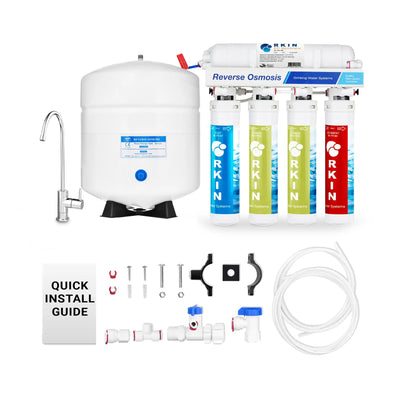
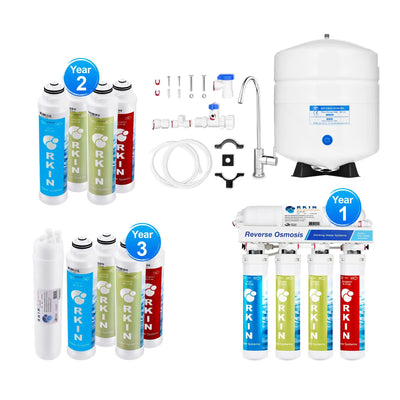
This is what the Flash Undersink Reverse Osmosis System with Chrome Lead-Free Faucet is built for: homeowners who want RO drinking water from a dedicated under-sink setup without turning the counter into a staging area.
The Flash system uses reverse osmosis with a storage tank and a dedicated faucet. It is the right category when you want the filtration work handled under the sink and the daily experience to feel like a normal kitchen faucet.
One honest limit: no RO system should be treated like a mystery box. If taste changes, check the simple things first: flush, compare, test, inspect flow, and follow the correct replacement schedule. A good system plus sloppy maintenance can still produce confusing water.
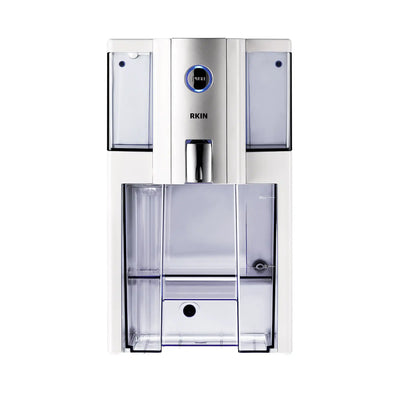
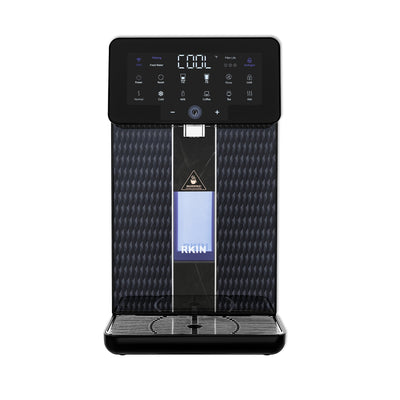
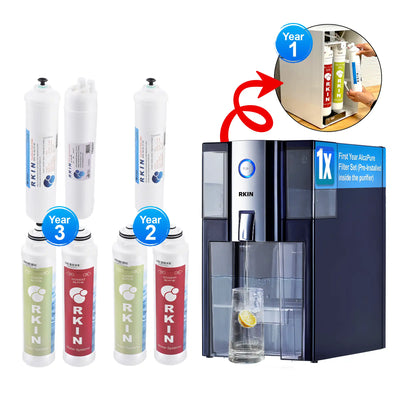
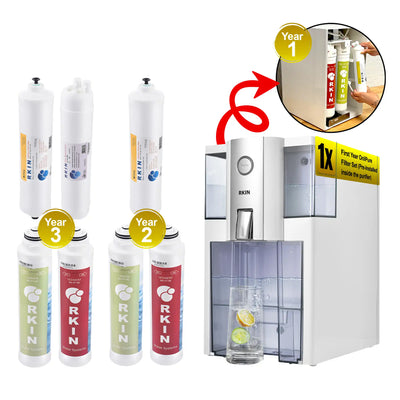
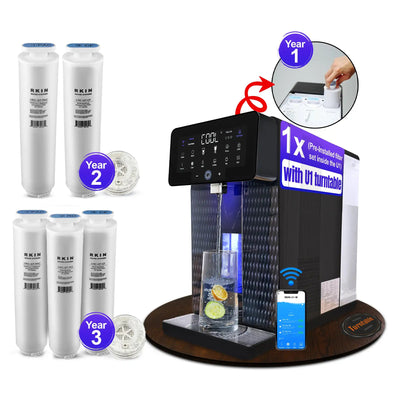
If you prefer a countertop system because you rent or do not want plumbing changes, RKIN also makes countertop options. For this specific search, though, the under-sink recommendation is the Flash system.
Frequently Asked Questions
Why does my under sink RO water taste different after four months?
The most common reasons are a source-water change, carbon filter loading, storage-tank behavior, low use, high use, tubing or faucet changes, or membrane performance changes. Taste tells you something changed, but it does not identify the exact part. Compare tap water to RO water and check TDS before replacing parts.
Is flat-tasting RO water normal?
Yes, flat taste can be normal with reverse osmosis because RO reduces dissolved minerals that give water its familiar mineral finish. If the water has tasted flat since installation, that may be the normal RO profile. If it suddenly changed after months of normal taste, troubleshoot the system.
Can city water changes affect my RO taste?
Yes. Utilities may adjust treatment, flush lines, or see seasonal source-water changes. If your cold tap water tastes different too, the issue may start before the RO system. Your annual Consumer Confidence Report is a useful baseline, and a home test can add current detail.
Should I replace all filters if RO water tastes off?
Not automatically. Replace filters according to the exact model schedule or when testing and symptoms point there. If the taste is stale after low use, flushing or sanitation may matter more. If chlorine taste returns, the carbon stage deserves attention. If TDS reduction drops, check the membrane.
How do I know if the RO membrane is still working?
Use a TDS meter to compare incoming tap water with RO water. A strong reduction suggests the membrane is still doing its main job. A sharp change from your normal baseline is a reason to inspect pressure, filters, flow restrictor, tank behavior, and the membrane.
Ready to Get the Taste Back on Track?
If your under sink RO water tastes different after four months, do the simple checks before guessing: fresh draw, tap-water comparison, TDS screen, flow check, and recent-change review.
For a dedicated under-sink setup, review the Flash Undersink Reverse Osmosis System with Chrome Lead-Free Faucet and match the system to your sink, water test, and maintenance expectations.






0 comments