




homeowner-guide
New Homeowner Water Filtration Guide: What to Do First

You just closed on a house. You've got the keys, the mortgage, and a list of things to fix that grows every time you open a cabinet. Somewhere near the bottom of that list — usually after paint colors and appliance shopping — sits "figure out the water situation." It should be closer to the top.
Untreated hard water can reduce a water heater's lifespan by 30% to 50%, according to a 2023 study from the Water Quality Research Foundation. Chlorine and chloramines dry out skin and hair, degrade rubber seals in appliances, and leave a taste that makes you reach for bottled water. And contaminants like PFAS and lead don't announce themselves — you have to look for them. Here's a practical, step-by-step guide to evaluating and treating your water as a new homeowner.
Step 1: Find Out What's In Your Water
Before you buy anything, get data. There are three ways to do this, and the best approach uses all three:
- Read your Consumer Confidence Report (CCR): Every public water utility is required by the EPA to publish an annual CCR. It lists detected contaminants, their levels, and whether they exceed regulatory limits. Find yours by searching your utility name at epa.gov/ccr or calling your water provider. The CCR tells you what's in the water when it leaves the treatment plant — not necessarily what arrives at your tap.
- Get a lab test: A certified lab test measures what's actually coming out of your faucet, including anything picked up from your home's plumbing. Costs typically run $30 to $100 depending on the panel. Test for basics (hardness, pH, TDS, chlorine, iron) plus any regional concerns (lead, PFAS, nitrates, arsenic). Use a state-certified lab — the EPA maintains a searchable directory.
- Check for visual clues: White or chalky buildup on faucets and showerheads indicates hard water. Orange or brown staining suggests iron. Rotten egg smell points to hydrogen sulfide. Slippery-feeling water could mean high sodium or a water softener left behind by the previous owner.
If you're on well water, lab testing isn't optional — it's essential. Wells aren't regulated by the EPA, and water quality can shift with seasons, drought, and nearby land use. Test annually at minimum, and immediately after any construction, flooding, or agricultural activity near your property.
Step 2: Understand the Most Common Problems
Most residential water issues fall into a handful of categories. Knowing which ones you're dealing with narrows down the right solution quickly.
Hard Water (Above 7 GPG)
Hard water is the most common residential water quality issue in the U.S. The USGS estimates that 85% of American homes have hard water. It's not a health risk — but it's expensive. Hard water builds scale inside pipes, water heaters, dishwashers, and washing machines. It reduces soap efficiency, leaves spots on glassware, and makes skin and hair feel dry after showering.
Hard water is measured in grains per gallon (GPG). Under 3.5 GPG is soft. Between 3.5 and 7 GPG is moderately hard. Above 7 GPG is hard, and above 10.5 GPG is very hard. If your test comes back above 7 GPG, whole-house treatment makes a measurable difference in appliance longevity and daily comfort.
Chlorine and Chloramines
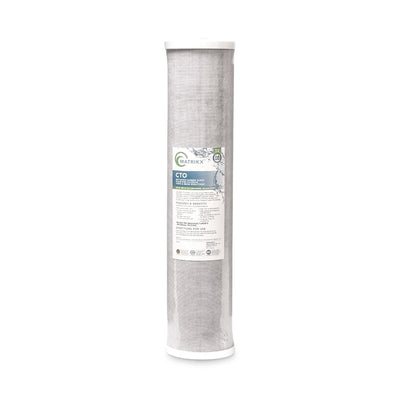
Municipalities add chlorine or chloramines to disinfect water during treatment. By the time it reaches your home, the disinfection job is done — but the chemical remains. Chlorine affects taste and smell, dries out skin, and degrades rubber gaskets in appliances over time. Chloramines are harder to remove than free chlorine because they don't off-gas as easily. Catalytic carbon filtration handles both effectively.
PFAS (Forever Chemicals)
A 2023 USGS study found PFAS in approximately 45% of U.S. tap water samples. These synthetic chemicals are persistent — they don't break down in the environment or the body. The EPA finalized enforceable limits for six PFAS compounds in April 2024, setting maximum contaminant levels as low as 4 parts per trillion for PFOA and PFOS. Reverse osmosis and activated carbon filtration are the two most effective residential treatment methods for PFAS.
Lead
Homes built before 1986 may have lead solder, lead service lines, or brass fixtures containing lead. Even newer homes can have fixtures with trace lead content. Lead has no taste or smell, and no level of lead exposure is considered safe — especially for children. Test for it specifically, and if detected above 5 ppb, install a lead-rated filter at every drinking water tap.
Step 3: Match the Problem to the Right System
Water treatment isn't one-size-fits-all. The right setup depends on your water test results, whether you're on city water or a well, and what you're trying to accomplish.
Whole-House Systems (Point of Entry)
These treat all the water entering your home — every faucet, shower, and appliance gets filtered water.
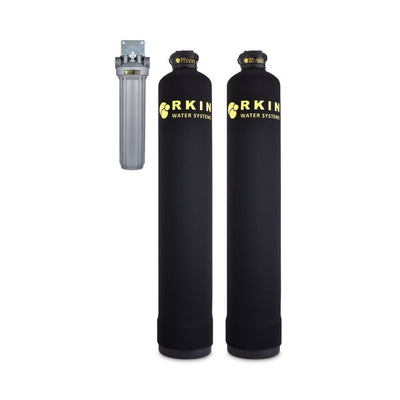
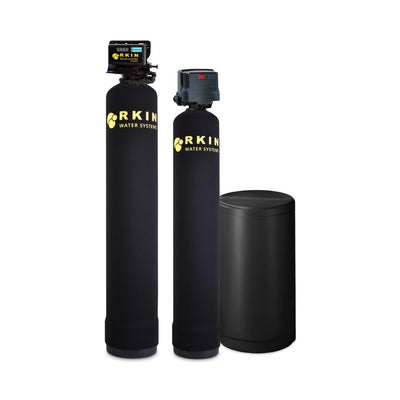
- Hard water (7+ GPG): A salt-free water conditioner prevents scale buildup without adding sodium to your water and without the maintenance of salt bags. The RKIN OnliSoft Pro Salt-Free + Carbon Combo combines TAC media (which prevents scale) with activated carbon (which removes chlorine, taste, and odor) in one system. The TAC media lasts a lifetime — no replacement needed.
- Chlorine and taste issues: A whole-house carbon filter removes chlorine, chloramines, and organic compounds before they reach your showerhead, washing machine, and kitchen tap. The RKIN Whole House Water Filter uses a tank-based carbon media bed rated for up to one million gallons.
- Well water (iron, sulfur, manganese): Wells need specialized media designed to oxidize and filter dissolved metals. The RKIN Well Water Whole House Filter targets iron, sulfur (that rotten egg smell), and manganese without chemicals.
Point-of-Use Systems (Drinking Water)
These filter water at a single tap — typically the kitchen — and are designed for drinking and cooking water.
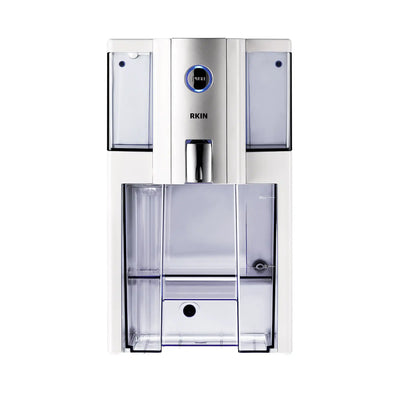
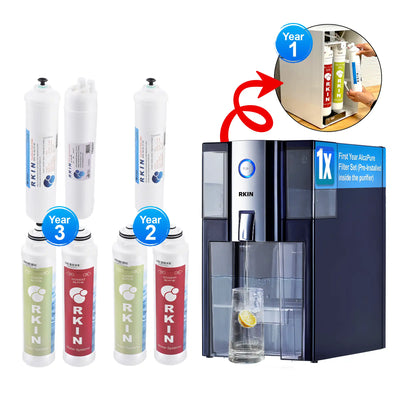
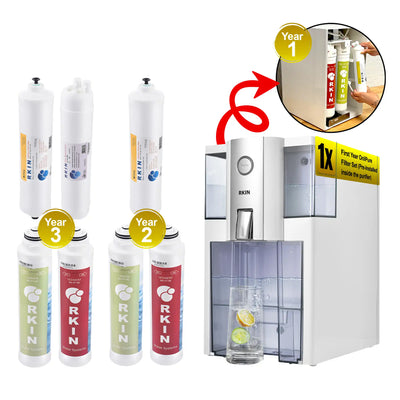
- Countertop reverse osmosis: If you want the highest level of contaminant removal without any plumbing work, a countertop RO system sits on your counter and produces purified water on demand. The RKIN U1 4-in-1 Water Filter System uses five-stage filtration — sediment, dual carbon, RO membrane, and UV sterilization. Fill the tank, plug it in, and it produces purified water. No installation, no plumbing changes.
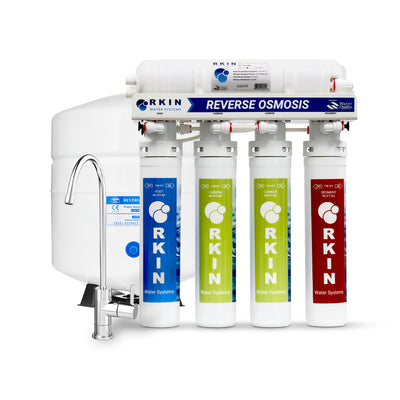
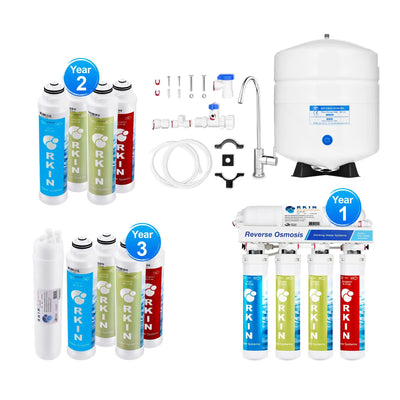
- Under-sink reverse osmosis: For a permanent, out-of-sight installation, an under-sink RO system connects to your cold water line and delivers filtered water through a dedicated faucet. The RKIN Flash Undersink RO System fits under most kitchen sinks and includes a 3.2-gallon storage tank. It does not require electricity.
Step 4: What Most New Homeowners Get Wrong
After helping thousands of homeowners choose water treatment systems, these are the mistakes we see most often:
- Buying a filter before testing: A reverse osmosis system is overkill if your only issue is hard water. A water softener does nothing for PFAS. Test first — then match the solution to the actual problem.
- Ignoring the whole house: If you only filter your kitchen tap, you're still showering in chlorine, running hard water through your dishwasher, and letting scale build up inside your water heater. Drinking water filtration is important, but whole-house treatment protects your plumbing and appliances too.
- Assuming "city water is safe": City water meets federal minimums — but legal limits and optimal levels aren't the same. The EPA's legal limit for lead (15 ppb) is 15 times higher than what the American Academy of Pediatrics recommends for children. And many contaminants (like PFAS, until 2024) had no enforceable federal limit at all.
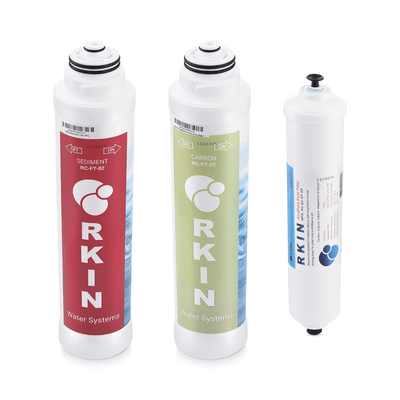
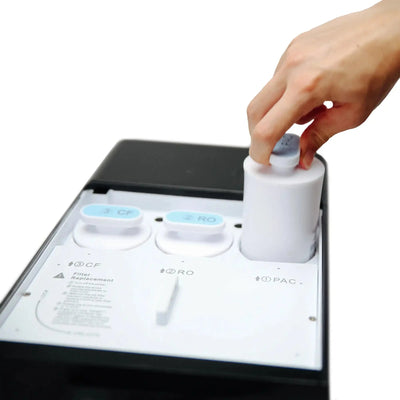
- Forgetting maintenance: Every filtration system needs filter replacements. A reverse osmosis system with an expired membrane is barely better than no filter at all. Set a reminder on your phone or sign up for auto-ship replacement filter cartridges so you don't forget.
Step 5: A Simple Decision Framework
Use this to narrow down what you need based on your water test results:
- City water, hard (7+ GPG), no lead or PFAS: Whole-house salt-free conditioner + carbon filter (handles scale, chlorine, taste). Add a countertop or under-sink RO if you want the purest drinking water.
- City water, lead or PFAS detected: Point-of-use reverse osmosis on every drinking water tap at minimum. Consider a whole-house lead filter (like the RKIN OP1L) if the source is your service line.
- Well water: Start with a full lab test. You'll likely need a whole-house system addressing iron, sulfur, or manganese — plus a point-of-use RO for drinking water. Well water treatment is rarely one system; it's often a treatment train.
- Rental or temporary home: A countertop RO system requires no plumbing modifications and moves with you. The RKIN Zero Installation Purifier connects to any standard faucet — no tools, no landlord approval needed.
Frequently Asked Questions
Should I test my water before or after buying a home?
Before, if possible. Most home inspections don't include water quality testing, but you can request it during due diligence. If you've already closed, test within the first two weeks so you can address problems before they affect your appliances, skin, or health. Lab tests typically run $30 to $100 and return results within a week.
Do I need both a whole-house filter and a drinking water filter?
It depends on your water quality. Whole-house systems handle broad issues like hardness, chlorine, and sediment that affect your entire plumbing system. Drinking water filters (like reverse osmosis) provide a higher level of purification for the water you ingest. If your test reveals contaminants like PFAS, lead, or high TDS, pairing both gives you the most complete protection.
How much does a whole-house water filtration system cost to maintain?
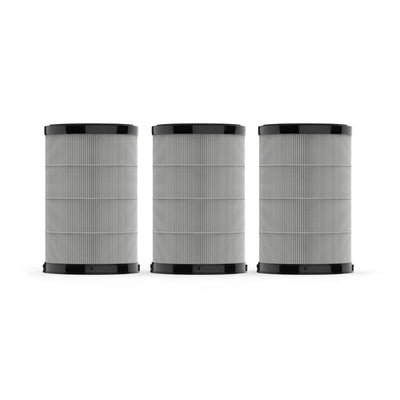
Maintenance costs vary by system type. Salt-free conditioners with TAC media need minimal upkeep — the RKIN OnliSoft Pro's TAC media lasts a lifetime. Carbon cartridge systems need filter replacements every 6 to 12 months. Tank-based carbon media systems can go up to 10 years before media replacement. Check the manufacturer's replacement schedule for your specific system.
Is a water softener or salt-free conditioner better for a new home?
Salt-based softeners physically remove hardness minerals through ion exchange, replacing calcium and magnesium with sodium. This makes water feel slippery and eliminates scale, but adds sodium and requires regular salt refills plus drain line access. Salt-free conditioners use TAC media to prevent scale formation without removing minerals or adding sodium — no salt bags, no drain, no electricity. For most new homeowners, salt-free is simpler to install and maintain.
What if I'm renting and can't modify plumbing?
Countertop reverse osmosis systems need zero plumbing modifications. The RKIN Zero Installation Purifier connects to your existing faucet with an adapter — no tools, no holes, no landlord issues. When you move, disconnect it and take it with you. It delivers the same RO-level purification as an installed system.
Start With the Test, Not the Product
The single best thing you can do as a new homeowner is test your water within the first two weeks. Once you have the data, the right treatment system becomes obvious — and you avoid both over-buying (a whole-house RO when all you need is a conditioner) and under-buying (a pitcher filter when you have lead in your pipes).
Whether you need whole-house treatment, a countertop RO for drinking water, or both, RKIN builds systems designed for real residential water problems. Browse the full lineup at rkin.com, or start with the RKIN U1 4-in-1 Water Filter System for zero-installation filtered water from day one.




0 comments